- 02/26/2026
- 7 Min Read
- By: Christian Schaefer
Are You Certain Those Vibrations Are Normal? You May Have Worn Drivetrain Mounts

Drive any older car long enough, and you’re sure to hear and feel signs of wear. Maybe that’s a clunking as you accelerate, a vibration at speed, or even a vague feel from the steering wheel; nothing that seems too serious, but it often makes itself apparent. Despite their perceived lack of importance, those noises and vibrations can indicate that critical areas of your vehicle need replacing, and they can all have the same root cause: bad bushings.
Bushings can take many forms in our vehicles, both as suspension and drivetrain components. Control arm bushings may be the first thing you think of, but all engine and transmission mounts contain bushings, too. Their main job is to isolate the vehicle’s chassis from excessive vibrations and other harshness while stabilizing the powertrain, but that can be tough to do after thousands of miles of use. Replacing the worn mount is the only fix, so get to know your mounts first before tackling your repair.
Engine & Transmission Mounts Support The Drivetrain
Whether you’re one to stomp on the accelerator every chance you get or feather it in for smooth, comfortable motoring, your engine and transmission mounts hold your powertrain in place. They sit between the chassis and the engine or transmission, connecting the two, and within that connection is a bushing insert, most commonly a natural or synthetic rubber compound. The insert provides firm stability while also absorbing the vibrations they make and softening their movement. Seeing as vehicles come in different shapes and sizes with powertrains to match, the mounts come in all shapes and sizes to fit whatever vehicle they’re in, but their construction remains similar.
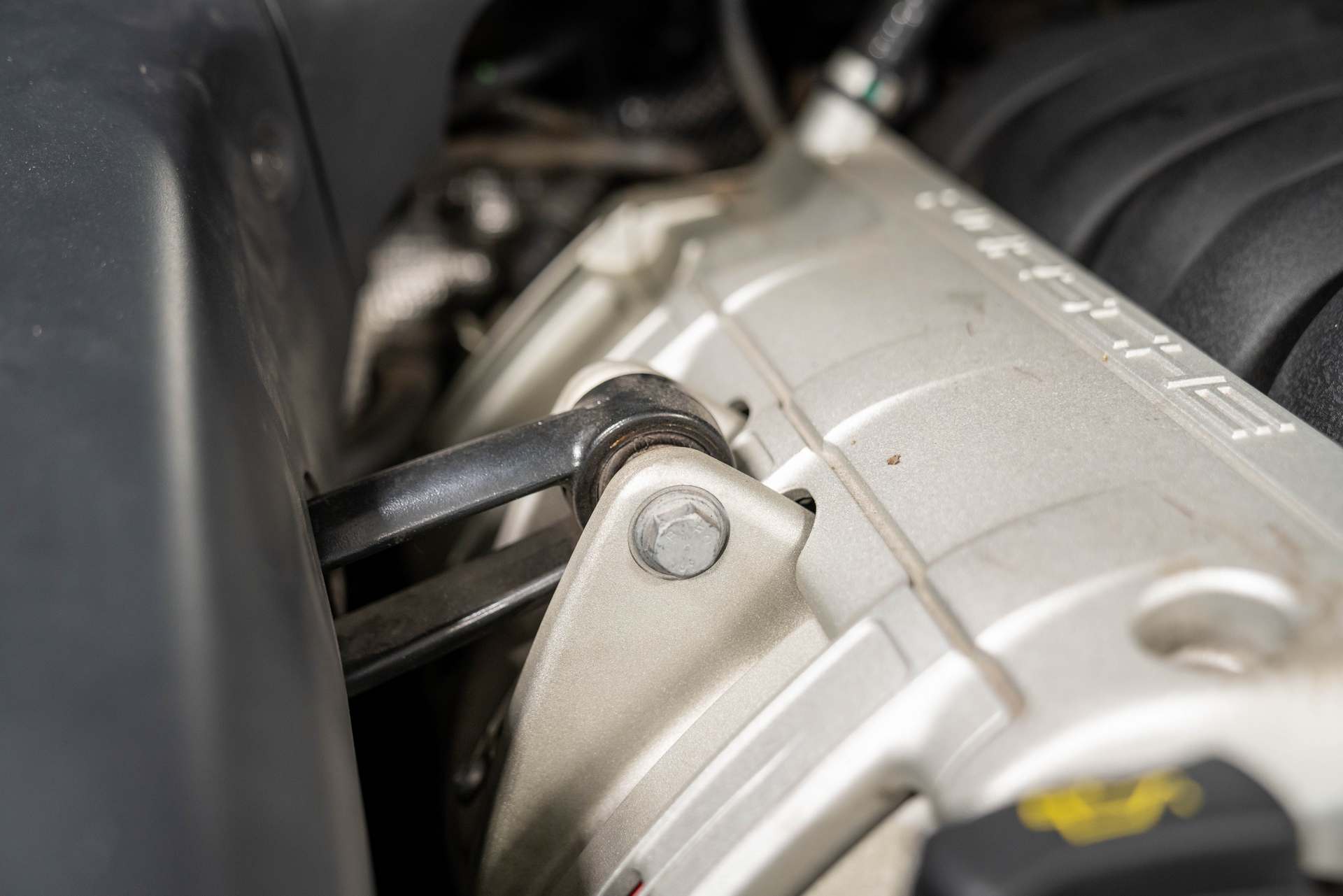
While solid rubber is pretty good at isolating NVH for thousands of miles, there are better options available these days. In the pursuit of a better bushing insert material, engineers have developed a handful of answers to the automotive equivalent of: Can we have our cake and eat it, too? Each is effective in its own way and improves upon the drivetrain mount’s simple basics. What were once blocks of vulcanized rubber sandwiched between plates of steel, and are now—in some cases—electronically controlled, ferro-fluid-filled, active mounts seemingly more advanced than an entire Mk4 Golf. You’ll find the latter as standard and optional in higher-end luxury vehicles and performance-focused models, but there are other options better than solid rubber that many entry-level vehicles benefit from.
No matter which yours has, they are liable to wear out after thousands of miles of use. That's just the nature of mounts, and replacing them is standard across the industry. However, they way they fail is a bit different depending on the bushing type, as are their average lifespan and wear characteristics. Get familiar with the types of mounts and you'll know what to look for.
OE Drivetrain Mount Types
Rubber
Rubber-filled mounts are as basic as it gets for modern and vintage motoring. They’re analog, using nothing more than steel and rubber to make your car more comfortable, and are largely reminiscent of the first suspension bushings, but with modern rubber compounds. Despite their relatively vintage beginnings, they remain perfectly effective in many modern vehicles, thanks to their best characteristics. Being so simple, they’re inexpensive and quick to manufacture, not to mention, they’ve been updated over the years with improved bushing quality, making them as durable as ever.
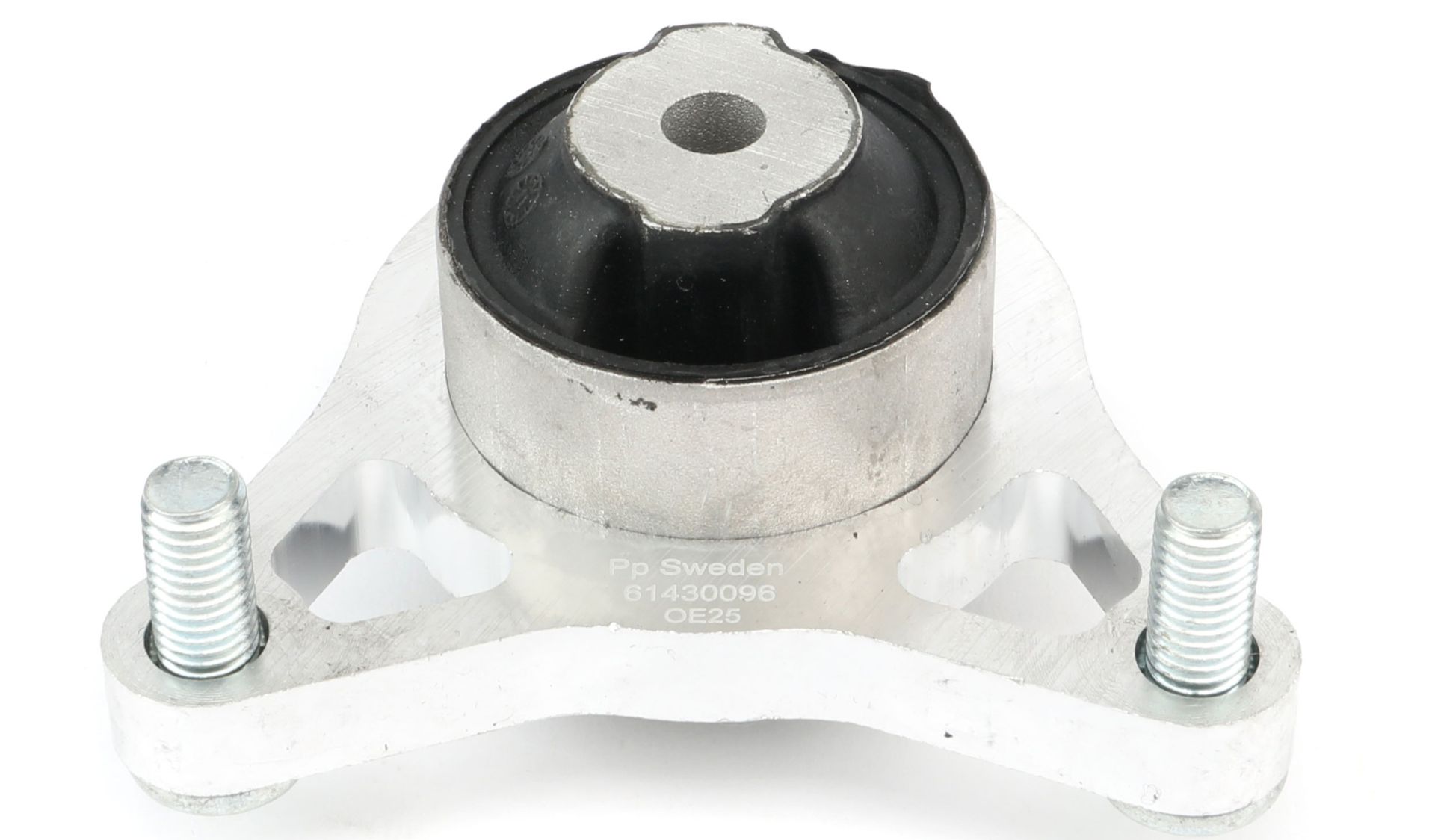
Controlled flex is key with any bushing, and engineers determined the best way to balance comfort with a firm, durable rubber was by leaving gaps in the bushing material. The gaps, also called voids, allow for controlled deformation under heavy loads, ensuring the engine and transmission have compliance at idle and stability at speed. It’s effective enough to be used across the industry, and bushings of this type are found throughout the drivetrain and suspension.
Fluid-Filled (Hydraulic) Bushings
Fluid-filled bushings are the next step in bushing insert evolution. They’re analog, like their predecessor, but they ditch the all-rubber bushing insert with its manufactured gaps for one with fluid-filled sections encased in rubber. From the outside, they look very similar to a traditional mount insert, but their more complex construction allows for better vibration dampening and more precise handling in one package. For that reason, they’ve become the standard for engine mounts in modern European vehicles.
Fluid-filled bushing inserts work so well because the fluid within acts as a hydraulic damper, similar to the struts/shocks in the suspension. As the mount is compressed, fluid is moved between chambers within the fluid-filled sections, dampening unwanted vibrations and controlling excessive movement. Testing has shown that the fluid-filled bushing insert eliminates a wider range of NVH than a solid-rubber bushing while being stiffer, making it far better at delivering the sporty luxury feel of many modern European cars.
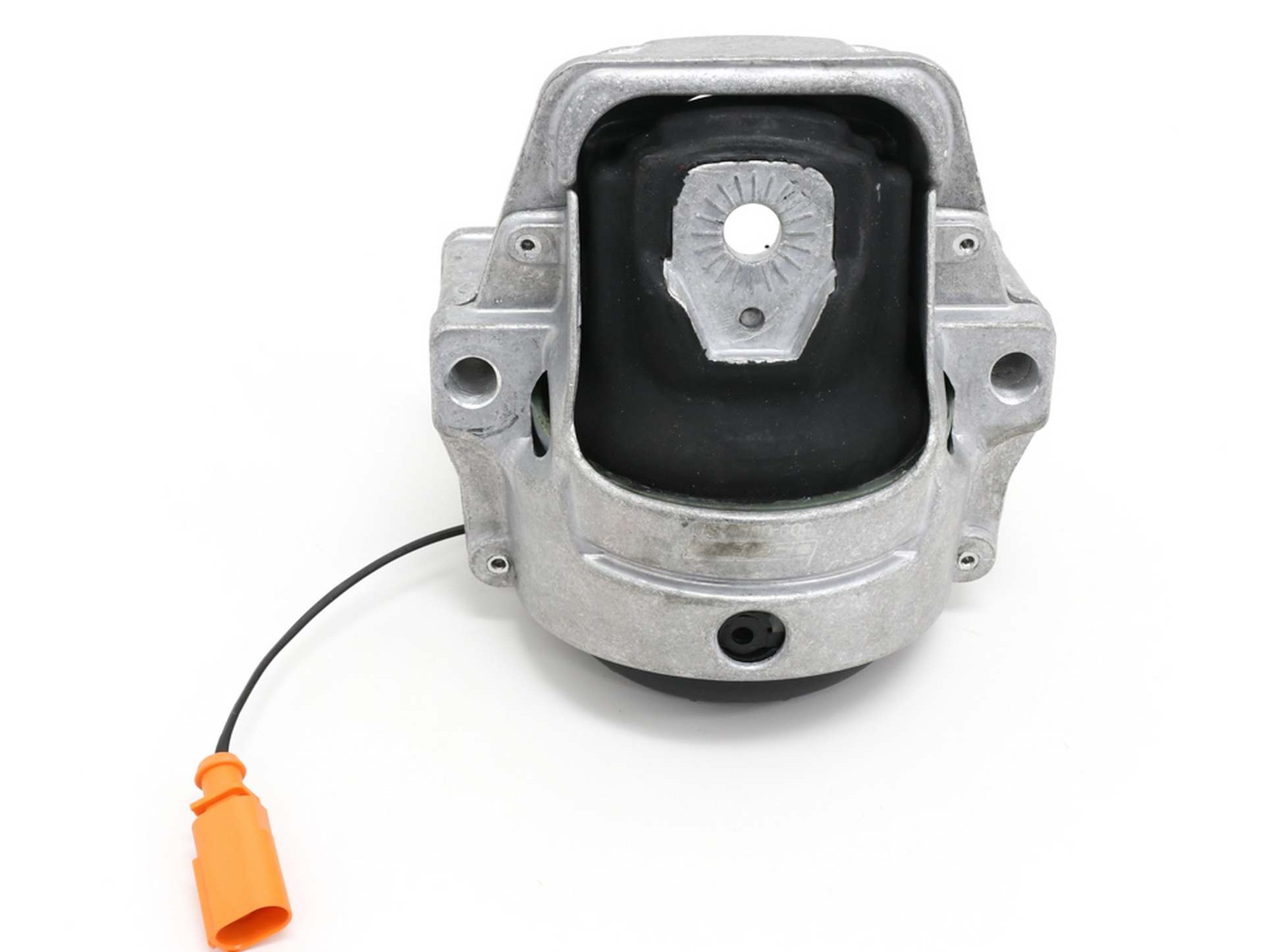
Today, many of the fluid-filled mounts are adaptive in some way, incorporating two settings for the bushing insert for variable firmness. Many use an electronic actuator that pushes on a small diaphragm below the hydraulic chamber. At idle, the actuator remains in its low position, giving the fluid ample space to move around, but at a certain point, it's activated, pushing up on the diaphragm and shrinking the hydraulic chamber, giving the fluid little expansion room. However, some modern European cars, like the Jaguar XE, still use a vacuum-operated mount, which does largely the same job for a much lesser cost. Vacuum-activated mounts are very similar in cost to a standard fluid-filled engine mount, but pricing only increases from there.
Active Drivetrain Mounts
As far back as the eighties, engineers developed a drivetrain mount that perfectly toes the line between everyday comfort and rigid drivetrain control, or at least, comes close. Active mounts contain fluid-filled rubber chambers similar to the hydraulic bushing, but add a variable element that actively adjusts the mount's firmness based on a given factor. Early active mounts were controlled by engine vacuum, and many modern systems use electronics to adjust firmness. Despite how advanced that sounds, electronically-controlled active mounts have stiffened drivetrains for about two decades in road-legal vehicles, so they can be found in everything from Honda Accords to Porsche 911 GT3s.
The more advanced active mounts used in sports cars and supercars are similar to active dampers in that they fight against inertial forces. Porsche and Audi have long used a magneto-rheological type mount, which uses an electromagnet between two ferrofluid-filled chambers. Activating the magnet changes the alignment of the magnetic particles in the fluid, significantly stiffening the fluid’s viscosity. The engine computer controls the mount's activation, considering factors like engine speed and yaw angle to determine when to best stiffen or soften the mount.
Speaking of cost, active engine and transmission mounts can be rather pricey to replace. Porsche’s active engine mounts, called PADM in Porsche speak, are near the peak of pricey, running buyers over $2200 for a single mount when the engine needs two. Now, that wouldn’t be a major issue if they lasted forever, but they don’t, no matter the brand. The electronics add another failure point into the mix, and wouldn’t you know it, they are a regular source of replacement for active engine mounts. PADM failure is one of the more common issues on modern Porsche sports cars, and others aren’t too dissimilar, so know what you’re buying beforehand.
Are Your Engine & Transmission Mounts Worn-Out?
If there’s anything to be said about car parts that contain rubber its that they’ll eventually wear out. The same rings true for your drivetrain mounts, which rely on rubber material for their bushing insert. However, it’s not always the rubber that fails, and ultimately, it doesn’t necessarily matter why it has altogether. A worn-out mount is no good, so you need to know when it’s time to replace one.
If you’re lucky enough to have a vehicle with an electronic mount, you’ll likely see a warning code should something happen. Otherwise, you’re left with a handful of relatively obvious symptoms and a couple of broader ones. Ultimately, finding a worn mount should be straightforward.
The first sign of a worn or failed mount is excessive vibration at idle; that's where the engine should be at its smoothest. Misfires and other mechanical issues can cause similar vibrations, but they'll have other characteristics that ultimately rule them out, such as engine codes or certain noises. Worn mount vibrations will change in tone and feel as the worn mount collapses on itself during acceleration. They can be worse in certain RPM ranges, too, as the engine and transmission's internal parts spin at varying frequencies.
Almost all bushings clunk or knock when worn out, so a sound such as that while driving can be common, but if you pay attention to when it happens, you’ll find the real clues. For failing drivetrain mounts, you’re looking for clunks when accelerating from a stop and when shifting gears. Those times are when the torque load on the powertrain changes somewhat drastically, and the worn mounts are most likely to move. You'll see this in action if you blip the throttle while in park with the hood open and the engine on. Good engine mounts hold the engine in place; worn mounts allow significant movement. This would also be the time to observe the engine mount itself, if it’s in the engine bay. Many transversely-mounted engines use a mount accessible with the hood open.
Slide under the vehicle to inspect the engine and transmission mounts. They won’t always look worn, but damaged rubber is almost always an indicator. Tears and cracks in the rubber are natural to a point, but will eventually be the source of failure from pure fatigue, and if left long enough, they can tear completely. The best way to find out how worn they are is by using a pry bar to flex them. If you can compress them with ease or make the isolated metal parts of the mount touch, it’s time for a replacement.
Fluid-filled mounts aren’t immune to rubber fatigue either, as the rubber casing around the fluid is a similar compound to solid engine mounts. That means the constant heat cycling and flex will eventually lead to its failure. In nearly every case, a failed fluid-filled bushing insert will leak its fluid, so a wet mount always deserves investigation.
Active mounts share fluid leaks with hydro bushing inserts, but their included electronic or vacuum tech adds another point of failure into the mix. Those with electrics are likely to fail due to damaged sensors or internal shorts before triggering an error code. Vacuum mounts don’t have the luxury of alerting the driver with a code, but you can check them manually with a vacuum pressure tester by swapping its vacuum line with the tester and trying to draw a vacuum.
Pricing will be higher for the active mounts, too, as the extra complexity brings extra cost, but replacement intervals aren’t any better.
Aftermarket Mount Solutions Could Be Just What You Need
When it comes to engine and transmission mounts solutions, OE and OEM aren’t the only options. Plenty of aftermarket companies offer their takes at improving on the original design, and many of them are worth buying. Costs are typically less than OE, but there are exceptions. Ultimately, the choice for an aftermarket mount comes down to how you’re using your vehicle. Luxury seekers and anyone trying to restore their factory ride quality should stick with whatever the vehicle was given by its engineers, but performance seekers have a few paths.
The simplest form of engine mount upgrade is bushing inserts. Some are plastic, and others are metal, but regardless of composition, they fit into the gaps in the bushing inserts. Once in place, they prevent the mount from deforming into those gaps, sacrificing some of the NVH absorption for improved drivetrain response. Complete aftermarket engine and transmission mounts manufactured with a stiffer rubber or fluid-filled bushing are also available from tuners like 034 Motorsport or OE suppliers like Prekom-USA, although model coverage is not as wide-ranging as the inserts. However, if you’re lucky enough to have a vehicle they support, the aftermarket mounts are a stellar and relatively inexpensive upgrade that offers a noticeable improvement.
If neither of those will cut it, polyurethane bushing replacements are the next step up. Essentially a plastic material, poly bushings are harder and offer far more resistance to flex and deformation than rubber. For that same reason, they also transmit far more vibration and harshness into the chassis. In most cases, these are a bit much for the street, but poly bushes with softer durometers do exist, thanks to companies like SuperPro. Do some research into owners' groups and forums dedicated to your car and tier opinions on poly mounts before diving in.
Tools You Might Need To Replace Your Engine And Transmission Mounts
The engine and transmission mount replacement process is not universal; mounts are often bespoke to a chassis or platform. Some vehicles have easily accessible mounts ready to be replaced with just a few tools. Others require the engine to be nearly removed, so it’s best to be prepared well before buying your replacement parts.
The one commonality among drivetrain mount replacements is that you’re briefly removing the parts supporting the engine or transmission, so you’ll need to support it in the interim. The simplest way to do that is with a good floor jack, something you may already have. It’ll come in handy for holding up the engine or transmission, gaining access to the mounts, and loosening a corroded mount with gentle pressure.
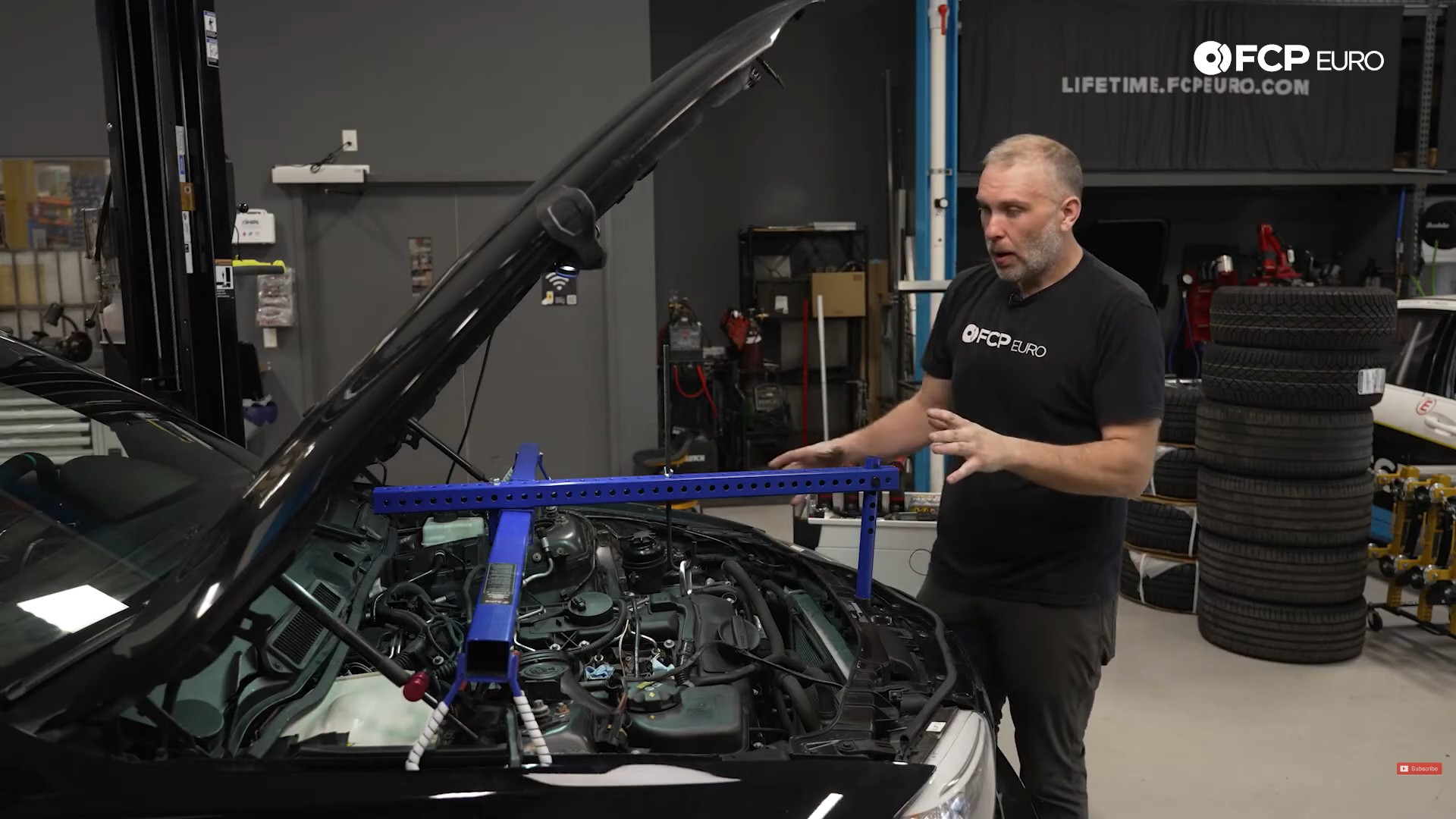
Unfortunately, the floor jack method doesn’t work with all cars. Some need their subframes removed to reach the mounts, and that requires a heap of prep work just to get to it, including supporting the engine. In this case, an engine support bar is necessary. It’ll sit in your engine bay and hold the engine up from above, giving you free rein to work on it from below. If you’re working or will be working through a project like this, consider using this time to fix any other issues, large or small, with the bottom of the engine free of blockage. That access is a premium, so don’t waste it.
Regardless of which engine or transmission mounts are available for your car, we’ll have them ready in an all-inclusive kit that provides everything you need to replace them correctly. With one click, you eliminate any guesswork or anxiety about whether you’ve ordered everything you need correctly. Upon arrival, you’ll need only tools and instructions to replace it. Though knowing us, there’s a good chance we can also offer you the latter on our YouTube channel.