- 05/13/2026
- 6 Min Read
- By: Christian Schaefer
Don't Neglect Your Transfer Case Or It'll Leave You With A Big Repair Bill

All-wheel and four-wheel drive have become increasingly popular in the last few decades, and while they’ve provided better traction in inclement weather, they’ve also added complexity. At the center of all that complexity in many European cars and SUVs is a transfer case, which sends power to both axles when needed. Despite its widespread use, transfer case issues are common, with major failures affecting BMW, Mercedes, and Porsche. Before pulling the trigger on your favorite European SUV, learn how transfer case issues can hamper your ownership.
What’s A Transfer Case?
Have you ever thought about where your engine sits in relation to the front axle? In most cases, the engine sits over it to varying degrees, and as a result, the transmission connects to it behind the front axle. All the engine power that reaches the wheels comes from the output flange or spline at the rear of the transmission, and considering that’s positioned below the front seats, there needs to be something to send some of that power back to the front axle. That’s where the transfer case comes in.
The transfer case bolts to the back of the transmission and splits the engine power, sending it to both axles. They’ve been around since the advent of four-wheel drive, but today’s requirements have forced them to become far more complex and hold much more power. Within those fitted to modern European SUVs are a clutch pack, a couple of gears, a couple of shafts, a big chain, lots of bearings, and lubricating fluid; bolted to the outside is the electric actuator that adjusts the clutch engagement. All of those pieces fit nicely within (or on) the transfer case in a fairly compact package and work together to deliver a fairly reliable four- or all-wheel drive to any vehicle, large or small.
At their most basic, transfer cases split power between the front and rear axles at a fixed ratio determined by the automaker’s engineers. Trucks and off-road-focused SUVs like Range Rovers have two-speed cases, which can be shifted into a lower gear for low-speed crawling. These days, though, many performance and luxury SUVs have more advanced single-speed cases that work in tandem with the vehicle's traction and stability computers to adjust the front-to-rear torque split on the fly for maximum performance and safety at any given moment. The latter have allowed the super SUVs of the last decade to perform far better on the road than their size and weight would normally allow for. Unfortunately, that benefit is balanced by their imperfect track record.
Transfer Case Failures Aren’t Unique - Here’s What To Look For
Pick any major brand FCP Euro supports, and there’s a very good chance that at least one of their vehicles can suffer from transfer case failure. If you’re keeping score at home for your favorite brand, they include: Porsche, BMW, Mercedes, Land Rover, and Volkswagen (7P Touareg only). The few not included either exclusively use a transverse engine layout and a “Haldex-type” AWD system (Volvo, MINI), or a transaxle gearbox with an internally housed front differential (Audi). They, too, have their own drivetrain issues, but nothing that crosses over.
It’s an unfortunate aspect of owning a modern AWD vehicle, but widespread failures have led to a fairly clear set of symptoms to look for. Despite small differences individual transfer cases may have between manufacturers, the most common symptoms are shared by all modern transfer cases.
Most Common Transfer Case Symptoms:
A jerking or hesitation under moderate acceleration
A hopping or binding while making slower, tighter turns
Unusual noises from the transmission area
Grinding
Clunking
Clicking
Whining
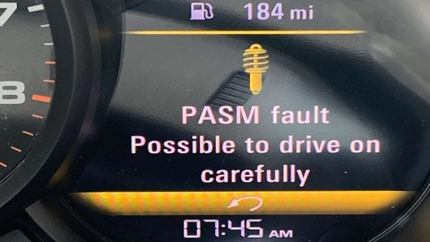
Dashboard warning lights (4WD, AWD, Transfer Case, Terrain Response, Stability Control)
Beyond these are the individual driveline malfunction codes your specific make and model will throw when there’s an issue. They’re going to be related to the transfer case or involve the traction or stability control system, which will read the wheel slip caused by the transfer case through the wheel speed sensors. You’re going to need a capable scanner to read those codes, something like an Autel MD808, or manufacturer-specific online software like VCDSor Durametric. Either is a great tool to have, and both will have you ready for plenty more involved repair jobs.
Now you know what symptoms to look out for, although none of those really tells you why your transfer case has failed. In most cases, it doesn’t matter too much why, just that it has. However, many of them are rebuildable with the right parts and tools, so should you attempt the repair, you’ll need to know what’s gone wrong. Each case has its own particular issues specific to a manufacturer, and even a model on occasion, but there’s only so much that can go wrong with them. There aren’t too many parts in the transfer case, and only a handful get damaged or wear out.
This Is Likely The Cause For Your Failed Transfer Case
With only a handful of moving components, transfer cases are fairly simple, but still require regular maintenance. A few of these failures are regular occurrences because servicing isn’t performed on time, whether through an automaker's recommendation or poor ownership. Regardless of how they’ve failed, many of the components are replaceable, allowing you to rebuild your case if needed.
Clutch Pack Wear
A worn or damaged clutch pack is the main culprit for binding or juddering in tighter corners and under acceleration. The clutches are used on every drive you take, as the computer adjusts their engagement to send more or less power to the front axle based on information from a handful of sensors. It’s a very capable system when functioning properly, so much so that you don't ever feel it working beneath you, but problems occur when the clutches wear out for one reason or another. Those issues force you to become aware of the troubles beneath the floor.
A common source of this kind of failure today is 2015+ BMW products and their associated ATC13 transfer case. They claimed a “lifetime" fluid in the transfer case wouldn't need replacing, but a 2025 technical service bulletin of theirs shows that the source of the failures is largely from factory fill oil no longer up to spec. In this case, the oil wears out and cannot properly lubricate and cool the clutch plates, leading to accelerated wear. However, it wasn’t too long ago that Porsche was the bastion for expensive transfer case failures (also with an associated lawsuit) with their 958 Cayenne and early 95B.1 Macan. Their PL72 ATC cases were initially supplied with inferior clutch material, forcing a 2018 redesign that swapped in uprated clutches. Several subsequent redesigns were also needed to prevent water ingestion from a vent, which contaminated the lubricating oil and damaged the clutch plates.
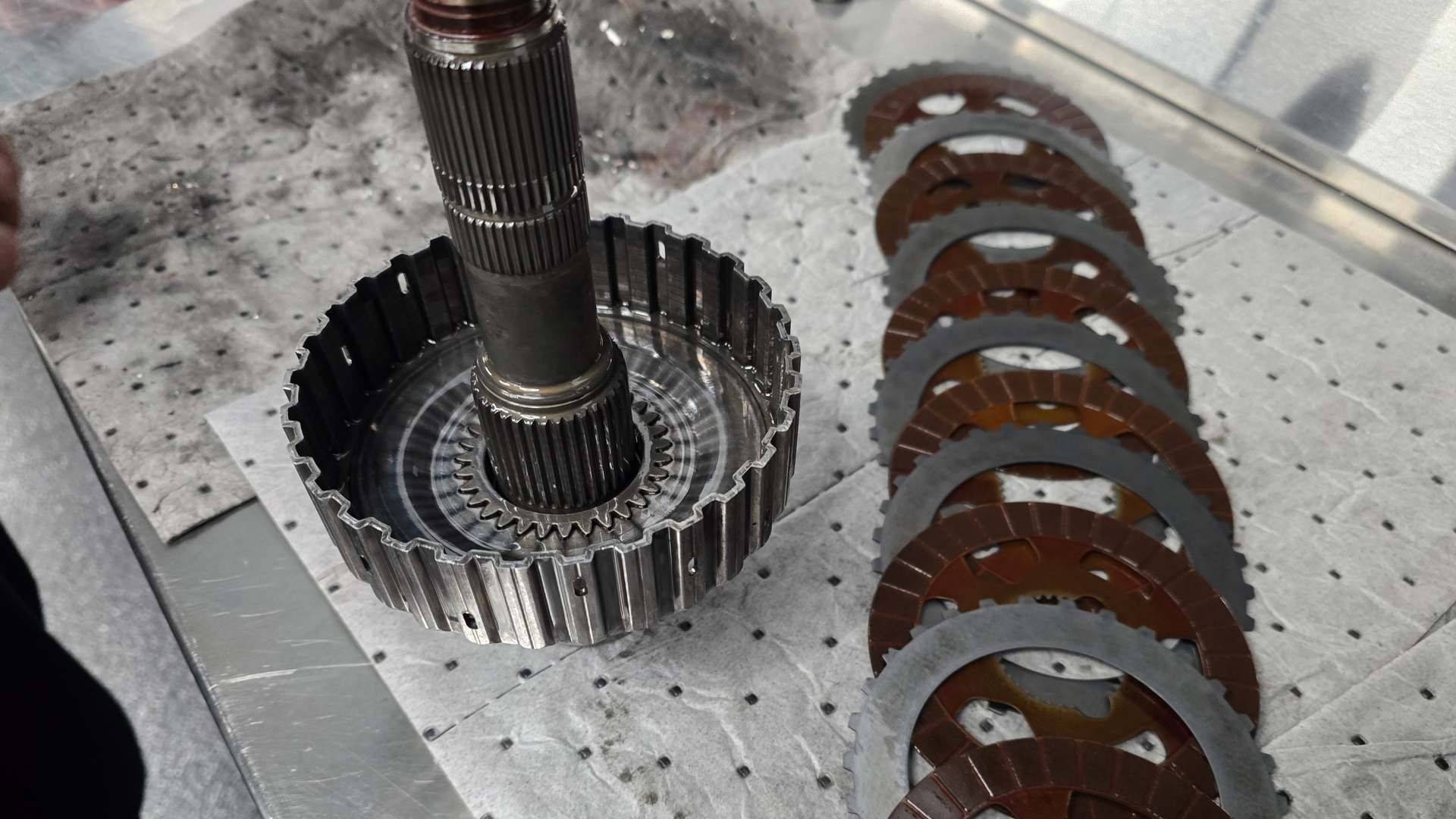
Older BMWs from the E9X and E8X platforms can also experience issues due to worn clutch components. In this case, though, the problem lies with the surrounding metal components in the clutch pack wearing out and pitting, which causes excessive clearance.
Case rebuilds aren’t the most DIY-able job, but we like to think it’s possible, so we do offer a clutch pack rebuild kit for the BMW ATC13 cases. The parts in the kit are provided by S-Tec, a subsidiary of Magna Powertrains, which is the original designer of both the Porsche and BMW transfer cases. We don’t currently carry a rebuild kit for the 958, but we do offer a replacement kit with a new transfer case.
Chain Stretch
Mercedes SUVs have become a popular go-to for many seeking the best luxury appointments, but recent generations have had distinct issues with their transfer cases. Unlike the Magna-designed cases in the Porsche and BMW, the Borg Warner-designed case in the X166 and X164 platforms (among others) suffers from chain-related issues. You may consider a stretched chain to be less of an issue than a toasted clutch pack, but you’ll need to disassemble the transfer case for either issue, making the jobs largely similar.
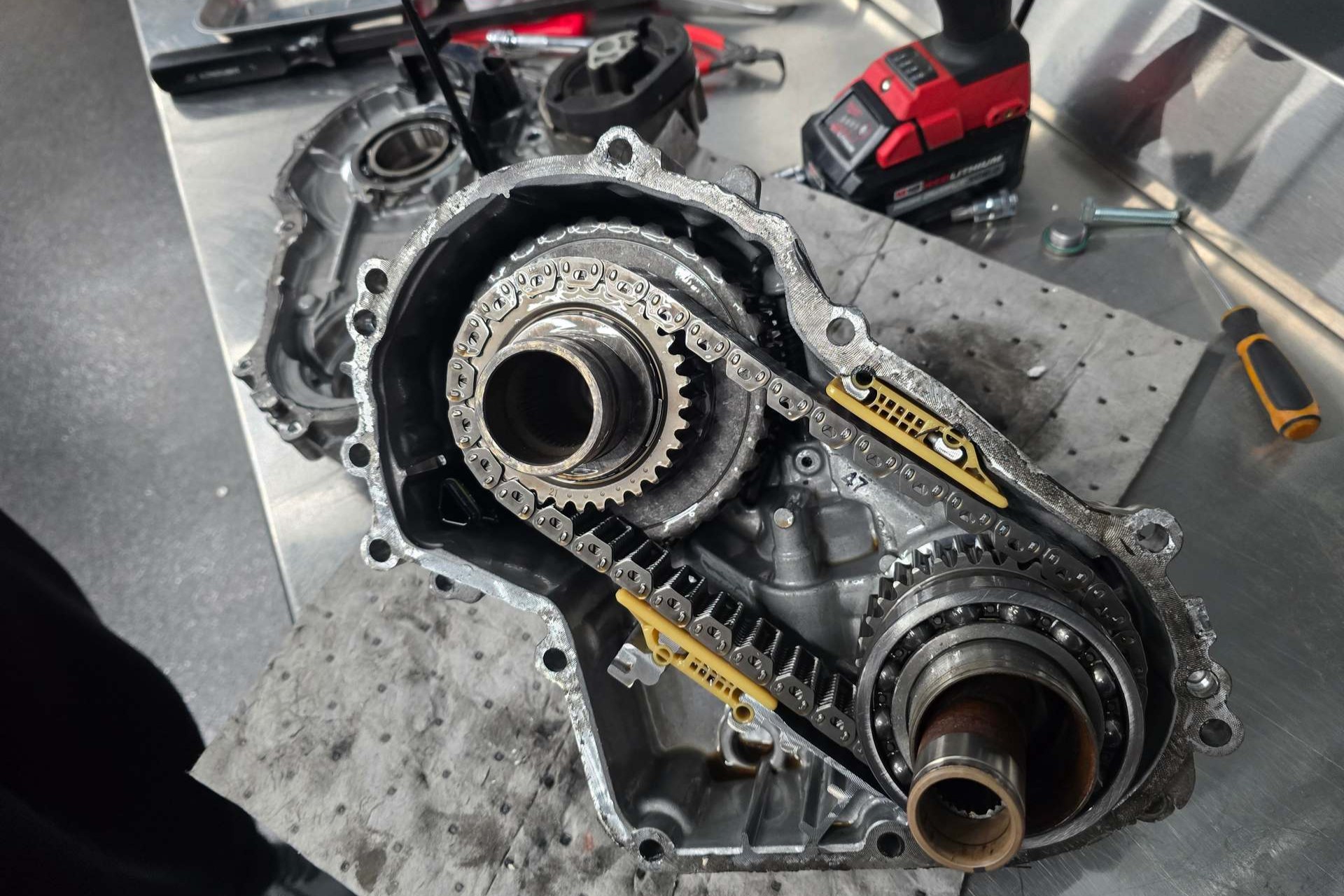
Chain stretch occurs when—surprise, surprise—they’ve been subjected to a lack of lubrication. While it doesn’t look like a bike chain, it’s similar in that it’s made of links and pins. Without enough healthy oil circulating, the links wear on the pins, creating slack, which loosens the chain. This is likely to happen in the standard X166/X164 transfer case, and the larger two-speed case available as part of the “Off-Road Package.” In any case, the stretched chain will cause a loud clicking or clunking from the transmission area as it jumps teeth under acceleration.
Bearing Wear
Almost all the moving parts within your engine or driveline need a bearing, whether plain, needle, roller, or ball. They’re essential, along with a lubricating oil, to keeping all parts spinning freely without issue. Problems arise when bearings are starved of oil, or clearances are set too tight, and that’s exactly what happens in smaller 4Matic Mercedes models with the 722.9 7G-Tronic transmission.
The transfer case in Mercedes’ smaller models, like the C-Class, GLC, and E-Class, is integrated into the back of the transmission rather than a bolt-on component like those in the GLE and GLS. It’s a completely different type of case, utilizing helical gears to send power to the front-facing drive shaft rather than the stretch-affected chain. It’s simpler and more compact, sharing the same ATF for lubrication and cooling as the transmission. Unfortunately, Mercedes assembled these transfer cases with incorrect preload from the selective shim stack, which puts excessive pressure on the bearing, wearing it out prematurely. As such, bearing failures—and damage to the case's planetary gearset—are somewhat common occurrences on 4MATIC models.
Actuator Failure
Actuator failures are somewhat common on higher-mileage vehicles. They often use plastic components that become brittle and break after a decade of service on a hot transfer case. No automaker sees these more than another, with BMW, Porsche, Land Rover, and Mercedes all experiencing actuator-related problems. Luckily, these are generally easier to fix than internal case issues, as they bolt onto the case from the outside.
Actuator motors can be fairly pricey to replace, but they’ll always be significantly less expensive than a complete transfer case replacement. In some cases, an independently replaceable plastic gear or set of gears is the source of trouble; they’re a relative bargain to replace, and most are stronger plastic or brass to prevent future issues.
Service Your Transfer Case Regularly To Avoid Most Issues
So what’s the best thing you can do to keep your transfer case trouble-free? Regularly service it with fluid changes.
Find your transfer case fluid here!
We all know how important engine and transmission oil is; the transfer case (and the rest of the driveline) oil is no different. All of the moving parts in the transfer case are under a lot of stress and heat from transferring the engine’s power forward and aft, and it’s the oil’s job to keep them all cool and lubricated. All of that heat and stress break down the oil’s lubricative properties, turning it into nothing more than slightly thickened water if left in use past the point of needing replacement. It’s at that point that clutch material wears out, metal parts move against each other with excessive force and heat, and chains wear on their sprockets. The majority of what it takes to avoid all of that mess is simply an oil change.
Not to kick while down, but BMW’s current ATC13 transfer case debacle is a prime example of how important the oil change is. In the suit filed in late November of 2025, affected owners point to a BMW Technical Service Bulletin stating that the main cause of the damaged transfer cases was that “factory-filled transfer case oil does not meet BMW specifications.” BMW itself sold all of the affected models under the premise that the transfer case fluid was a lifetime fill, meaning it wouldn’t require servicing, so the fluid not being up to spec after just 50,000 miles is anything but on the affected owners. Beyond that, transfer cases are like any other part that holds oil: they’re prone to leaks. There’s often not much fluid in the cases to begin with, so anything lost has a far greater effect than it would on an engine that carries five times as much oil.
Regardless of whether you have one of those affected models or any other mostly modern European car or SUV with a transfer case, replacing the fluid at regular intervals will keep the boogeyman (transfer case failure) away. Even the biggest cases take less than two liters of fluid, so there’s not much in the way of service cost, and a fairly standard 20,000-mile replacement interval means it’ll need less regular changing than the engine oil. You’ll be able to use most of the same tools, too, though you may need a fluid transfer pump to refill the case. It’s a cheap addition to your toolbox and will be vital in just about every driveline fluid replacement service.
Anything beyond what you'll find in here starts to become model or manufacturer-specific, so it's best to dive into the applicable forum for your vehicle for a further diagnosis or to look for DIY rebuild instructions. There may come a point where we can offer that for everyone, but for now, we'll be happy to simply supply you with the parts and tools to repair and service your transfer case going forward. Happy wrenching!