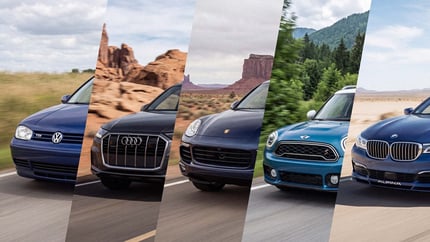
Ask ten enthusiasts for their ideal road trip car and you'll get ten different answers, because the right vehicle depends entirely on the kind of trip you're taking. A flat-out interstate run asks for very different things than a weekend of dirt roads and campsites, and neither has much in common with the kind of trip where you just need to point a car at a destination and trust that it'll get you there. So instead of crowning one universal winner, we've split the road trip into five categories and picked our favorite vehicle for each. Some are obvious. Some aren't. All five are cars we'd happily fill up and point toward the horizon tomorrow.
Faultless Flyer | Mk4 Golf TDI
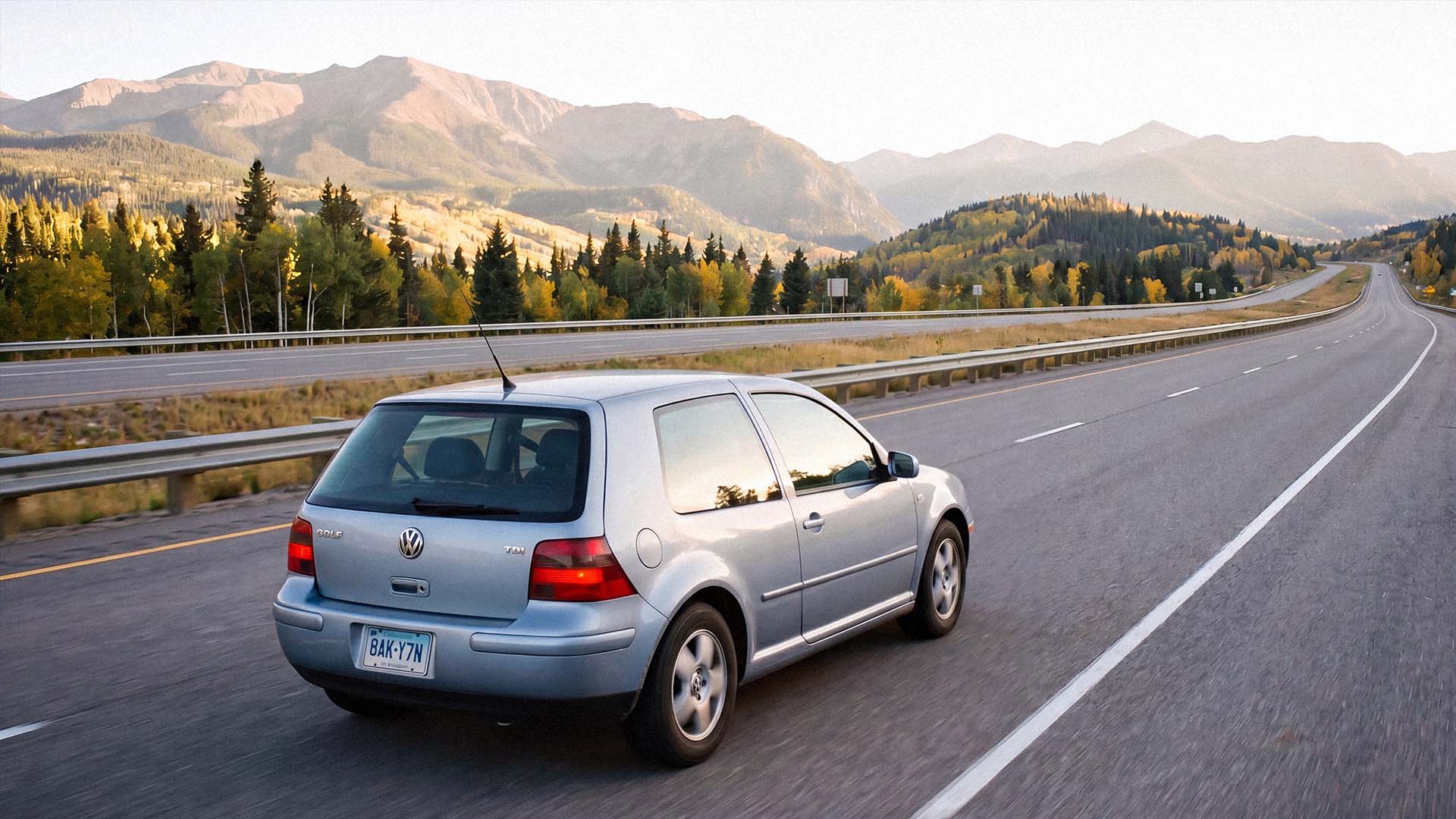
Not every trip is planned out in advance or with notice; things happen, and that occasionally necessitates getting somewhere far away by car. It's unlikely yet entirely possible, and in that situation, where getting there is really all that matters, you'll need automotive transport guaranteed to get you there. A true guarantee like that isn't entirely possible, but you can get the automotive equivalent if you don't mind sacrificing comfort, speed, and technology.
Volkswagen's Mk4 Golf platform will forever be a fan favorite for a multitude of reasons, and its inclusion on this list comes down to its most European powerplant: the famous 1.9 TDI. There are many variations of that engine, but the one we're after is the ALH, used across the US-spec Jetta, Beetle, and Golf. It's an old-fashioned, underpowered, turbo-diesel inline-four; a legend known as one of the most reliable engines ever made.
Developed in the '90s, it's free from the last 20 years of emissions tech that have made owning a modern diesel much more challenging. Though, that may be underselling it, as the ALH is largely free from all technology. It uses a single, non-variable overhead camshaft with eight valves and is driven by a rubber belt, which also drives the mechanical fuel pump. Only one injector has an electrical connection, and being a diesel, there isn't a traditional ignition system or any coil packs to worry about. It's an older engine now, so plastic and rubber bits are likely to be brittle if they haven't been replaced in a while, but beyond the cooling and EGR system, there aren't too many to worry about. Left alone and serviced regularly, they'll chug along for a staggering number of miles. Because of that, many of the ones you'll find for sale have upward of 200,000 miles, which, for the ALH, is barely break-in mileage.
Power isn't much of a consideration in stock form, but the ALH has a notoriously strong bottom end, so tuners can double the original 90hp fairly easily. At that point, you'll need some supporting mods, like a stronger clutch for your 02J five-speed manual transmission. A four-speed auto is available at the sacrifice of some fun and economy. Even then, the ALH won't sacrifice much of its efficiency, which sits around 40 MPG without any attention paid to throttle position. For that reason, Mk4 Jettas with this engine are a favorite among hypermiling enthusiasts, too.
You're not just buying an engine; there's an entire car that comes with it, and it's a Piech-era classic. It'll feel older now, but the Jettas and Golfs of this era were engineered with real care, so there's a real solidity to them. Luxury appointments aren't stellar, and any kind of half-decent radio will need to be an aftermarket upgrade. However, with refreshed suspension components and a set of seats from a lower-mileage gasoline-powered Mk4, you can give yourself a bit of extra "plush" for your road trip ahead.
Backroad Barnstormer | UKL MINI
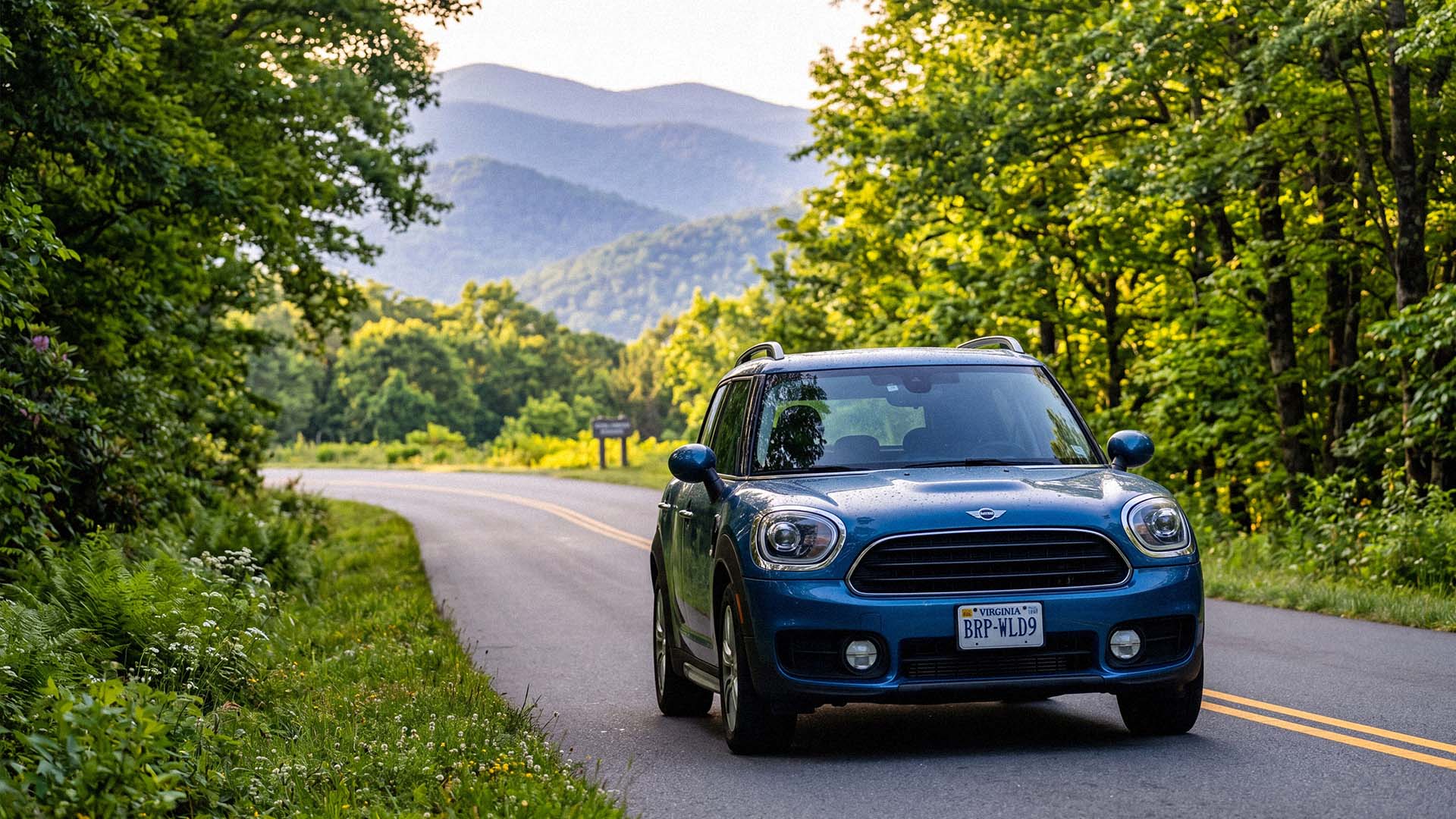
If you're like me, you tend to forget about MINIs. Thankfully, working for FCP Euro means I'm regularly reminded that they really shouldn't be. This last generation of MINI products is undoubtedly the best to date, thanks to larger changes at BMW that spawned the best family of engines it's likely ever produced and consolidated engineering across the shared BMW UKL platform. Much like VAG's MQB platform, it underpins all of BMW's front-wheel-drive vehicles with shared drivetrain components, suspension mounting points, and standardized engineering that can be applied across the lineup with minimal modification. For BMW-badged models, that means a lower entry cost; for MINIs, it means BMW performance without the price tag. That performance comes in a few flavors, from the classic two-door Cooper to the tall-riding Countryman, but it's the Cooper S Clubman that's best suited for the long haul with some spirited runs on rural roads.
Now, I know that might ruffle some sensitive enthusiast feelings, but hear me out. Nowhere else can you get a B48 engine (technically a B46, in this case) for less money with this amount of cargo space. Sure, it's not at its most potent in stock form, but with a simple flash tune from Dinan, which keeps the engine running under its original safety parameters, the B46 will produce an extra 64hp and over 100 lb-ft of torque at the wheels on 91 octane; better results are achievable if 93 octane is available near you. At least, that's how it goes for pre-LCI models, which is BMW speak for 2019 and earlier. LCI variants use a different ECU that has not yet been properly unlocked, so only the DINATRONICS X inline tuner is available for those.
Regardless of whether your Clubman can make GTI or Golf R power, you'll need to choose what you want from the rest of the drivetrain. A six-speed manual, a seven-speed DCT, and an eight-speed auto were all offered, with the DCT and eight-speed being LCI and pre-LCI, respectively. The manual was available in both versions, though it was unavailable for a short period during production. All three power the front wheels unless MINI's All4 all-wheel-drive system is fitted; only the manual and eight-speed auto offer that option. Regardless of what's ultimately in your Clubman S, you can expect about 30 MPG between the backroad blasts.
Of course, it's still a road trip vehicle, so it needs to carry people and their things at a minimum. Traditionally, that's been tough for a family of vehicles built around being small, but the Clubman makes efficient use of its space, offering near-identical cargo volume to the BMW F31 3-Series wagon with its seats up while being 14 inches shorter lengthwise. At under 3,500 lbs with the All4 AWD, it's light, too, so even when filled with a good bit of luggage, it should respond well to spirited inputs.
So what does something like this go for? Well, even though the oldest F54 Clubman S is only nine years old, they're not difficult to find under $10,000 with under 100,000 miles. That's bargain pricing in just about every way you look at it for a very capable car. Should you prefer the taller-riding Countryman S, which offers much of the same as the Clubman, you'll sacrifice a bit of backroad fun for a little more utility without spending any more money. The choice is yours on which UKL-based MINI is best for you, but in the twisties, catch us in a Clubman S.
Camper Capable | Audi Q7 4M
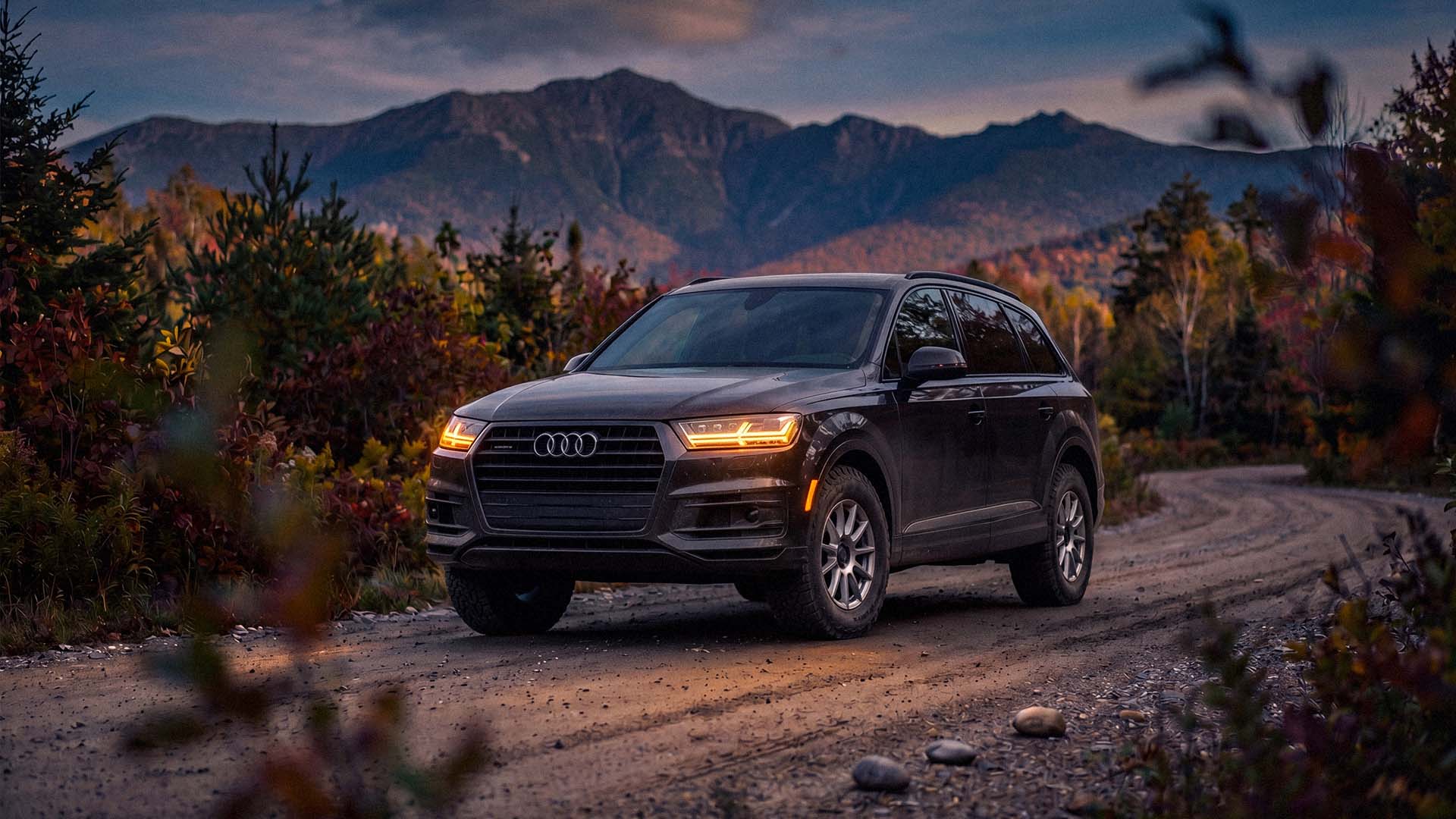
Camping has seemingly evolved in the last couple of decades, thanks to the overlanding movement. Where traveling to the campsite was once the annoying part of the vacation, it's now become the point of the entire thing. Cruising slowly on rocky trails and in the open desert with a tent on your roof, solar panels strapped to the outside, and a trunk full of camping gear is the choice for so many now, and if you'd like to get in on that, you'll need a certain type of vehicle. It'll be something with good road manners and genuine off-road capability, whether in stock form or with the help of simple aftermarket modifications. Luxury, performance, and decent fuel economy typically aren't necessary, but if you make the right choice, like a 4M Audi Q7, you really can have it all.
Audi's big SUV is in its third decade of production, and the 4M represents its second generation, running from 2015 through today with multiple facelift revisions. It was a revelation upon debut, replacing the long-aged first generation with a clean-sheet design based on VAG's MLB evo platform. It's basically the same overall exterior size as its predecessor, but extensive use of aluminum and the benefits of the MLB evo platform allowed it to shed several hundred pounds over the earlier model. The 4M also features significantly more storage volume within the same footprint. On paper, it's a great family-hauling SUV with space for everyone and their luggage, but look a little further, and the 4M becomes a very reasonably priced luxury barge that has no trouble getting out of its own way.
Key to its inclusion here are the optional adaptive air suspension and supercharged 3.0t V6 engine. The former is great for taking the Q7 off-tarmac on occasion, as it features variable ride-height adjustment, including an Offroad/Lift mode that raises the chassis by 60mm (2.36in). Once back on pavement, the suspension will settle back to normal height for standard driving, and even hunker down another 15mm in Dynamic mode to improve handling and reduce drag. Coil-sprung models can use lift spacers for more ground clearance, but those are a semi-permanent change. Being adaptive, the air suspension will provide a more comfortable ride across a wider range of surfaces, too. That comfortable ride is sweetened by rear-wheel steering, the other part of the Adaptive Chassis package, which includes the air suspension. Sure, you'll need to find a Prestige trim optioned with it, but they're not too hard to find, nor do they carry the premium over the lower trims that they did when new.
The EA837 evo, more commonly called the 3.0t V6, or CREC, is the more common engine in the 4M Q7, and it's all the better for it. As an evolution of the supercharged V6 found in US-spec B8 S4s, the CREC variant is the best we received, with a revised supercharger, dual-port fuel injection, and updated tuning that pushed peak power a bit higher than before. It's a torquey monster that will rev out if you let it, and in the Q7, it's right at home shoving the 4,000-lb SUV around without breaking a sweat. Combined with the air suspension and rear-wheel steering, the Q7 feels far smaller than its exterior dimensions make it. Assisting the V6 in putting its power down and sipping fuel when needed is a ZF-built 8HP eight-speed automatic, the absolute gold standard of today's "slushbox" offerings. Beyond that, the Q7 can be had with four-zone climate control, heated second-row seats, and a Bang & Olufsen audio system to play your CarPlay or Android Auto through.
Even if you're not going to hit a few trails per year, the Q7 is great as an everyday family car. Less than a decade old, they can be had for a quarter of what they stickered at with under 100,000 miles. Slap on some chunky tires and strut spacers, and you have a camp-capable cruiser fit for any situation.
Highway Bruiser | Alpina B7 G12
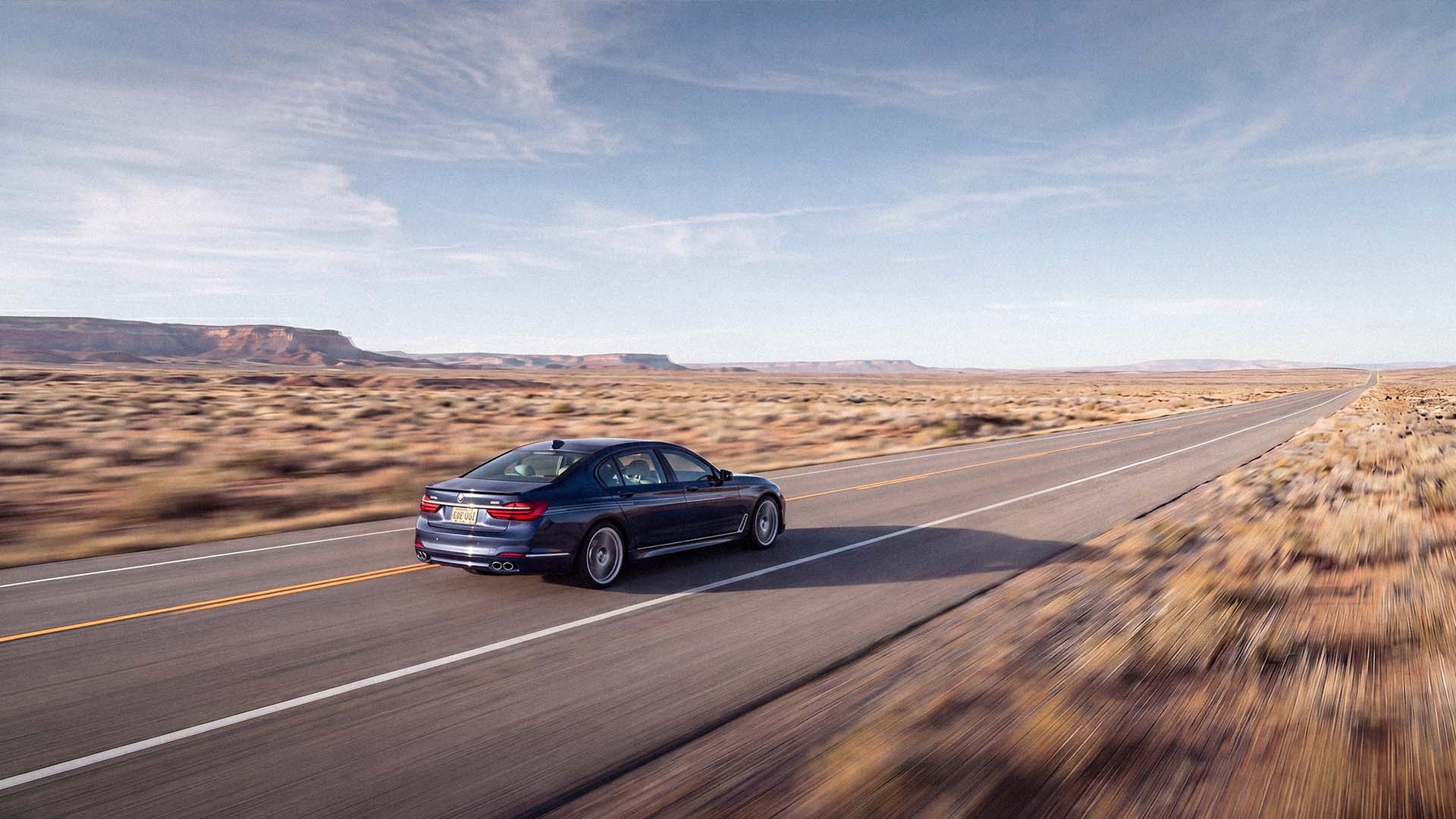
Speed and style are often overlooked for qualities like utility and reliability, but where's the fun in that? Road trips can be long and a bit boring if you're on the interstate system for too long, so sometimes you need something that can rapidly shrink the time spent on those roads while doing so in comfort. To me, that screams fast executive sedan, which happens to be somewhat of a specialty of the Europeans. Audi, Porsche, BMW, and Mercedes all have their own versions of what that can be, but one of the better choices might be from a far more exclusive name: Alpina.
Even the average non-enthusiast respects the presence the G12-based Alpina B7 has on the road. People will move right out of your way as they see your extra-large kidney grilles and laser lights approaching in their rearview mirror (if they're paying attention to it). It's the closest you can get to a land-going luxury cruise missile, sporting a twin-turbocharged V8 based on the N63B44 and handbuilt by Alpina technicians with a bespoke rotating assembly, headwork, turbochargers, intercoolers, and cooling system. Each change was designed to help the V8 withstand its 600hp and 590 lb-ft of torque with ease, well more than any BMW version of that engine family. Paired with its ZF eight-speed auto tuned to Alpina's specifications, the B7 will snap off sub-four-second sprints to sixty and cruise at triple-digit speeds all day, all night, on its way to a 205mph peak.
When you have to slow down, the B7 is no less impressive. The adaptive air suspension provides comfort and poise in its range of modes, isolating passengers from all but the worst bumps while sharpening up when speed demands it. It works with cameras and sensors to view the road ahead and adjust damping rates quicker than we can feel them, ensuring the ride is never compromised. Behind the iconic 20-inch, 20-spoke wheels sit enormous brakes fit for an M7. Even the rear-wheel steering is retuned, improving the big sedan's agility, not just at speed but in tight parking situations.
Then there's the interior, which features hand-stitched Lavalina or Nappa leather upholstery on nearly every surface. The seats are built for supportive comfort with bespoke stitching and an available massage function, and a Harman/Kardon stereo with iDrive infotainment ensures music is at its best; both are great for long-distance cruising. Everyone can even set their own temp through the four-zone climate control, and rear-seat passengers can enjoy some front-seat functions with electric adjustment. Plus, there's a trunk larger than that of the F31 3-Series wagon, so everyone and their luggage are sure to fit.
What does all that cost these days? Not a whole lot up front, relative to what it once cost or to new cars. Sub-$30,000 asking prices are not uncommon for examples with under 100,000 miles. That's not exactly cheap, especially for a vehicle with potentially questionable reliability, thanks to its engine's N63 roots, but where else can you hit 200mph for less?
Jack of All (Road) Trips | Porsche Cayenne 958
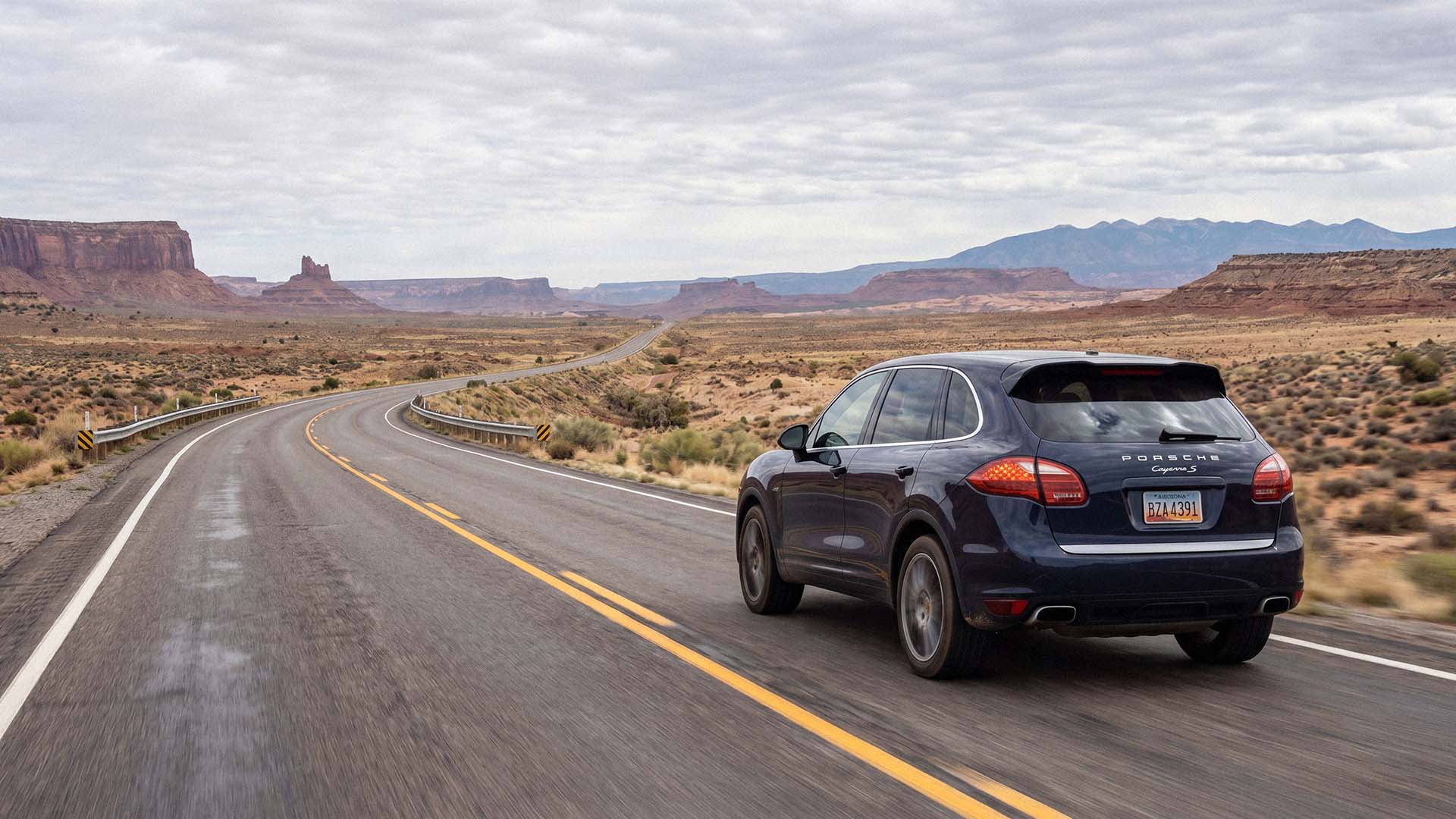
True do-it-all vehicles are hard to come by. Speed often comes at the cost of comfort, and backroad fun often sacrifices off-road capability, but there's at least one vehicle out there that combines them all. It's even pretty reliable, so long as maintenance has been kept up, though parts aren't inexpensive when they're needed. That, of course, is the second-generation Porsche Cayenne Turbo.
The 958-chassis Cayenne ran from 2011 through 2018, splitting that production run with a substantial facelift in 2015 that ushered in the 958.2. Compared to the original Cayenne, which made its case as a heavy, controversial first effort at an SUV from Stuttgart, the 958 shed weight, sharpened its lines, and benefited from a lighter chassis shared with the Audi Q7 and VW Touareg. The Turbo variant sat near the top of the model range from day one, blending serious power with all of the off-pavement hardware and luxury kit Porsche offered on the platform. It's not subtle, but it isn't shouty either, and that combination is exactly what makes it work as a long-distance companion.
Powering the Turbo is the M48.52, Porsche's 4.8-liter twin-turbocharged V8, producing 500hp and 516 lb-ft of torque in 958.1 form, with the 958.2 bumping output a bit higher. The turbochargers sit inside the V of the engine, keeping intake plumbing short and throttle response sharper than the displacement and curb weight might suggest. It's a stout engine when looked after properly, though the coolant pipes that run beneath the intake have a reputation for failing, and the timing chain tensioners want attention as the miles climb. Handle those preemptively, and the M48 will pull hard for hundreds of thousands of miles. Backing it up is an Aisin-built eight-speed automatic, tuned by Porsche to deliver quick shifts under throttle and smooth, unobtrusive operation when cruising. The full-time all-wheel-drive system splits torque actively, sending power wherever it has the most grip, whether you're merging onto an on-ramp or picking through a washed-out forest road.
That off-road capability is more genuine than most owners ever bother to find out. The Turbo comes standard with Porsche Active Suspension Management, and most examples include the optional air suspension, offering several inches of variable ride height. Lift the Cayenne into its highest setting, and you've got enough ground clearance to take on rutted trails and shallow water crossings without much worry. Drop it into its lowest setting on the highway, and the big SUV hunkers down for stability at the kind of speeds it can comfortably reach. Combined with the optional Porsche Dynamic Chassis Control, which uses active anti-roll bars to keep the body flat, the Turbo carves through corners with composure that feels physically impossible for something this size.
Inside, the 958 Turbo is plush in a way that holds up surprisingly well a decade on. Soft leather covers nearly every surface you'd touch, the seats offer broad adjustability with optional ventilation and massage, and four-zone climate control is on the options list along with a Burmester audio system that genuinely sounds incredible. The infotainment is dated by today's standards, but a head unit swap is straightforward, and most owners simply live with it. The cargo area is generous, the rear seats fold flat for longer hauls, and the overall feel is one of solidity rather than flash. It's a Porsche cabin built for big miles, not for showroom impressions.
Fuel economy is the one place the Turbo asks for some forgiveness. You'll see somewhere in the high teens to low twenties on the highway if you behave, and considerably less if you don't. The saving grace is a 26-gallon fuel tank, which means real-world range on a single fill stays competitive with smaller, more efficient SUVs, even when you're using the throttle freely. Best of all, the asking price for one of these now sits well under $35,000 for clean examples with under 100,000 miles. Some patience and a willingness to chase the right service history will land you a 500hp, air-sprung, off-road-capable luxury SUV for the price of a base-trim Toyota. That's the kind of math that makes road trip planning pretty easy.

.jpg?width=430&crop=16:9&format=webp)