- 05/19/2026
- 6 Min Read
- By: Christian Schaefer
Stop Clunking Around, Your Suspension Bushings Need Replacement

Drive any older car long enough, and you’re sure to hear and feel signs of wear. Maybe that’s a clunking over bumps, or a vibration at speed, or even a vague feel from the steering wheel; nothing that seems too serious, but makes itself apparent often. Despite their perceived lack of importance, those noises and vibrations can mean critical areas of your vehicle need replacing, and they can all have the same root cause: bad bushings.
Bushings take all sorts of shapes and sizes in our vehicles. Each of them plays a critical role in how a vehicle feels in almost every aspect, and when they go bad, they can throw off everything from tire wear to braking performance to ride quality. Ensuring they’re in good shape will go a long way toward your driving experience and your repair costs, so take a few minutes to understand bushings a bit better and brush up on how best to care for your car.
What’s A Bushing?
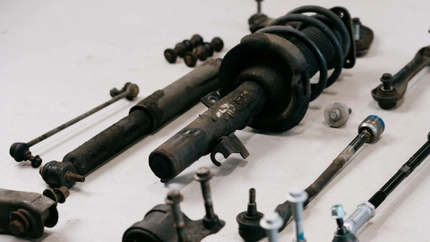
The term ‘bushing’ can mean a handful of things depending on where it’s used, but in the automotive world, it's the blanket term for rubber-based isolators. They take many forms in our vehicles, and you’re likely familiar with them or the parts that contain them, like control arms, strut tops, and engine mounts. Despite the name differences, each uses a rubber-based bushing to connect one piece of the vehicle to another, absorbing vibrations from the road surface and from the vehicle’s drivetrain. In certain cases, the bushing can even act as a sort of spring, becoming stiffer as it loads. That’s determined by where in the car the bushing is used, as well as the overall shape, size, durometer, and composition.
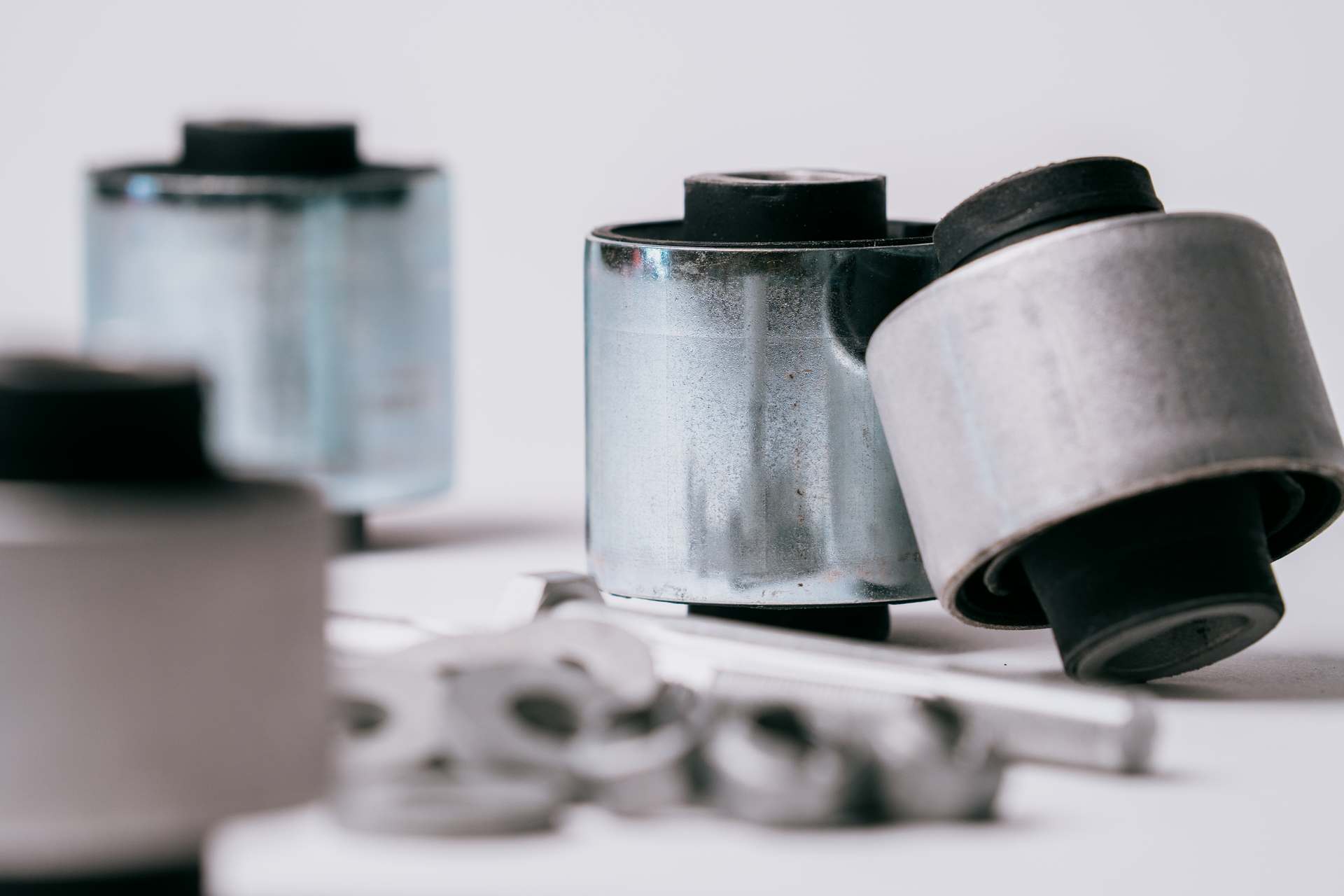
Control arm bushings are similar to a point, but help control suspension motion while minimizing bumps and sharp hits to the chassis. At their simplest, they’re vulcanized rubber placed between the arm and an inner metal sleeve through which the arm is attached to the chassis or subframe. They get slightly more advanced in the form of fluid-filled rubber, but forgo complexity for pure mechanical simplicity when engineers need precision over comfort. The latter situation happens more than you think, and many road-going car enthusiasts know, and love, are stripped of their rubber suspension bushings for sealed rod-end bearings—also called monoballs, rose joints, and heim joints.
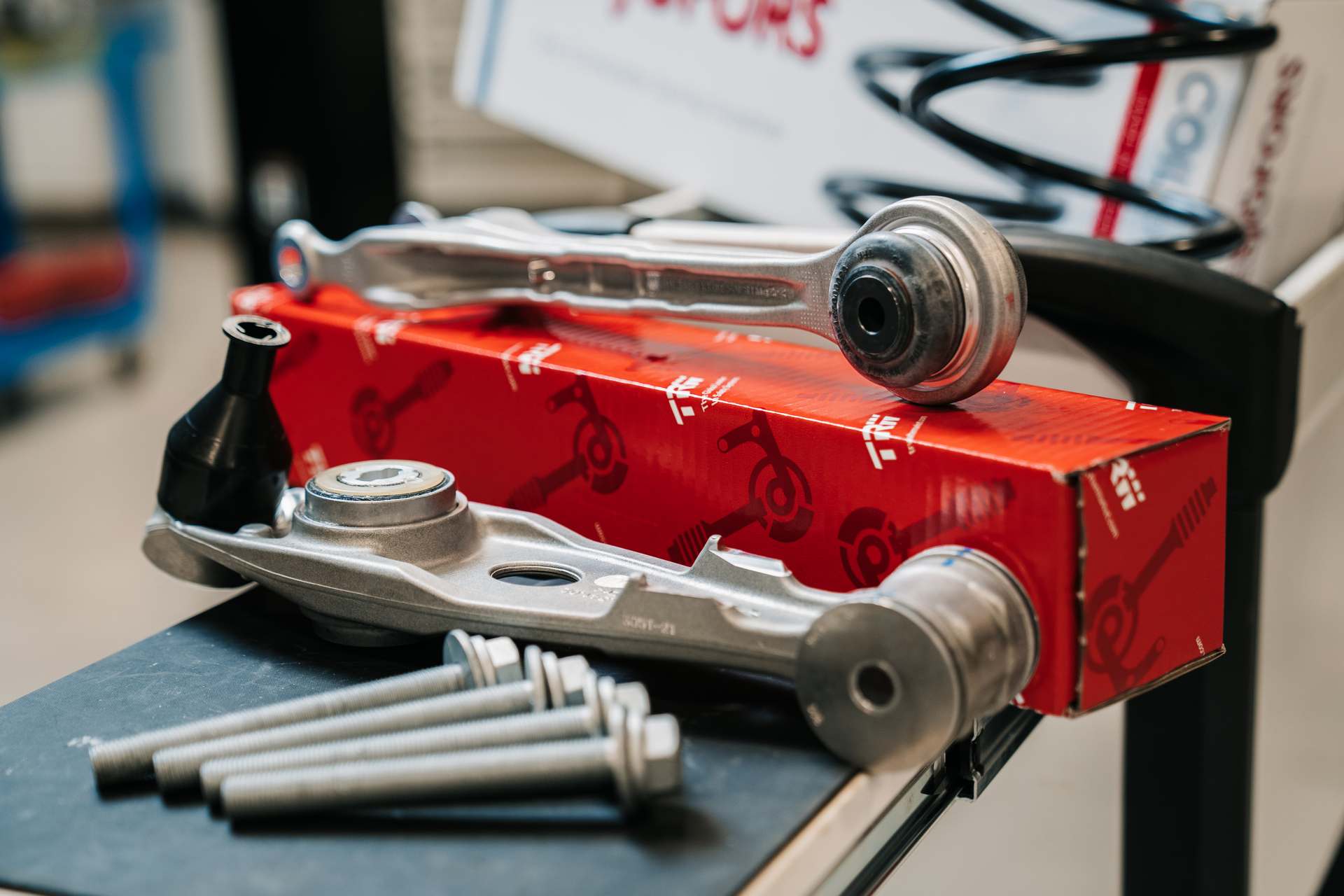
Regardless of which variant an automaker chose during development, bushings are most certainly in your vehicle. They’re crucial to so many areas of the vehicle, yet have been overlooked by plenty of owners. Replacing them when worn is one of the best repairs you can make to your vehicle, but before you do so, it may help to know what kind you’re putting in your car.
OE Bushing Types - What You'll Find In Your Car
Rubber Bushings
Rubber bushings are as basic as it gets for modern and vintage motoring. They’re analog, using nothing more than steel and rubber to make your car more comfortable, and are largely reminiscent of the first suspension bushings, but with modern rubber compounds. Despite their relatively vintage beginnings, they remain perfectly effective in many modern vehicles, thanks to their best characteristics. Being so simple, they’re inexpensive and quick to manufacture, not to mention, they’ve been updated over the years with improved bushing quality, making them as durable as ever. That said, they remain the least effective OE-type bushing at removing NVH, relatively speaking.
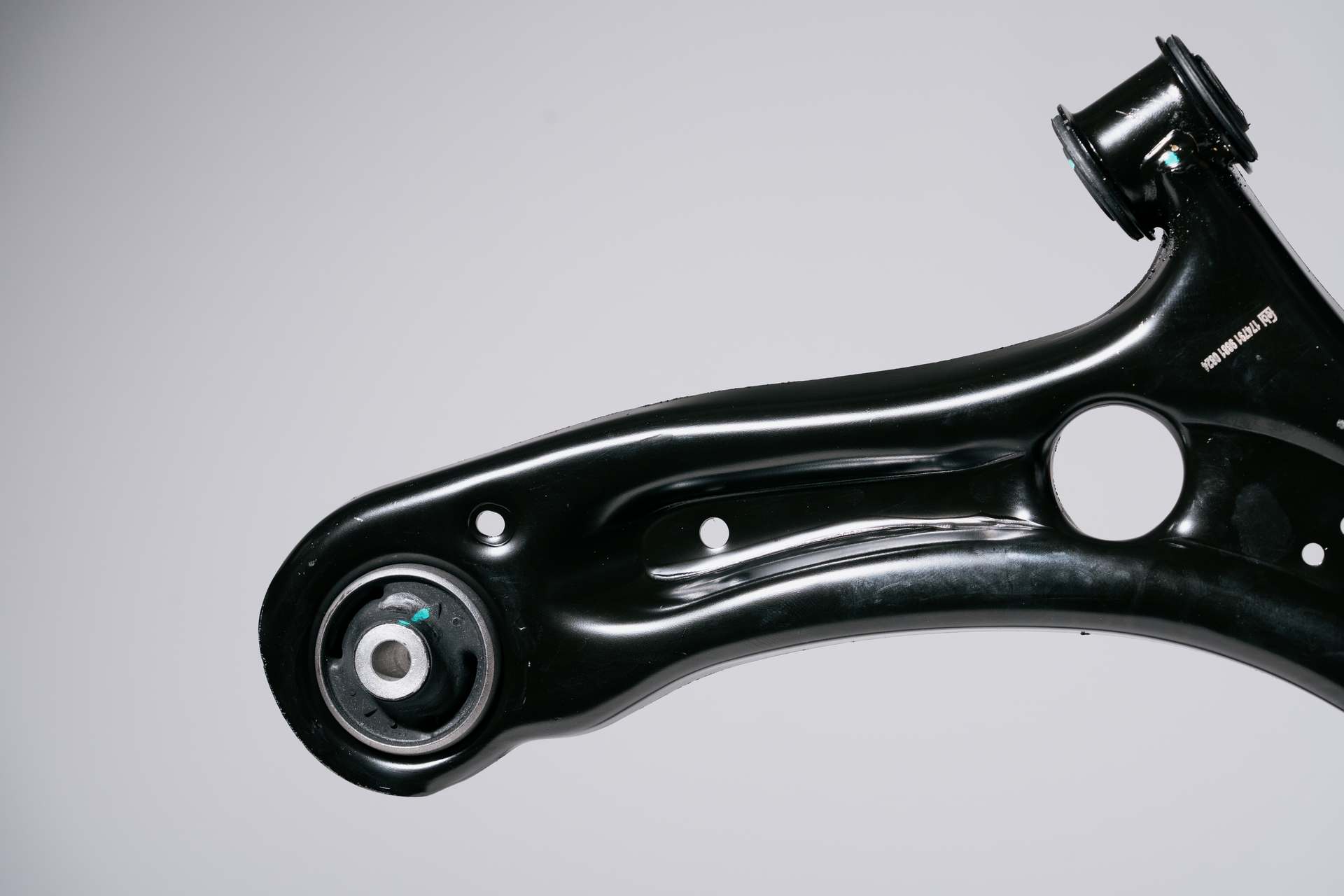
Controlled flex is key with any bushing. Engineers have determined the best way to get that is by leaving gaps in the bushing material. It’s effective enough to be used across the industry, and bushings of this type are often found at subframe mounting points, in control arms, and in drivetrain mounts. The only potential downside to the manufactured gaps is that they give way to tears and cracks. It’s generally not a quick failure, and small tears are nothing to worry about, but you’ll be able to see the wear grow gradually over thousands of miles. The real catalyst for replacement should be when they start making noise. That signals the remaining bushing material is no longer isolating one component from another.
That sound of failure rings true for the smaller rubber bushings within the suspension. Usually solid because of their small size, sway bar mount bushings, end link bushings, strut tops, and smaller suspension arm bushings can all create noise once worn beyond usability. Don’t be fooled by their size, either, as their condition is just as important to your vehicle as the larger ones.
Fluid-Filled (Hydraulic) Bushings
Fluid-filled bushings are the next step in bushing evolution. They’re analog, like their predecessor, but they ditch the manufactured gaps for fluid-filled sections encased in rubber. While the rubber still acts as the casing and a minor torsion spring, the fluid-filled sections absorb vibrations far better. From the outside, they look very similar to a traditional suspension bushing insert, but their more complex construction allows for better vibration dampening and more precise handling in one package. For that reason, they’ve become the standard for engine mounts in modern European vehicles.
Fluid-filled bushing inserts work so well because the fluid within acts as a hydraulic damper, similar to the struts/shocks in the suspension. As the bushing is compressed, fluid is moved between chambers within the fluid-filled sections, dampening unwanted vibrations and controlling excessive movement. Testing has shown that the fluid-filled bushing insert eliminates a wider range of NVH than a solid-rubber bushing while being stiffer, making it far better at delivering the sporty luxury feel of many modern European cars.
Spherical Bearings - Monoballs
There comes a point where the need for handling performance outweighs comfort. Hydraulic bushings are great up to that point, but beyond it, NVH concerns all but disappear as rubber is eliminated from the suspension. The extent of rubber removal depends on the car, but its replacement is always the same: a spherical bearing. Also called monoballs or pillowballs, depending on your enthusiast allegiance, they replace the flexible bushing with a solid one, at least as far as flex is concerned. The key is that it allows totally uninhibited arm articulation with direct connection to the chassis, no isolation from a bushing.
The stability, feel, and response gained with spherical bearings are critical for motorsports and driving on track, so you’re most likely to see them on road cars designed for that kind of use in some way—your M3s and GT3s. The monoball bushings they wear are sealed by protective rubber covers that protect them from the elements. The bushings need to be clean to have uninhibited movement, and road grime makes that intensely difficult, so they’re protected, unlike those used on non-street-legal race cars.
The cost of the much-improved performance is a noticeable increase in the vibrations and harshness felt through the chassis. However, it’s not always a ride-killing amount, as thousands of people can attest to driving M3s daily in all sorts of conditions. Your personal vibration and comfort limit is bespoke, so it's best to feel them in use before buying something with them.
Worn Suspension Bushings: What To Look For
If there’s anything to be said about car parts that contain rubber, it's that they’ll eventually wear out. The same rings true for your suspension arms and links, which rely on rubber bushing inserts. However, it’s not always the rubber that fails, and ultimately, it doesn’t necessarily matter why it has altogether. A worn-out bushing is no good, so you need to know when to replace one.
The best place to start checking for worn bushings is behind the wheel on your normal drive. As each bushing type wears, it gains play, and that’s eventually enough for it to make noise and affect handling. You may hear a clunk or knock when riding over bumps, dips, and cracks in the road, while steering, or while braking. Each of those strains the bushing in a way it’s supposed to absorb, but the fatigue allows the metallic parts that the bushings are isolating to come into contact. You may also feel the wear directly through the chassis as you motor along. Worn bushings won’t react as quickly or directly, leading to a mushy, vague response to direction changes.
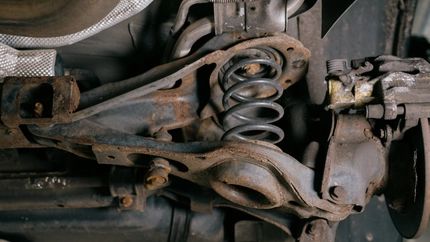
Despite those symptoms pointing toward a bushing issue, you can't confirm that until you look at them under the car. They won’t always look worn, so any noticeable damage is worth investigating. Tears and cracks in the rubber are natural to a point, but will eventually be the source of failure from pure fatigue, and if left long enough, they can tear completely. The best way to find out how worn they are is by using a pry bar to flex them. If you can compress them with ease or make the isolated metal parts of the mount touch, it’s time for a replacement
Fluid-filled bushings aren’t immune to rubber fatigue either, as the rubber casing around the fluid is a similar compound to other engine mounts. That means the constant heat cycling and flex will eventually lead to its failure. In nearly every case, a failed fluid-filled bushing insert will leak its fluid, so a wet mount always deserves investigation.
New Bushings Are The Most Underrated Suspension Upgrade
Replacing a control arm, toe link, or drop link isn’t often a major job, and the results it brings are worth more than the parts cost. We don’t necessarily feel our suspension and steering get softer, but if you've had your car for long enough, that’s almost certainly what’s happened. You need no more proof than the odd click and clunk, so add your vehicle to your FCP Euro account via the “select your vehicle” tool and take a peek at just how many replaceable bushings your vehicle has. While you don’t have to replace all of them together, doing so methodically over the course of a year or two, if all bushings need replacement, will revitalize your suspension, restoring performance and comfort.
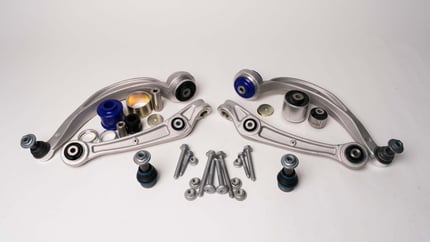
We offer all sorts of options for how you want to handle your bushing replacement, from individual bushing inserts to complete control arm kits featuring every piece needed for a complete refresh. Somewhere between those two is the solution for your suspension’s needs. The simplest way of caring for your vehicle is to replace individual arms, links, and bushing inserts if that’s all you need. But the other bushings around it are likely to be on their way out as well, and replacing the lot in one shot can save you time and money in the long run. That’s where our control arm kits and bushing kits make the process much easier, gathering all of the parts you’ll need to refresh your suspension bushings the right way under one product link.
However, the necessity to remove control arms for any reason is also a great time to consider upgrading to aftermarket bushings.
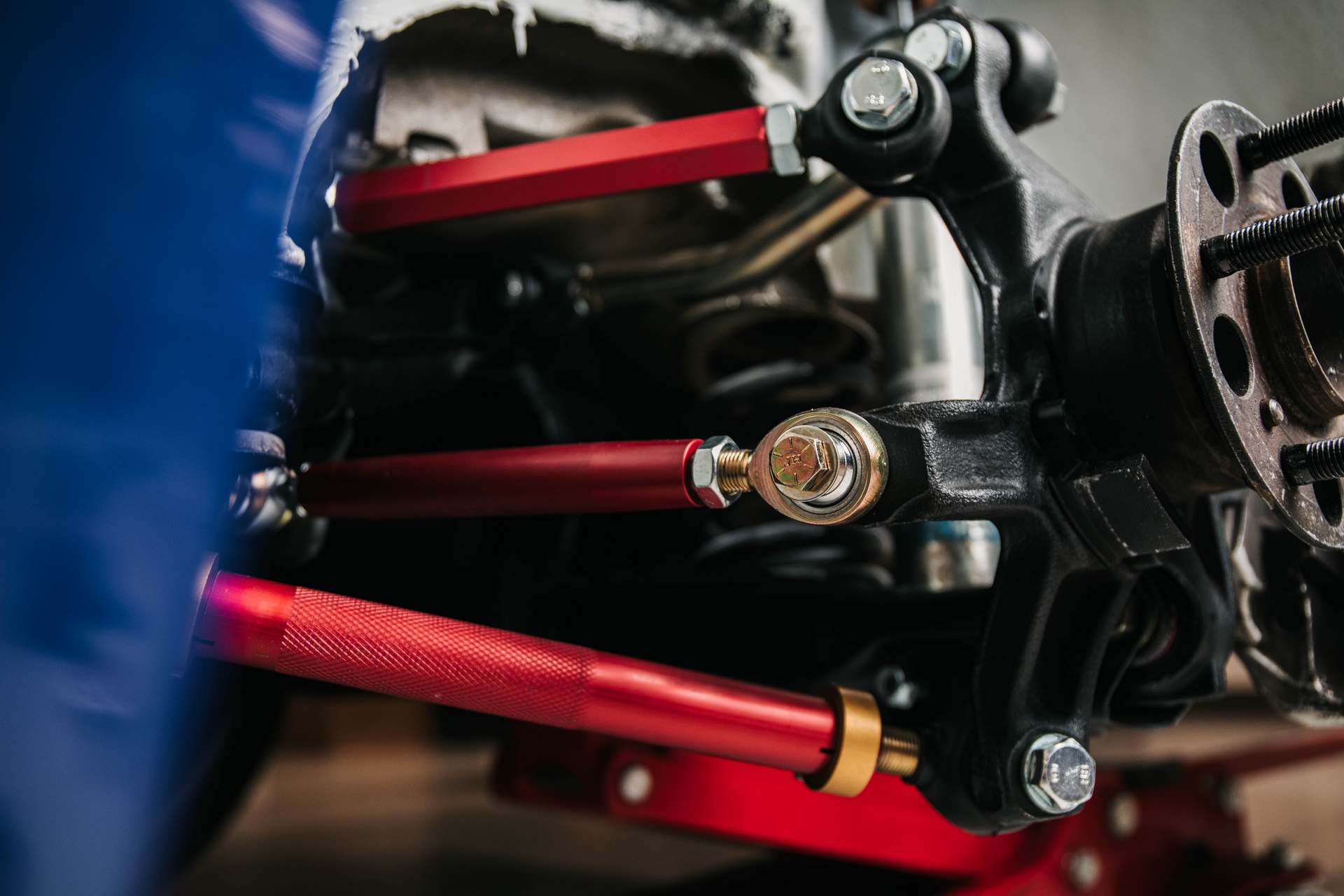
The aftermarket is filled with all sorts of companies, from small upstarts to long-established tuners to OE suppliers with ideas for improving their own products. They offer all sorts of components that will change how your suspension feels, and much of that comes down to the bushings they provide.
The most common aftermarket suspension bushings ditch rubber for plastic, usually polyurethane or Delrin. Both are synthetic polymers that are relatively inexpensive to acquire, often priced near an OE bushing replacement. They’re generally made without voids and at a stiffer durometer than the original rubber, which increases the amount of vibration and shock felt through the chassis, but drastically improves feel and feedback. Some may even feature an offset sleeve for improved suspension geometry.
Manufacturers typically offer two bushing durometers for street and race applications, visually differentiated by the bushing’s color. The former is plenty stiff enough to change the vehicle’s characteristics, so only opt for the race stiffness if you’re seeing regular track use. Other factors to consider are the noises they may make; poly bushings are notoriously squeaky and may need regular greasing. You can find poly-type bushings that claim to be self-lubricating, but experiences can vary widely depending on who you ask.
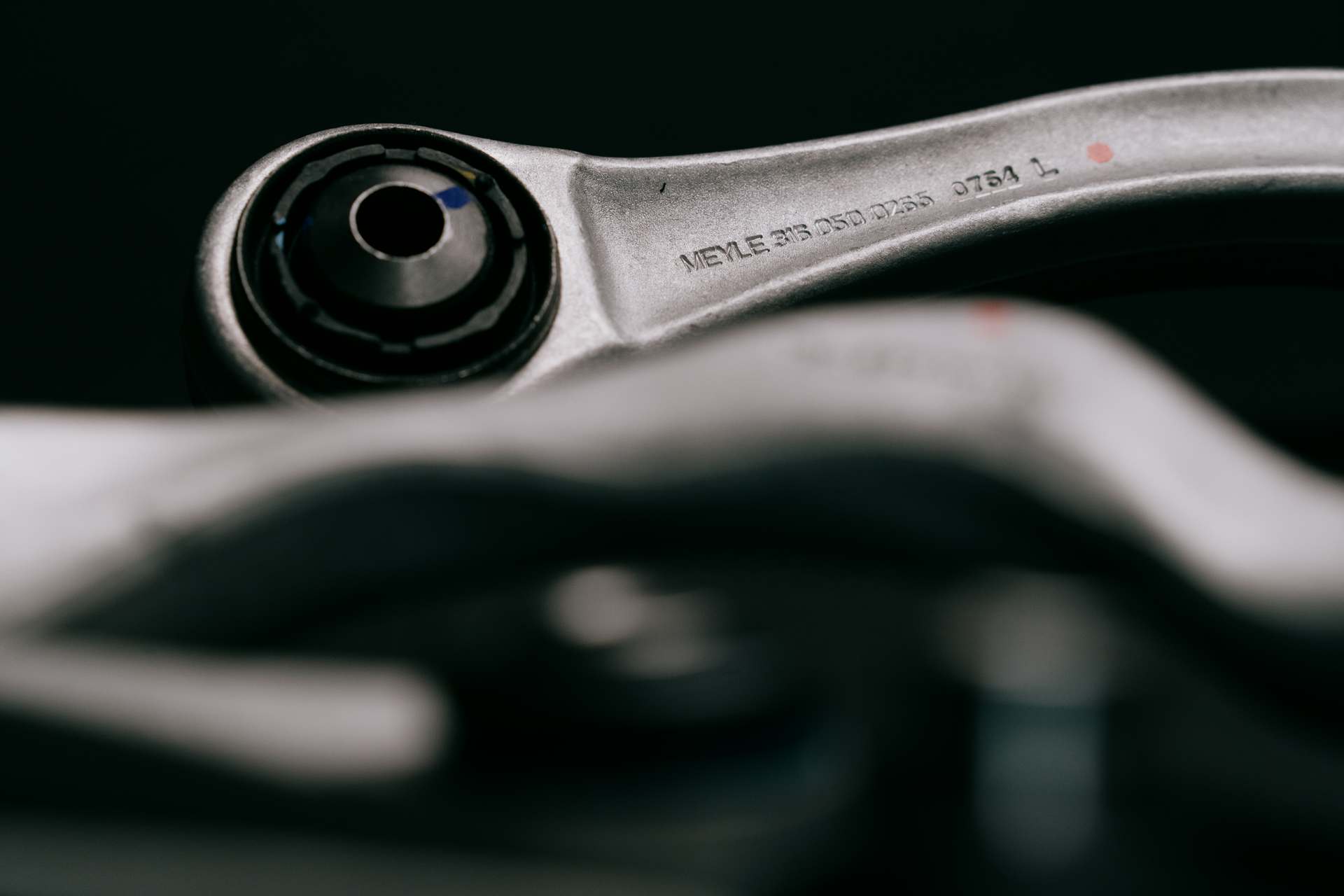
If you’re lucky, you’ll have OE+ upgrades available to you. Original parts suppliers manufacture them, and they may even be OE equipment for a higher-trim vehicle. The best example of this comes from the E9X-generation 3-Series BMWs, whose M3 control arms are a bolt-in replacement for the non-M arms, offering better geometry and monoball bushings for maximum performance. Other cars may have support from Meyle’s HD line, offering more robust versions of their OE-style products. They feature a larger ball joint, solid rubber bushing, or both, to improve durability and suspension feel.
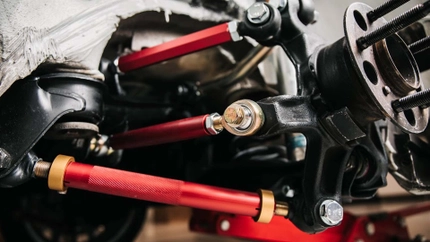
Unfortunately, sticking with an OE+ type upgrade doesn’t always give you what you need. Suspension bushings are almost always part of a control arm assembly, and it’s often easier to replace the entire arm assembly than to remove and replace bushings in the existing arm. Doing so would give you the chance to install aftermarket adjustable arms with the alignment adjustment you need. The bushings they use are either poly/Delrin or spherical bearings, and the arms will need to be adjusted by a professional following the installation, so be sure that’s not a detriment to your needs.
Always Torque Your Rubber Bushings At Ride Height!
Whether you have fresh bushings in hand or you’re going to check out what fits your vehicle right after reading, this is the one thing you need to know about replacing your suspension bushings:
All rubber suspension bushings must be torqued to their final specification while the suspension is at its normal ride height.
The bushing’s orientation is carefully chosen to allow it to deflect in a specific way under specific conditions, and for that to happen, it needs to be in its relaxed position at normal ride height. Tightening the bushing’s bolt prevents the center of the bushing from rotating, allowing the arm to rotate around it. That needs to occur when the suspension is neutral, which is normal ride height. Failing to do so will strain the bushing at its most common position and over-torque it at compression. You’ll get a few thousand miles of decent bushing quality if that’s the case, but they’ll soon need another replacement.