
BMW E46 M3 Parts
- BMW E46 M3 Fluids
- BMW E46 M3 Engine Maintenance & Issues (S54 Engine)
- VANOS Related Failures
- Exhaust Camshaft Hub Tab Failure
- VANOS Solenoid Coil Pack Failure
- VANOS Sealing Plate
- Connecting Rod Bearings
- VANOS Hub & Camshaft Sprocket Bolts
- Upper Exhaust-Side Timing Chain Guide
- BMW E46 M3 Suspension Maintenance & Issues
- Struts & Shocks
- Cracked Suspension Subframe Mounting Points
- Rear Suspension Bushings
- Rear Shock Mounts
- BMW E46 M3 Performance Mods, Engine & Power Upgrades, & Tuning (S54 Engine)
- Air Intake
- Exhaust
- BMW E46 M3 Brake Upgrades
- Brake Pads
- Brake Rotors
- Brake Cooling
- Big Brake Kits
- BMW E46 M3 Suspension Upgrades
- Struts & Shocks
- Springs
- Coilovers
- Sway Bars
- Trailing Arm & Subframe Bushings
- Rear Shock Mounts
- Camber Arms
- BMW E46 M3 Information, Models, Production & Model Years
- BMW E46 M3 Special Models
- M3 CSL
- M3 GTR
- M3 “30 Years of BMW M”
- M3 Silverstone Edition
- BMW E46 M3 Specifications
The E46 M3 has remained a symbol of BMW’s Motorsport division since it was introduced in late 2000. Featuring a high-revving, naturally aspirated straight-six engine, a six-speed manual transmission, and rear-wheel drive, it proved to be a formidable competitor, outperforming supercars with much higher price tags in tests. For the US market, the E46 was a breakthrough product. Previous M3 models were diluted and less impressive due to concerns that Americans wouldn’t buy such a special version of a normal sedan. After addressing these concerns, BMW delivered the E46 in its true M-spec form. By the end of its production run, nearly 44,000 M3s had been sold in the US, making it one of the most popular models from BMW’s M division, and its appeal continues to endure
The standout feature of the E46 M3 is undoubtedly its engine. Like earlier M3 models, which were designed primarily for racing and featured high-output engines as a foundation for their race cars, the S54B32 in the E46 M3 continued this tradition with distinction. Boasting over 100 horsepower per liter and an 8,000 rpm redline, the S54B32 remains highly regarded in motorsport circles. With a displacement of 3.2 liters, it features one of the highest piston velocities of any production engine and individual throttle bodies for each cylinder, providing a throttle response comparable to an F1 car. While modern BMW M models have shifted to forced induction, the S54B32 represents the pinnacle of BMW’s iconic straight-six engines.
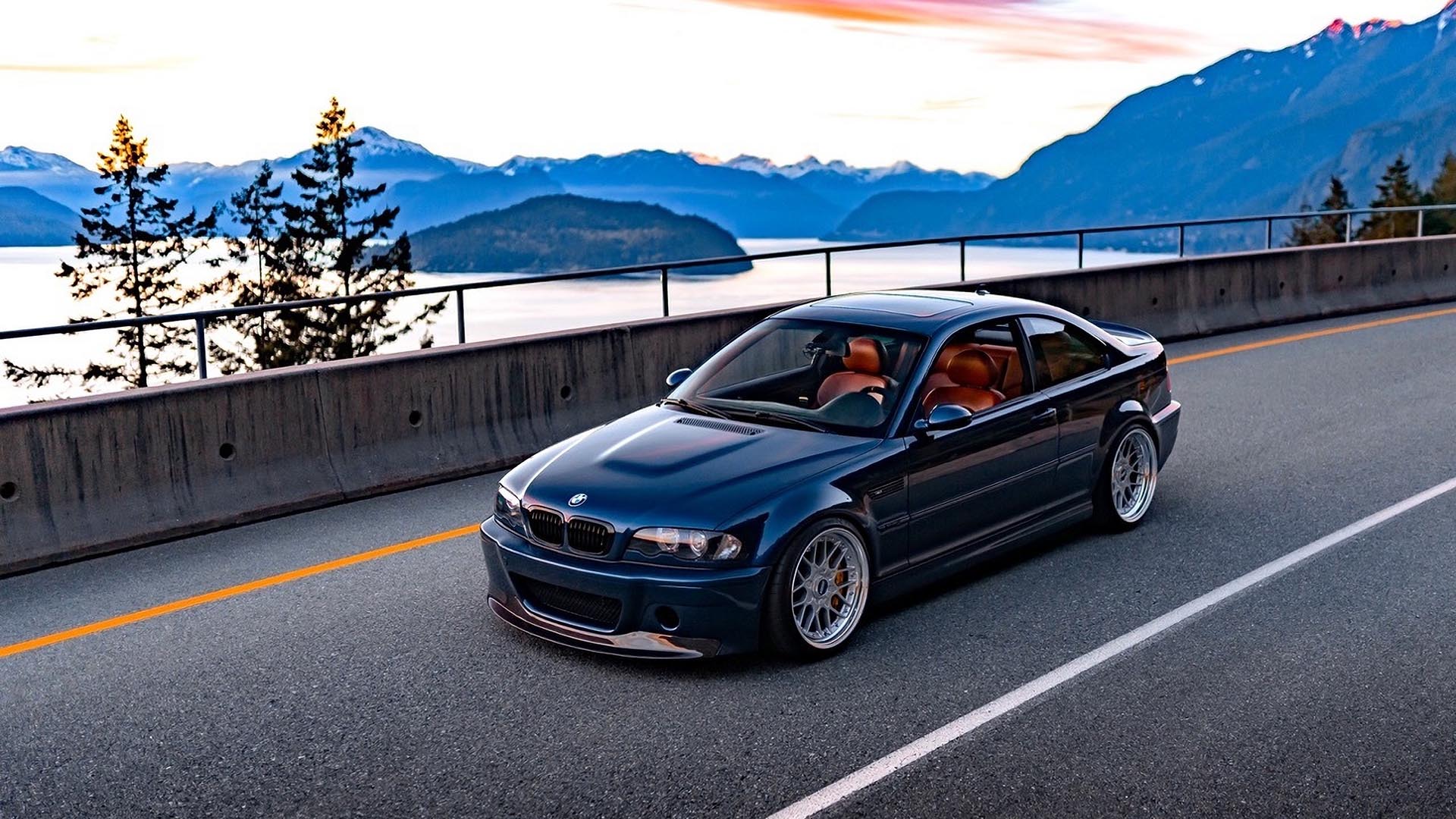
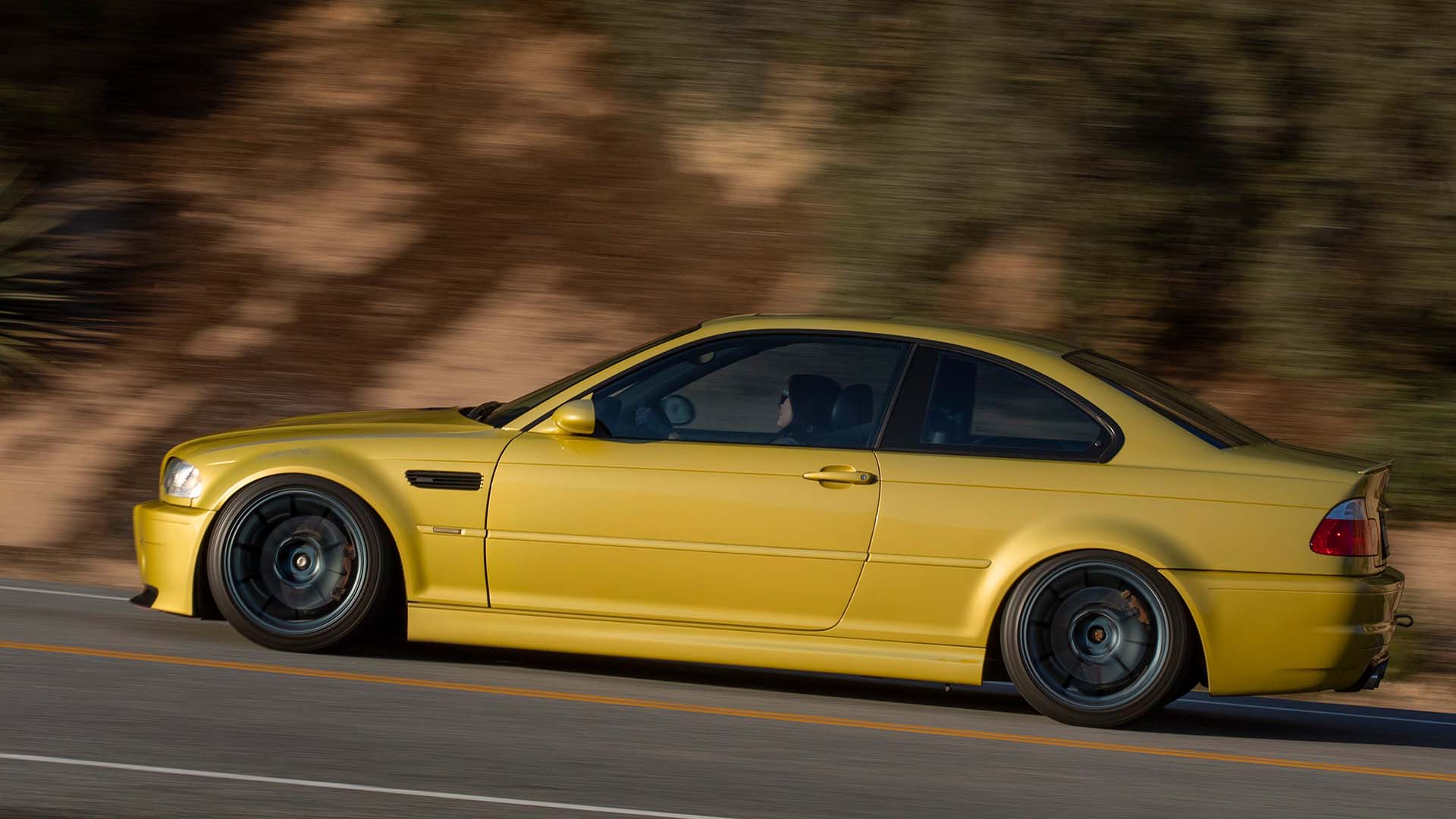
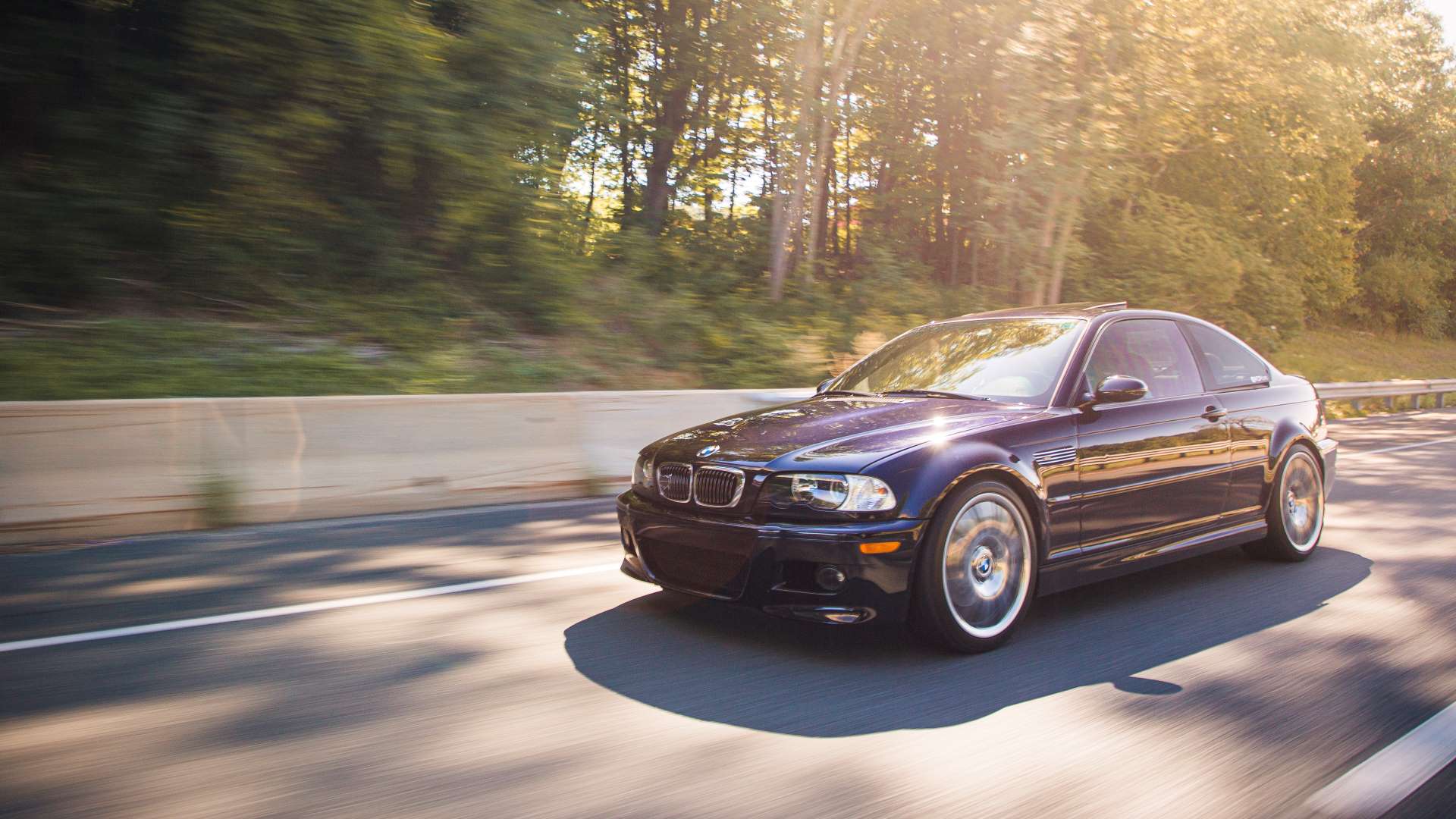
BMW produced the E46 M3 only in Coupe and Convertible body styles; the M3 sedan lovers would have to wait until the E90 for another four-door. The chassis ditches the boxy ‘90s lines for a softer-edged but aggressively stanced appearance. Fat fender flares accentuate the significantly wider chassis, and the sculpted hood features a “power bulge” to make no mistake of what lurks beneath. Of course, all of the signature BMW details are present, though the four headlights have a much more distinctive shape that can only be associated with the E46 platform.
BMW E46 M3 Fluids
Engine E46 M3 (S54) |

SKU:
KIT-11427833769KT2
QTY
$104.96+
| ||||
| Transmission Manual & SMG Getrag 420G |

SKU:
KIT-23117527440KT
$102.36x
| ||||
| Differential |

SKU:
KIT-33117525064KT6
QTY
$133.53+
| ||||
| Brake |

| ||||
| Power Steering |

|
VANOS Related Failures
While very effective at allowing the S54 to create solid low end power but also rev to 8200 RPM, the VANOS system, tasked with adjusting the timing of the camshafts, has several significant failure points that can be costly and difficult to repair. However, when addressed with improved aftermarket parts, the issues can largely be solved and avoided. Check out the VANOS-related engine codes listed below to see if any apply to you. If so, continue reading to learn about what could be causing your problems.
There are three common problems associated with the VANOS system on the S54; failed solenoid coil pack, sticking solenoid valve body, and broken oil pump driver tab. We will cover all three below. First, check out the VANOS-related engine codes listed below to see if any apply to you. If so, continue reading to learn about what could be causing your problems.
P0010 (BMW xx, 0xxx): VANOS intake solenoid circuit
P0011 (BMW 67, 0x43): VANOS intake timing over advanced
P0012 (BMW 72, 0x48): VANOS intake timing over retarded
Pxxxx (BMW 184, 0xB8): VANOS intake position control
P1525 (BMW xx, 0xxx): VANOS intake solenoid open circuit
P0013 (BMW xx, 0xxx): VANOS exhaust solenoid circuit
P0014 (BMW 22, 0x16): VANOS exhaust timing over advanced
P0015 (BMW 21, 015): VANOS exhaust timing over retarded
Pxxxx (BMW 185, 0xB9): VANOS exhaust position control
P1531 (BMW xx, 0xxx): VANOS exhaust solenoid open circuit
Exhaust Camshaft Hub Tab Failure
The VANOS system operates its variable cam timing by using a high-pressure oil feed produced by the VANOS pump. That pump is driven by a hub bolted to the exhaust camshaft. On the hub, there are two tabs that fit into the back of the VANOS pump, specifically into the “oil pump disc.” Through an oversight by BMW to make VANOS installation easier, the openings in the back of the disc that the hub tabs fit into were 1mm oversized. As the hub’s tabs interacted with the disc, they would bang around inside it until they cracked and snapped off the hub.
If both tabs break, this eliminates the VANOS pump’s drive and renders the VANOS system useless. When that happens, you’ll get a significantly reduced power level, especially in the lower rev range, rough idle, fuel economy loss, and several warning codes causing the “Check Engine” light to light up brighter than the sun. In a best-case scenario, that is how it fails. When the tabs break, they typically get lodged into the oil pump disc, as the tabs rarely fail together. That leaves a relatively large chunk of steel rotating at engine speed without much holding it in. In that situation, you can only hope the tab stays in the disc until you can pull it out rather than get flung around the timing assembly and potentially wipe out the chain or sprockets.
Arguably, the worst part of this potential issue is that you won’t know it’s happening until too late. There is no symptom for one broken tab; as long as the pump produces the correct amount of pressure, the car is none the wiser. Take caution if there isn’t any mention or documentation of the hub being replaced or upgraded. The tabs can be examined by removing the valve cover and rotating the engine, this should be included in the value adjustment process. A little work in the short term will save a lot of heartbreak in the long term.
VANOS Solenoid Coil Pack Failure
One of the most common points of failure of the S54’s VANOS system occurs with the attached electronics. The DME controls the various pistons and solenoids inside the VANOS housing. On the outside of the housing are the solenoid coil packs connected to the DME. The soldering on the circuit boards within the coil packs cracks from the engine vibration and heat cycling, breaking the connection from the DME to the solenoids.
A loss of connection will leave the solenoids dead with no guidance or control. When that happens, the engine will look at the cam adjusters in their position at the time of failure. From that, you’d experience poor running and a lack of power at either end of the rev range, but never both. Where that loss in performance occurs is up to the position of the VANOS at failure. You’ll likely get hit with several engine warning codes and poor performance.
Multiple companies offer rebuilds and refurbished coil packs at reasonable prices compared to new parts. Buying new coil packs will cost you over $900 from BMW, as they only sell them with a new solenoid block. Although the solenoid can go bad, it’s much less common than the electric components attached to it.

VANOS Sealing Plate
The sealing plate between the VANOS unit and the solenoid block was equipped with a rubber material called Buna. Made from nitrile, the material has an operational limit of 212°F, which is well below the temperatures in every internal combustion engine. The seals eventually shrink and flatten through exposure to the heat, allowing oil to pass right on by.
Replacement is inexpensive and certainly a DIY job, but one that should be performed as soon as possible. Any foreign contaminants that gum up the solenoids will cause much larger and more expensive issues later.

Connecting Rod Bearings
As early E46 M3 owners began to put serious miles on their cars, an unnerving trend began to emerge. At random mileage intervals, the bearings separating the connecting rods from the crankshaft began to fail, causing knocking from the bottom end. In a technical service bulletin, BMW stated that the issue was limited to certain models between 2001 and 2003. However, late M3s and the Z4Ms were also regular victims of the failure.
Whatever the reason for their failure, it happens, though the cars that would’ve had bad bearings from BMW have likely already been changed. It was a big deal around the mid to late ‘00s as most of the M3s were experiencing widespread failures. Damage and repairs varied by case, but none had good outcomes. The best-case scenario meant that the bottom of the engine needed to be exposed to replace the bearings with the engine in the car. In the worst case, the bearing material clogs oil passages in the engine and destroys camshaft bearings, effectively ruining the engine.
Luckily, it doesn’t have to be that way. Rod bearing replacements are a very involved job, but we’re here to help you through it. Along with our DIY guiding you through all of the replacement steps, we have the parts you’ll need. Depending on what you’d like to do, we have rod-bearing replacement kits featuring Genuine bearings and ACL bearings designed with oversized clearance. They were assembled during our DIY process, so you can be sure they contain the basics to seamlessly remove and replace those bearings without having to make another purchase.

VANOS Hub & Camshaft Sprocket Bolts
The bolts that BMW used to secure the camshaft sprocket to the camshafts have proven to not be up to the task given to them. Many owners have had their bolts back out and shear off into the engine to likely cause extensive damage. Upgraded bolts made with the correct grade steel are inexpensive to acquire and provide the necessary fix. However, the entire VANOS unit and valve cover assembly need removal just to access the bolts. It is a time-consuming fix, although DIY’able at home with enough time and patience.
Upper Exhaust-Side Timing Chain Guide
The S54’s timing chain system is nearly faultless, with the exhaust side’s upper guide being the only weak point. Guide duties are split between two guides—upper and lower—overlapping in a very small area. Due to the cylinder arrangement and firing order, the timing chain doesn’t rotate evenly, bunching slightly on the exhaust side. The extra chain movement puts pressure on the overlapping portion of the guides, with enough pressure to wear right through the upper guide quickly. When left long enough, the guide will break and introduce slack into the chain, possibly causing significant valvetrain and rotating assembly damage.
BMW never addressed the issue with their OE guide and still offers the same part known for wearing in as little as 30,000 miles.

Struts & Shocks
The dampers are the primary source of bump absorption in the suspension. While not necessarily a problem for the E46, they tend to wear through their dampers faster than other sports sedans. While that could be viewed as a negative, it gives you an excuse to try a different damper better suited to your driving.
If you're interested in upgrading the struts and shocks rather than just replacing them, scroll down to our upgrades section to learn more about your options.
Cracked Suspension Subframe Mounting Points
If you own or are going to own an E46 M3, especially one that has or will see time at the track, then you need to keep a close eye on the suspension mounting points. The rear trailing arm, subframe, and strut mounting points at the rear of the M3 chassis were all under-reinforced from the factory for aggressive use. Although that is the point of owning an M3, BMW didn’t prepare for the forces that extra-stiff suspension and wide slick tires would put on the chassis.
The most prevalent issue is cracking around the rear subframe. The forces exerted on the subframe are transferred through its bushings and into the chassis floor. Over time, those forces are enough to crack the trunk floor and pull it away from the rest of the chassis in quite a spectacular fashion if left for too long. If you’re lucky, you’ll be able to see the signs of cracking before they even start. Take a peek around the mounting points and look at the spot welds. The undercoating sprayed onto them will chip off and cause some surface rust if the road forces have begun to stress the welds.
Cracks around the trailing arm bushing mounts are more common on heavily tracked cars. There, too, the forces exerted on the chassis are too much for the original sheet metal to handle, and cracks form quickly. Left long enough, the mount will tear off the chassis and jam into the ground, likely pole-vaulting the chassis. As an owner or potential buyer, you’ll also want to pay close attention to the front and rear strut towers. There have been more than a few instances of towers cracking before failing.
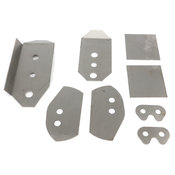
Reinforcing panels are available from several aftermarket companies for a relatively low cost. Those panels don’t fix cracked metal, though. You’ll have to repair what is already cracked before reinforcing it. The subframe reinforcement is easily the most extensive job, as nearly the entire rear suspension has to come out of the car to access the mounting points. Fixing the trailing arm mounting points, generally referred to as “RTAB pockets,” is nearly as involved and best done alongside the trunk floor reinforcement. Shock tower reinforcements are much simpler to install as they are bolted into place.
Rear Suspension Bushings
While you have the entire rear suspension out of the car for chassis repairs, you may as well tackle the bushings. Like the chassis itself, the bushings are known for wearing fairly rapidly. As they wear, the rear end will develop clunks and knocks during acceleration and a vague, floaty feeling through the corners. In extreme cases, the lack of bushing will accelerate the chassis cracking as all suspension forces are sent directly into the mounting points.
You can replace many of the bushings with the rear suspension, which is still partially attached. However, removing the rear subframe with all of the arms will make the bushing replacement much easier. The chief culprits of the worn bushings are those on the subframe, rear trailing arm forward mount, and the diff mounts, though the latter isn’t necessarily part of the suspension. The monoball joints of the upper and lower arms don’t wear as quickly but are replaced relatively easily “while you’re in there.”
There are several options when it comes to replacing the rear suspension bushings. Genuine and OE rubber units are the exact replacement for what’s coming out and make a great choice for anyone keeping things simple and original. Race track use would benefit from a more durable bushing, so polyurethane and solid aluminum pieces can also be used, depending on the location. Those, while significantly increasing NVH, will take any vagueness out of the rear end, giving you much more stability through those high-G corners.
Rear Shock Mounts
The upper mounts that secure the struts to the strut towers are fairly common failure points on the E46 M3 and other BMWs of that vintage, like the Z3M and Z4M. With so much stiffening done to the suspension, the rear shock mounts were designed softer to introduce comfort into the car. While that worked, the rubber in the mounts was too weak and regularly wrecked after 40-60,000 miles.
The most common fix is to replace the factory mount with a slightly beefier unit that uses stiffer rubber or Delrin bushings, along with the shock tower reinforcement plates. Meyle offers a set of mounts on their HD line that will provide better longevity and firmness without sacrificing comfort. Other available mounts use Delrin to ensure the strut is held in place without much give. The reinforcement plates are bolted to the top of the strut tower over the mount, so no extra modification is necessary for chassis reinforcement.

Air Intake
Airflow is critical to engine performance, and that can be improved. Colder air is denser air and contains more oxygen than warmer air. The colder the air, the more power an engine will make. The simplest and least expensive aftermarket intakes leave the stock airbox but improve how efficiently air is pulled into the box and how cold that air is. The nicest of those pieces has to come from Eventuri with their pre-preg carbon-fiber and CNC-machined aluminum components. Other manufacturers like aFe and Dinan all offer the same kind of intake without the fancy materials at a more approachable price point. While you can expect can expect a small horsepower gain the biggest advantage is often the sound that will resonate from under your hood when you step on the throttle!
The other kind of intake is one that replicates or is based on the M3 CSL’s intake. The CSL intake deletes the stock airbox, air filter housing assembly, and MAF sensor for a large carbon fiber box with a massive bell-mouthed intake snorkel. Deleting the stock air filter housing and MAF components opens up a huge amount of airflow for the S54, letting it breathe easier. It also adds much more intake noise that many put the audio gain on par with the performance enhancements. However, none of them are remotely wallet-friendly.
Every single aftermarket CSL airbox, including the factory one, is made from carbon fiber. The boxes sit right around the $2000 mark, depending on the manufacturer, which doesn’t include the other work required for their use. Because the MAF sensor is deleted, the DME needs to be recalibrated with a MAP sensor installed. Figure a couple hundred bucks for the MAP sensor components and up to $1000 for a custom tune on top of the airbox itself. Because of the new tune required to run it, you can’t really compare the power gains as the DME parameters are completely different but expect a larger jump than the non-CSL style.


Exhaust
The exhaust system is made up of a few components, but this section is going to focus strictly on a cat-back system. Like with the intakes, airflow is the key to power, so the quicker it can escape, the quicker more air can be pulled in. Advertised power gains and the increased sound from the fifteen or so different companies that make aftermarket exhausts for S54-powered cars will vary by exhaust system as they can be pretty different. A full titanium 3” system will not sound the same as a stainless steel 2.5” one.
The best thing you can do while picking out an exhaust is to find someone local with the parts you’re choosing between. YouTube exhaust clips can give you an idea of the tone, but they’ll never be identical to what they truly sound like. If you can’t do that, search the forums for a few different options that owners seem to agree positively upon. While power will increase with an aftermarket exhaust, they work best when paired with other modifications for more power. Improved sound quality will be the largest benefit without other modifications.
Brake Pads
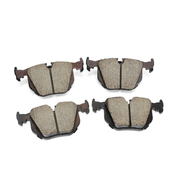
The brake pad compound is critically important to the type of driving you intend to do. Because of its sporting nature, you should only consider a ceramic or semi-metallic pad compound for your M3. Both options provide great resistance to heat and offer the stopping performance necessary for the chassis. An OE or OEM compound is plenty for street driving. BMW knew what they were offering with the M3 and gave it the brakes necessary. Once you start getting into timed events like autocross or open-lapping days, look elsewhere.
All of the major players involved with brake pads, like Pagid, EBC, Ferodo, Hawk, and others, produce more aggressive pads for the E46. Most, if not all, will be a high-concentration metallic compound. These pads, while offering a significant increase in initial bite, stopping power, and fade resistance, do have some downsides. The more aggressive the pad, generally, the more dust it will produce. For those deeply invested in the cleanliness of the exterior, the increase in dust could be a deciding factor. Other effects from the tougher pads are squealing and squeaking when cold or at slower speeds and a rapid increase in the rotor’s wear.
Brake Rotors
The standard E46 M3 rotors are single-piece steel units without any slotting or dimples. Spirited road driving won’t require a different set of rotors, as you shouldn’t really be getting the discs heated beyond their capabilities on the street. Arguably, the easiest way to improve your rotors is by using the ZCP or CSL rotor. Its slightly larger size and floating design help to shave weight and improve the heat dissipation efficiency. They won’t require a pad or caliper change either, only the caliper bracket needs to be updated to match the rotor making them quite cost-effective.
For just about the same money, you could also get a set of aftermarket rotors from someone like StopTech. They won’t be a multipiece design like the CSL rotors, but you can get them in a few different styles, like slotted, dimpled, or both. The one-piece construction is a bit of a step back, but aftermarkets can control and determine the metallurgy they use, and, in many cases, will use steel rotors with a higher carbon content than factory.
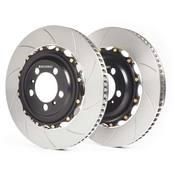
If you’re into more serious motorsports where braking points are in the triple digits and every ounce counts, you’re going to want some multi-piece aftermarket rotors. DBA, Girodisc, StopTech, and Brembo are all noted manufacturers of those kinds of rotors, as their expertise in motorsports makes them highly qualified. Their designs revolve around an aluminum hub or hat that bolts to a replaceable steel rotor ring. Using the aluminum center shaves a considerable amount of unsprung rotational mass and improves the heat tolerance of the rotor itself. All of those positives are balanced by their cost, though. Expect to pay at least 50% more than a set of Genuine BMW CSL rotors for the least expensive aftermarket multi-piece rotor.


Brake Cooling
The most critical part of a high-performing brake system on a race track or autocross is the ability to stay cool. Brakes do need a certain amount of heat in them to reach their maximum effectiveness, but there is such a thing as too much heat, and that can have some very dire consequences. Overheating your brakes can wipe out their stopping power and render them nearly worthless while exposed to that heat— you need to keep them cool.
As mentioned, the E46 M3 is an incredibly popular platform for motorsports junkies, and there is enormous aftermarket support for their brake cooling. Whether you buy from Hard Motorsport, VAC Motorsports, or Condor Speed, the contents of a brake cooling upgrade will all have some specialty cooling plate that replaces the stock rotor backing plate. The cooling plate bolts to the front wheel hubs in place of the original backing plate and features a large, round air channel for attachment with a hose. That hose will run forward to an opening in the bumper and channel air to the cooling plates. Once through the cooling plate, the air is directed onto the brakes for cooling. Each of the manufacturers listed and the few that don’t use the cooling plate. Depending on the company, it may be offered as part of a kit that also includes sime high-temp hose and stainless steel clamps for ducting.
If you grab just the cooling plates from someone, you will need the high-temp hose to route the cooling air to the plate. You’ll also need some an area to grab that cooling air from. The common choice for the M3 bumper is to take the air from the fog light openings after they’re removed. Hard Motorsport sells the duct inlets separately or as part of their kit.
Big Brake Kits
The simple things like pads and rotors are great for a more street-oriented setup, but when it comes to regular track time, you’ll need more reliable stopping power. The logical upgrade path at that point is to fit a set of aftermarket calipers and rotors. You can find kits from StopTech, Brembo, Wilwood, and Alcon, among others. The kits can be had in a range of sizes from the stock 332mm rotors with StopTech 4-piston calipers to all out, endurance-racing-spec 380mm rotors and 6-piston calipers, although all brands offer them in 355mm X 32mm. Regardless of size, the aftermarket pieces will hold up to aggressive and high-temperature conditions far more than any of the OE components. Prices for those kits range from about $2600 to $4000, with the differences in cost coming from the names involved and the parts used. Oh, and those are front brakes only.
You could always DIY a kit if those are too much for your budget. Owners have found success calipers from the Porsche 996, BMW E31 840ci, BMW E87 135i, and some Aston Martins, though there is quite a bit more work involved. Certain options are more popular than others and have detailed guides written up on how to make the change, but it’s the internet, and parts availability and fitment may vary. All of them use the CSL/ZCP rotor, which is an upgrade for the early M3s, but not so much for the later cars. The largest upside to these options is the reduced cost, although they can get very close to the cheaper of the aftermarket kits.

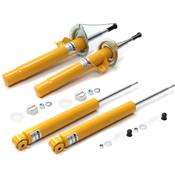
Struts & Shocks
The dampers are the primary source of bump absorption in the suspension. While not necessarily a problem for the E46, they tend to wear through their dampers faster than other sports sedans. While that could be viewed as a negative, it gives you an excuse to try a different damper better suited to your driving.
The OE dampers are produced by Sachs and do a fine job of delivering a sporty ride. If Sachs isn’t what you’re looking for, then you could always try Bilstein’s equivalent to the Sachs damper, the B4 Touring. While made by a different manufacturer, they should deliver near-identical performance to the Sachs units. Moving up from OE and OEM replacements brings the Bilstein B6 Performance damper into play. The Bilstein B6 Performance dampers are valved firmer than the B4 units for a sportier ride and can be paired with a set of aftermarket springs, though they are designed to be paired with the factory pieces.
Koni Sports are your best match for aftermarket springs. Thanks to their adjustability, the Sports are a very popular damper in the European car community and make an optimal choice for the owner looking to dabble in some autocross along with their usual sporty driving.
Springs
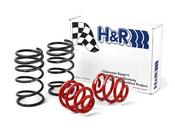
Choosing the proper spring set can be a challenge. Manufacturers don’t often provide all of the specs you’re looking for, and decisions must be made based on what someone wrote on a forum. Not exactly the scientific answer people are looking for, but there is some truth in those answers. The E46 M3 is wildly popular and has always been, so it’s safe to say that owners and enthusiasts are some of the most dedicated bunch out there. As such, their recommendations of either the Eibach Pro-Kit or H&R Sport springs as the goto options should carry some weight.
Both Eibach and H&R are German companies with a history of supporting BMW’s race and street products, among others. Owners have found that the springs perform very similarly in testing, with the H&Rs being the stiffer and lower of the two. Both are regularly paired with Bilstein B6/B8s or Koni sports, and Bilstein even offers a complete strut and spring kit that includes the B8s and Eibach springs. However, if neither of those does your fancy, there are plenty of other options. Dinan Performance, all offer springs for the E46 M3 chassis.

Coilovers
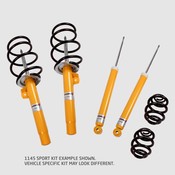
Simple strut and spring upgrades are excellent for street driving with occasional autocross duties but aren’t the best for regular track time. A better option for that car would be a dedicated coil-over damper. Thanks to the E46's popularity, there is no shortage of brands that offer coilovers for the M3. Every option provides a range of height adjustments, both front and rear, and a form of damper adjustment. Whichever you choose is up to you and your budget.
The least expensive option comes from BC Racing. They’re an affordable option for a very budget-minded customer. Stepping into a more reputable brand name brings out KW, Bilstein, and Ohlin's offerings. All these coilovers are made in Europe and offer a wide selection of damping and ride height control, along with great engineering, TUV approvals, and corrosion resistance. Bilstein’s PSS10s are an incredibly popular option and not just for the E46. The Bilsteins are a great blend of on-track performance and firm street compliance, offering the closest things to a true dual-purpose Coilover. The Ohlins Road & Track coilovers are also part of this group; however, they’re around $700 more than the next closest choice and are back-ordered at the time of writing. Don't forget that German-made KW, is found on many factory BMW race cars, including the WTCC E46 320si and the BMW Motorsports M340iR. KW has a wide range of products, from the affordable V1 with only ride height adjustment to top-level V3 and V4, which rival some of the best racing dampers technology on the market.
Stepping into more serious track time territory warrants a set of slightly more dedicated and track-focused coilovers. Ohlins, Bilstein, and KW all offer their own version of these pieces with more aggressive settings than their street-oriented counterparts. Both Coilover systems use lighter-weight parts specially tuned for their application. The Ohlins dampers feature a single adjustment knob on each damper and come with spherical mounts for the front and rear. The Bilsteins forgo the mounts but offer individually adjustable rebound and compression settings to fine-tune the damper to any road surface. Both options will run you about $2000 - $3000, so ensure they’re what is right for you before pulling the trigger.
Sway Bars
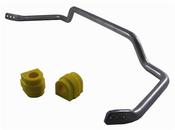
Sway bars are often overlooked even though they play a vital role in how manufacturers design their suspension systems. Like the coilovers, there is no shortage of aftermarket companies that offer sway bars for the E46, although different OE components may just be the best choice.
Whiteline, H&R, and Hotchkis are three of the more prominent aftermarket options, though there are other options. Regardless of who you choose, the front and rear bar sizes will almost always be 30mm and 25mm. Those sizes are what the entire aftermarket has deemed to be the best.
If you’d rather stay away from the aftermarket, look for the OE M3 CSL sway bars. The front bar measures at 30.8mm and the rear at 22.5, so it’s a slightly less oversteer-prone setup. Where coilovers use a closer spring rate front to rear, the aftermarket springs use a balance closer to the factory coils, likely making the CSL bars a better fit in that application.
Trailing Arm & Subframe Bushings
Some of the most important bushings in the suspension are the quickest to wear. Their lack of effectiveness becomes frighteningly apparent as you push the M car harder, and the rear reacts in a loose but darty way. Chances are that the bushings have succumbed to the forces enacted on them and begun to tear. Rather than replace them with the same components, many owners choose a more durable option.
Your two most prevalent options are to go with a polyurethane bushing or a spherical bearing. The latter is also called a monoball and is the same kind of bushing BMW used where the upper and lower control arms meet the trailing arm. Both options will give significantly less deflection than the OE rubber bushing for a better cornering feel and last far longer. However, the trade-off is a slightly sharper ride over rough roads, especially with the monoballs. The mono balls will last nearly forever if cared for, though.
Whiteline, Powerflex, and Revshift offer the poly bushings in a few different durometers for around $70. They’ll last longer than the OE rubber and will provide significantly more feedback. The monoball bushings offered by Syncro Design Works and SPL clock in at around $280 but are far more durable and shouldn’t need replacement.
Beyond the rear trailing arm bushings, you’ll want to consider replacing those used in the subframe. They also eat up the suspension forces along with those from the driveline, so they, too, can get blown out pretty quickly. There aren’t any monoball bushings here as they wouldn’t make sense, so the OE rubber or polyurethane bushings are the choices. Again, Revshift offers several options with durometers slightly firmer than OE and up to full race hardness. Powerflex provides inserts for the OE rubber bushes, but that’s it.
Rear Shock Mounts
Another problem area in the suspension is the shock mount. While they have enough force to crack and mushroom the chassis they’re bolted to, the rubber within the mounts also has a penchant for failing. The rubber used in the bushing is subject to significant forces, especially on pothole-filled roads. Those excess forces are enough to separate the inner metal sleeve from the surrounding rubber bushing.
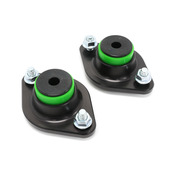
Aftermarket OE-like rubber mounts, polyurethane mounts, and monoball mounts are all widely available upgrades for the E46. The softest of the upgraded pieces comes from Rogue Engineering, which offers a rebuildable mount made with T6061 aluminum and approximately 30% stiffer rubber. These are an excellent choice for an aggressively driven weekend warrior who sees mostly street time. Throw some regular autocross and track days into the mix of street driving, and you might want to consider Revshift’s polyurethane mount. They also use a CNC-machined T6061 aluminum base but with a much stiffer polyurethane bushing. Shock tower reinforcing should definitely be used with these mounts and anything stiffer, as cars can crack them with the OE pieces.
Camber Arms
The rear lower control arms are stamped steel pieces designed to be a weak point in the event of a sharp lateral hit to the suspension. They’re also in charge of the camber in the rear thanks to an eccentric bolt. However, that bolt leaves a lot of adjustability on the table, especially for a vehicle designed to crush apexes. The upgrade here is to remove the factory arms for a pair of adjustable arms.
Eibach, SPL, SPC, and Powerflex are just a few companies that make adjustable arms for the E46 chassis, among others. They all share the same design; a tube arm fitted with threaded ends for camber adjustment negative camber. Nearly all of the arms are made from steel, though the more expensive set of Eibach arms is aluminum. Expect the steel arms to command around $220—the aluminum Eibachs are nearly double that.

BMW’s E46 M3 took over from its boxy predecessor for the 2000 model year. A slightly simplified lineup saw the Coupe and Convertible return but without the sedan counterpart. The new model bore a highly revised chassis covered in significantly rounder styling. Inside, the new M3 ushered in the cell phone era with a distinctive aluminum beltline across the dash, knobless climate controls, and an LCD infotainment screen. In front of the driver was an all-new instrument cluster, too. Featuring titanium-ringed grey gauges, it delivered more precise information and informed the driver of a safe rev range based on the oil temperature. There were also radio controls on the steering wheel and controls for cell phone calls; it was an M3 for the modern age.
Drivetrain options were very simple. Every car received the S54B32 engine and either a six-speed manual or six-speed automated manual called ‘SMG II.’ Exterior options consisted of a set of wheels, Xenon headlights, Park Distance control, and metallic paint. Speaking of, the M3 was offered in a variety of colors, including some legendary shades like Laguna Seca Blue and Phoenix Yellow.
In 2005, BMW introduced the Competition Package, also known as the ZCP, instituting a few small but key changes to the aging model taken from the Europe-only special editions. One would first notice the 19’ wheels taken directly from the CSL, with its larger, two-piece, cross-drilled rotors behind them. Inside the cabin were some unique trim and a smattering of Alcantara-covered surfaces, including the steering wheel connected to a quicker steering rack. Two other exclusives for the Comp pack were the Interlagos Blue Paint and the M Track Mode setting of the Dynamic Stability Control.
The Competition pack was available only on the coupe models, so convertible buyers were left with the same components as the earlier cars. The M3 would continue until the end of the 2006 model year before becoming discontinued.
-
M3 CSL
The standard E46 M3 is already lauded for its balance, handling, and motorsport-derived drivetrain, but it isn’t the gold standard among the chassis. That distinction falls to the M3 CSL, which is the only BMW to wear the CSL badge and the first one to do so in nearly thirty years. CSL stands for Coupe Sport Lightweight, and the original 3.0CSL was just that. Its more powerful engine and strict diet made the E9 fit for homologation. At the same time, the wild aero and graphics ensured it would be remembered for generations to come as it was affectionately called the Batmobile. The E46 M3 CSL had some large shoes to fill, but M ensured it didn’t disappoint.
The CSL was a big change from the M3 as nearly every facet of the car was massaged or modified somehow. Previously, steel components, the roof and trunk lid, were replaced by carbon fiber and plastic pieces, respectively. Between those two was a rear window made from special thin glass. The plastic trunk lid was also a new shape, featuring a molded-in ducktail-like spoiler. The lift-reducing rear bodywork was rounded out by a small carbon fiber diffuser molded into the CSL-specific bumper. At the front, the aluminum hood remained unchanged, but a new front bumper was added. The new piece ditched the fog light and brake ducting holes for a single round hole on the driver’s side of the bumper face. Made from carbon-fiber-reinforced plastic, the bumper also had larger splitter-like pieces on its corners.
All of those new exterior bits could be painted in either Silver Grey Metallic or Black Sapphire Metallic over a black interior. The standard leather M3 interior bits made way for carbon door panel inserts, non-adjustable fiberglass bucket seats covered in “Reflex” cloth and Amaretta synthetic suede, and a similarly covered steering wheel. As if that wasn’t enough, BMW cut out the air conditioning and radio; they could be had but were optional. In total, BMW shaved 243 lbs from their standard car, putting the curb weight at about 3050 lbs.
That would be plenty for the 343 European-spec horsepower to throw around, but it didn’t make that. Instead, BMW took the standard S54B32 and turned it up a bit. New, larger camshafts, revised cam timing, modified exhaust valves, a thinner and freer-flowing exhaust system, and an all-new intake that used a MAP sensor all worked to produce 360 horsepower from the 3.2-liter straight six. BMW designated the new engine the S54B32HP, and the CSL remains the only car ever fitted with it.
Along with the bespoke engine, and much to the chagrin of many prospective owners, every CSL was fitted with the SMG gearbox. It was technically faster than the standard manual, and the CSL was an exercise in outright performance, so it’s easy to understand why BMW did that—but it doesn’t mean we have to like it. Really though, that’s the only blight in the car.
Further modifications were made to the suspension and chassis to improve the already stellar handling characteristics. Helping shave rotating mass was the new two-piece, cross-drilled brake rotors. Their centers were made from aluminum and attached to the steel outer friction surface instead of being a solid piece of steel like the standard M3 discs. Aiding the brakes' stopping power were the lightweight 19” Style 163M “Cross-spoke” wheels made by BBS. BMW later offered similar versions on the 330i ZHP and with the M3’s Competiton package, although they have a different front width and offset. BMW wrapped the wheels in Michelin Pilot Sport Cup tires, which offered the driver incredible grip when matched with the revised springs, dampers, and larger sway bars.
Years on, the M3 CSL remains a benchmark for standard M3 owners and a god among the M cars. Not one list of the all-time best M cars is ever seemingly complete without the CSL, even if that’s not what BMW development chief Klaus Frolich wants to hear. Owning one of the 1383 made is an incredibly special opportunity, though one we Americans were never able to experience on our own shores.
-
M3 GTR
Like nearly every German manufacturer, BMW's history is incomplete without motorsports. Their racing heritage can be traced back to the 1930s, with specially built models and regular ones repurposed for motorsport. Their sporty sedans and coupes became regular faces in touring car and endurance events in the sixties thanks to the powerful engines and balanced chassis the Neue Klasse models provided. Special homologation models like the E9 3.0CSL followed, and the birth of M, BMW's motorsport division, came with it. However, their greatest road car turned racing car is somewhat of a legend in and of itself. It was born out of anger and dominated the competition in its only year of use before being retired from championship competition.
The American LeMans Series was a racing series that ran from 1999 to 2013. In its earliest days, the competition featured significant manufacturers like BMW, Porsche, and Ferrari, alongside smaller, hardly known makes like Panoz, Ascari, and Spyker, all going head to head in multi-class racing across America. BMW's E46 M3 was primed to be a main contender in the lower GT class, competing against Porsche, Ferrari, and Callaway, but some fishy rules regarding restrictor size put the 3.2-liter straight six at a disadvantage to the new, 996-based GT3R. Unhappy with the response from the governing body, BMW set out to create the M3 GTR.
ALMS GT class rules stipulated that a model seeking homologation must be sold on multiple continents and released within 12 months of competition. So BMW supposedly built ten examples, including a few prototypes, offered them to exclusive customers across the globe, and had a car that would go on to wipe the floor with the Porsches. It turns out that BMW only built three cars, and none ever left their care, but the FIA was none the wiser at the time.
Fully knowing that the S54 couldn't give BMW the power they were looking for, M pulled out the six and dropped in the P60B40, a 4.0-liter, flat-plane crankshaft V8. The compact, all-aluminum engine was created specifically for this application, featuring bespoke engine components and a dry-sump oil system. Of course, BMW didn't stop the drivetrain improvements there, as they then ditched the standard gearboxes for a six-speed sequential. The body was also explicitly redesigned for racing. Carbon-fiber-reinforce plastic was used for the hood, roof, and bumpers for maximum weight savings. At the rear, M added a rear spoiler to balance the downforce created by the new front bumper.
While none of the GTRs ended up in customers' hands, the race car crushed the competition in 2001. BMW Motorsport and Jörg Müller took home the manufacturer's and driver's championships in the GT class, managing seven consecutive victories. After that season, the rule-makers changed homologation requirements to 100 cars a year, so BMW opted to pull the GTR from the competition. However, it did live on in the Need For Speed: Most Wanted video game as the final boss' car, where it arguably gained more popularity than it did from its racing career. BMW wheeled the race car out just a few more times, taking back-to-back wins at the 2004 and 2005 Nurburgring 24 Hours.
-
M3 “30 Years of BMW M”
In 1972, a team of around thirty BMW employees set out to take the E9 3.0CS and homologate it for racing. They developed the 3.0CSL, a stripped-out, souped-up coupe that would dominate the European Touring Car Championship competition and the Deutsche Rennsport Meisterschaft. In the process, they became the first employees of BMW Motorsport. Renamed BMW M, 2002 marked the division’s thirtieth anniversary, and a commemorative M3 was available in Germany just for the occasion.
BMW produced 30 of the limited editions, ten in each of the three paint and two-tone interior combinations they offered. Those combos were Imola Red II paint with Imola Red/Black extended Nappa leather, Estoril Blue metallic paint with Estoril Blue/Black extended Nappa leather, and Velvet Blue metallic paint Ink Blue/Black extended Nappa leather. The limited editions were also treated with Anthracite Birchwood trim, Bi-Xenon headlights, PDC, heated front seats, and the Harmon/Kardon sound system.
Beyond the extensive options list, the 30YoM editions were standard M3s under the skin without any other performance-enhancing modifications. As sales were limited to thirty models during the spring of 2002 in Germany only, it’s safe to say that these editions are some of the rarest BMW ever produced.
-
M3 Silverstone Edition
The Germans weren’t the only ones to get a limited edition model. In 2004, BMW produced 50 Silverstone editions exclusively for the UK market. Each example was painted in Silverstone Metallic over a Dark Estoril Blue extended Nappa leather interior. The exclusive paint is excellent for owners, but it’s a shame it wasn’t available on other examples. Silverstone Metallic is a stunning shade that transitions from silver in overcast light to a vibrant pale blue in sunlight.
Finishing out the interior was black mats with Estoril Blue piping and the Aluminum Cube trim. Like the 30YoM edition, the Silverstone cars were given several expensive options as standard, including the Harmon/Kardon sound system, Style 163M wheels, and navigation system. Other than that, they were still based on a standard M3. Neither the engine nor suspension saw any tweaks, but buyers did have a choice of the gearbox. Thirty manuals and 20 SMGs were produced.
table { width: 100%; border-collapse: collapse; margin: 10px 0; } th, td { border: 1px solid #ddd; padding: 8px; } th { background-color: #38a4fe; text-align: left; color: white; } h3 { margin-top: 25px; }
| Specification | Details |
|---|---|
| Engine Type | Inline 6 |
| Engine Displacement | 3.2L |
| Induction Type | Naturally Aspirated |
| Max RPM | 8000 |
| Horsepower | 333 hp @ 7900 RPM |
| Torque | 262 lb/ft @ 4900 RPM |
| Compression Ratio | 11.5:1 |
| Transmission Types | 6-Speed Manual, 6-Speed SMG |
| Manual Transmission | Getrag 420G - H-Pattern |
| SMG Transmission | Getrag 420G - Electro-hydraulic Clutch and Shift Assembly |
| Transmission Ratios | 4.23/2.53/1.67/1.23/1.00/0.83 |
| Transmission Final Drive | 3.64 |
| Weight (Coupe) | 3415lbs / 1550kg |
| Weight (Convertible) | 3781lbs / 1686kg |
| Weight Distribution (Coupe) | 50.3/49.7 |
| Weight Distribution (Convertible) | 49.9/50.1 |
| 0-60MPH (Coupe) | 4.8 Seconds |
| 0-60MPH (Convertible) | 5.4 Seconds |
| Top Speed | 155mph (Electronically Limited) |