
BMW E90, E92, E93 M3
- BMW E92 M3 Fluids
- BMW E92 M3 Engine/Transmission/Drivetrain Info, Maintenance, & Issues
- BMW E92 M3 Engine (BMW S65 Engine)
- Connecting Rod Bearing Wear
- Throttle Actuator Failure
- VANOS Cover Failure
- Magnesium Valve Cover Deterioration
- Idle Control Valve Failure
- Engine Mount Wear
- Engine To Chassis Ground Strap Corrosion & Failure
- Fuel Injector Failure
- BMW E92 M3 Transmission (GS6-53BZ & GS7D36SG)
- DCT Mechatronic Cover Leaks
- BMW E92 M3 Drivetrain
- Differential Seal Leaks
- BMW E92 M3 Suspension/Brake/Chassis Maintenance & Issues
- Rear Subframe Rot
- Carbon Roof Clear Coat Peeling
- Brake Line Flar Nuts Seizing To Hard Line
- BMW E92 M3 Engine/Power Upgrades (Engine, Intake, Exhaust)
- Intakes And Plenums
- Stroker Engine Build
- Forced Induction (Superchargers)
- ECU Tunes
- Exhaust Systems
- BMW E92 M3 Suspension Upgrades
- Coilovers
- Monoball Conversion
- Adjustable Control Arms For Camber, Toe, & Anti-Dive
- Subframe Mounts
- BMW E90, E92, E93 M3 Specifications
- BMW E92 M3 Recalls
- B640717 - Recall: Blower Motor Wiring
- B650416 - Recall: Takata Driver Air Bag Module
- B611119 - Recall: Repair Positive Battery Cable
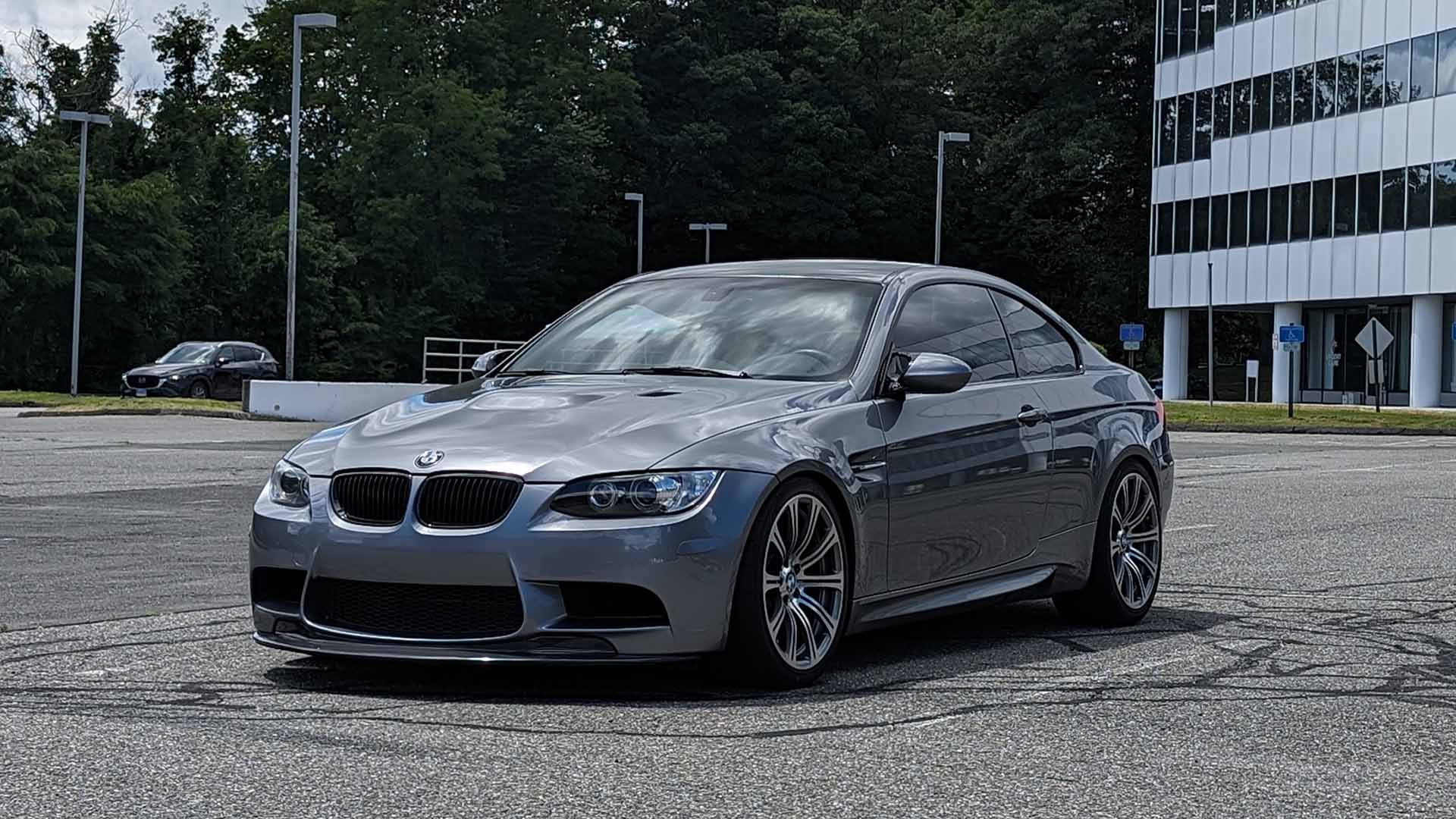
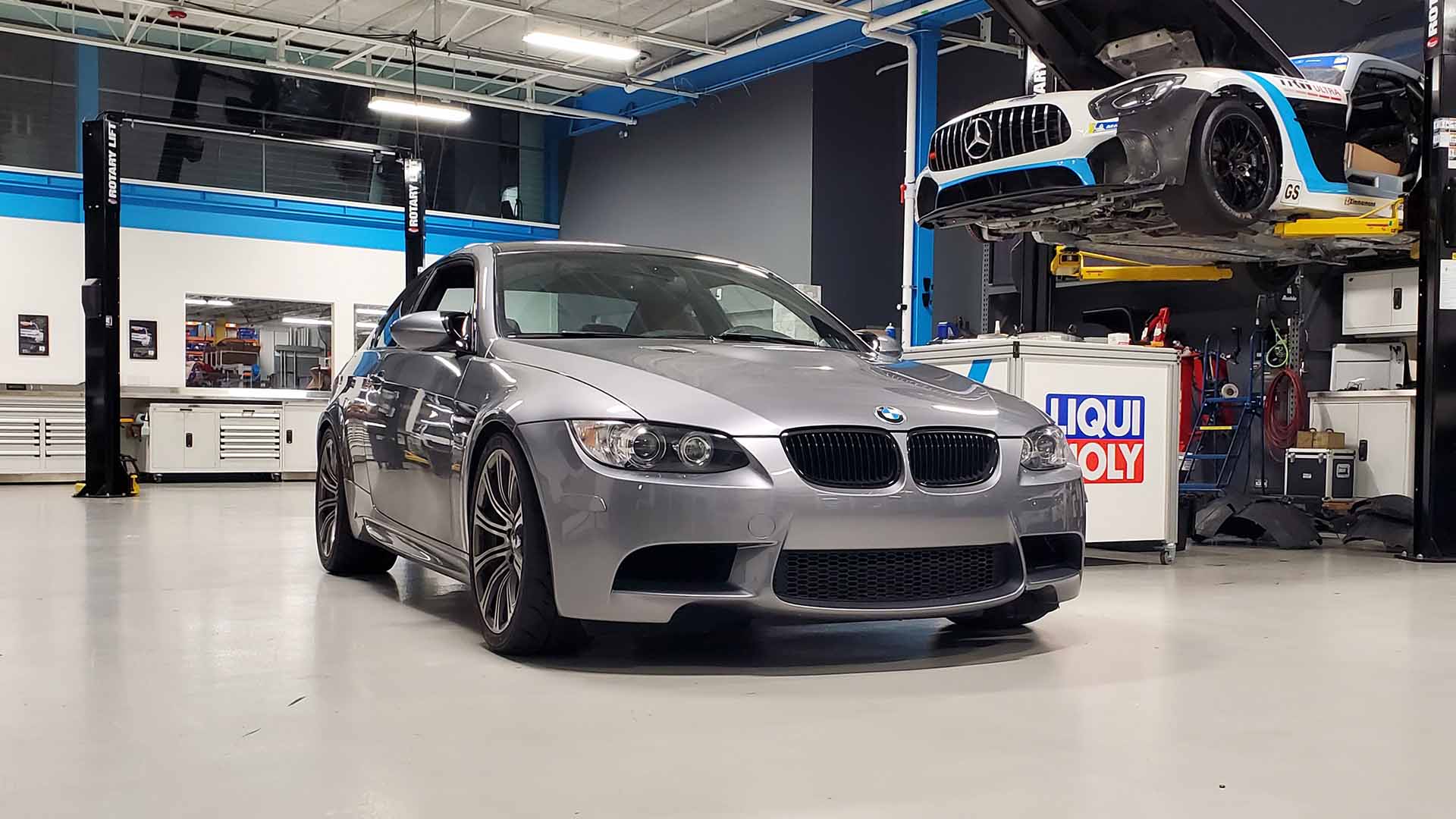
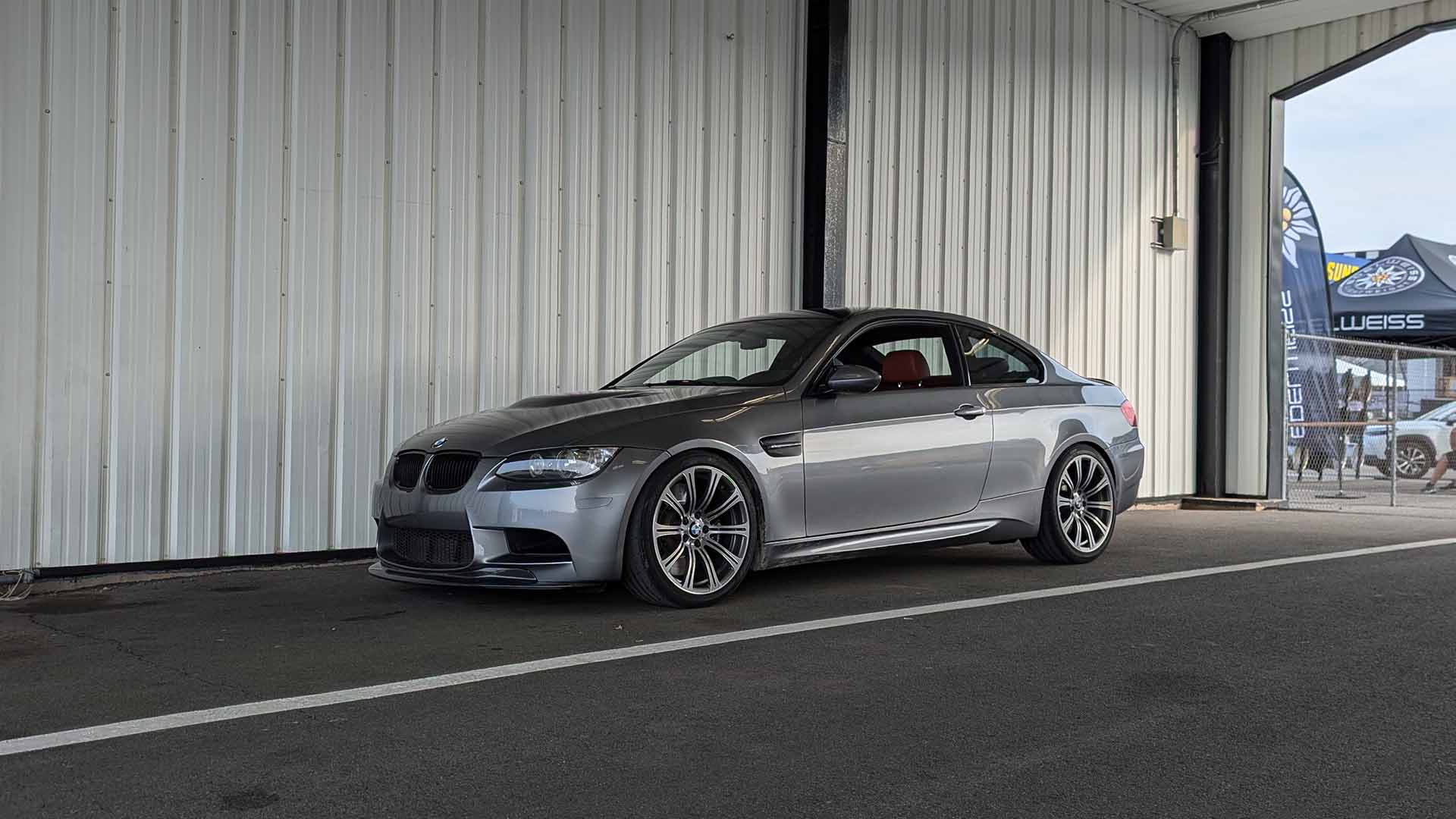
The E90, E92, and E93 M3 are BMW’s fourth generation of the M3. Compared to the outgoing E46 M3 the E9X M3 represents a major change in the sophistication of the chassis and the technology included in the car. This is also BMW’s last naturally aspirated M-car featuring the rev-happy 4-liter S65 V8 capable of redlining at 8400 RPMs.
Engine E92 M3 |

SKU:
KIT-11427837997KT2
QTY
$148.05+
| ||||
| Transmission Manual |
SKU:
MOL-LM20352
QTY
$13.59+
| ||||
| Transmission DCT |

SKU:
FUC-602007209
$20.69x
| ||||
| Differential |

SKU:
KIT-33117525064KT7
QTY
$85.72+
| ||||
| Brake |

| ||||
| Power Steering |

| ||||
| Coolant |
SKU:
BMW-82141467704
QTY
$26.99+
|
BMW E92 M3 Engine (BMW S65 Engine)
The construction and materials of the S65 V8 are identical to the S85 V10. The upper low-pressure die-cast crankcase is made from an aluminum-silicon alloy. The cylinder bores are honed which exposes the hard silicone crystals. This allows the relatively soft aluminum silicone engine block (alusil) to not require cylinder liners. The lower crankcase (bedplate) is also constructed using the same material. However, due to the forces of the crankshaft, grey cast iron inlays are used to reinforce the bedplate. This construction choice has the benefit of limiting crankshaft bearing clearances over a greater temperature range and has a positive effect on oil flow. All of this is to say that the S65 engine was designed in consideration of saving weight over the outgoing S54 without compromising strength. The bed plate design of the S65 engine makes this a very strong engine block.
Looking at other parts inside the engine block BMW optimized the rotating assembly for reliability. The crankshaft is forged from a single piece which includes the two sprockets for the left and right cylinder bank timing chains. The crankshaft pins are offset by 90°, which is typical for all non-flat plane crank V8s. The S65 uses a unique firing order for BMW V8 engines with the order being r 1-5-4-8-7-2-6-3. The connecting rods are weight-optimized and made from high-tensile steel and fracture split. To save weight on the connecting rod upper section BMW utilized a trapezoid shape where the piston wrist pin is located, The pistons are the same as used in the S85 engine.
The S65 oiling system is comprised of two oil pumps. One pump is driven off the crankshaft via a helical cut gear. This pump is used for scavaging oil at the front of the oil pan. The second pump is driven off the scavenging pump and controls oil pressure and volume to the rest of the engine. The design of the oil pan, and oil pumps, combined with its relatively large capacity, means the S65 engine has a guaranteed oil supply at 1.4G’s in both lateral and longitudinal acceleration.
The S65 V8 is the first high-revving Motorsport engine to not require a high-pressure oil pump for the VANOS system. This means the pressure and volume delivered by the main oiling system are adequate to control cam phasing. This not only makes the S65 engine more reliable but it also means it's a simpler engine.
The ignition coils used in the S65 engine are far from standard ignition coils. For the S65 engine to make maximum power at close to 8400 RPM, continuous ignition monitoring is required more than what traditional acoustic knock sensors can provide. The S65 engine uses an ionic current monitoring system derived from the S85 V10, which actively and continuously monitors combustion quality. Unlike the S85 engine which uses an inline control unit for each cylinder bank, the simplified system utilized on the S65 engine has incorporated the system in the individual ignition coils themselves. During ignition cycles, the measurement current is stored in a capacitor integrated with the ignition coil itself and, after ignition, is available at the spark plug electrode. In the S65, the ion current measurement and evaluation are also performed exclusively by the MSS60 DME.
The MSS60 DME is extremely powerful. It’s designed to control the S65 V8 up to 9000 RPM and is capable of processing millions of calculations per second.
Connecting Rod Bearing Wear
The S65 is a very tight-tolerance engine and also uses very small (relatively) rod bearings. The connecting rod bearings on the loaded side (big end) will always take a majority of the abuse. It is a common maintenance item on the E9X M3 to replace rod bearings preventatively. There are numerous options for engine bearings for this engine including updated Genuine BMW bearings to ACL oil clearance bearings.

Throttle Actuator Failure
Each cylinder bank on the S65 engine has one throttle actuator, which movies the individual throttle bodies in unison. The common failure of these throttle actuators is MOSFET failure. Usually, the only fix for failed throttle actuators is to replace them with new ones. In other cases, a failure can be related to the drive gears inside the actuators themselves.
Common fault codes:
- 2B15 - Throttle Valve Actuator Control Monitor Bank 1
- 2B16 - Throttle Valve Actuator Control Monitor Bank 2

VANOS Cover Failure
The VANOS hubs have a plastic cover on them which helps retain the return spring. These covers have been known to deteriorate and disintegrate. The plastic ends up in the oil pan and can restrict or block the oil pump pickup (which can cause engine failure). There are aftermarket replacements including clip-on and bolt-on versions. The clip-on versions are the easiest to install as they do not involve timing the engine. The bolt-on versions are the best in terms of reliability but will take the most amount of work to install.

Magnesium Valve Cover Deterioration
BMW chose to use magnesium as a material for the valve covers on the S65 V8. Magnesium is a notoriously difficult material and suffers from porosity problems. Besides outgassing and leaking these magnesum valve covers will often peel their protective coating. Cosmetically this looks pretty bad but this same coating can also peel off inside the engine and can restrict or block the oil pump pickup (which can cause engine failure)
There are aftermarket valve covers that address this problem such as those linked below from NRW Design.

Idle Control Valve Failure
The S65 engine uses an idle control actuator to supply air to each cylinder off throttle or at partial throttle This actuator is known to be problematic and can cause irregular idle or idle hunting behavior. One of the more common failures of this part is due to carbon buildup inside the unit which restricts the movement of the control valve. Other known areas to consider are the sealing grommets for the idle control strips, or the main connection hose between the idle stript and idle actuator can also fail with age.

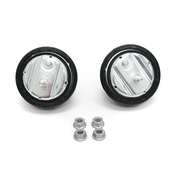
Engine Mount Wear
The engine mounts used in the E9X M3 have also been used in the previous generation E36 M3 and E46 M3. On the E9X M3, in particular, the right engine mount gets pancaked very easily. In as little as 50K miles this engine mount can be compressed upwards of 4 or 5mm when compared to a new one. On manual transmission cars, this can cause difficult shifts with the drivetrain loaded (particularly first to second gear). In extreme circumstances, engine mounts that fully compressed can allow the oil pan to hit the subframe with the drivetrain under load.
There are aftermarket engine mounts available, such as those from 034Motorsport, which are solid rubber. These are an excellent alternative to the OE hydraulic-filled engine mounts.
Engine To Chassis Ground Strap Corrosion & Failure
BMW uses braided ground straps on newer BMW’s. These braided straps are highly conductive and are required for proper grounding. These braided gound straps can become corroded with age which either increases resistance or can fail by falling apart entirely. A failed ground strap can cause a variety of issues including a no-start condition. Ideally, this is something you should keep an eye on and replace as necessary. If you’re ever in doubt just replace the engine ground strap and play it safe.
Fuel Injector Failure
The S65 engine uses Bosch EV14ST fuel injectors. This is a port injection engine and does not have the same issues that direct-injected engines will have but there are reported cases of S65 engines suffering failure due to stock open injectors which hydro lock the engine. This is a risk with any solenoid-style injectors. This often happens due to contamination in the fuel. NRW Design makes a serviceable inline fuel filter kit that allows you to add extra filtration to the fuel system.
A common way of staying ahead of this problem is to replace the fuel injectors preventatively with new ones.
BMW E92 M3 Transmission (GS6-53BZ & GS7D36SG)
The BMW E90, E92, and E93 M3 came from the factory with two different transmission options: a 6-speed manual (GS6-53BZ) and a 7-speed DCT (GS7D36SG). Both transmissions are extremely reliable, especially the 6-speed manual. Neither transmission should be of major concern during the ownership of your M3 as long as the fluid is changed regularly.
DCT Mechatronic Cover Leaks
Of all the issues associated with these two transmissions, this is the only concern. The side cover for the mechatronic unit is located on the right side of the transmission. These covers have been known to leak with age. To fix this problem, the transmission must be removed.
Aftermarket versions of these covers are available from different manufacturers such as Fall-Line Motorsports.


BMW E92 M3 Drivetrain
Another part of the E90, E92, and E93 M3 that is nearly bulletproof, there aren't many things that should keep you up at night when it comes to the maintenance and issues on the E9X drivetrain.
Differential Seal Leaks
The pinion seal is a common leak area. All BMW large case differentials use the same style of pinion seal. Side cover (axle) seals are another common leak point. The worst leaks you will see can result in noticeable drips below the car with mild leaks causing a fluid film to build up around the differential housing.
Corteco offers an improved pinion seal with a much more robust sealing lip which should prevent future leaks from occurring again.

The E9X chassis is a major change over the E46. The two previous generations of the 3-series (E36 and E46) use more or less the same chassis and suspension design where they utilized a single wishbone McPherson strut front suspension with a “z-link” (dual-link) trailing arm independent suspension in the rear. The E9X generation of the 3-series received a major overhaul for the front and rear axle suspension. The M3 received all bespoke parts intended to decrease unsprung weight, add strength, and increase track width. E90’s received a double pivot McPherson strut front suspension with a 5-link semi-trailing arm independent rear suspension. The suspension design change is significant for a few reasons:
Double Pivot McPherson strut front suspension:
The double pivot system establishes a geometrical “axis” that is formed by the two control arms, which in turn create an upper and lower pivot point. Two lower pivot points established by the wishbone and tension strut create an “imaginary” pivot point that is extended further out on the wheel carrier. This design allows pivot points on the wheel carrier to be selected to accommodate larger brakes. The other major benefits of this suspension change include:
Innate ability to reduce body roll while cornering.
Reduced front-end dive tendency during heavy braking scenarios.
Utilization of a small positive steering offset which has improved handling if traction levels differ while braking on both wheels.
Improved caster position with improved straight-line stability at higher speeds with better steering return after small steering inputs.
5-link semi-trailing arm independent rear suspension
In some literature, this rear axle design is referenced as an HA-5 axle design. This has nothing to do with the fact that the rear suspension has 5 links but rather this is the 5th rear axle suspension development from BMW.
Benefits of this suspension design include:
The very small positive kingpin offset guarantees less sensitivity to longitudinal forces even in connection with wide tires.
The relatively large caster ensures a defined degree of lateral force understeering, improving vehicle handling/stabilization and offering faster response.
The change in toe as part of the suspension travel provides directional stability with a relatively short wheelbase and self-steering characteristics while cornering.
The change in camber as part of the suspension travel is selected to establish optimum camber while cornering. The long toe link has a positive effect on the toe-in characteristics over the spring travel range.
BMW M engineerings further developed the E9X chassis for the M3 by utilizing bespoke control arms, knuckles, wheel bearings, struts, and shocks. Along with additional chassis bracing bespoke to the M3 the chassis has been further stiffened and refined for performance. A great example of this is the rear camber link (the coil spring sits on it), which is made from cast aluminum instead of stamped steel. The factory version of this part is allowed to flex while the E9X M3 version is a rigid component.
Another major change on the E9X M3 over the standard E9X 3-series is the body of the car. Like all M cars before it, there are notable differences between the Motorsport variant and the standard variant it is based on. In the case of the E92 M3 Coupe the only body component shared with a regular E92 3-series coupe is the trunk lid. It is worth noting that most of the E9X M3 is not shared with the standard version of any particular 3-series it's based on.
Rear Subframe Rot
This occurs in only the most extreme circumstances. However, the rear subframe is steel and open internally. From the factory, these subframes may not have the best coating (or none at all) internally. This can cause the subframe to rot from the inside out. We would only expect this to happen in the worst possible environments and where the car is used year-round.
Carbon Roof Clear Coat Peeling
Some E92 M3 Coupes have seen the clear coat fail on the factory CFRP roof. This problem is not an inherent issue with the finish but rather an environmental circumstance. Cars that are stored outside and in harsh environments with strong UV.
Brake Line Flar Nuts Seizing To Hard Line
Depending on the vehicle and the environment it's located in it’s not uncommon for the flare nut on the brake hard lines to seize to the hard line. This makes replacing the soft lines (hydraulic line between the hard line and brake caliper) themselves a real challenge. In extreme cases, you may need to repair/replace the hardline. Under most circumstances, you can get the flare nut loose by working it back and forth, using some heat and penetrant. The cause is corrosion between the line and nut forming.
Intakes And Plenums
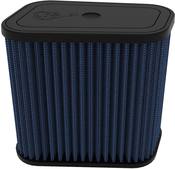
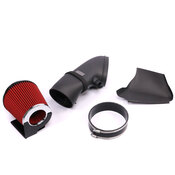
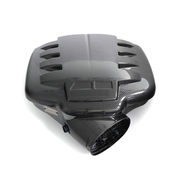
One of the neat things about the E9X M3 is its naturally aspirated high-revving V8. It uses individual throttle bodies and an air collector on top of the ITBs which makes for an awesome intake sound note that is unique to this car. The factory air box design is also unique with the air box pulling air from the bumper cover, hood, and in front of the radiator. There is a lot of air moving through the intake system at wide open throttle, and if you have driven one of these cars, you already know how awesome that sound is.
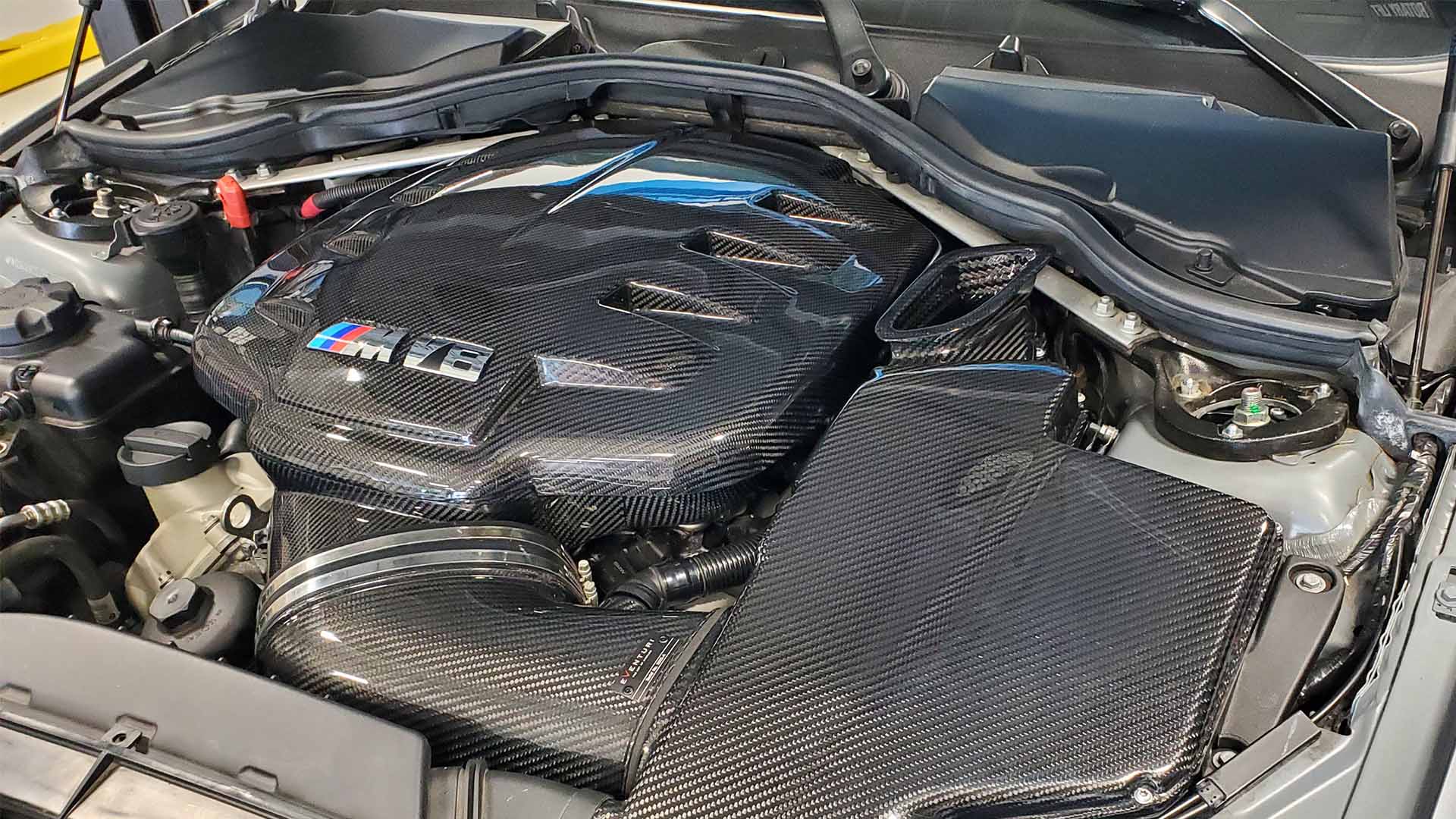
There are countless intake options for this generation of M3s. Everything is available, from high-flow filters to upgraded intake tubes between the plenum and air filter housings, to entire intake systems. One of our favorite OEM+ systems is that from Eventuri which encompasses the plenum, air box cover, air intake tube, and forward air inlet in carbon fiber. This audibly increases itnake noise in the most satisfying way possible. Also, when the hood is open, it looks amazing. We think BMW should have done it this way from the factory.
Stroker Engine Build
As soon as the S65 engine was released development on increasing displacement started in the aftermarket. Companies like Dinan offered a 4.6L liter stroker engine build which significantly changed the characteristics inherent in the 4-liter stock engine. Since then there have been 4.7L, 4.4L and 4.2 builds including a factory 4.4L S65 from BMW in the E92 M3 GTS and E90 M3 CRT. These engine builds are expensive but also very exclusive. The primary benefit of a stroker engine is the significant bump in low end torque.
Forced Induction (Superchargers)
Dollar for dollar, the cheapest power adder per horsepower on the S65 engine is a supercharger kit. Multiple different kits are on the market, including those from ESS Tuning, VF Engineering, Active Autowerke, G Power, Harrop, and more. Supercharger kits with intercoolers can deliver power north of 600 crank horsepower.
ECU Tunes
There are many tunes available for the E9X M3 on the market. These tunes enhance the stock mapping for the S65 engine and squeeze out a few extra horsepower through careful optimization. Overall, power gains are minimal on a naturally aspirated engine with no headwork, but drivability and throttle response can be improved. This is a route that some may choose to go when they are seeking just a little bit extra from their car.
Exhaust Systems
A common modification on the E9X M3 is to play around with the exhaust system. This is not only a modification that brings instant gratification but is something that can help set your E9X M3 apart from other cars on the road. When it comes to exhaust system modifications it ultimately comes down to budget. At this point in the E9X M3 lifecycle you can find full titanium kits from companies like Akrapovic to kits from Ali Express. Our favorite exhaust systems for the E92 M3 include options from Milltek, Remus, Akrapovic, and Dinan.
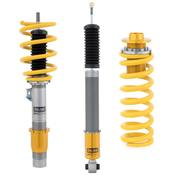
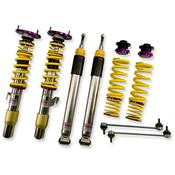
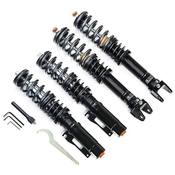
Coilovers
There are no limits to the number of coilover options available m for the E9X M3. You have an array of options for cosmetic/street use applications, mid-range performance options for the occasional track day or autocross, as well as top-end options for dedicated track use. In this realm of suspension upgrades, you must first assess your needs, your budget, and your comprehension of how shock absorbers and springs work together. The latter is critical for properly setting up adjustable shocks with rebound and compression adjustments (commonly referred to as 2-way adjustable).
Street-driven cars
- https://www.fcpeuro.com/products/bmw-ohlins-08-13-bmw-m3-e9x-road-track-coilover-system-ohlins-bms-mi40
- https://www.fcpeuro.com/products/bmw-b16-pss10-coilover-kit-bilstein-48-145701
- https://www.fcpeuro.com/products/bmw-st-xta-coilover-kit-st-suspensions-18220867
Autocross and occasional track days
Monoball Conversion
BMW used cross-axial joints in many of the control arm pivot points from the factory on their E9X M3, including the front wishbone, rear toe link, and rear upper control arms at the inboard position. You can swap mono balls into the rear subframe for the trailing arm and the front thrust arms and can replace the outer pivot points for the rear upper control arms as well (requires machined shims to adapt to the shape of the knuckle). These joints allow for full suspension articulation without any unwanted deflection you would typically see with rubber bushings. The only negative effect is they do increase NVH slightly.

Adjustable Control Arms For Camber, Toe, & Anti-Dive
For those who are serious about tracking their E9X M3s, one of the best upgrades is starting to dial in anti-dive and bump steer correction with fully adjustable control arms. SPL Parts offers an entire product lineup for the E9X M3 designed to maximize the performance of your suspension through maximum adjustment.
Subframe Mounts
The E9X M3 has its own bespoke subframe mounts that are different than those found on the regular E9X 3-series. These mounts are fairly robust, but they are still made from rubber and can wear with age. A common issue with rubber subframe mounts is when they are in a deteriorated state they will cause excessive subframe movement under drive train load or when cornering hard.. An easy solution to permanently locking down the rear subframe is to convert to aluminum subframe mounts. The NVH is almost zero, and fortunately, BMW finally built a floor strong enough that you don’t need to worry about chassis cracks (E46 problems for those in the know).
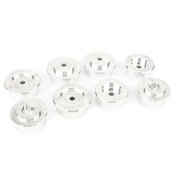
table { width: 100%; border-collapse: collapse; margin: 10px 0; } th, td { border: 1px solid #ddd; padding: 8px; } th { background-color: #38a4fe; text-align: left; color: white; } h3 { margin-top: 25px; }
| Specification | Details |
|---|---|
| Wheelbase | 108.7 inches / 276.1 cm |
| Weight | E90: 3748 lbs / 1700 kg E92: 3649 lbs / 1655 kg E93: 4200 lbs / 1905 kg |
| Drive Type | RWD |
| Gearbox | ZF GS6-53BZ 6-Speed Manual Transmission, Getrag GS7D36SG 7-Speed Dual Clutch Transmission (DCT) |
| Horsepower | 414HP @ 8300 RPM |
| Torque | 295 lb-ft @ 3900 RPM |
| Wheel Packages & Tire Sizes | Standard wheel package: Style 219 M Double Spoke -Front 18x8.5 ET29, 245/40ZR18 -Rear 18x9.5 ET23, 265/40ZR18 Optional wheel package 1: Style 220 Dual Spoke -Front 19x8.5 ET29, 245/35ZR19 -Rear 19x9.5 ET23, 265/35ZR19 Optional wheel package 2: Style 260 M Double Spoke -Front 19x8.5 ET31, 245/35ZR19 -Rear 19x10 ET25, 265/35ZR19 |