- 11/04/2025
- 7 Min Read
- By: Christian Schaefer
What's Under The Hood? A Beginner's Look Into A Car's Engine Bay

Well over a century since the Benz Patent-Motorwagen sparked the automotive revolution, the automobile has become the primary mode of transportation in the United States. The affordable car is mostly unique to the US, but a low price doesn’t guarantee reliability. Tight budgets or a lack of care mean maintenance is often a second thought for most owners, and that can leave hidden issues waiting to emerge right after a second-hand purchase. Checking the engine bay is a great way to understand how the car’s been maintained, but that’ll be tough if you don’t know what to look for.
We don’t blame you if you don’t; many systems can appear the same yet be wildly different without a basic understanding of what’s happening. In reality, though, the basics are just that, and a little reading can go a long way to saving you money and heartache. Here are the basics of what’s under your hood.
Fluids & Reservoirs
Every non-EV, no matter the make or model, will have at least one fluid reservoir of some kind. Most modern vehicles will have a few, each supporting a critically important system for safe operation. In all cases, the fluid must be within its service window for optimal operation, as worn fluids can cause damage to the parts they flow through. Although engine oil is changed by most owners, some avoid it for one reason or another.
Checking the condition of the brake fluid, power steering fluid, and engine coolant can provide insight into how the previous owner maintained the car. They’re vital fluids that ensure you can stop and turn whenever you want and keep your engine cool, so they must be fresh and at the correct operating level. The easiest way to check for this is by examining the reservoir and fluid.

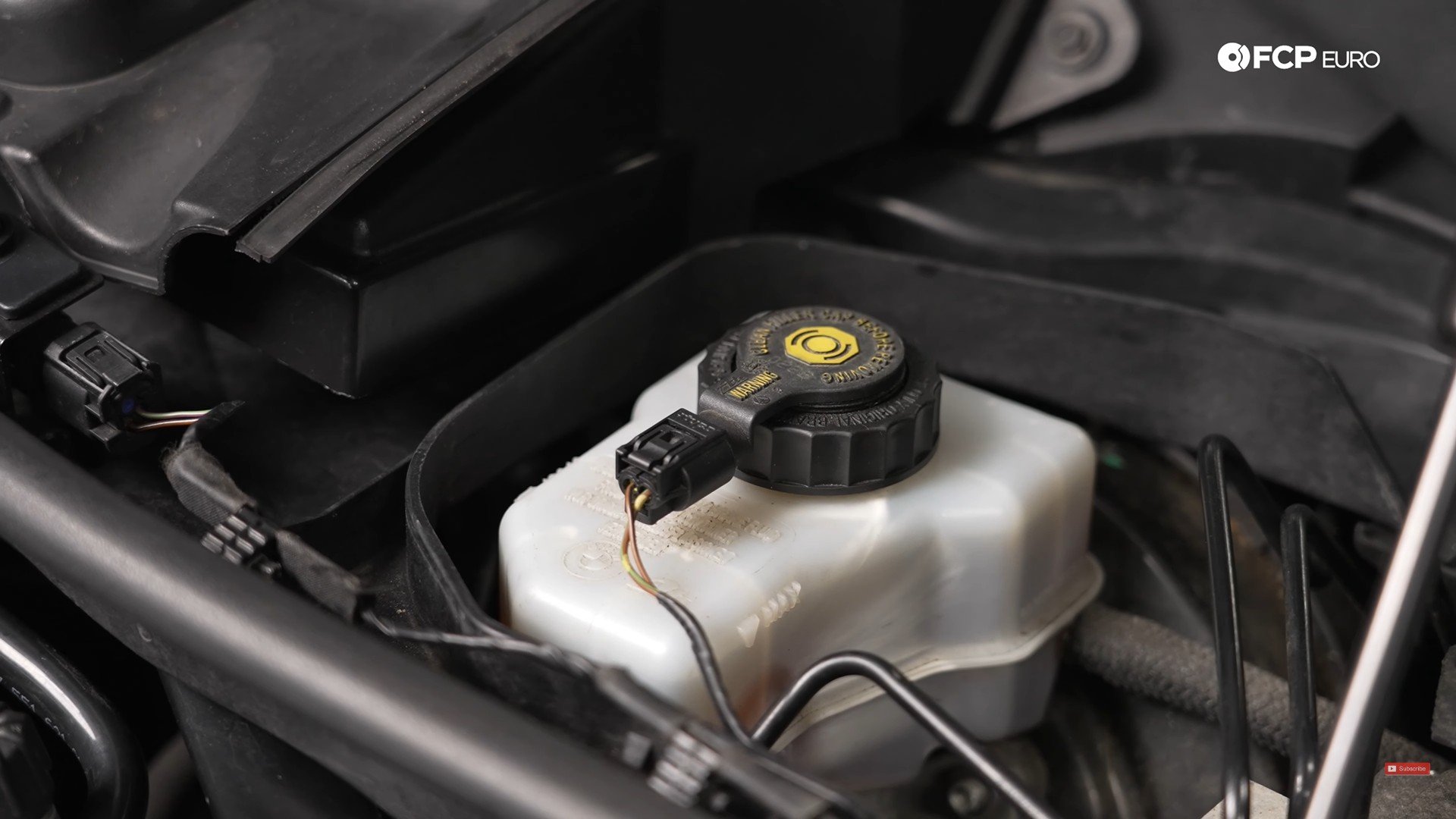


Worn fluids will appear darker than new when worn. Brake fluid is almost exclusively a pale amber color in the US when fresh out of the bottle, but if used for several years in a vehicle without service, it’ll become dark and cloudy. This also applies to clutch systems, which use brake fluid for their hydraulic operation. In the worst cases, the hygroscopic (brake) fluid will absorb water over time, reducing the brake fluid’s boiling point and hurting pedal effectiveness. Other fluids, such as those used in power steering systems, will smell burnt and be less than clear.
Low fluid levels in the respective reservoirs can indicate a problem elsewhere. Brake fluid can evaporate, but that’ll happen very gradually. Open each cap and check the fluid level; there’ll be a dipstick or markings on the side of the reservoir noting the minimum and maximum levels. Small coolant and power steering leaks aren’t uncommon, and their signs—like dried residue or actively wet leaks—can be identified from the engine bay. If nothing stands out, examine the condition of the reservoir. They’re almost always made from plastic, and if it’s brittle or looking worse for wear, a problem elsewhere in the given system shouldn’t be too challenging to imagine.
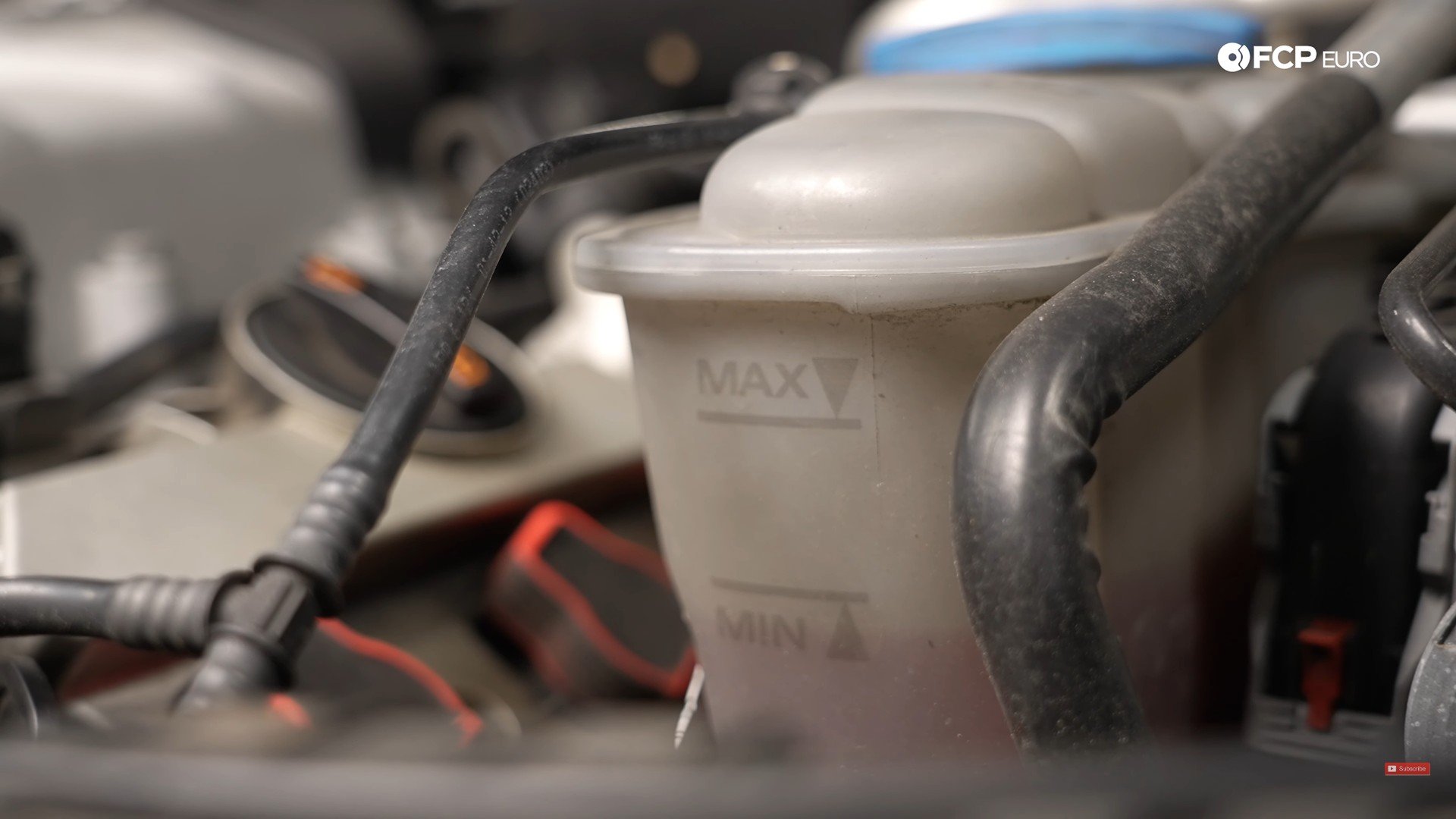

When buying a model with a potential issue like this, it’s certainly warranted to pay less than asking if it wasn’t explained correctly. Whether it's a fluid flush or physical parts that need replacing, you must ensure you grab the right ones. The reservoir should have the exact fluid specification printed on the cap; if not, refer to the owner's manual. Then head over to fcpeuro.com and plug in your vehicle’s information. From there, you’ll see the proper fluids, along with the option of kits that include those often-broken plastic parts, to ensure you stay running safely for thousands of miles to come.
Belts & Pulleys
At the front of the engine are the water pump, alternator, and power steering pump. Not every engine will have all three as electric water pumps and electronic power-assisted steering (EPAS) trade their mechanically driven pumps for wiring, but there will be an alternator at the very least. Driving those bits is the belt assembly, a collection of rollers, a belt, and a tensioner. Altogether, they ensure your engine remains cool and the electronics stay charged, but only if the belt system is healthy.
Like all rubber components in the engine bay, the belt is subject to extreme temperature changes and long running hours. It’s not an issue for a new belt, but the heat and stress will eventually take their toll, cracking the rubber. Those cracks are the primary sign of degradation and will lead to a snapped belt in the future. Replacement jobs can be tricky, depending on the engine bay, and may involve several other parts that need replacing, so take your time inspecting that area.


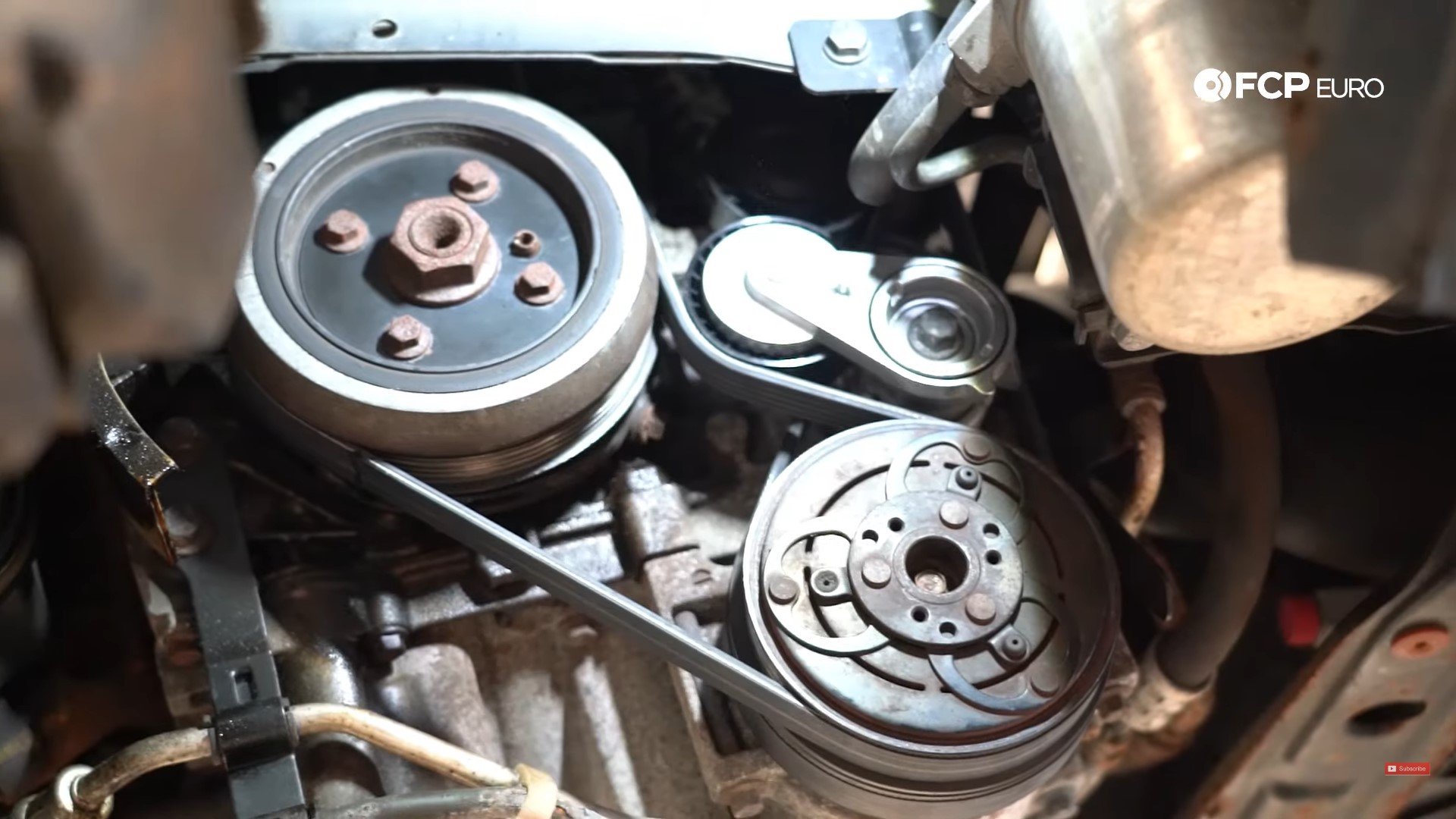

If you get your hand in there, push on the belt to check for tension. It should be taught, giving only a little at the push of your hand. Looser belts can point to an issue elsewhere in the system, most likely the tensioner. At that point, there isn’t much more you can do but prepare for a replacement. Drive belt kits are widely available, with parts offered by a range of manufacturers, allowing you to choose your parts at the price point that works best for you.
You can also check their health while the engine is running. All of the pumps and pulleys use bearings that will wear out, typically making a whirring or howling sound when they’ve done so. It can be challenging to hear with the engine running, but give it a shot. Specific pumps may only leak while in operation, so this is your opportunity to check.
Air Intake & Filter
Aside from the engine cover, the air filter housing is likely the largest plastic component connected to the engine. Engines come in a wide range of shapes and sizes, so airboxes will be unique to a particular manufacturer or model, but their purpose remains the same. As the name suggests, the air filter housing holds the engine air filter in place, ensuring your engine stays free of debris that could ruin it. The intake tube, which runs from the filter to the engine, completes the system. Although it may appear simple, the health of the intake air filter can have a significant impact on an engine's performance.


Filter housings are almost always designed around the engine bay they’re stuck in, so their physical properties will vary. In most modern cases, the filter will be some kind of flat quadrilateral shape, but performance cars occasionally use a cone-shaped unit. Filter shape doesn’t determine much, so you're good to go as long as it's clean. Downstream of the filter, the intake tube channels the filtered air into the engine. Check the connections along the tube, as there should be hoses for the PCV, forced induction (where applicable), and a MAF sensor (where applicable). These connection points have a greater chance of developing small vacuum leaks in older vehicles.
European vehicles are popular for many reasons, so there's a chance you’ll see an aftermarket intake at some point. While they might look slightly different from OE with an exposed cone filter and a small heat shield, they still do the same job. Automakers design their intake components to reduce noise and draw air into the engine efficiently, but that can leave flow on the table. Aftermarkets will simplify the tube to improve airflow and free up horsepower for all engines.
Radiator & Cooling
At the front of the engine bay is the radiator. As you likely know, it’s a significant part of the engine’s cooling system, responsible for removing the heat from the coolant. Connected to that is a fan of some kind; most automakers use an electric fan on the radiator’s backside to pull air through. BMW is a slight outlier in that its models have used electric pull fans, pusher fans, and engine-mounted mechanical fans within the last few decades.
An original radiator will have silver fins and black plastic tanks crimped on. The fins can take a beating from road debris, but the end tanks are more often an issue. They become brittle and crack from the heat, just like every other plastic item, leaving you with a leaky mess. Luckily, antifreeze residue is easy to spot and has a distinctively sweet smell, making identification simple. That said, it’d likely be the coolant expansion tank if anything were to crack first.


Technically, a reservoir, the coolant expansion tank is how modern Euro manufacturers like to check for system capacity. Tanks can be transparent or black and have at least two lines running. They’re a critical point in the system, giving you a window into its health, but they can also be a regular source of headaches. Their plastic construction has never been the best, so depending on the model, these may require semi-regular replacement.
Whether transparent or not, make a note of the coolant color. Manufacturers have different requirements for their cooling systems, and the corresponding coolants will have unique colors to signify this. Pink, Blue, and Green are the most common colors, each bright and vibrant. Any muddied or clouded fluid is a bad sign and should be addressed as soon as possible.
Battery
Every car needs a battery. Whether running the radio, powering the ignition, or ensuring the alarm stays armed, a constant 12-volt source is critical. Under the hood is where you’ll likely find them, but Euro automakers love moving them around, so it depends on the make. Regardless of location, they all supply electric power to the various systems within a vehicle.


Once you locate the battery, there isn’t much you can do but observe its condition. Unless fitted with a lightweight performance battery, the power source in the vehicle you’re looking at will use a corrosive fluid mixture to transfer its energy. Battery acid can leak from the battery case due to excessive heat or a failing voltage regulator, which causes the alternator to overcharge the battery. It’s most often seen as a cakey green/white substance around the battery terminals, and while it's not catastrophic for the battery, it’s not supposed to happen. Immediate replacement isn’t required, but it would give you a healthier battery with a fresh lease on life, so it certainly won’t hurt.
In the short term, you can clean the corrosion with a brush and specialized battery terminal cleaner. Other cleaners can work, but the specialized formula helps prevent more corrosive build-up, making it the best option for the job. With any luck, there isn’t any build-up, or you were able to clean it off to reveal the battery’s manufacture date. A safe lifespan for a standard automotive battery is about 3-5 years, so anything more than that, and you’re playing a risky game.
For vehicles with a battery elsewhere of the engine bay, there’s likely a positive battery post for you to use when jumping a dead battery. They can be covered with a small red cap or under cladding marked with a positive symbol.
General Engine
Well, what else is under the hood, right? Among more minor but related concerns, it’s the reason you have the hood open. The mechanical hunk, smack in the middle of the engine bay, is the source of all the good a vehicle can bring, but it’s an expensive, tightly toleranced machine that requires regular maintenance. Barring any horrible noises, such as grinding, knocking, or tapping, a simple visual check can give you an idea of its condition.


What you’ll first see isn’t the engine but a plastic “beauty” cover placed on top. Removing it will expose parts like the valve cover(s), intake manifold, turbochargers, ignition coils, and more, depending on the engine type. Any signs of fluid leaks should be a concern, although not necessarily immediately serious. An engine losing oil, even in a relatively controlled manner, isn't good. It can lead to damage both inside and outside the engine. Removing the oil fill cap can also give you a small glimpse into the condition of the oil, with any discoloration indicating the need for maintenance or a more significant issue.
Turbochargers & Superchargers
Turbochargers have become the norm across all European automakers, and they’re here to stay. Advanced electronics have enabled forced induction to optimize the internal combustion engine far beyond what was initially thought possible, leading to a world filled with fire-breathing, high-powered monsters that cruise for maximum fuel mileage, as well as those of most decade-old economy cars. But there’s no denying their increased complexity, weight, and added heat, which can strain surrounding components.


The most common supercharger you’ll find these days is on VAG’s widely used 3.0T V6. The roots blower, mounted in the vee and driven by a belt off the crankshaft, provides excellent response and plenty of power with only a few maintenance requirements and common issues. Supercharger oil changes are infrequent but recommended on higher-mileage examples of any supercharged engine, so be sure to ask about that in an applicable situation. Beyond that, the belt is the only real maintenance item, with an interval of 75,000 miles. However, be sure to check the belt beforehand, as extreme conditions and other variable factors can shorten its life. If it's a modified example, look for pulley clutch slip, which can also happen with performance improvements.
Turbochargers are primarily maintenance-free, come with a handful of supporting pieces, and can fail with some regularity. Instead of a contained oil supply, turbos are fed with engine oil and are occasionally joined by coolant, ensuring its bearings aren’t affected by the hot side's near 1000℉ temperatures. Seal failures are common, as is compressor shaft play, but that’ll all be hidden in the engine bay. Any issues will appear with the engine running through feel or the exhaust pipe. Instead, look it over for any fluid leaks and worn vacuum lines.
And with that, you're ready to check out that car you're looking to buy or impress your know-it-all car friends. Be sure to keep your eyes on all of our socials for more educational and entertaining content. Happy wrenching!