- 01/19/2026
- 8 Min Read
- By: Christian Schaefer
Volkswagen Mk7 Golf R vs Mk8 Golf R: Is The New Model Worth The Price Difference?

Few enthusiasts have been as spoiled for choice as those of the Golf. From the iconic original hot-hatch to the wide arched, VR6-powered Mk4 R32, and through to modern day, there’s a Golf variant for everyone. Over the last few decades, the top spec performance variants have been the choice for anyone looking for genuine performance fun and everyday practicality, but now there’s a dilemma. The current Mk8.5 Golf R is undoubtedly the best there’s been, but it's a $50,000 car. Is the extra performance and technology offered by the newest one enough to compensate for the price difference of a similarly spec'd Mk7? Let’s find out.
Mk7 Golf R
Generational updates aren’t always a hit. Some models have charm and character due to their chassis architecture and evolutions, while being objectively better, they lose the feel that enchanted so many. Luckily for VW fans, the then-new MQB platform, which underpins all Mk7 models, retained all of the Golf’s beloved characteristics and shored up many of its previous shortcomings. The new architecture was VW’s first modular platform, on which it has based itself to date. Naturally, the solid basis of the Mk7 extended to the Golf R, enabling the ultimate hot hatch to reach a level we’d not yet seen from an R.
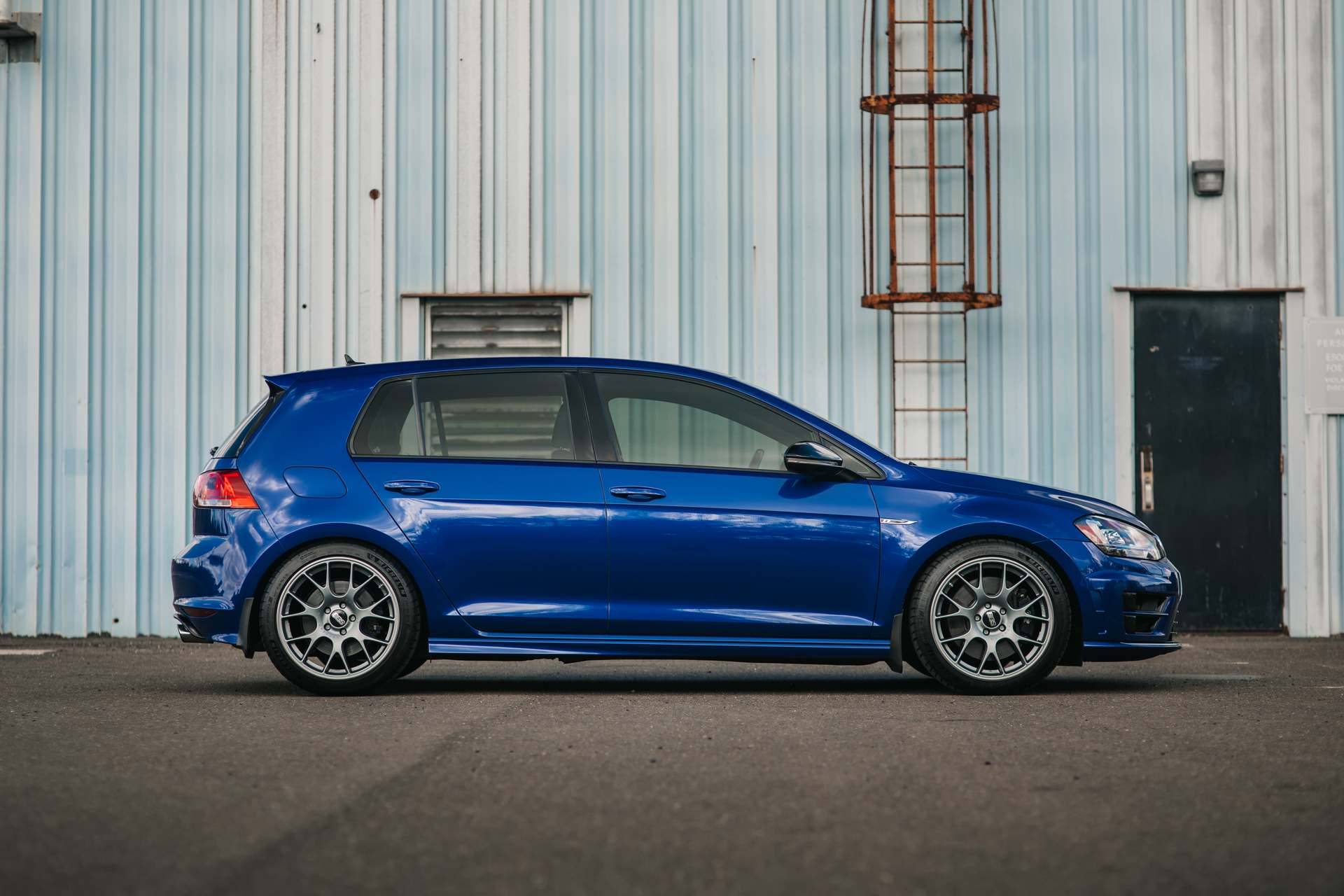
Improvements over the Mk6 were everywhere. Gone was the EA113 engine from the previous gen, and in its place was the EA888 Gen.3. On paper, they’re both turbocharged 2.0-liter four-cylinders, but the more modern engine is capable of much more performance. The IHI IS38 turbocharger, improved internal components, and advancements in engine controls were all factors contributing to the Golf R’s peak power output of 288 hp and 280 lb-ft of torque. Behind that engine was a six-speed manual or DSG transmission mated to a Gen 5 Haldex-based AWD system. The much-revised AWD coupler and controller were smaller, lighter, and simpler than their predecessors, reacting far quicker than ever before.
In standard Golf fashion, the Mk7 featured a MacPherson strut up front and a multi-link suspension at the rear, which positioned the chassis 24mm lower than the standard GTI. Standard dampers were passive, but VW’s Dynamic Chassis Control dampers, adaptive units, were optionally available. VW also fitted its XDS+ brake-based torque vectoring system, which played a significant role in mitigating heavy understeer typically encountered by preceding generations.
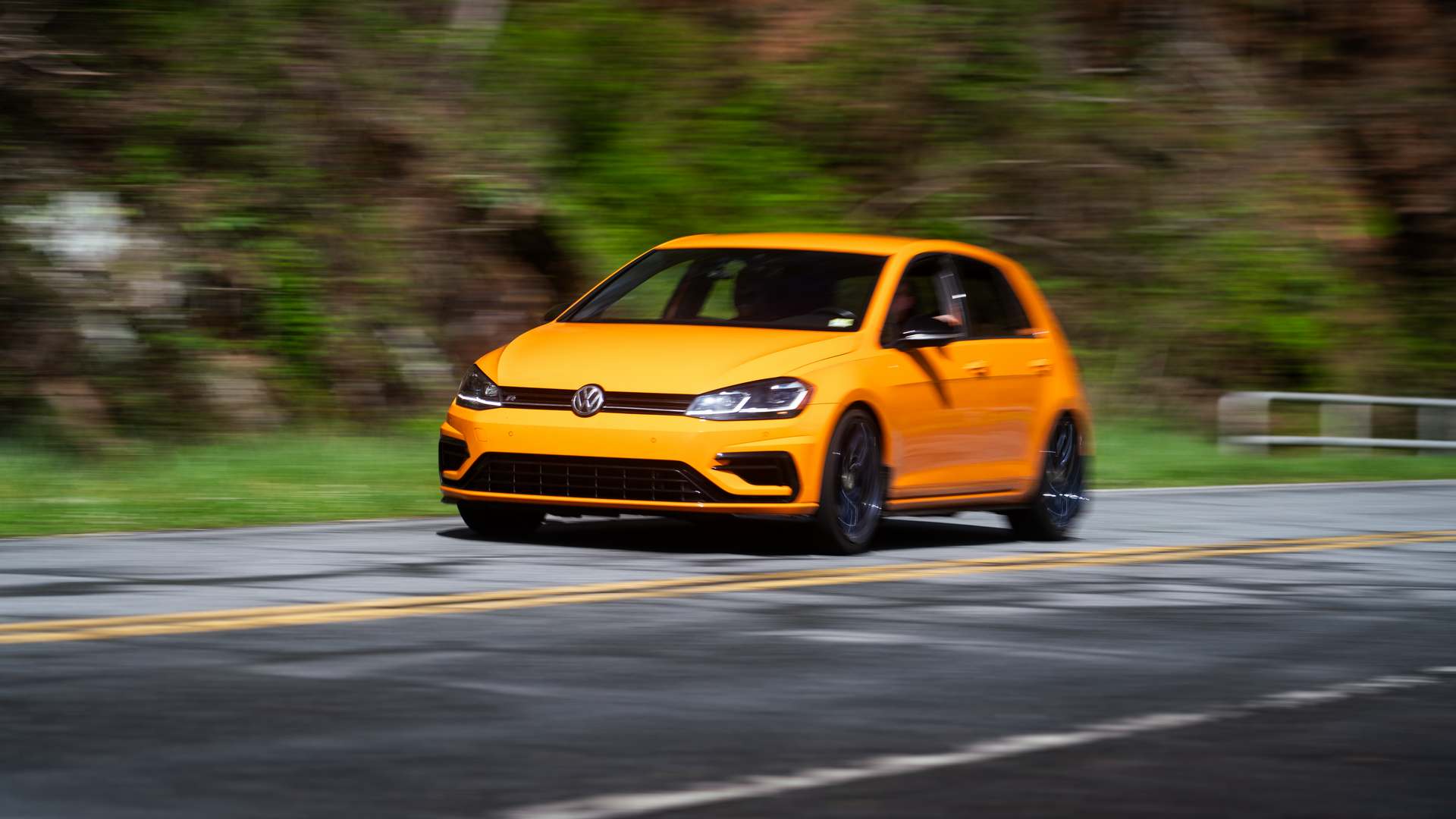
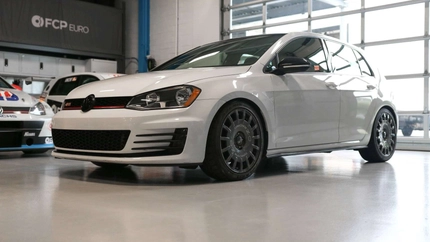
Cosmetically, the Mk7 differentiated itself in the same way as past Golf R models. Larger and more aggressive intakes in the front bumper gave away the sporting potential, with body lines carrying down the lower portion of the body to the rear bumper. Back there, the familiar bumper, featuring twin-center pipes and a diffuser, was present. The headlights and other features remained the same shape as the GTI, but LEDs were used to distinguish them. Inside the cabin, GTI owners will feel at home, as the layout and features are nearly identical, save for the higher-quality materials in the R. Leather trim with accenting blue stitching adorns the seats, steering wheel, and a few other areas. At the same time, soft-touch plastics do the rest of the heavy lifting. Distinguishing accents and badging are present but less frequently than in other R models.
Volkswagen sold the Golf R between 2015 and 2017 before giving it a facelift. The updates were largely cosmetic, but a few performance improvements were included. Befitting the Mk7.5 are revised LED headlights, taillights, and a redesigned front bumper. Interior updates were similar, featuring small design changes and more advanced electrical components. The instrument cluster became customizable to driver preferences, while the new infotainment system featured a better operating system and a much larger screen, growing from 5.8” to 8”. Drivetrain and performance options remained the same, but a new seven-speed DSG replaced the aging six-speed.
Mk8 Golf R
Succeeding the Mk7 R would never be easy, but Volkswagen managed to mostly do it right. The latest generation of Golf R carries on everything its predecessor got right and improves on most of it, with a bit more power, a slightly better chassis, and updated styling that keeps the benchmark super-hot hatch at the top of its class in all categories. Key to that is the MQB evo platform. Building on the MQB underpinnings introduced in the Mk7, the evo brought a range of technological advancements to the Mk8, including a new engine, advanced infotainment technology, enhanced safety features, and revised suspension.
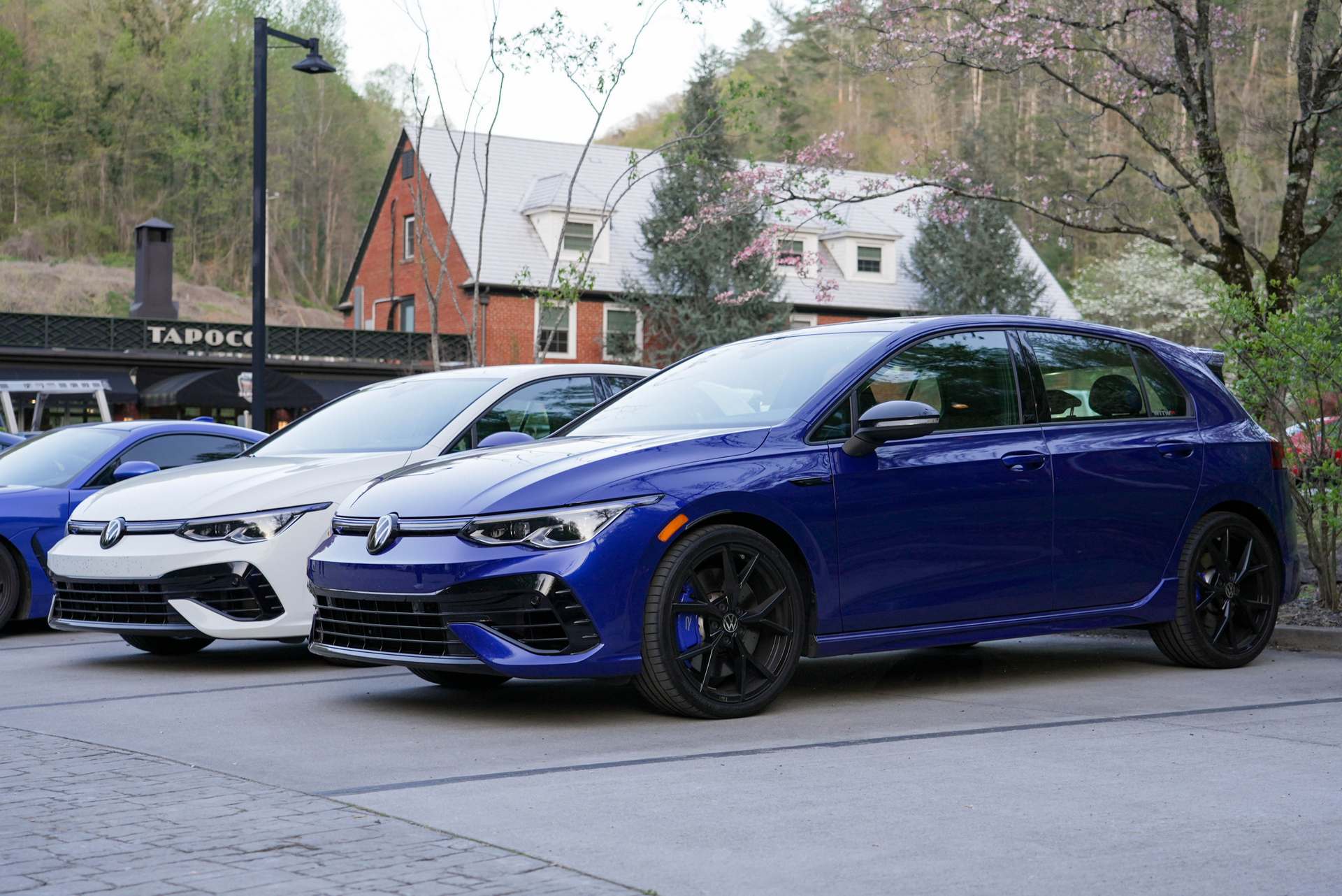
The EA888 engine has been under the hood of the fast Golfs for nearly twenty years, thanks to consistent updates and reengineering. The latest variant in the Mk8 is the evo4, which remains a 2.0L turbocharged inline-four engine with direct fuel injection, but sports a few impactful changes. They combine for 315 hp and 295 lb-ft in the Mk8 and 328hp and 310 lb-ft in the Mk8.5, pushing well beyond the power figures of the Mk7. Both pre- and post-facelift Mk8 variants use the latest DQ381 seven-speed DSG, which transfers power through all four wheels via an all-new torque vectoring all-wheel-drive system, replacing the traditional Haldex found in all other Golf R generations. A six-speed manual transmission was available for pre-facelift models, but it has since been removed with the latest facelift.
VW spent considerable time reworking the interior, including a heavy redesign of all touchpoints and an entirely new electronics suite. The center dashboard stack with the radio and climate controls was condensed into a single screen and a thin row of “buttons” below it for a minimalist look. DSG-equipped models have a small shifter toggle and a couple of accompanying buttons, but not much else in the console. Gone are the traditional gauges, swapped for a 10.25-inch screen called Digital Cockpit Pro. However, the “digital interior” also introduced haptic touch buttons that have become the bane of many Mk8 Golf R owners. Keeping things somewhat familiar, there are sporty seats with strong bolsters and classic blue accents.
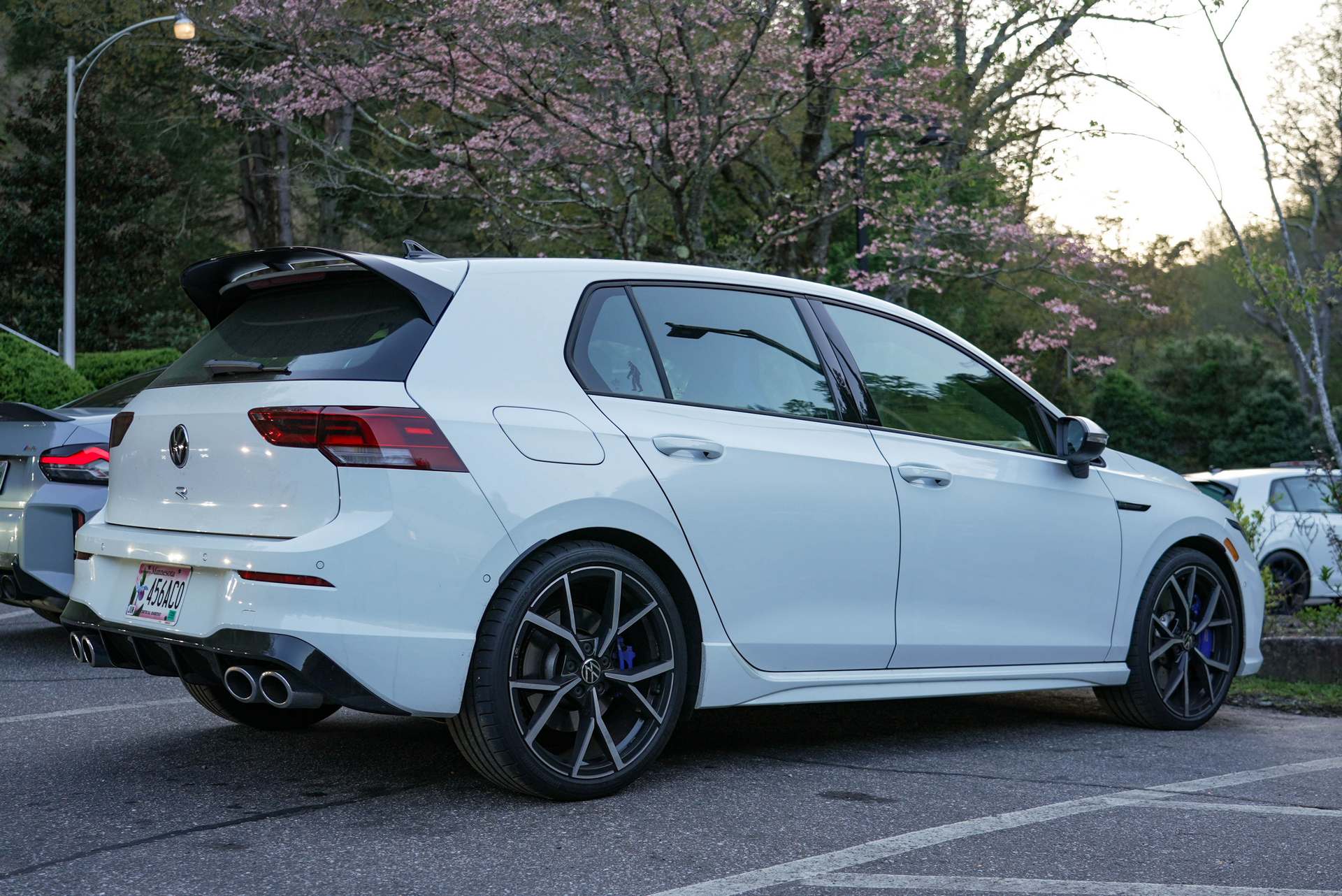
Externally, the Mk8 is undeniably a good-looking hatch. It's slightly curvier than the outgoing Mk7 but retains plenty of straight lines and sharp angles to keep it looking as attractive and aggressive as ever. Matrix LED headlights and standard LED taillights are a focal point of the exterior's design, with the former featuring a more pronounced shape than the Mk7. The taillights keep it relatively clean and straightforward.
Mk7 vs. Mk8 Golf R
VAG was in full stride in the 2010s, and many of their products from that era have become favorites and are often recommended. The Mk8 has the luxury of following up on one of those, the Mk7 Golf R, which many enthusiasts still recommend for a daily driver. We’re not here to crown a winner; that’s an opinionated fight, but we are here to compare the two generations.
Engine
Much of the love for the Mk7 platform comes from its engine: the EA888 Gen 3. The turbocharged 2.0L inline-four is powerful in its original form and can withstand a decent amount of tuning. That’s led the Golf R to be a common sight anywhere motorsports is allowed. However, it’s also quite efficient with either the manual or DSG transmission, making it great for everyday driving.
Its nearly 300 hp was a conservative figure, but also the most ever produced by a Golf. Most tuners can push the stock engine near 350whp on the stock turbo with supporting bolt-ons. The IS38 turbocharger features a single-scroll design, utilizing a partially divided exhaust housing to enhance response times and provide a broader power band without compromising efficiency. Other up-market engine components, such as finger-follower cam actuation, a lightened rotating assembly, a cylinder-head-integrated exhaust manifold, variable cam timing, and variable exhaust cam lift, all contribute to the ability to produce power while achieving fuel economy of over 30mpg on full tanks.
In moving to the evo4, Volkswagen focused on refinement and improving on ever-tightening fuel economy demands. That came via a revised direct injection fuel system, nearly doubling its injection pressure from 2,900 psi to 5,076 psi. Combined with better control, it allows the evo4 to use less fuel and be more efficient with the fuel it uses. For enthusiasts, the most significant change is the switch from an IHI turbocharger to a Continental unit. It’s more powerful in stock trim with similar spool characteristics, and tuners have already pushed it up to the 400whp mark, well beyond the Mk7’s IS38.
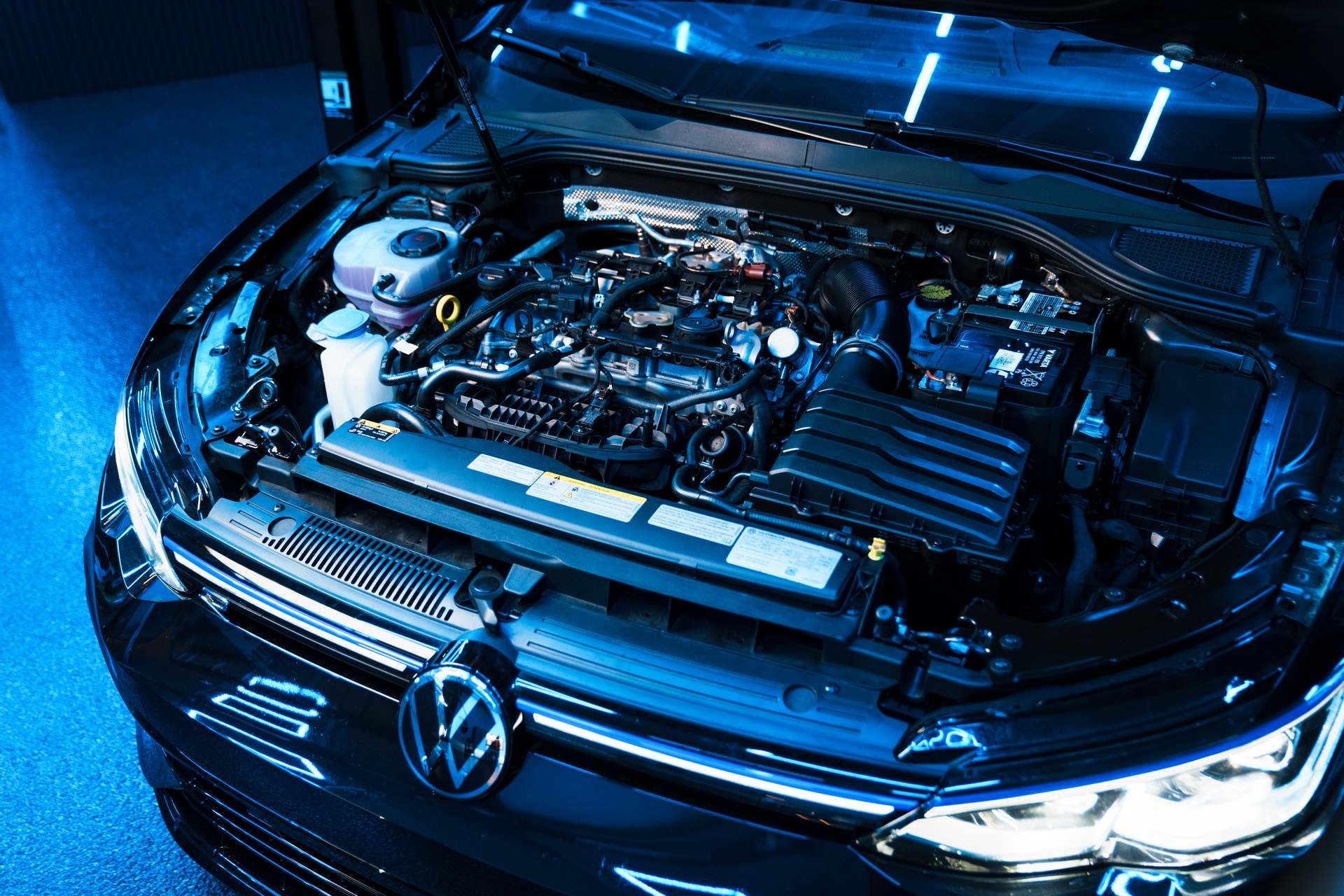
There aren’t any catastrophic issues with the later EA888s, but plenty of minor problems can arise. After decades of development, the PCV system is still not perfect; however, the latest version in the evo4 is the best yet. Mk7 owners will still have to look out for torn diaphragms. When those fail on the engine, oil leaks develop. Although there are a few places leaks will come from, the rear main seal is definitely one of them. The seal was a poor design from VW, and various aftermarket kits are available to replace it with a more traditional setup, as leaks are so common. You’ll also have to worry about the thermostat housing. In an effort to reduce weight and cost, the water pump and thermostat are combined into a single larger assembly. While the pump itself is made of metal, the thermostat housing it bolts to is plastic and is prone to cracking due to constant heat cycling. If it isn’t that, oil leaks from the upper timing cover, caused by a failing PCV, will cause the water pump’s O-rings to swell and leak. Lastly, be aware of possible spark plug and ignition coil faults.
Driveline
Spend any time in Golf R communities or on VW/Audi forums, and you’ll be met with plenty of talk about Haldex all-wheel drive. Dubbed 4Motion in VW marketing speak, it’s been the Golf R’s party piece since the original R32 in 2004, and it’s at its best in the Mk7. At that point, Borg-Warner had acquired the rights to the system and applied its engineering expertise to the system’s fifth generation. Reaction times were up, and moving parts were reduced, making it the lightest of units by far, but it wasn’t Borg Warner’s own. The Gen 5 Haldex remained in the Mk7 until the end of production, but a fresh platform with the Mk8 meant an opportunity to improve its classic AWD design, and Borg Warner came through with Magna Torque Vectoring AWD.
The Magna rear differential is similar to the Sport differential offered on older B8 Audi S4 and S5 models, but without the hydraulics. Two electronically adjusted multi-plate clutch packs on either side of the differential determine the torque sent to each rear wheel. As the Golf R corners, the AWD computer reduces pressure on the inside wheel’s clutch pack and increases the pressure on the outer wheel’s clutch pack, ensuring more torque is sent to the outer wheel to assist with chassis rotation.
Further up the driveline is the gearbox; all things considered, there’s a lot of crossover between the two in this department. Mk7 and Mk8 Golf R models can feature a six-speed manual transmission or a dual-clutch DSG across most model years. The latter can utilize six or seven speeds, though only the pre-facelift Mk7s receive the six-speed DSG (DQ250). The Mk7.5 and Mk8 utilize the seven-speed DSG (DQ381), with the later generation featuring an updated variant of that DSG. VW axed the manual transmission with the update to the Mk8.5 in 2025.
As transmissions go, you can’t make a wrong choice with either generation of Golf R. The manual is timeless and delivers engagement that’ll have you smiling anywhere but in traffic. On the other hand, the DSG shifts faster, is easier to drive in traffic, returns slightly better MPG, and can handle more power without modification. The dual-clutch is a little less reliable than the manual, but nothing to write home about. Servicing is crucial for the DSG, so changing the fluid on time will ensure the best chance of avoiding trouble.
Chassis
Speed and power are fun, but the twisties are where you can truly see where all the engineering went for both of these Golf Rs. The Mk7 was the first Golf based on VW’s modular MQB platform, bringing a highly revised suspension architecture over the preceding PQ35 platform. It utilized more aluminum, revised bushings, and new geometry, which sharpened the Mk7’s fundamental characteristics and created a better base for aftermarket modifications. The same basic formula was applied to the Mk8, but the culmination of a stiffer bodyshell and many small suspension changes makes it the better-performing car in stock trim.
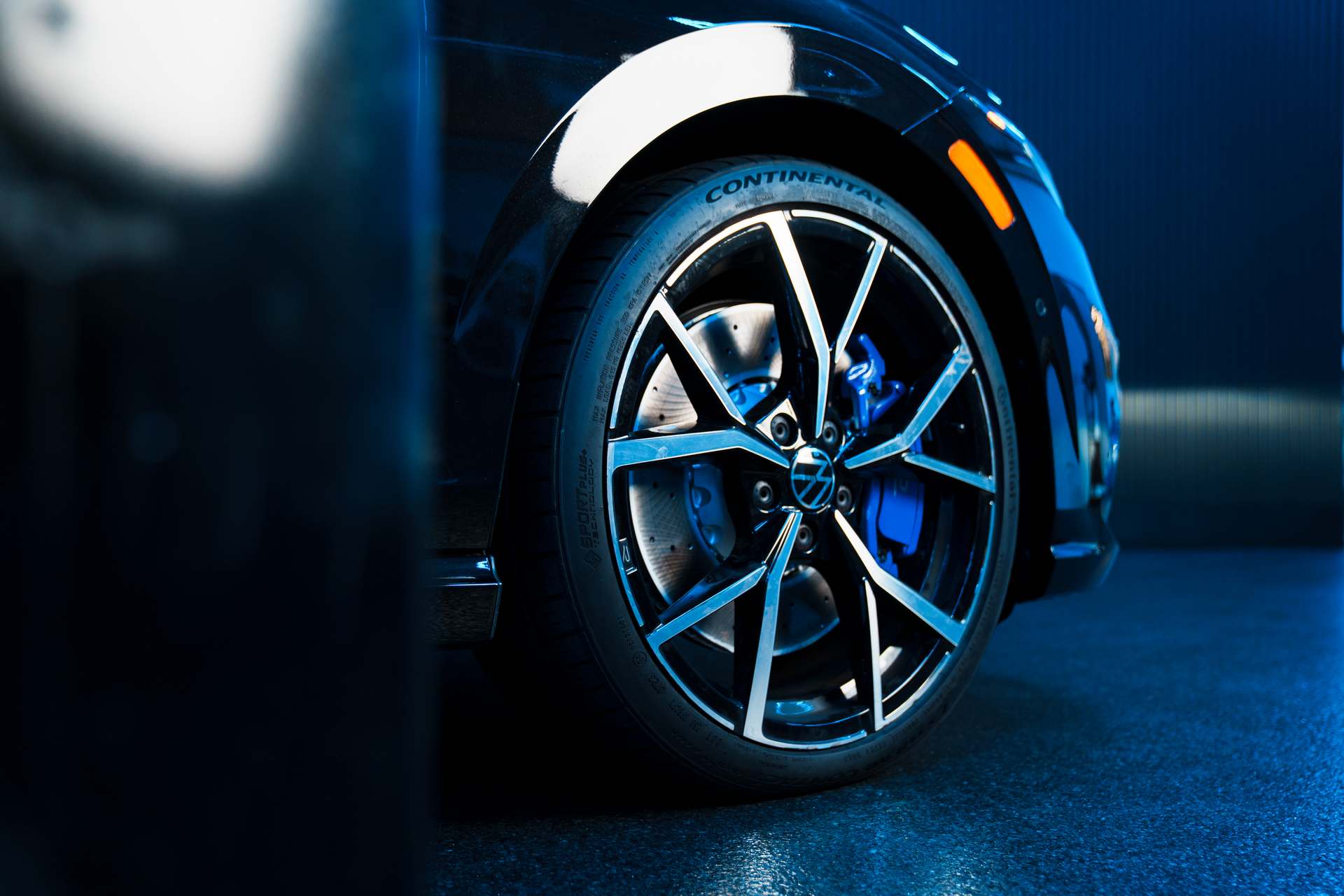
In both generations, the front suspension consists of a MacPherson strut and a lower control arm, while the rear features a multi-link design with four arms. The springs paired with the dampers are firmer and shorter than those of their GTI counterparts, providing a better look and improved performance. A pair of sway bars aids in suspension roll characteristics. Beyond that, a handful of important differences give the edge to the Mk8.
A big one comes from the standard dampers, which in the Mk8 are adaptive units, a first for the Golf R. Called DCC (Dynamic Chassis Control) in VW speak, the previous generation offered them as an option. While everyone can do without them in real-world situations, the adaptability is nice and lends to the Mk8’s improved dynamics. Furthermore, the DCC is integrated into a new electronics suite that encompasses the entire car, including the Vehicle Dynamics Manager.
The VDM is the central brain for all electronic chassis aids, integrating the electronic stability control (ESC), electronic differential locks (XDS), and Dynamic Chassis Control (DCC) under one roof, so to speak. Utilizing the measurements from those three systems, it adjusts them on the fly, adapting them to the situation at hand. When adding the trick new rear differential, which the VDM also influences, the Mk8’s already sharp chassis is amplified to a degree not seen before from a road-going VW hot hatch.
However, as mentioned, the Mk8’s formula is essentially the same as the Mk7's. The suspension design is nearly identical, and you can get DCC and a similar XDS electronic differential lock—which is related to the braking system and not the differentials—in the older generation, which provides many of the tools the Mk8 has. Stock for stock, it’s not as responsive or neutral, but the Mk7 platform offers a range of aftermarket upgrades that can quell the inherent understeer. Even if left stock, on its own, the Mk7 is plenty capable and fun; you can’t go wrong with it.
Interior/Exterior
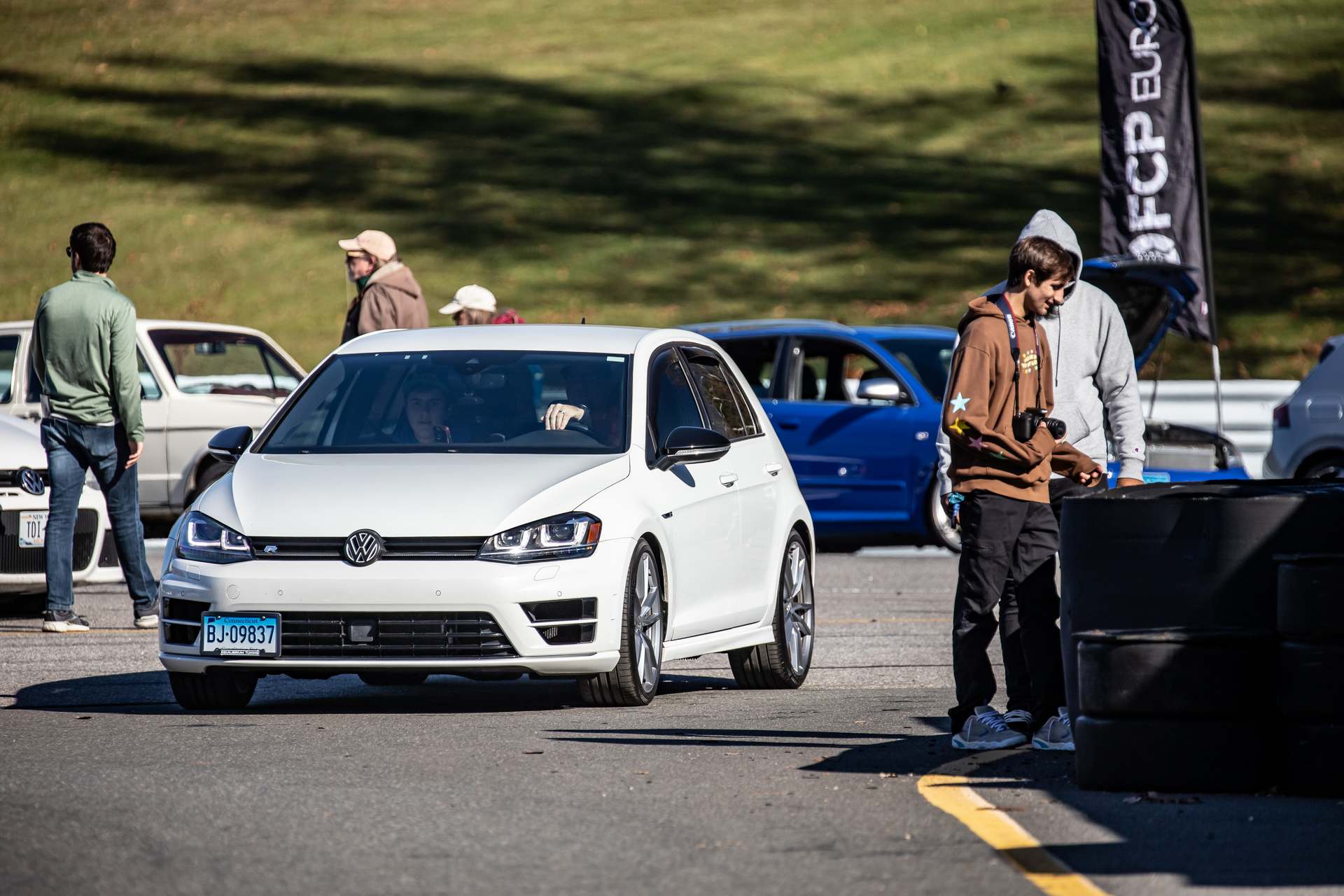
While other brands seem hell-bent on destroying their decades of beloved styling to focus on one specific market, VW has managed to change things up without offending a significant portion of its clientele. The Mk7 was always a looker, full of sharp angles and straight lines that delivered a rather aggressive exterior fitting of a performance vehicle. Like Golf Rs past, it features bespoke bumpers, wheels, and blue-painted brake calipers in a package with fantastic proportions and minimal bumper overhangs. It’s precisely what many wanted from their hot hatchback, as evidenced by its stellar sales figures while on sale, and it remains an appreciated design a decade after its release.
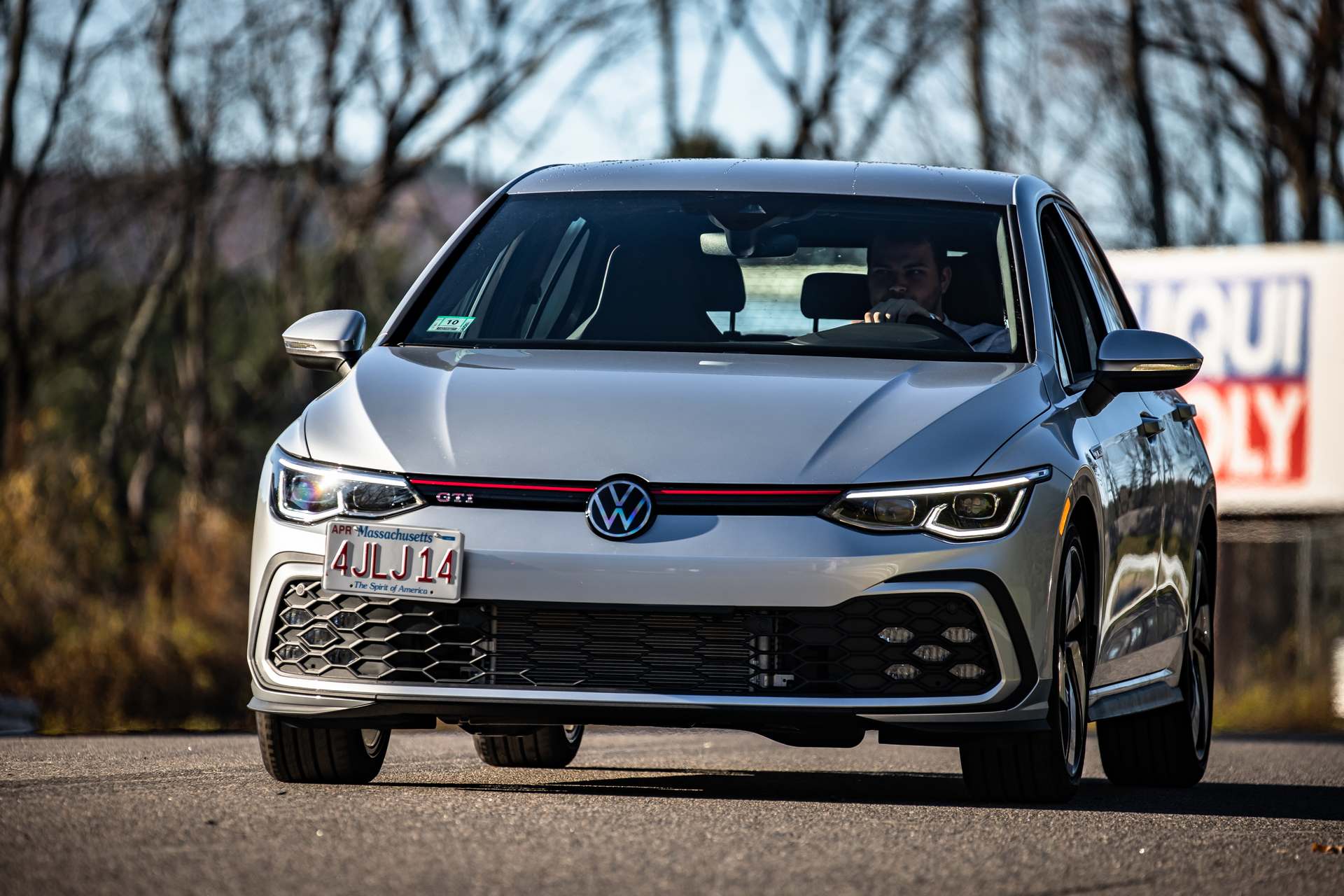
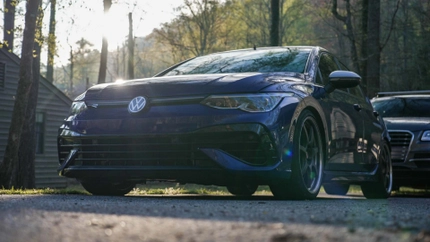
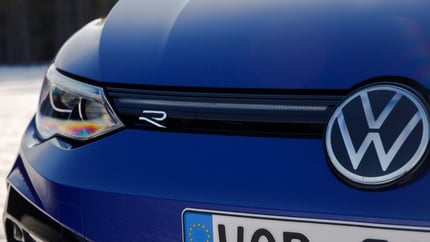
Comparatively, the Mk8 has a slightly softer styling, but not by much. Distinctive changes are immediately apparent, where the headlights feature a much thinner design with an E46-esque lower half, derived from the LED design in the Mk7’s headlights, and a hint of winged eyeliner in their upper corners. The blue stripe that appears in the upper portion of the headlight and connects the two by running across the grille is a cue from the GTI, but uses the Golf R’s historic blue accents. The bumper features a significantly larger lower grille area and begins with body lines that extend down the car's side skirts. The rear end feels more like a hefty update to the Mk7 than an all-new design, but I’m not sure anyone can honestly complain about that.
As different as they look externally, it's the interior that truly sets these two apart. In the late teens, VW invested a significant amount of time in developing an updated electronics suite for the next generation, and the Mk8 is the beneficiary of all that work. As such, each Mk8 Golf R comes equipped with the Digital Cockpit Pro instrument cluster and infotainment screen, which combine to present all the data and information drivers and passengers would need. The cluster itself is programmable, featuring a handful of different screens and the ability to swap out which two gauges flank the large central tachometer on the standard cluster screen. Just to the right of that is the infotainment screen, which measures 8.25" or 10", depending on whether or not the Discover Pro infotainment option is selected. The latest Mk8.5 models have an even larger infotainment screen, measuring in at 12.9”. It comes with an updated electronics suite, which includes VW’s IQ.Drive and Volkswagen’s Discover Pro MIB3 infotainment system.
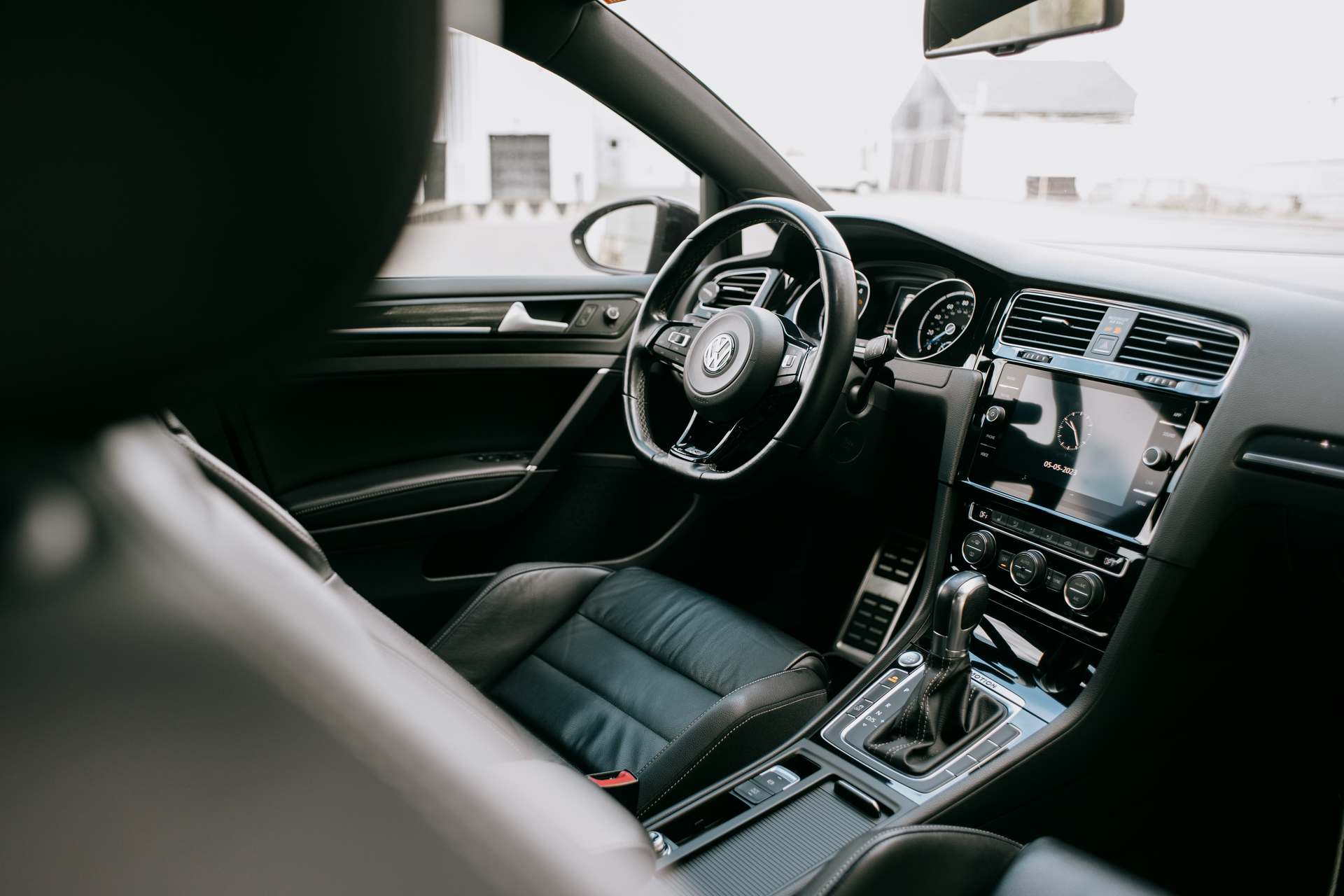
The Mk7 and Mk7.5 are technologically less sophisticated, running older infotainment software and featuring smaller screens where applicable. Pre-facelift models utilize analog gauges in the cluster, accompanied by a small screen positioned between the two, displaying information such as remaining mileage and TPMS data. Mk7.5 models did receive a digital cluster, but nothing as capable or as large as the one found in the Mk8. Both pre- and post-facelift variants did have Apple CarPlay and Android Auto, except for the 2015 MY Rs.
Beyond the technology gap, the Mk8 has an interior befitting a car in a more luxurious class. A heavily redesigned dashboard inset with ambient lighting and a lock of switchgear is a distinct change from the relatively contemporary styling of the Mk7. It’s far more modern altogether, but if you can live without your interior looking new, the Mk7 isn’t a bad place to be. It features a straightforward layout without frustrating haptic buttons, and Mk7.5 models come with a large touch infotainment system compatible with CarPlay and Android Auto.
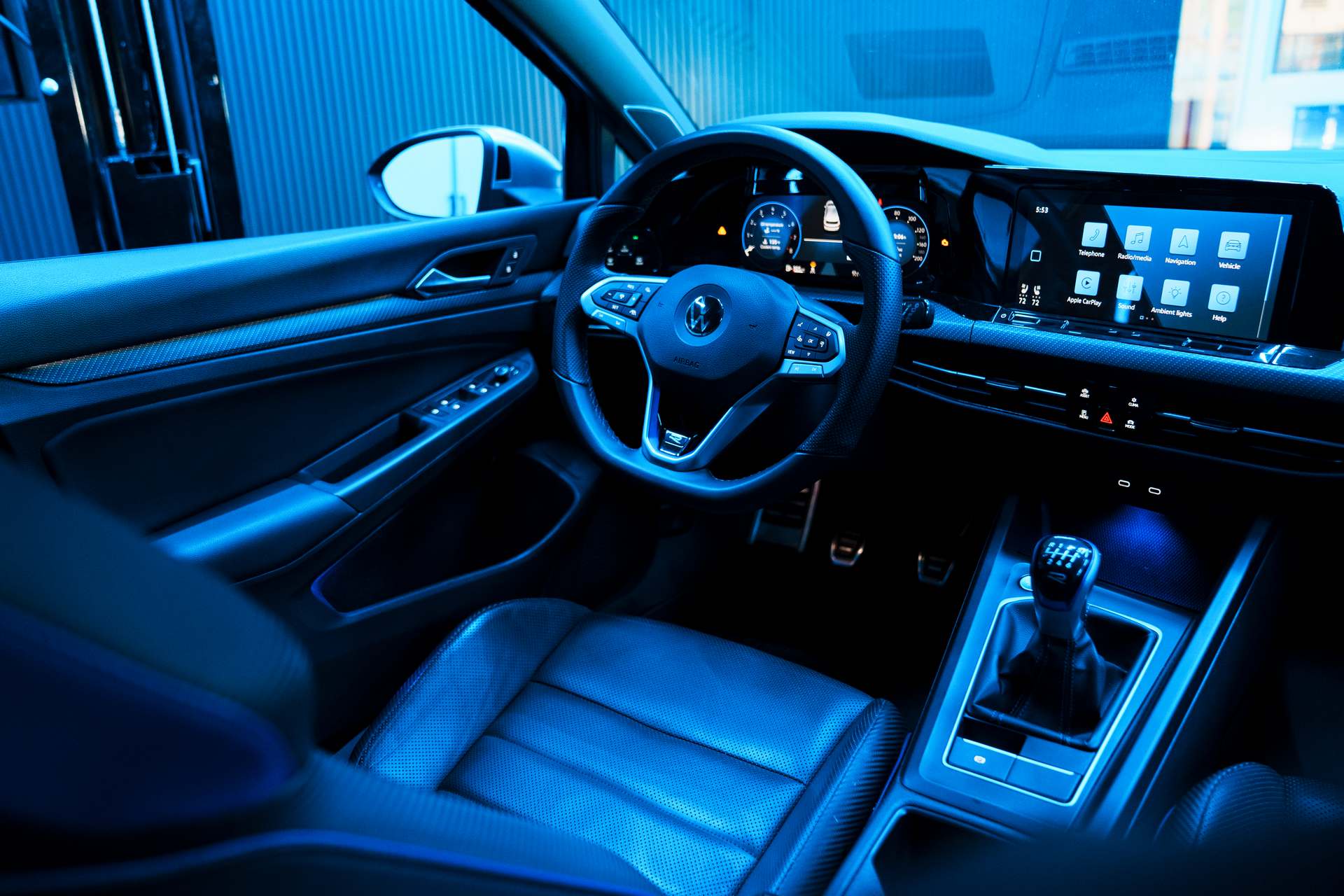
Both generations benefit from great sport seats, typically covered in black Nappa leather with blue stitching and an embroidered R logo in a matching blue. That said, the Mk8’s seats are closer to those of the European model, from which many have coveted seats. The front and rear are heated on Mk8.5 models with the standard interior. If you’re after something a little more exotic, VW offers the Euro Style Package on Mk8.5 models, replacing the stock seats with velour and cloth-covered, manually adjustable sport seats.
Pricing
If the Mk7 and Mk8 commanded the same money, then the latter car, being more powerful, better equipped, and more refined, would be the go-to choice. Unfortunately, this is not a fantasy world, so that’s not the case. The facelifted Mk8.5 models have not been on sale for long and likely have a few years left before VW makes a change; expecting to acquire one significantly below MSRP is unlikely, so they shouldn’t be considered unless you can spend the fifty-grand to get one. However, go back a few model years, and asking prices get much lower.
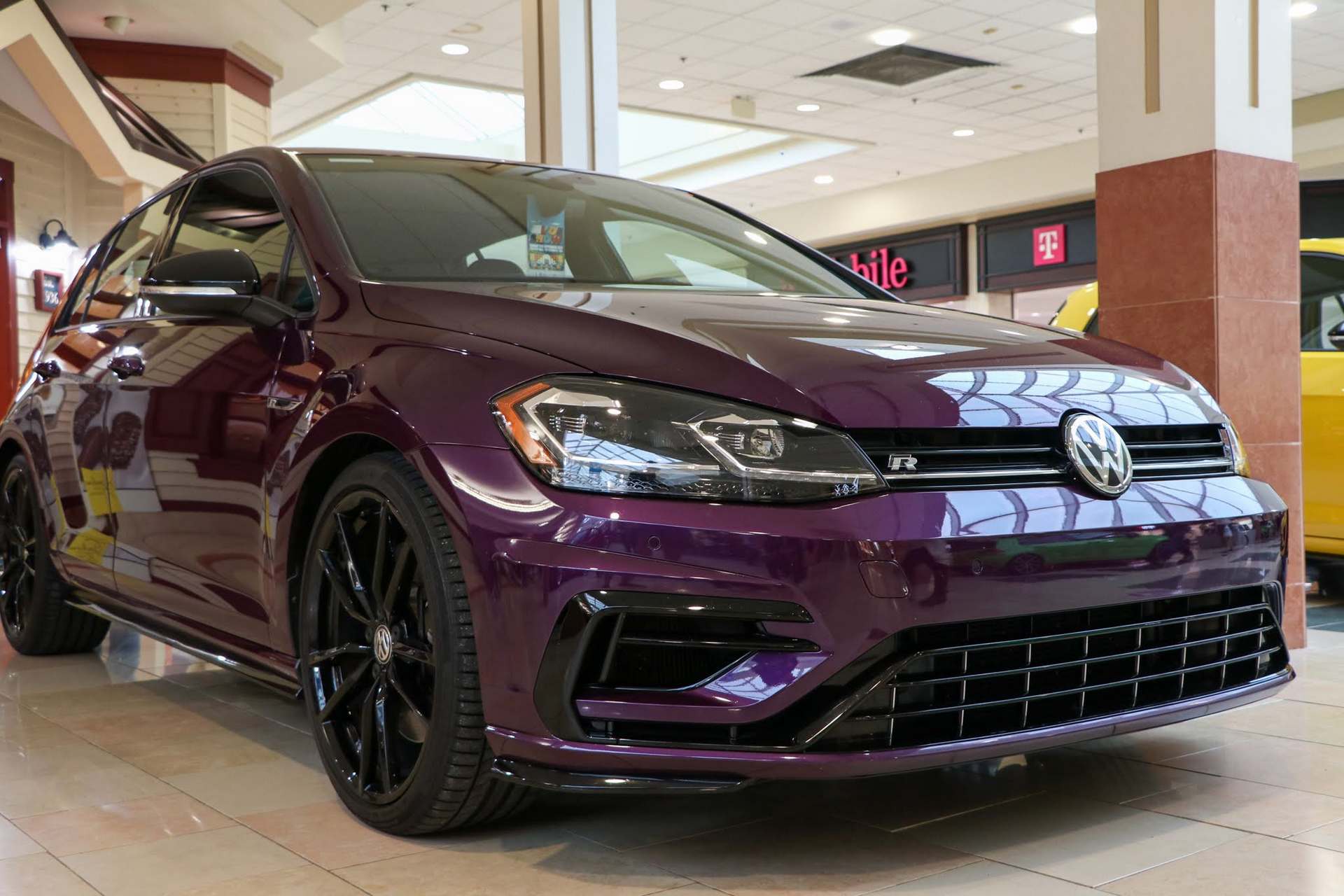
The cost of a Golf R can vary significantly depending on your mechanical expertise. Do you have the time, tools, and knowledge to potentially replace expensive parts or rebuild larger components due to neglect or abuse from prior owners? If yes, there are plenty of high-mileage Mk7s and Mk7.5s in the mid-teens and lower with suspect modifications and spotty service history. If that doesn’t sound like you, consider the floor for a good-enough example, around the $16,000 mark for a Mk7 with higher mileage and in the low $20,000 range for a similar Mk7.5.
Mk7: $16-28,000
Mk7.5: $20-40,000
Mk8: $30-50,000
Mk8.5: MSRP
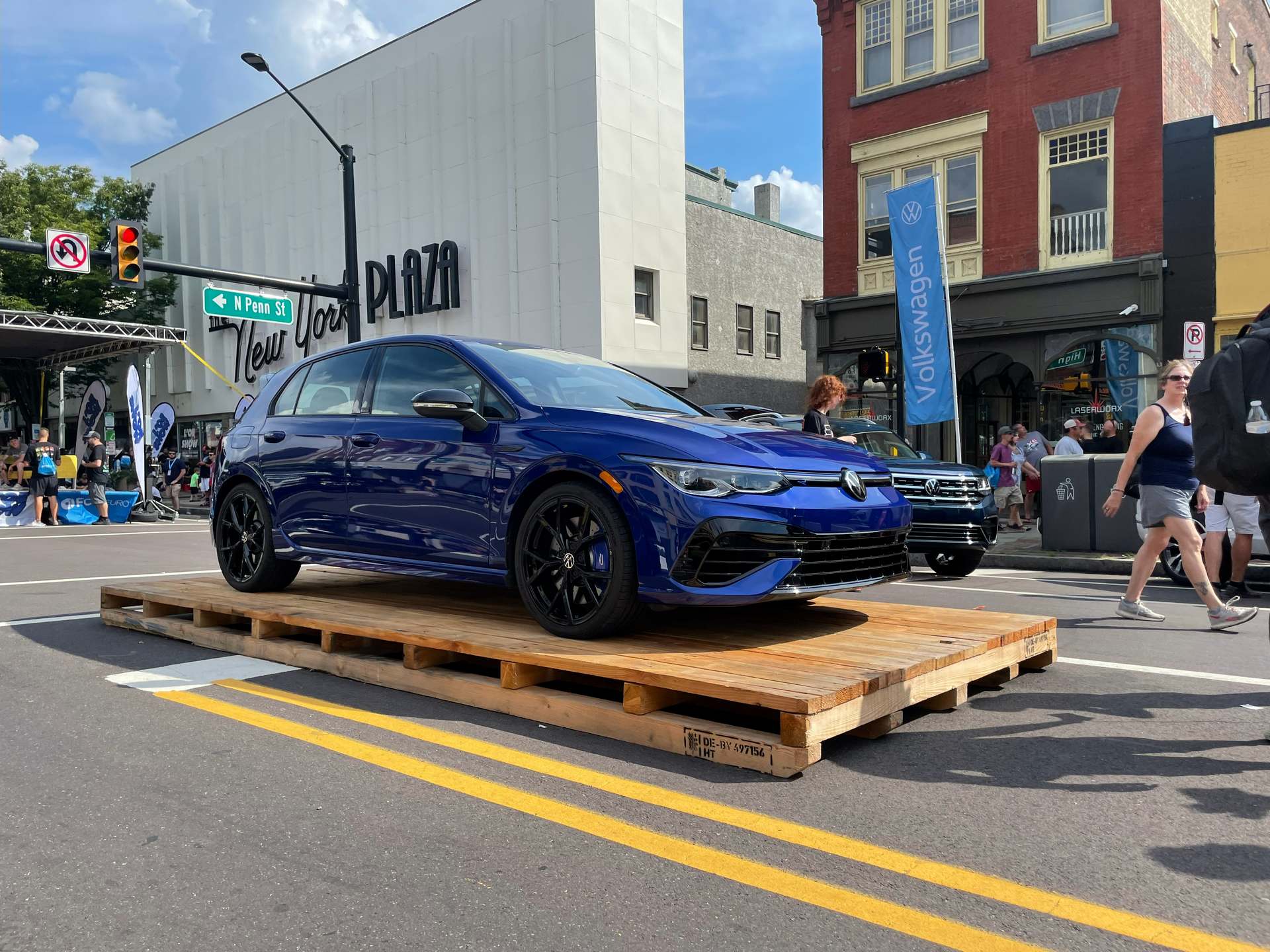
You’ll find the most competition in the high twenties through the low thirties. There, low-mileage Mk7s and well-kept but used Mk7.5s are pitted against early Mk8s with higher mileage, not to mention used Mk8 GTIs. If you’re not set on one generation or another after reading this, then find the best deal in that range; it’ll give you the best chance of finding a cared-for Golf R. Otherwise, choose your generation and see what’s out there.