
Volkswagen EA888 Gen 3 Engine
- VW EA888 Gen 3 Engine Codes/Designations
- Mk7 Golf R vs. GTI vs. GLI vs. Mk6 GLI - VW EA888.3 Differences
- VW EA888 Gen 3 Common Issues & Maintenance
- Ignition Coil & Spark Plug Replacement
- Intake Valve Carbon Cleaning
- Water Pump Replacement
- Air Oil Separator (PCV) Replacement
- Rear Main Seal
- Oil Leaks (Camshaft Bridge, Upper Timing Cover, Lower Timing Cover, Oil Cooler)
- Intake Manifold Flap Replacement
- Engine Mounts
- VW EA888 Gen 3 Engine Upgrades & Modifications
- Steel Oil Pan
- IS38 Turbo Swap
- Air Intake
- Intercooler
- Catback Exhaust
- ECU Tune
- VW EA888 Specifications
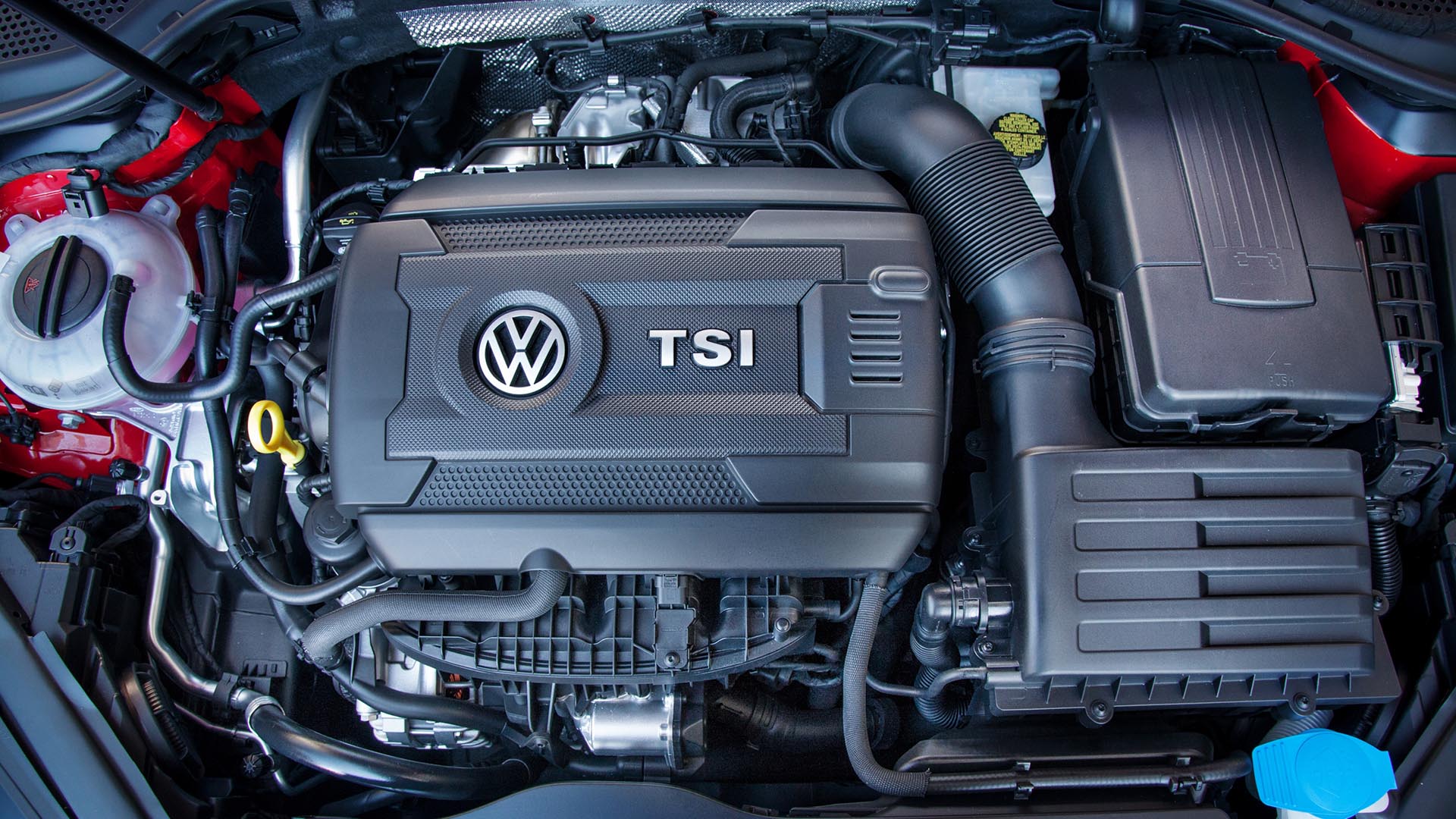
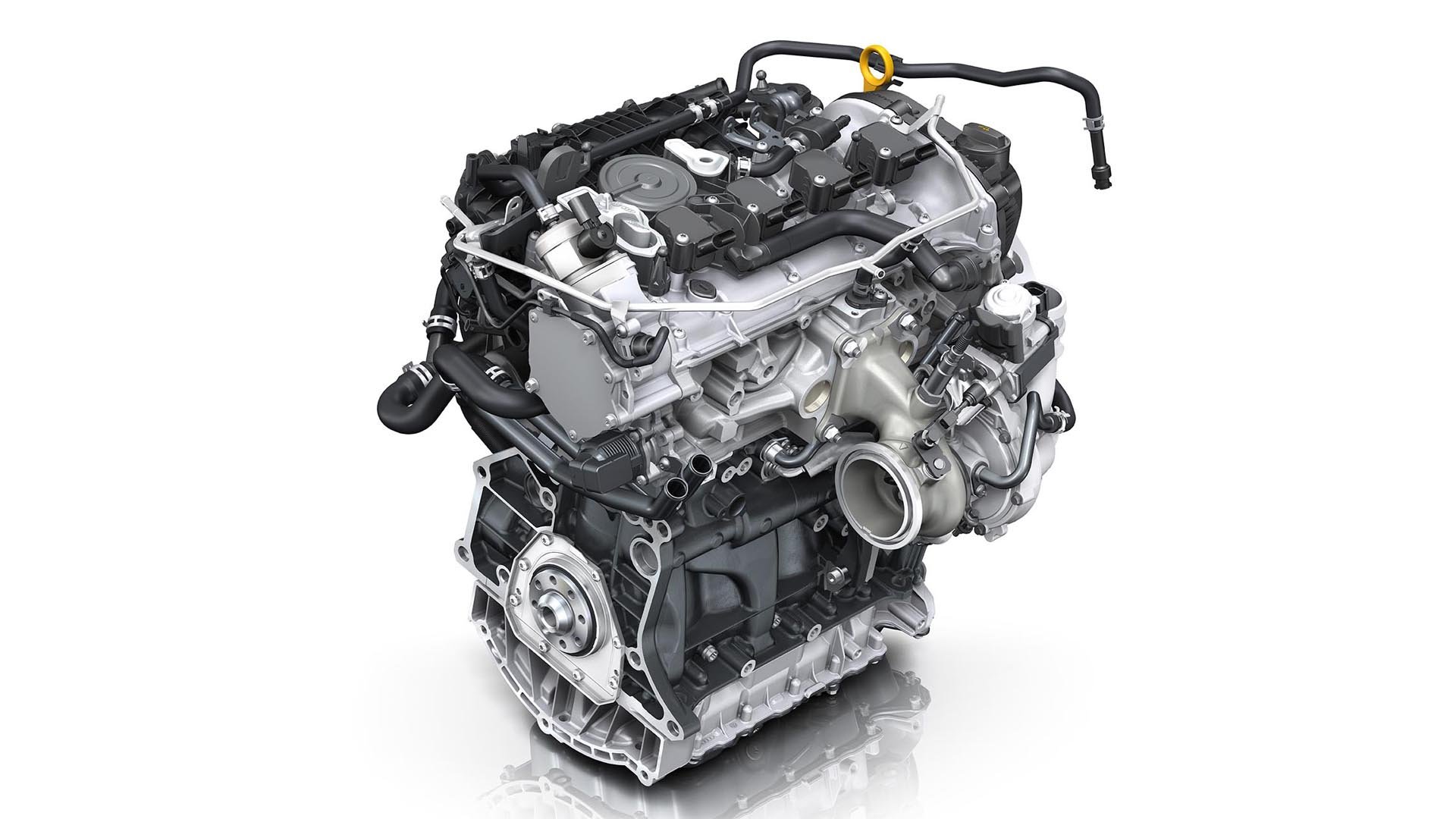
Building upon the first and second generation of ‘TSI’ badged turbocharged and direct-injected engines used across the Volkswagen and Audi lineups, the EA888 Gen.3 has become a fantastic option for anyone looking for a reliable daily driver or something capable of more performance. As the main engine in VW’s lineup for many years, the Gen.3 TSi comes in two displacements—1.8L and 2.0L—with many different variants and power levels, though the larger displacement is much more common. Minor differences exist across those engines in tuning, compression ratios, turbochargers, and fueling, but each is built upon the same architecture. It’s used in the VW GTI, GLI, Golf R, Tiguan, and Atlas models. There are variations among the three, but all are based on the same design and architecture. The 1.8t version features the same 82.5mm bore, bit with a shortened 84.1mm stroke, decreased from the 2.0t 92.8mm.
Audi follows a similar pattern with their MQB-based vehicles, the 8V A3/S3 and the 8S TT/TTS. While only the base model A3 received the 1.8t variant of the Gen3 TSI engine, most A3 models, plus the S3 and TT/TTS, all used the more popular and common 2.0t version.
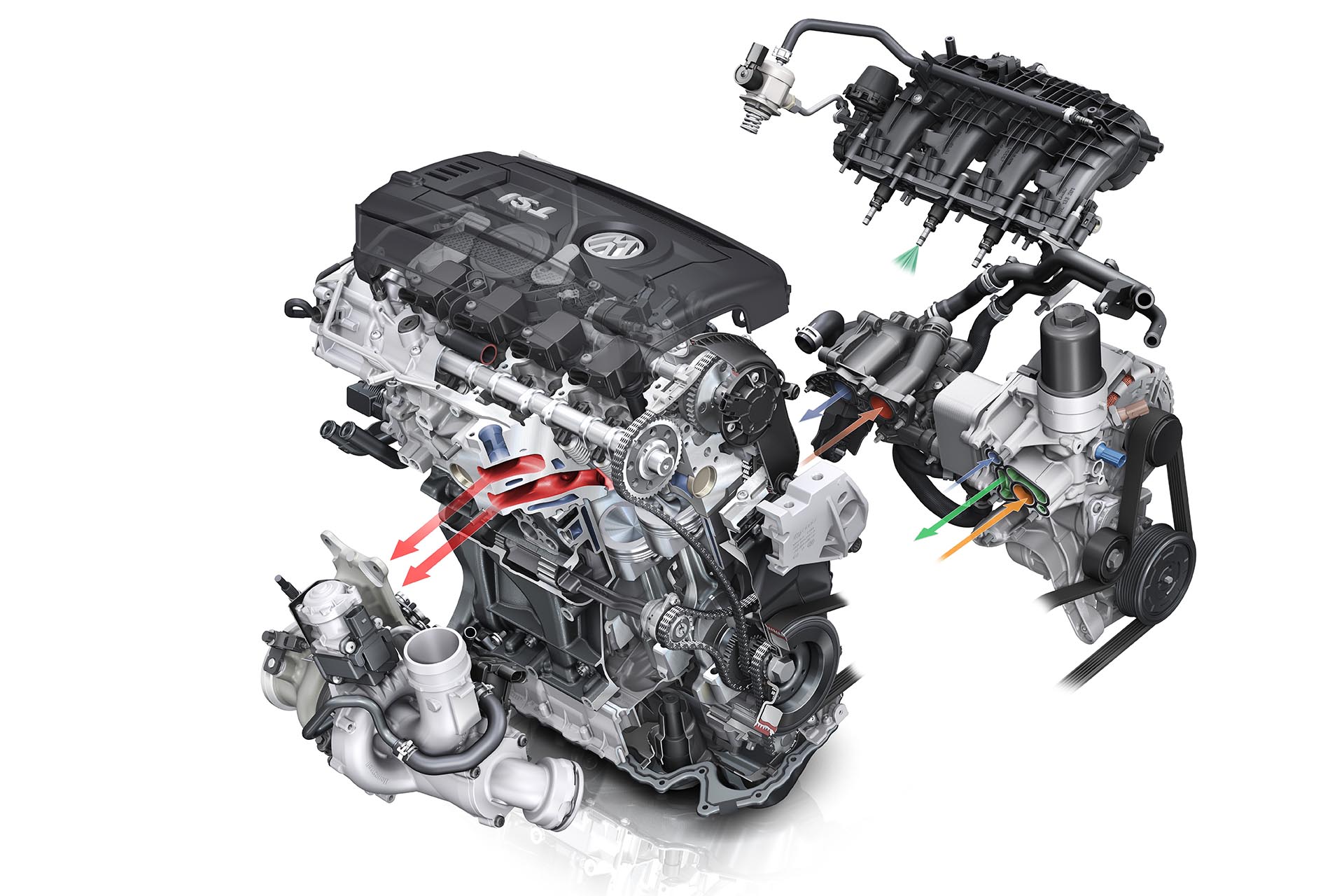
The 2.0 turbo Gen.3 engine uses a cast iron block and an aluminum cylinder head with variable camshaft timing. Depending on the engine variant, the exhaust side may also have a variable exhaust lift. Thanks to the integrated and water-cooled exhaust manifold, a mono-scroll turbocharger with a divided exhaust inlet is bolted directly to the cylinder head. This design is increasingly common on modern turbocharged engines, which aids economy, emissions, and performance, significantly improving all three over outgoing generations. Direct fuel injection feeds fuel into the cylinders, hence the TSI name.
The most potent VW variants of the Gen.3 EA888 are available in the Mk7 and Mk7.5 GTI, Golf R, and Mk7 GLI models. The Golf R, S3, and TTS use the highest output version available in the United States, featuring a larger IS38 turbocharger and several improvements not found anywhere else; however, the GTI and GLI variants also offer plenty of power and performance. Bolt-on modifications like performance ECU tunes, larger turbochargers, and freer-flowing intake and exhaust components are readily available and can seriously improve power levels without sacrificing anything.
There’s a large handful of engine codes across VW’s variants of the Gen.3 EA888. Below, you’ll find some of the more popular codes that may relate to your model and model year for the GTI, Golf R, and MQB GLI.
Being as there are so many makes and models that use variants of the EA888 Gen 3 engine, make sure to use the "My Garage" vehicle selector to add your specific vehicle to ensure fitment of all of the parts.
| Volkswagen Mk7/Mk7.5 GTI | CNTA - 2015 CXCA - 2015-2018 CXCB - 2015-2018 DKFA - 2019-2021 |
| Volkswagen Mk7/Mk7.5 Golf R | CYFB - 2016-2017 DJJA - 2018-2021 |
| Volkswagen Mk6 Jetta GLI | CPPA (PZEV) - 2012.5-2018 CPLA - 2012.5-2018 |
| Volkswagen Mk7 Jetta GLI | DKFA - 2019-2022 DXSA - 2023-2024 |
| Audi A3 8V | CNS - 2015-2016 CNTC - 2015-2018 CZRA - 2017-2020 DHHA - 2019-2020 |
| Audi S3 8V | CYFB - 2015-2017 DJJA - 2018 DLRA - 2019-2020 |
| Audi TT/TTS | CNTC - 2016-2018 DHHA - 2019-2021 CYFB - 2016-2018 DLRA - 2019-2021 |
Mk7 Golf R vs. GTI vs. GLI vs. Mk6 GLI - VW EA888.3 Differences
While the GTI, GLI, and Golf R engines are all Gen3 EA888 engines, sharing the same basic block, head, and basic architecture, they are inherently different regarding build components and engine power output.
The Gen3 TSI was introduced in mid-2012 during the Mk6 Jetta generation in the GLI Model. While this variant of the EA888.3 is more or less the same as those used in the Mk7 GTI and other models, it's fairly unique thanks to the GLI's older PQ35 platform. The aftermarket generally does not support these as well as the Mk7 GTI, Golf R, and other VW models.
Mk6 GLI Differences:
Honeywell-Garret MGT1725S Turbocharger
Intake routing (pre-turbocharger)
Exhaust routing
No Variable Valve Lift
The Mk7 Golf R and Audi TTS 8S engines are the toughest of the bunch. They were built to support true high-performance platforms and, as such, use the most robust parts VAG prepared for the EA888. As you can see bleow, the improvements covered all aspects of the engine, with virtually nothing left untouched.
Golf R/S3 Engine Improvements:
Exhaust valves are nitrided and contain a higher nickel content for improved thermal resistance
New exhaust valve seats for better thermal durability
Cylinder head metallurgy is a different alloy for improved thermal performance
A larger IHI IS38 turbocharger (GTI uses an IHI IS20)
Revised exhaust camshaft timing
Revised pistons with a reduced compression ratio
Higher-flowing piston oil squirter
Higher-flowing high-pressure fuel pump and injectors
A larger main radiator and a small auxiliary radiator

Ignition Coil & Spark Plug Replacement
The two most common maintenance items for any modern petrol-powered engine’s ignition system are the ignition coils and spark plugs. Together, they send the electric charge into the combustion chamber, which ignites the fuel/air mixture. The EA888.3 ushered in a new type of ignition coil for VAG engines. The new unit bolted into the head, solving the issue of ignition coils popping out of the head and causing a misfire, which is rare but can happen as they age. However, they can still fail prematurely.
Any wear or damage to the coil will weaken the spark at the plug. That’ll often trigger an engine code and light, but you may catch it beforehand through reduced power and poorer-than-normal fuel economy. Volkswagen’s recommended replacement intervals vary, with the average falling around 40,000 miles, but anyone making more power than stock will want to watch for earlier signs of wear. If your GTI, Golf R, or GLI has a flashing check engine light and a heavy misfire, you should not drive the vehicle any further than you need to be in a safe location. This indicates a ‘hard’ misfire, and you should never drive your VW with a flashing check engine or EPC light.
_1-35_screenshot.jpg)
Most often, an ignition coil that is otherwise in perfect functional condition may break or be damaged when you remove it to change your spark plugs. This is not uncommon—the lower portion of the ignition coil will often separate from the main unit, so it is always best to have new ignition coils on hand if you are replacing the spark plugs in your Mk7 or Mk7.5 GTI, Golf R, or GLI.
Speaking of spark plugs, these are one of the hottest topics for the MQB Gen 3 TSI engine. The honest answer is that the best spark plug for your GTI, Golf R, or GLI will be the OE-equivalent or Genuine plug, typically made by NGK for most late-model VW and Audi engines. If in doubt, ask your tuner what they recommend - going one step colder on the spark plug temperature is popular for lightly tuned engines. For highly modified engines, such as those with larger aftermarket turbos and as much as double or more the original engine output, one of the most popular upgraded spark plugs is from NGK Racing.
If you plan to tune your EA888 for more power and don’t know the ignition components’ age, mileage, or condition, we recommend you change them proactively. If anything is “borderline” in terms of function, an ECU tune that makes more power asks more of the ignition coils and can push it over the edge in terms of being able to ignite the air-fuel mixture.


Intake Valve Carbon Cleaning
Direct-port fuel injection has increased power and fuel economy for internal combustion engines enough that all modern engines are adopting the technology. However, the most significant downside to this new tech has proven to be a tedious issue to tackle. Traditional fuel injection setups have the injectors before the intake valves, and as the fuel passes over the valves, any oil or carbon build-up is washed off. Injecting the fuel directly into the cylinders removes that effect, so carbon will cake up the back of the valve to the point where it noticeably reduces power and hampers fuel economy.
The most common symptoms of dirty intake valves are stumbling or wandering idle when cold. When the problem is severe, it can cause a ‘soft’ engine misfire until the engine warms up or, in extreme cases, a continued misfire as you drive. Eventually, you will see significantly reduced fuel economy and poor performance.
How often you'll need to clean your VW’s intake valves can vary significantly. Driving conditions, driving style, temperature, and overall engine condition can contribute substantially to how severe and quickly the carbon build-up occurs. Generally speaking, a direct-injected engine that sees many short trips, spends a lot of time idling and doesn’t see a lot of full throttle or high RPM use will need cleaning at lower mileage. GTIs and other performance-focused models sporting the EA888 engine that see track time or other high-load uses will be able to go significantly longer before cleaning, and the carbon build-up tends to be easier to clean. As a rule, somewhere around 80,000 miles is a reasonable interval. However, it is possible to need cleaning as low as 40,000 miles for cars that are ”babied” or only driven around town, or as much as 120,000 miles for VW/Audis that see a lot of highway driving or see more full throttle and high RPM use.
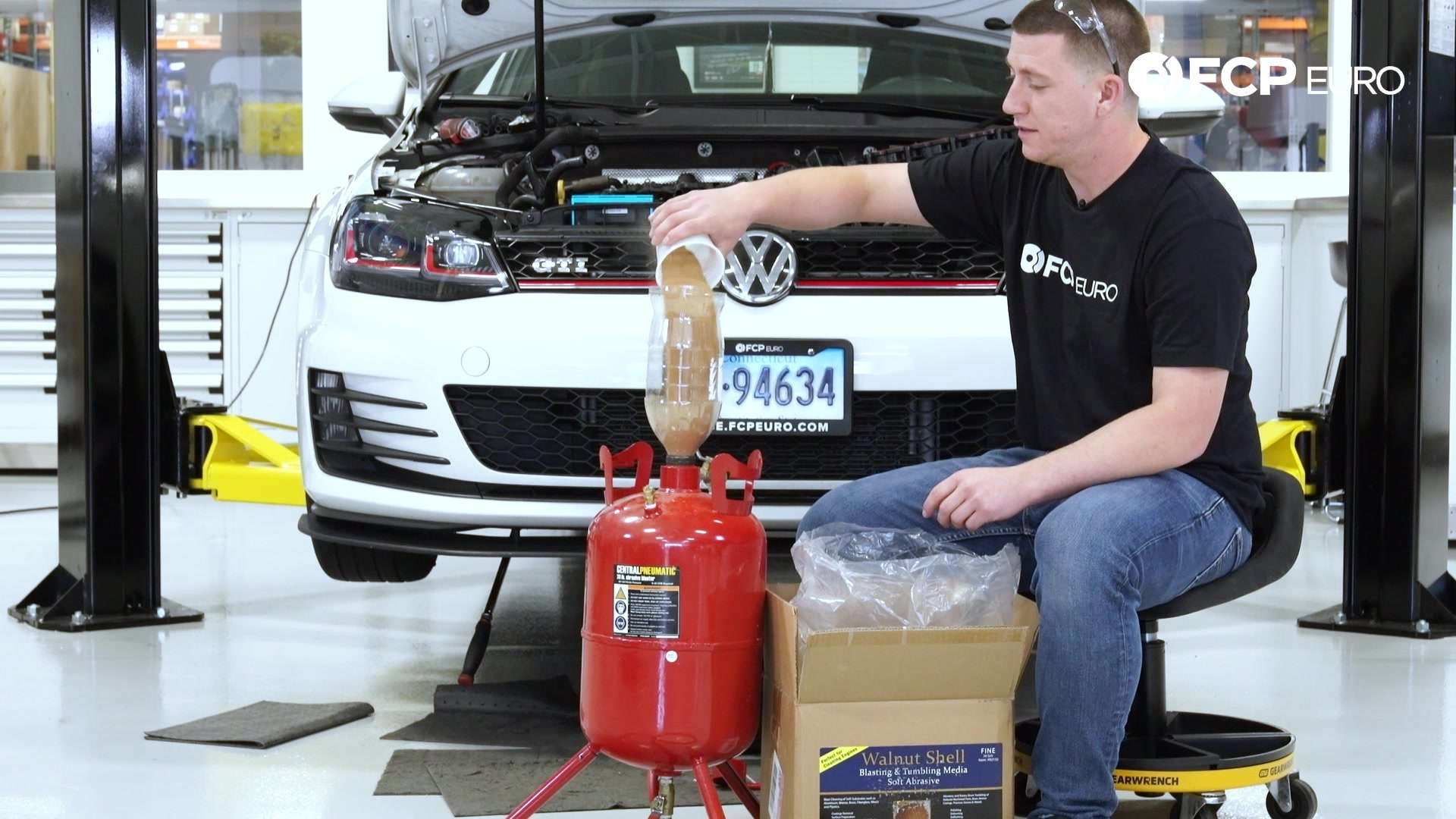
While you can take your EA888 to a dealer or independent service shop to have the valves cleaned, you can save a lot of money by doing it yourself. The tools can be rented, but seeing as most new engines use direct injection, having them readily available could be really handy. Beyond the tools, the steps are relatively simple, and we have them all laid out for you in a DIY. Because there is no fuel flowing over the intake valves, there is no additive that will solve this problem, but there are some additives, such as LIQUI MOLY Jectron DI, that can ensure the injectors continue to flow correctly and remove carbon deposits on the tips of the injectors.
Lastly, while using a ‘quick fix’ heavy-duty spray cleaner, like Seafoam or other products is tempting, these generally will not fully clean the valves. Without knowing exactly how that cleaner is affecting the oil and with the possibility of accelerated wear due to oil dilution, we do not recommend them.


Water Pump Replacement
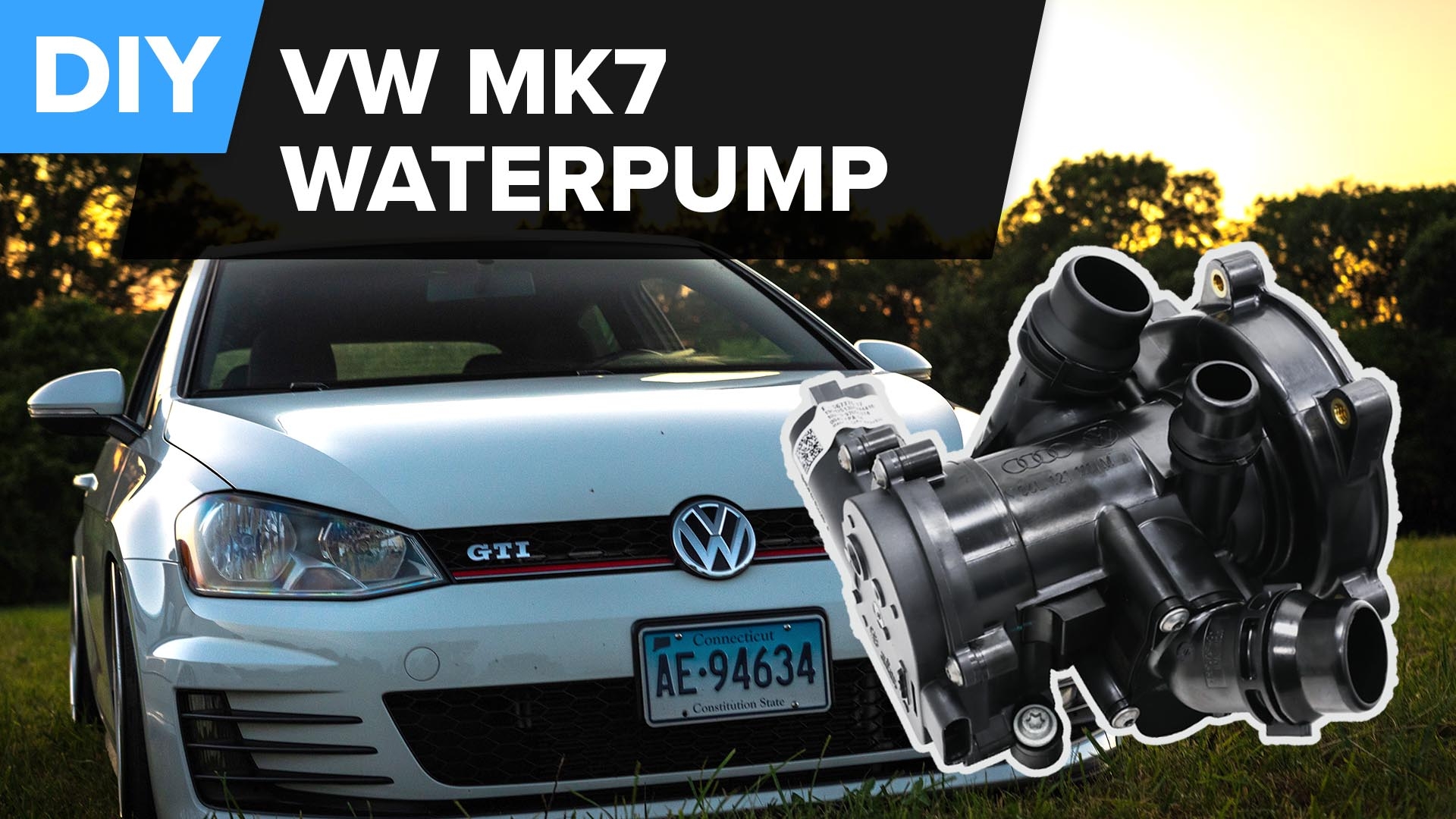
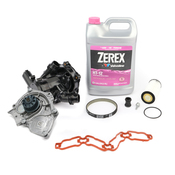
Leaking or seeping coolant from the water pump and thermostat assembly is the most chronic issue for the Gen3 EA888 engines. VW packaged the water pump and thermostat assembly into one complete unit, which mounts to the front side of the engine directly underneath the intake manifold. The assembly is primarily plastic, except for the metal water pump and rubber seals. Plastics and polymers generally aren’t long-lasting pieces within a cooling system, and the EA888.3 thermostat housing is no exception.
The housing is prone to cracks due to constant heat cycling and vibration from the engine. The heat makes the plastic more brittle, and the expansion and contraction of the housing cause cracks to form. If not the housing, the rubber gasket that seals the unit to the engine block can fail. They’ll do so either by drying and shrinking from age or swelling from oil contamination caused by an oil leak dripping onto it—this is especially common on cars serviced by less-attentive technicians. Since the oil fill cap is just above the water pump and thermostat location, it’s not unusual for oil drips and drops to reach the water pump/engine block seal. Both of these failures require a new housing assembly to remedy the leak.
If it isn’t either of those places, it’ll be the gasket that seals the water pump to the thermostat housing assembly. Luckily, the water pump can be unbolted and replaced separately from the thermostat housing. However, given its penchant for cracking and the hassle of reaching it for replacement, we recommend replacing the housing with the pump.
Several specialty tools, such as a vacuum filler, can help ensure the cooling system is filled without air bubbles, providing the best performance and no quirks after the job is complete. It can also help identify leaks before filling with coolant—if the system doesn’t hold a vacuum, it will leak coolant.

Air Oil Separator (PCV) Replacement
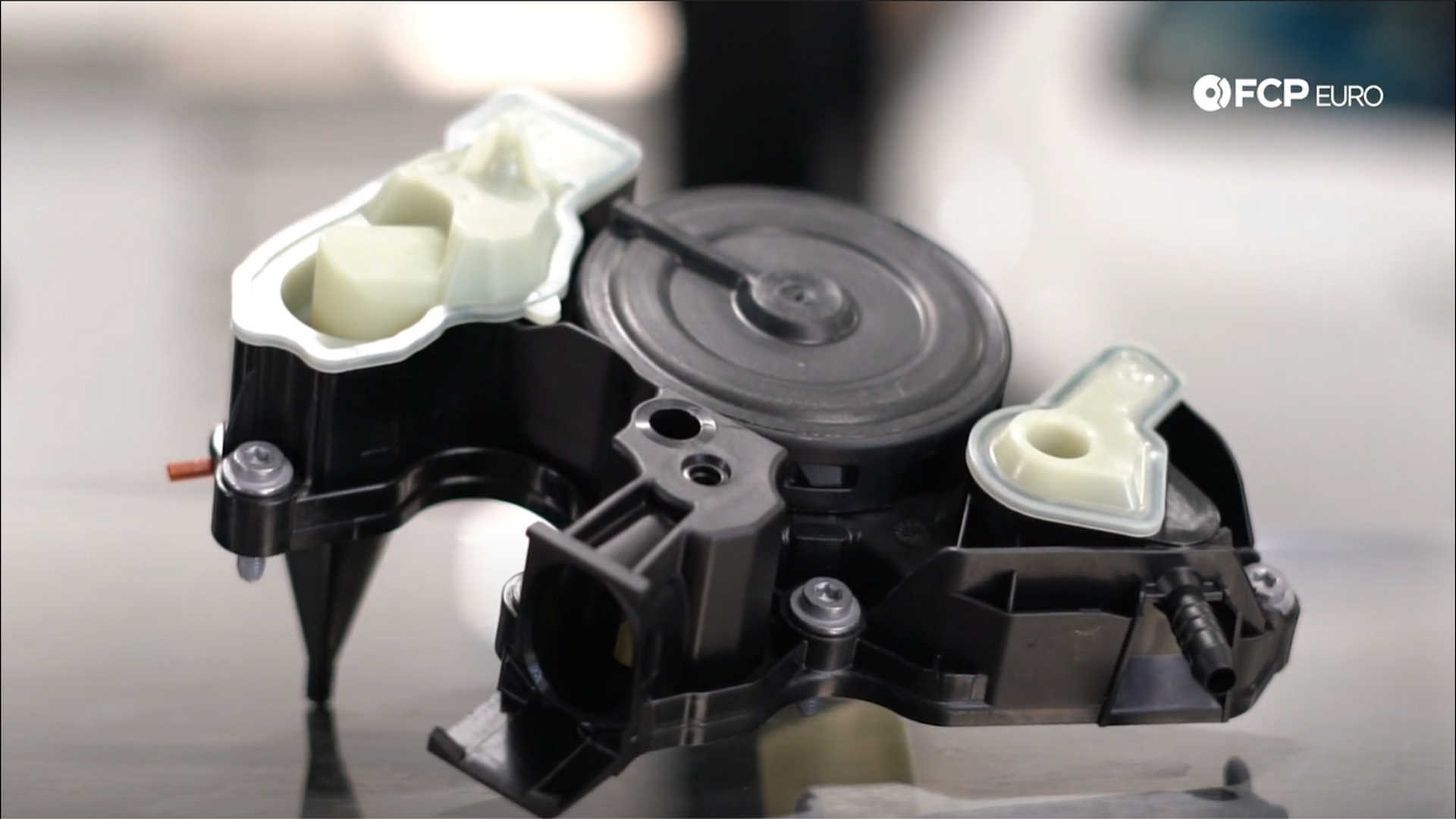
The Positive Crankcase Ventilation system is a feature of every modern engine. It recycles the engine’s positive crankcase pressure into the intake system while collecting the included oil vapors and returning them to the oil sump. A failed PCV will cause a few issues, the most common being an increase in oil consumption. Excess oil vapors entering the combustion chamber can also foul spark plugs, causing rough running through misfires and triggering engine codes for lean conditions. In extreme situations, excessive oil consumption can cause more significant damage to downstream exhaust components, such as exhaust catalysts.
While the Gen.3 EA888 has a highly revised and more reliable system than its earlier generations, it’s not perfect. It still suffers failures, typically due to a torn rubber diaphragm, which, once it’s bad, will no longer effectively control pressure and oil vapor. Along with the abovementioned issues, the excessive oil within the intake tract will also accelerate the degradation of the plastic intake manifold flaps.
There have been several PCV updates on the Gen3 TSI engine to resolve common issues or failures. One of the more common issues is excessive smoking from the tailpipe in hard right-hand corners. This usually only happens during heavy cornering, especially on track or during an autocross. While aftermarket catch-can solutions are popular, the most OE-type solution is to update the PCV to one off the newest Gen4 TSI engine, officially known as the EA888 Evo4.

Rear Main Seal
The rear main seal surrounds the output end of the engine crankshaft, where it protrudes from the engine block, to prevent oil from leaking out of the block and engine oil pan. The factory rear seal is made from a very thin strip of PTFE material, which seals well and conforms easily to the crankshaft. Like many oil seals within the engine, it’s prone to leaks as it ages. Because of its size and location, the rear main seal is one of the most critical seals on the engine.
A rear main seal leak can be pretty serious. The leak is under high pressure from the oiling system, so continuing to run the engine with it will only worsen it. That won’t happen instantaneously but over time. It can also allow dirt, clutch material, and other contaminants into the oil, clogging passageways and potentially leading to internal damage. On a GTI, Golf R, or GLI with a manual transmission, engine oil can contaminate and soak the clutch disc in oil, leading to slippage and requiring a replacement.
A failed PCV is a common cause of the leak. Excessive pressure within the crankcase pushes on all the seals, but the rear main is particularly susceptible to leaking. It is also possible for a car that sits for extended periods without running and driving will eventually have a slow, possibly self-resolving, rear main seal leak, depending on the exact conditions. A rear main seal leak will typically be diagnosed by oil leaking from the transmission bell housing at the midpoint of the engine/transmission assembly.
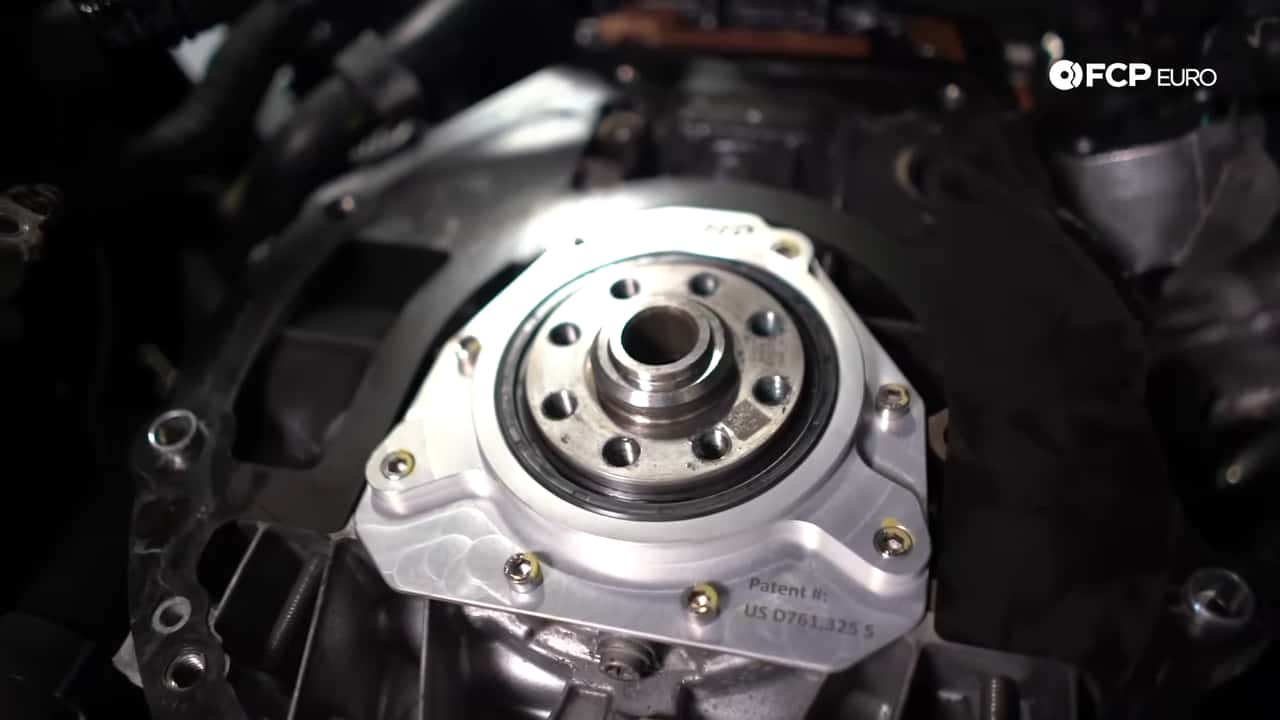
The factory rear main seal on the Gen3 EA888 is especially delicate, with multiple revisions throughout production. Some aftermarket backdate solutions also allow for using an older-style spring seal on the Gen3 TSI engine. It’s a more robust seal less prone to issues with excessive crankcase pressure. While the idea has merit, most of the latest revisions, such as dual-lip rear main seals, offer the best solution for most owners.
Replacing the rear main seal on VW’s EA888 involves transmission removal, a lot of time, a few special tools, and some careful steps. If you have no experience with involved jobs, consider contacting a dealership or independent. If you have a manual transmission GTI, Golf R, or GLI, you may want to take this time to replace your clutch, flywheel, and release bearing assembly to avoid having to remove the transmission for a second time.
Likewise, if you are replacing your clutch and flywheel, preemptively replacing the rear main seal makes a lot of sense regarding time and costs.


Oil Leaks (Camshaft Bridge, Upper Timing Cover, Lower Timing Cover, Oil Cooler)
Even though the EA888 Gen.3 is free of significant issues, there are plenty of little annoyances. Many of those are oil leaks from the front of the engine. Those will come from three locations: the camshaft bridge, the upper timing cover, and the lower timing cover.
The camshaft bridge is responsible for locating the front of the intake camshaft, housing the cam adjuster magnets, and supplying the cylinder head with oil. The cam adjuster magnets mount on the outside of the upper timing cover and sit in the bridge, where they act as an oil barrier and are sealed by an o-ring. The seals will dry up and lose their sealing properties through age and use. When the oil eventually pushes past the o-ring, it’ll leak down the front of the upper timing cover.
While replacing those cam bridge seals, it’d also be a good idea to replace the upper timing cover seals.
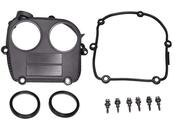
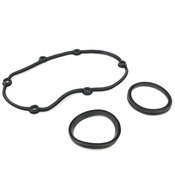
The upper timing cover has three seals that may leak. The main culprit is the large outer gasket that seals it against the cylinder head. Luckily, the gasket is separate from the cover, so replacement only requires a new gasket. Rubber seals also surround the openings for the cam adjuster magnets. They’re less likely to leak but can be the cause of oil dripping down the front cover, like the bridge seals. For peace of mind, we recommend purchasing the gasket kit that contains all three upper timing cover gaskets.
The lower timing cover is the outlier because it doesn’t use a rubber gasket. Instead, the stamped-steel lower cover utilizes an RTV silicone sealant. Removing the lower cover is much more of a challenge, as it is located so far down in the engine bay and blocked by an engine mount bracket, accessory belt tensioner, and crankshaft pulley. On top of that, what remains of the old sealant will likely force you to pry against the old cover to remove it from the engine. That prying can bend the thin cover, so having a new cover on hand for the reseal is the smart way to go, as it is virtually impossible to get the lower cover to seal correctly after damage during removal. Either way, the fastening screws are for one-time use, so no matter if you reuse the cover or not, you need new fasteners.
The oil cooler is not the most common cause of oil leaks on the Gen3 EA888 TSI engine, but as they age and mileage increases, it will become more common. Typically, heat and age will cause the factory rubber gasket to become stiff and brittle over time, eventually allowing oil to leak down the front of the block. Once this happens, the leak can become substantial as it’s a point of high pressure and flow. There is also engine coolant going through this seal, which, in the most extreme cases, can cause oil and coolant mixing.



Intake Manifold Flap Replacement
The EA888.3 engine utilizes vacuum-controlled variable flaps within the intake manifold for emissions and performance benefits. When clean, they’re effective at improving engine performance in all facets. However, their proximity to the intake valves in the intake tract makes them susceptible to the same carbon build-up as the intake valves.
It’s a much more severe issue for the flaps, as the plastic isn’t always tough enough to push through the build-up. Engine codes for range of motion are common, but not everyone is so lucky. If tough enough, the carbon will break the actuation rod as it tries to move the flaps into position. In rare and isolated cases, a few have seen a flap come free, fall into the intake port, and bend a valve.
The only solution is to replace the intake manifold with a new assembly. Thankfully, replacement is pretty straightforward and can be done by most DIY mechanics. If you haven’t recently cleaned your intake valves, tackling that job while replacing the intake manifold is the ideal time to do so.

Engine Mounts
While not very serious compared to some other issues the EA888 has, worn engine mounts aren’t uncommon. Mounted transversely, the Gen.3 has two upper mounts, one on the engine side and one on the transmission side, and a “dogbone” mount. They all utilize rubber bushings that work well to isolate vibrations and torsional stresses, which take a toll on the rubber. After more than 70,000 miles, your engine mounts are likely tired, meaning the rubber is softer and able to control the weight and movement of the driveline, especially under throttle and brake transitions and heavy acceleration. That will introduce slop into the drivetrain, cause a clunking under acceleration, and transmit more noise, vibration, and harshness through the chassis. New or increased idle vibration can also indicate bad or failing engine and transmission mounts.
The more aggressively you push your Mk7, the more stress the engine and transmission mounts experience. Replacing them is simple and inexpensive, but choosing an OE piece to handle boosted performance may not be the best choice. Instead, consider a mount meant for more performance offered by one of our partners.
034Motorsport’s Density Line mounts are some of the most popular choices for the Mk7, having been around for decades over several generations of GTI. Sharing the same design as the factory pieces, they use a stiffer, non-fluid-filled rubber that increases damping by about 25%.
Another popular fix is bushing inserts. The stock bushings have large air gaps in their rubber that allow for significant movement. Several companies now produce inserts that tightly fit those gaps and prevent excessive play. On the positive side, the inserts are much cheaper than new aftermarket bushings, coming in at under $50 a piece; however, they won’t have the same effectiveness as a new bushing and won’t prevent the original from eventually wearing out. These are typically available in polyurethane and solid billet aluminum.
Choosing a dogbone or torque arm, whichever you prefer to call it, will wrap up the necessary mounts. 034Motorsport and APR are the more popular choices, but Whiteline is also an option. Tossing in one of the billet aftermarket mounts with the insert will ultimately shore up the drivetrain mounting to provide crisper shifts and better power transfer. Once they’re installed, you’re all set to increase your engine’s horsepower, knowing the mounts can keep the driveline locked into place.
One side effect of upgraded engine and transmission mounts is that they include more noise, vibration, and harshness, especially when idling. Most owners don’t find this tradeoff to be an issue given the performance benefit, but if you’re picky, this is worth bearing in mind. Likewise, if you’ve replaced your factory dual-mass flywheel and clutch with a performance unit, it is more likely that you will have noticeable transmission noise as you drive. This is most related to installing an upgraded transmission mount, and the outcome can vary significantly depending on the clearances of your specific transmission. Some have more movement than others; unfortunately, there is no way to predict this. That said, even if your transmission is noisy, this doesn’t harm anything or cause any issues.

Steel Oil Pan
Modern plastics have been remarkable for manufacturers as their light and strong properties have simplified automotive component manufacturing. Like other automakers, VW is no stranger to plastics and has begun to use them extensively throughout its lineup. In many places, the use of plastic has reduced costs, weight, and complexity in critical areas, though not all have been complete beneficiaries of petroleum-based products.
Arguably, the most vulnerable spot on any engine is its oil pan, assuming it uses a wet sump like the GTI’s EA888. Traditionally, the oil pan is a steel or aluminum piece, but the Mk7 GTI uses a plastic one. The plastic oil pan has become more common practice in the last decade, so most people live with and aren’t affected by it. However, it is a potential failure point on a modified GTI; ask us how we know.
Luckily, older VW products used the EA888 with a steel pan that is still readily available. We offer a kit that includes the pan, oil level sensor o-ring, bolts, and sealant required to install it. Swapping to a steel pan eliminates the dangers of an easily cracked plastic pan as the metal piece dents and deforms before a complete break. The extra bit of toughness is a cost-effective and straightforward way to bolster your peace of mind. However, if that’s not enough, you can also pick up a skid plate.
Two skid plates are available to provide increased protection to the Mk7 GTI's oil pan. The first is the OE Golf Alltrack skid plate, made from GFRP and Kevlar. It’s essentially a beefed-up version of the stock plastic piece. Protection should be much improved, and it’ll cover more of the bottom of the car without affecting the DSG’s cooling abilities. If that’s not to your liking, then you’re looking at an aftermarket aluminum piece. Four Rings Auto offers a 3/16” thick aluminum plate that will provide even greater protection than the Alltrack piece.

IS38 Turbo Swap
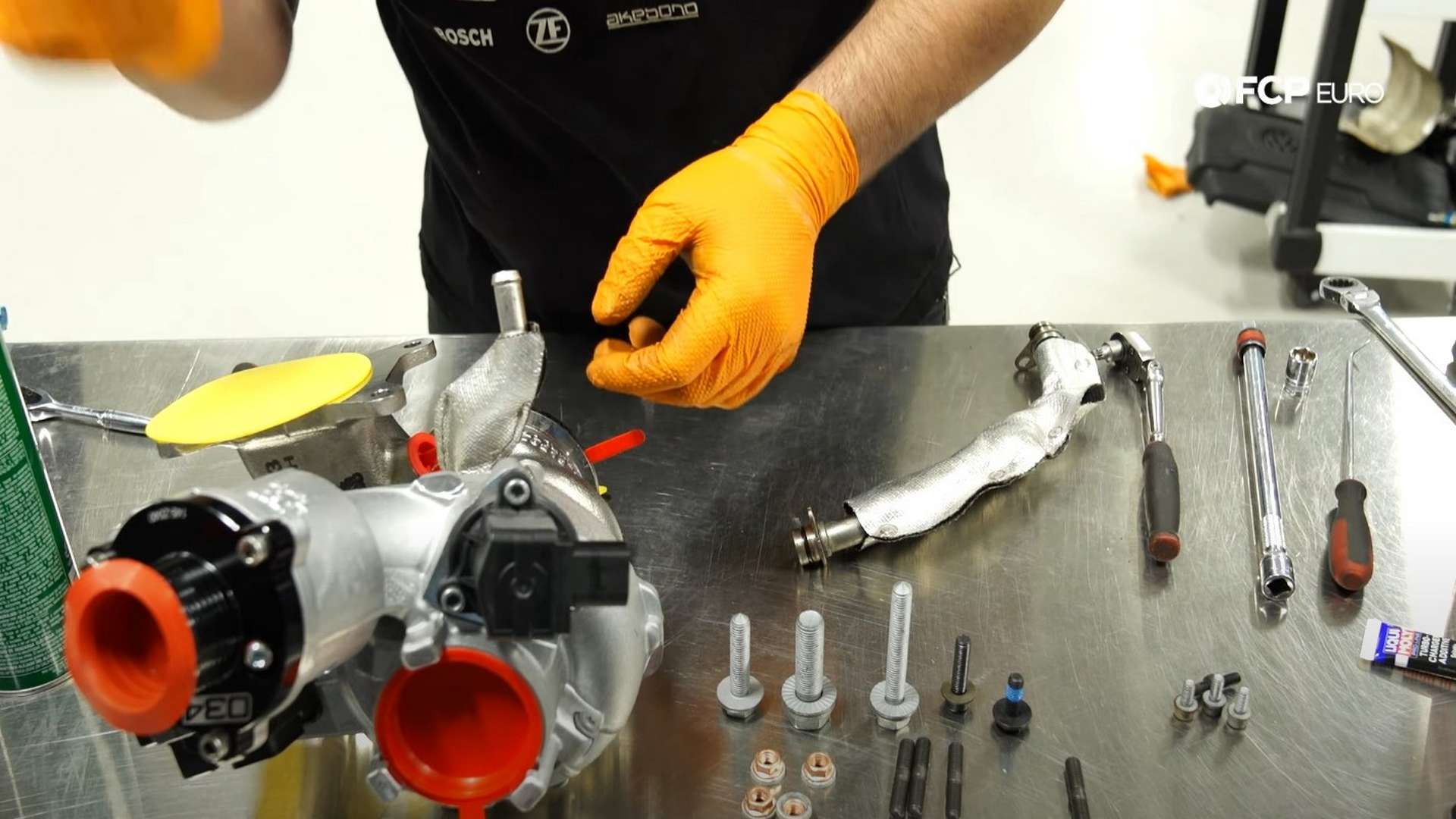
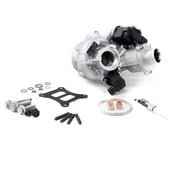
Installing aftermarket parts always comes with the possibility of poor fitment, and the only way to avoid that is by using Genuine, OE, or OEM parts. For all intents and purposes, the turbocharger is a bolt-on performance part, and the GTI’s EA888 can produce more power and handle more boost than its stock IHI IS20 can supply. Luckily for Mk7 GTI owners looking for great performance mods, the Golf R’s larger IS38 turbocharger is a direct swap-on.
Installing the IS38 is reasonably straightforward, requiring time and patience instead of money and special skills. Getting to the Mk7 GTI turbocharger means disconnecting the downpipe and removing a good portion of the intake, so it makes sense to do a few other upgrades with the new turbocharger if it’s in the budget. However, all the physical parts required for the job are the turbocharger and its associated gaskets; you can keep your stock intake and exhaust components if necessary, although you won’t see maximum performance gains with stock-supporting parts.
With the IS38 installed on your Mk7 GTI and the other bolt-on performance parts listed here, you can expect well above 300hp put down through at the front wheels. A remapped performance ECU tune is necessary here, as the IS38 reacts differently to and outperforms the IS20 everywhere. DSG cars should also invest in a TCU tune, and manual-equipped GTIs must look into a new performance clutch.
Other companies offer larger bolt-on turbo kits, but those come with different requirements in the form of significantly more aftermarket components than those listed here. The IS38 provides a more-than-modest boost while retaining the factory fitment and reliability your stock GTI already has.
Air Intake
Just about everyone and their cousin makes a Mk7 GTI intake, so you’ll have plenty of choices when it comes time to buy. The lower end of the price spectrum sits around the $270 mark, with APR, Integrated Engineering, 034Motorsport, and aFe offering intake kits in that price range. Cheaper options are available, but they may do more harm than good. More air is the goal, but it needs to be cold. The three companies listed above offer some shrouding for their filters, while lesser-priced options stick a nearly naked filter into the hot engine bay.
Typically, those around that lower-end price range feature plastic and aluminum construction. Neither of those materials is bad, and they are a great way to get a well-engineered VW 2.0t intake system for an affordable price. However, if you’re looking for a visual improvement and a performance gain, you’ll want to purchase a full-carbon intake from a company like AWE Tuning, 034Motorsport, COBB, or Unitronic.
A carbon fiber Mk7 GTI, Golf R, or GLI intake will be a bit lighter than a plastic/metal intake, but its performance capabilities should be about the same. Pair them with a good tune; they should net gains in the 10-15 horsepower range. But, for nearly double the price of the non-carbon pieces, you can open your engine lid to beautiful engineering that’ll wow you every time you look at it.
If you’re looking for the loudest induction noise and to hear the diverter valve “woosh” when you shift gears or let off the throttle, an open intake is a good choice. A fully enclosed intake will be the best choice for maximum performance, dust filtration, and a more stock-like tone.
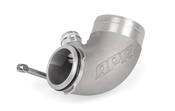
To maximize performance, consider adding a turbo inlet pipe, which reduces restrictions elsewhere in the intake system and increases horsepower.



Intercooler
Replacing your Mk7 GTI, Golf R, or GLI intercooler is critical for improving performance. It’s an essential piece of kit to get the best power from your EA888 turbocharged engine, especially if it’s been tuned for more power.
The intercooler’s job is to cool the hot air from the turbocharger so that it’s more oxygen-dense when entering the combustion chamber. This allows for more fuel to be burned, and with additional cooling capacity, you get more consistent power, especially when it’s hot outside or during extended full-throttle driving. In truth, this mod is likely in the “simple mods” section for other vehicles, but the entire front end of the Mk7 / Mk7.5 GTI, Golf R, and GLI has to come off to replace the intercooler, so it is a little bit more involved than other upgrades.
The intercooler sits between the A/C condenser and the radiator at the front of the vehicle for maximum airflow. However, its plastic end-tanks and relatively small core mean it struggles to flow efficiently above stock boost pressures. Aftermarket intercoolers are explicitly designed for power, with CFD-tested end tanks to eliminate bottlenecks and larger, more efficient cores to improve flow volume and cooling capacity. The colder the air that enters the engine, the more power it can make.
Choosing an intercooler leaves you with plenty of options, with varying pricing due to size differences. Generally speaking, a quality intercooler like one from APR, Unitronic, or Wagner Tuning will be priced between $800 and $1100, depending on what other parts it comes with and the general style, fit, and finish.

Catback Exhaust
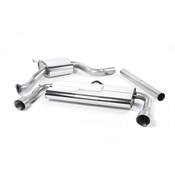
An aftermarket exhaust is one of the more fulfilling modifications you can make to your EA888-powered VW. Reduced pressure behind the turbocharger will improve power, stainless-steel construction will reduce weight, and the reduced muffler baffling will enhance sound quality. Although the exhaust has a few components, the most significant portion follows the downpipe and is colloquially called the “cat-back” section. You’ll find them when searching for an “exhaust” online.
A cat-back exhaust is of the most popular upgrades one might make to their Mk7 GTI, R, or GLI. Options are available through many prominent names and a smattering of VW-focused ones. Each system will vary in look, sound, and weight, none of which you can experience well through the computer. Sound clips work well, but we recommend finding a local shop or owner’s group and hearing those systems in person before purchasing. The big advantage of replacing a cat-back system and leaving the original downpipe in place is maintaining total emissions legality, which is an important consideration.
Every big name in the VW tuning scene or major exhaust manufacturer makes an exhaust for the Mk7 and Mk7.5 GTI, Golf R, and GLI. They include AWE Tuning, APR, Borla, Milltek, and Cobb Tuning, among many others. Each system is made of T304 stainless steel and a single muffler just before the single exhaust pipe splits into its two outlets. Aftermarket Mk7 GTI exhaust pipe diameters will typically be 3” through the muffler before splitting into two 2.5” sections out to the tips. Others, like the Supersprint and the AWE Tuning pieces, will be slightly different. The former is a complete 2.75” system to the end, while the AWE track exhaust shrinks from 3” to 2.25” after the split.
Most systems offer options for exhaust tip size, color, and style, plus versions with louder or quieter sound. Choosing a system that works best for you (and your neighbors) will be a matter of personal preference. Power outputs will typically be the same, but track or racing cat-back systems will have fewer mufflers or resonators and will be lighter.

ECU Tune
An ECU tune is the best place to increase horsepower and torque on any modern turbocharged VW engine. The EA888 Gen 3 engine is particularly tune-friendly, as Volkswagen sets up all of its GTI, Golf R, and GLI vehicles with conservative boost, fuel, and ignition curves from the factory. With no way to guarantee the octane or quality of fuel being put in the tank, VW builds in plenty of headroom for a solid margin of safety.
A performance ECU tune is going to be set up for a specific octane of fuel, meaning that you must use at least that octane or higher of premium fuel - which is one of the ways tuning companies such as APR, COBB, and Unitronic make more power with all otherwise stock engine components.
Choosing a tune for your EA888 Gen3 TSI Mk7 GTI, Golf R, or GLI leads you to two distinct choices: flash or piggyback. The traditional method is through a flash tune; a company like APR, COBB, Integrated Engineering, or Unitronic has a pre-made file that you load onto your ECU, and you’re off to the races (possibly literally) with a significant power increase. Under “stage 1” flashes, aftermarket intakes and exhausts aren’t necessary, and the power gains are around 80hp and 80 lb-ft of torque at their peak. This will vary by tuner and octane rating. Pair that tune with an aftermarket intake and exhaust; the gains will jump slightly. However, there isn’t much else to do once the tune is installed. Bolting on more bits will allow you to head to “stage 2,” but without much connection to your specific modifications. Off-the-shelf tunes are a perfect, set-and-forget upgrade, and those from APR and COBB tuning at CARB certified and 50-state legal.
APR and COBB ECU flashes can be installed in the comfort of your driveway, thanks to the APR Ultralink and COBB’s Accessport system. Both options provide a quick, easy, and DIY-able tuning process, giving you more power in just minutes. The APR Ultralink will allow you to buy a tune directly from their website, while the COBB Accessport comes fully loaded with everything you need in one box. You will want to be sure you have a battery tender or charger, such as the NOCO Genius 10, as your ECU needs a steady supply of voltage to avoid a bricked ECU.
Diagnostic software, such as the Ross-Tech VCDS cable, is always helpful for clearing codes or diagnosing any problems you may encounter. While no ECU tune will cause issues for your engine, worn or faulty fuel and ignition components, such as spark plugs, ignition coils, and injectors, can cause issues if you’re tuning for more power.
The other method is through a piggyback tuner like the JB4 from Burger Motorsports. Instead of rewriting the ECU, the JB4 taps into the GTI via the OBD2 port and manipulates the data going to the ECU, ‘tricking’ it into making more power and torque. While advertising similar gains to the Flash tunes, the JB4 offers more than just performance improvements. Like a COBB Accessport, the JB4 can record your 0-60 times, act as a code reader/scanner, can store up to 8 maps for different performances on the fly, and can be paired with Burger’s BlueTooth connect kit so you can monitor your GTI’s health from your phone as you drive.
If you’re pushing the limits and looking for maximum horsepower, one of the most significant advantages of a COBB Accessport or Burger JB4 is the ability to custom-tune for the exact modifications you’ve made. This can be done via a COBB Protuner in person or via remote tuning options. Either way, running the car on a dyno during this process is the best way to guarantee the performance of the ECU tune’s output and safety.
That said, a basic stage 1 tune is the best option for many owners, and some companies, like APR, offer a clear path to more power via their drop-in hybrid turbo systems.


Production Years
CXCA / CXCB - 2015-2018
DKFA - 2019-2021
CPPA/CPLA - 2012-2018
CYFB - 2016-2017
DJJA - 2018-2021
Horsepower/Torque
CXCA / CXCB - 210 HP @ 4,500 rpm / 258 lb-ft @ 1,500 rpm
CXCA / CXCB w/ Performance Pack - 220 HP @ 4,700 rpm / 258 lb-ft @ 1,500 rpm
DKFA - 228 hp @ 4,700 rpm / 258 lb-ft @ 1,500 rpm
CYFB / DJJA - 292 @ 5400 rpm / 280 @ 1800 rpm
CPPA/CPLA - 210 hp @ 5300 RPM / 207 lb/ft @ 1700 RPM
Cylinder Bore - 82.5mm
Piston Stroke - 92.8mm
Displacement - 1984cc
Compression Ratio
CXCA / CXCB - 9.6:1
DKFA - 9.6:1
CYFB / DJJA - 9.3:1
CPPA / CPLA - 9.6:1
Redline
CXCA / CXCB - 6,900 rpm
DKFA - 6,900 rpm
CYFB / DJJA -
CPPA / CPLA -
Oil Type/Capacity
CXCA / CXCB - 5.7 L VW 502 00 - 5w40 or 5w30
DKFA - 5.7 L VW 508 00 - 0w20
CYFB / DJJA -
CPPA / CPLA -
Operating Temp Range
Coolant - 185 F - 225 F
Oil - 190 F - 260+ F
Fuel Economy
CXCA / CXCB - 25 mpg city / 34 mpg highway (manual)
CXCA / CXCB - 25 mpg city / 33 mpg highway (DSG)
DKFA - 24 mpg city / 32 mpg highway (manual)
DKFA - 25 mpg city / 31 mpg highway (DSG)