
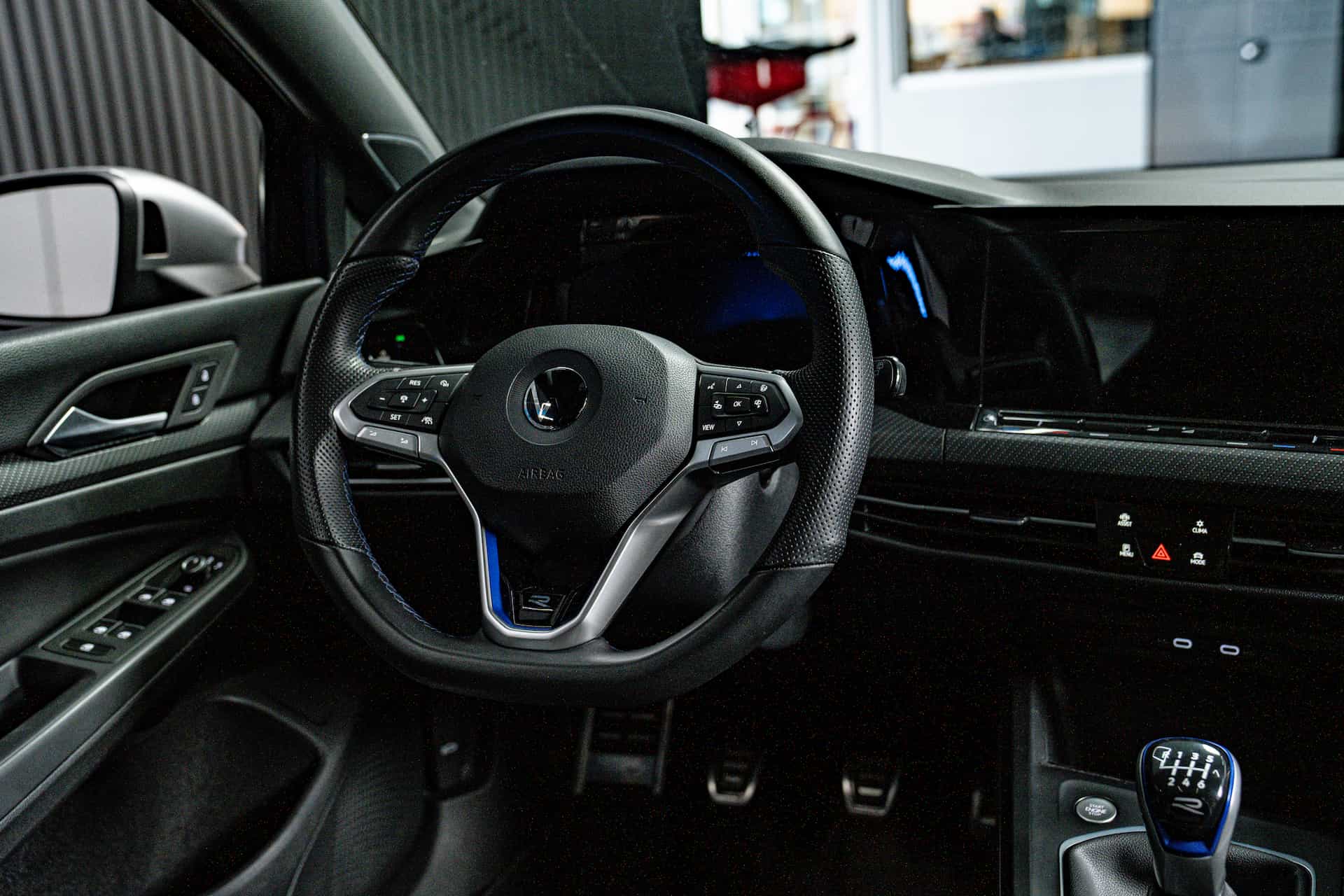
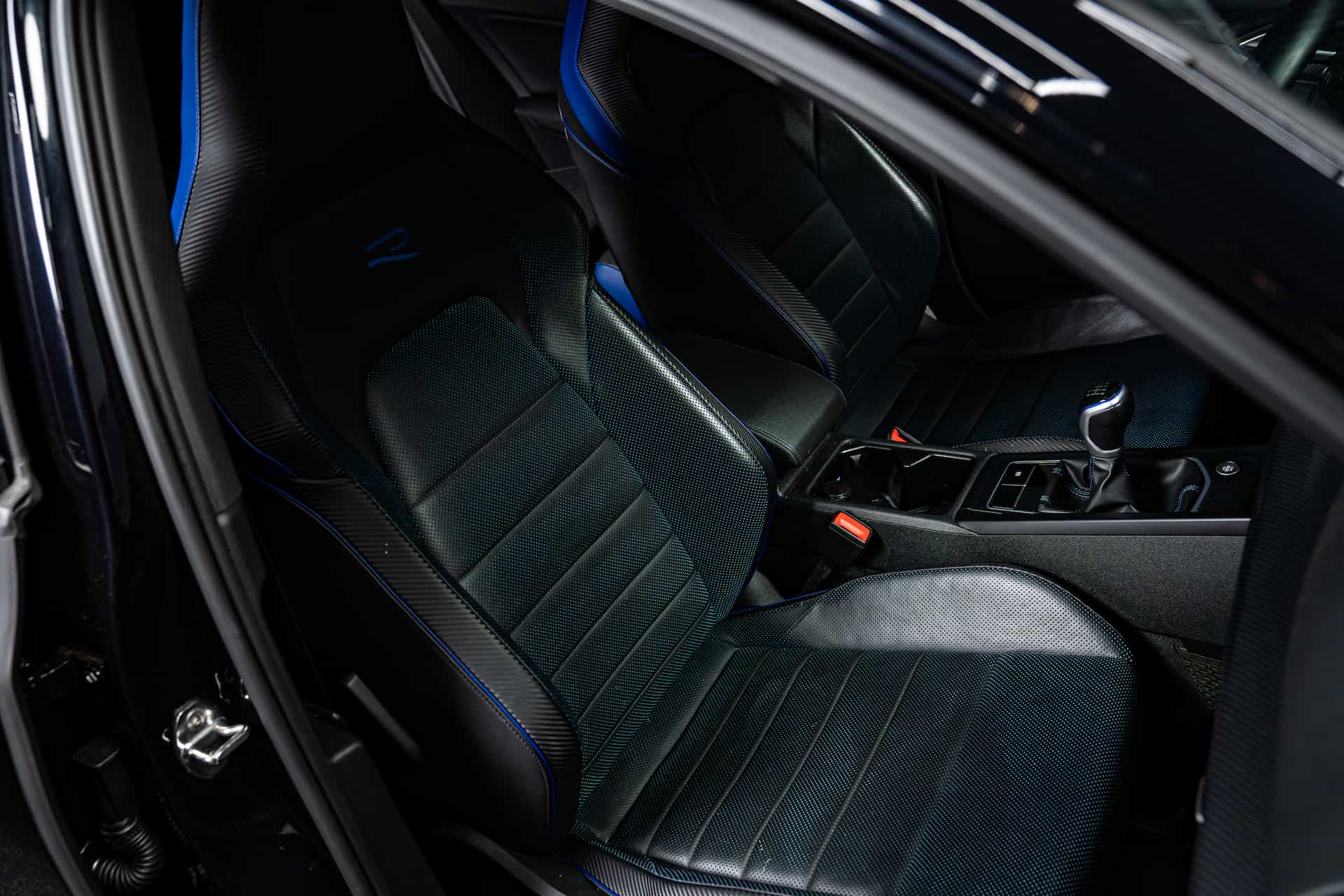
Volkswagen Mk8 Golf R
- Volkswagen Mk8 Golf R Fluid Resource
- Volkswagen Mk8 Golf R Drivetrain Maintenance & Issues
- Front Differential Service
- Rear Differential Service
- Clutch And Flywheel
- Transmission Service
- Front Wheel Bearings
- Volkswagen Mk8 Golf R Suspension & Chassis Maintenance & Issues
- Control Arm Bushings & Ball Joints
- Sway Bars & Bushings
- Front Brake Rotors & Pads
- Rear Brake Pads & Rotors
- Cabin Air Filter
- Volkswagen Mk8 Golf R Chassis, Brake, & Suspension Modifications
- Front Control Arms
- Rear Control Arms/Suspension Bushings
- Volkswagen Mk8 Golf R Brake Upgrades
- Front Brake Rotors & Pads
- Volkswagen Mk8 Golf R Aesthetic & Useability Modifications
- Engine Covers
- Haptic Button to Push Button Upgrade
- Volkswagen Mk8 Golf R Engine (EA888 Evo 4)
- Volkswagen Mk8 Golf R EA888 Evo 4 Common Issues & Maintenance
- Water Pump And Thermostat Assembly
- Radiator
- Volkswagen Mk8 Golf R Engine Modifications (EA888 Evo 4)
- APR Ultralink and Stage 1 93 Octane Tune
- APR Poly Cold Air Intake
- Volkswagen Mk8 Golf R Models, Production Years, and Model Years
- Volkswagen Mk8 Golf R Chassis Specifications
- Volkswagen Mk8 Golf R EA888 Evo 4 Engine Models & Specifications
Learn About Our Golf R Limited Build And How You Can Build Your Own
The evolution of the Golf R traces back to Volkswagen’s early experiments with turning the everyday Golf into a capable performance chassis. The Mk4 and Mk5-era R32 models were the first to show what happened when VW paired the compact Golf footprint with a more sophisticated suspension setup and all-wheel drive. They weren’t just quicker. They brought real composure, grip, and stability to a segment that was mostly front-wheel-drive hot hatches. Those models proved that the Golf platform could be transformed into something far more athletic without sacrificing usability.
As Volkswagen transitioned into the MQB era, the Golf R nameplate came into its own. The Mk6 and especially the Mk7 generations benefited from lighter, more rigid architecture that sharpened the car’s dynamics. Better weight distribution, improved multi-link rear suspension geometry, and smarter Haldex-based all-wheel drive systems allowed the R to punch well above its size. The result was a chassis that felt planted at speed, confident in bad weather, and eager on a back road. This blend helped define the modern “everyday performance” category.
Continuous refinement carried into the Mk7.5, where incremental updates to traction management, damping, and overall chassis tuning elevated the Golf R into a true benchmark. It struck a rare balance: comfortable enough for long commutes, yet capable enough to embarrass bigger, more powerful cars on the right road. This generation cemented the idea that an R-badged Golf wasn’t just a faster Golf. It was a different kind of machine entirely.
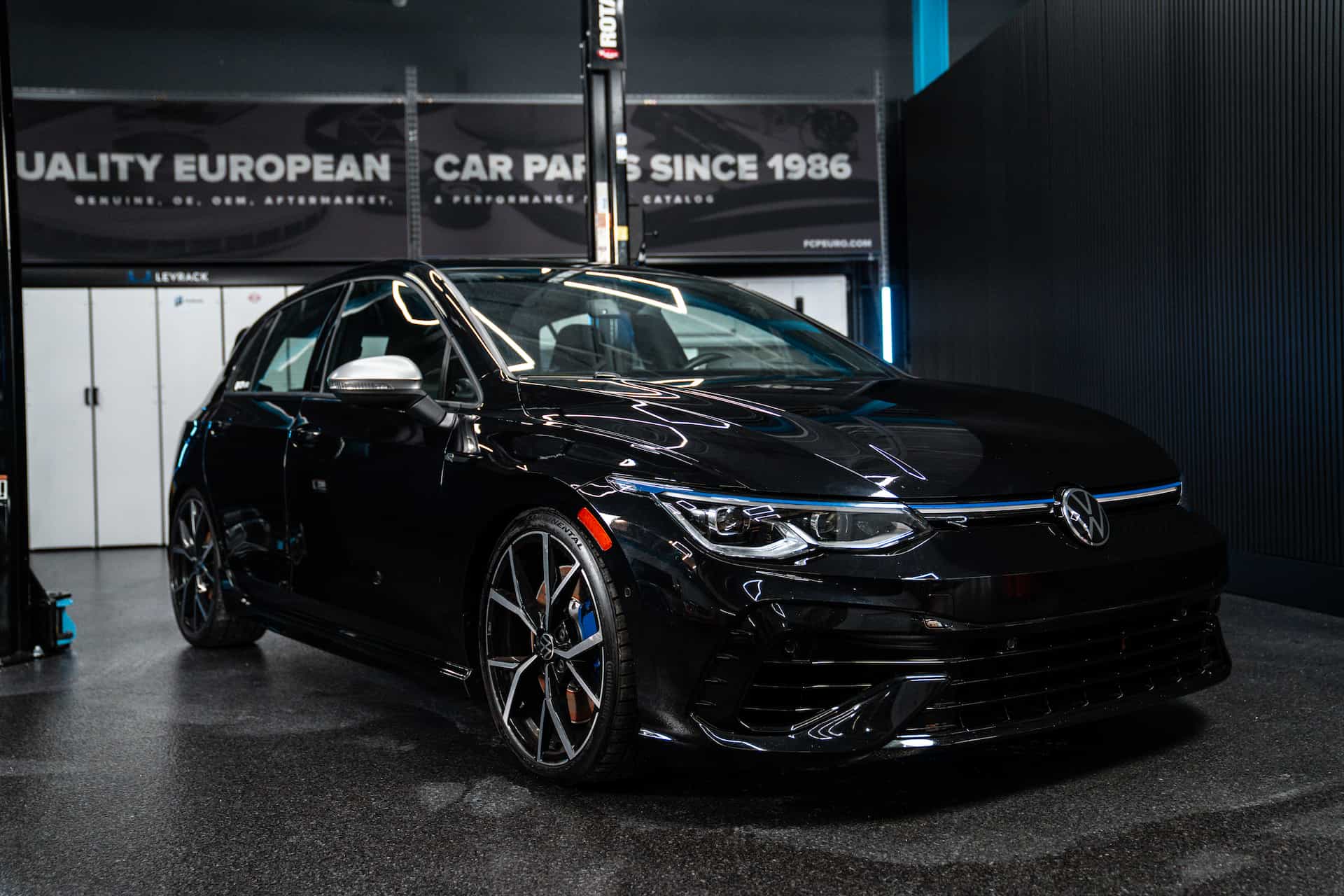
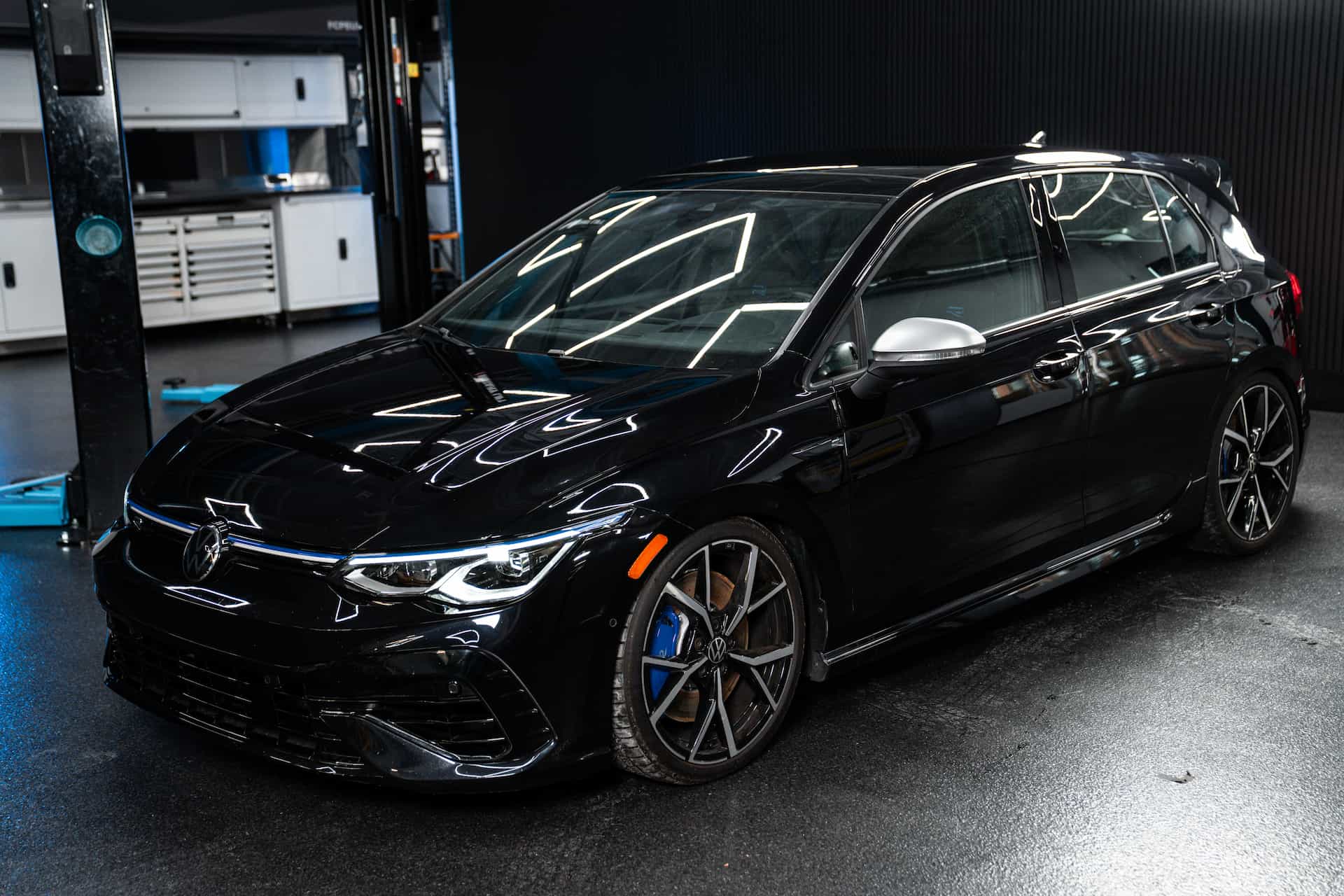
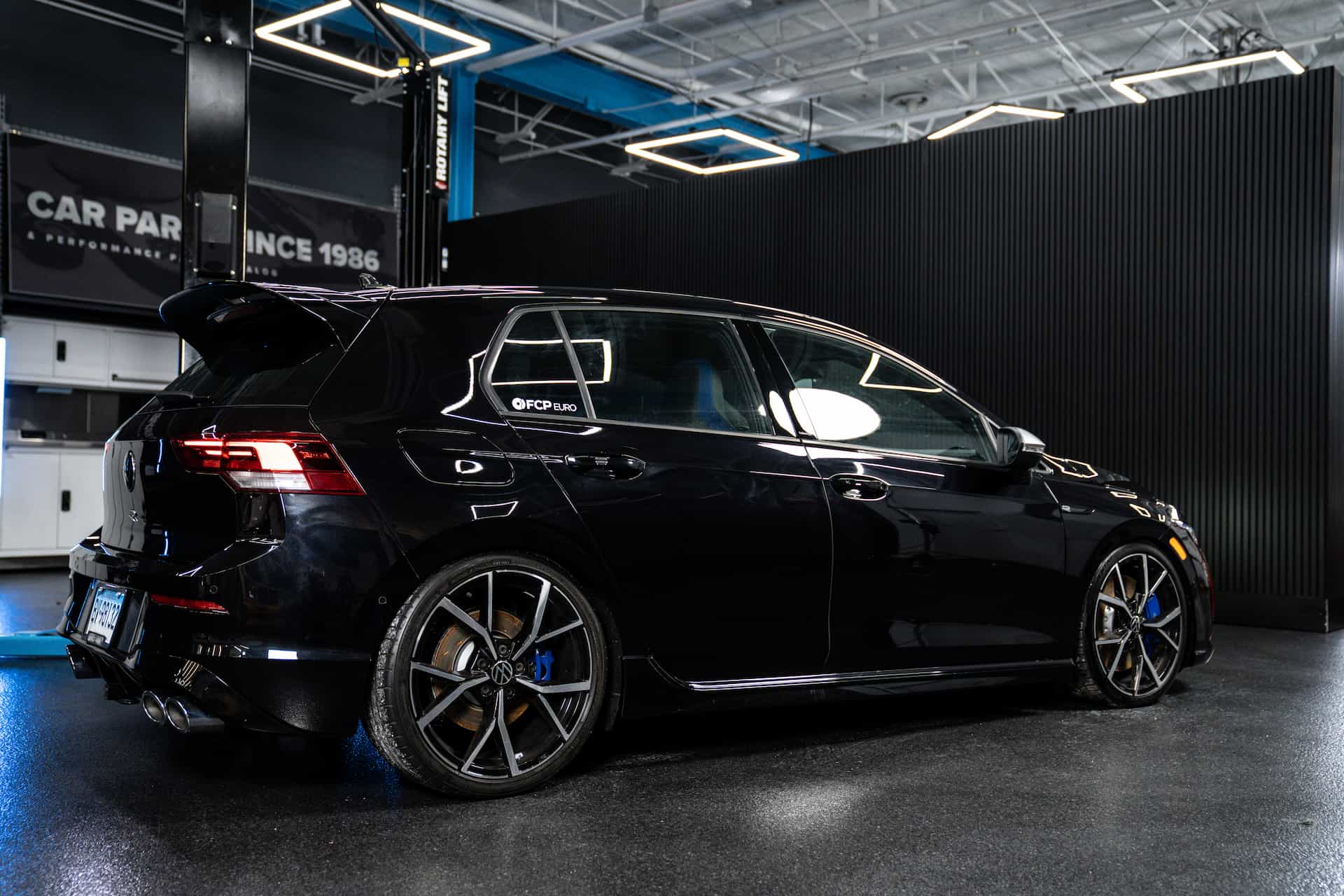
The MK8 builds on that legacy with the most advanced chassis in the model’s history. Volkswagen’s new torque-vectoring rear differential, revised suspension tuning, and more responsive AWD control transform how the car rotates, grips, and puts power down. It’s a platform engineered not just for speed, but for precision. The sharpest, most dynamic interpretation of the Golf R formula to date, and the natural next step in two decades of continuous chassis evolution.
Engine 2.0t (EA888 Evo 4) |

| ||||||
Transmission DSG |
SKU:
KIT-01146
QTY
$170.85+
| ||||||
Transmission Manual |

| ||||||
Differential Front |
| ||||||
Differential Rear |
SKU:
KIT-G055190A2KT
$106.36x
| ||||||
| Brake |

|
Front Differential Service
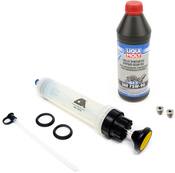
The MK8 Golf R features a torque-vectoring front differential that represents a major step forward from previous generations. This limited-slip differential uses electronically controlled clutch packs to actively distribute power between the front wheels, improving turn-in response and corner exit traction. Like any mechanical component with clutches and gears, it requires regular fluid service to maintain proper function and longevity.The clutch packs inside the differential generate heat and wear over time. This wear produces metal particles that contaminate the fluid. Old, contaminated fluid loses its friction properties, which degrades the differential’s ability to control torque distribution. You’ll notice this as increased understeer, vague turn-in, or inconsistent handling. Regular fluid changes keep the clutches fresh and the differential operating as designed.Service Interval
For locking/torque-vectoring differentials (like the MK8 Golf R): VW recommends service every 3 years or 40k miles. FCP Euro recommends every 30k miles for spirited or track driving.
Cost to Fix
Dealer: $300-450 (parts + labor)DIY: $80-120 (fluid + hardware)Rear Differential Service
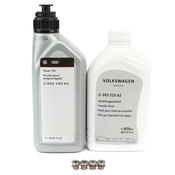
The rear differential on the MK8 Golf R is arguably the most important component in the entire AWD system. Unlike older Haldex-based systems that sent most power to the front wheels most of the time, the MK8’s rear differential uses an electronically controlled multi-plate clutch pack that can send up to 50% of engine torque to the rear axle. This happens constantly and varies based on drive mode, throttle input, wheel slip, and cornering forces.
Inside the differential housing, you actually have two separate fluid systems: the gear oil that lubricates the differential gears, and the clutch fluid that controls the multi-plate clutch pack. The clutch fluid is under high pressure and operates at high temperatures, especially during spirited driving or track use. Over time, this fluid breaks down, loses its friction properties, and becomes contaminated with clutch material.
Service Interval
Rear Differential (gear oil): No factory interval. FCP Euro suggests 80-100k miles.Clutch fluid: 4 years or 40k miles. If you drive spiritedly or track the car, consider reducing that to 2-3 years or 20-30k miles.Cost To Fix
Dealer: $400-600 (parts + labor)DIY: $100-180 (fluids + hardware)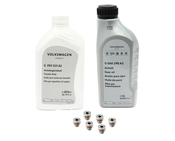
Clutch And Flywheel
If you drive a manual-transmission MK8 Golf R hard, you’re going to wear out the clutch. It’s not a question of if, but when. The factory clutch is adequate for stock power levels and normal driving, but it shows its limits quickly if you tune the car or drive aggressively. Owners report clutch slip as early as 30-40k miles on tuned cars, though stock vehicles can go 80-100k or more depending on driving style.Service Interval
40-100k miles, depending on driving style or if the vehicle is/was tuned before the clutch replacement.Cost to Fix
Dealer: $2,500-3,500 (parts + labor)DIY: $900-1,400 (depending on kit selection)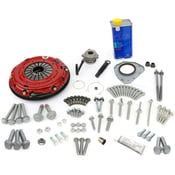
Transmission Service
The MK8 Golf R is available with two transmission options: a six-speed manual or a seven-speed DSG dual-clutch automatic. Both require different service procedures and intervals, but both will benefit from regular fluid changes.
Manual Transmission
The six-speed manual in the MK8 uses a traditional gear oil. Volkswagen does not specify a service interval for manual transmission fluid, but we recommend service every 60-80k miles, or more frequently if you track the car or drive hard. Fresh fluid restores smooth shifting, reduces notchiness, and protects the synchros from wear.
DSG Transmission
Volkswagen does not specify a service interval for the DSG transmission. DSG service in a similar vehicle would be about 80k miles, you can get an idea of the vehicle’s use by inspecting the fluid. Around 80-100k miles is suggested. Keep in mind as the vehicle ages, the fluid should be considered for replacement regardless of mileage to ensure longevity of the transmission. To be safe, 10 years of age from new is suggested regardless of mileage.
Important Note About Fill Plugs
There are variations in the fill plug design on the MK8 manual transmission. Some use a traditional hex plug, others use a newer style. Our kit accommodates both styles.
Cost To Fix
Dealer: $250-400 (parts + labor)DIY: $80-120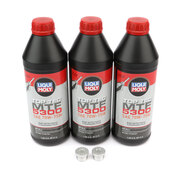
Front Wheel Bearings
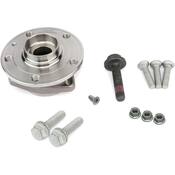
Wheel bearings allow each wheel to rotate smoothly, but their positioning in the wheel assembly means they're constantly subjected to sharp, aggressive strikes and high thermal loads. Those conditions will eventually cause the wheel bearing to wear and require replacement. Replacing wheel bearings on modern vehicles, such as the Mk8 Golf R and GTI, is much easier than before, and it's a DIY-able job with the right tool set and some spare time. Failing wheel bearings aren't the end of the world, but they can cause severe damage if driven on for an extended period. As they wear, the individual ball bearings within the unit lose their shape and produce noise when driven at speed. Depending on how badly worn, the noise can manifest as a low grumbling, a steady hum, or an intense howl.
Control Arm Bushings & Ball Joints
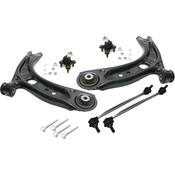
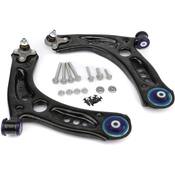
Front control arm bushings and ball joints are a regular wear item on any car, and on the relatively high-performance Mk8 Golf R, this is no different. Instead of replacing the individual bushings and ball joints, you replace the entire control arm with these pre-installed. This makes the job much more DIY-friendly, and speeds up the job considerably.
It's pretty easy to tell when it's time to replace your control arms. When they're worn out, you will start to feel a general looseness in the handling of the car, and that can be combined with clunks, bumps, and unusual noises and feelings over both large and small bumps.
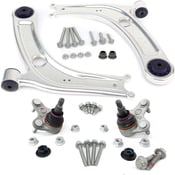
Instead of just replacing the front control arms with genuine, OE, or OEM versions, there are multiple aftermarket options with various bushing and ball joint options. Depending on if you want a stock car feel, or if you want something that is more enthusiast driving oriented, there's an option for you.
Sway Bars & Bushings
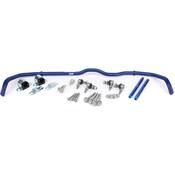
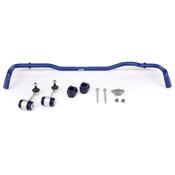
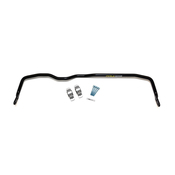
When sway bar bushings wear out, the create a lot of noise. They're nearly impossible to ignore, and that does not change on the Mk8 Golf R. Even if your sway bar bushings aren't worn out, you might want to adjust the handling characteristics of your car whether that is for track or spirited back road driving. The DIY isn't too difficult, and the parts are affordable, so if you're looking to change the feel of your car, this could be a low commitment way to do that.
Front Brake Rotors & Pads
The MK8 Golf R introduces a meaningful change to its front braking system: Volkswagen moved from the traditional solid one-piece rotor used on the MK7 to a lighter, pinned two-piece design. This newer style uses a series of pressed or riveted pins to connect the aluminum hat to the iron friction ring, reducing unsprung weight and improving heat management. Both are great for performance, but it is important to understand from a maintenance perspective.
Because pinned rotors allow more natural expansion and contraction under heat, they also develop different service characteristics than the older one-piece setup. Over many heat cycles, the pins can begin to develop slight play or surface wear (called fretting). When this happens, owners may notice symptoms like a soft clicking at low speeds, a light rattle backing out of a driveway, or a chattery feel under gentle braking. These noises often lead drivers to suspect warped rotors, loose hardware, or worn pads, but they’re the result of the rotor’s construction, not a failure of the braking system.
From a diagnostic standpoint, this makes the MK8’s front brakes easy to misinterpret. If the car exhibits noise or light vibration without obvious runout or pad wear, the rotor pins are a common culprit. While not unsafe, these symptoms indicate it’s time to inspect or replace the rotors, especially if the vehicle sees spirited driving, heavy commuting, or track use.
For owners planning maintenance, this design shift means replacement intervals and symptoms look different from those of earlier generations. The good news: high-quality replacement rotors, pads, and hardware are available, and choosing the right components can restore the tight, confident brake feel the MK8 is known for.
Cost To Fix
Dealer: $800-1,200 (parts + labor)
DIY: $350-500 (depending on pad and rotor selection)

Rear Brake Pads & Rotors
Servicing the rear brakes on the MK8 Golf R comes with its own set of unique considerations, most notably Volkswagen’s updated brake pad retaining clips. Unlike previous generations, the MK8 uses a revised clip design that helps the pads retract cleanly from the rotor after each brake application. This small detail plays a major role in preventing drag and premature pad wear, but it also means the clips themselves require more care during any rear-brake service.
These clips can feel tight or finicky to remove, and it’s easy to bend them if they’re pried on too hard. Once distorted, they often won’t guide the pads correctly, leading to symptoms like accelerated wear, glazing, squeaking, or a dragging sensation that many owners mistake for sticking calipers. From a diagnostic standpoint, if you’re seeing uneven pad wear or hearing persistent noise from the rear, worn or deformed pad clips are one of the first things worth inspecting.
Because these clips are part of what ensures proper pad retraction, treating them gently during removal is important, especially since genuine replacements run around $40. That said, mistakes happen, and the MK8’s design doesn’t give much margin for error. The good news is that replacements are available, and we offer both Genuine VW and high-quality OE alternatives so you can restore proper function without expense.
Whether you’re tackling a routine pad and rotor job or chasing down uneven wear, understanding how these clips work will make your rear-brake service smoother and help you avoid avoidable costs.
Service Interval
Varies based on driving style but can be in need of replacement as soon as 30k miles. When inspecting, be sure to inspect the inboard pad on this style caliper as it wears faster than the outboard pad. With modern ABS and assistance systems, the rear brakes tend to wear out sooner under normal driving conditions.
Keep in mind the manufacturer suggests a brake fluid exchange service after 3 years and every 2 years after that. Inspect your brakes at every oil service to keep a close eye on wear. Replace at 2mm minimum thickness.
Cost To Fix
Dealer: $700-1,000 (parts + labor)
DIY: $300-450

Cabin Air Filter
The cabin air filter helps keep your interior clean and smelling nice. In doing so, it picks up and blocks all sorts of contaminants that the HVAC system pulls in to provide heat or A/C. Replacing the filter at its scheduled interval is the best way to ensure your Audi always has quality air coming through the vents. Failing to replace it on time can lead to some stinky results. Blocking dirt, dust, and debris is a tough job that can only be done for so long. A typical cabin air filter replacement interval is around 30,000 miles, depending on the driving environment. Polluted or dusty areas can force an earlier replacement. You may notice a musty or moldy smell and reduced air flow with an old or partially blocked filter.
Front Control Arms
Installing upgraded front control arms is one of the most effective ways to improve turn-in response, reduce understeer, and add adjustability to your suspension setup. The factory stamped steel arms use rubber bushings that deflect under load, creating vague steering feel and inconsistent geometry. Upgraded alloy arms with polyurethane or spherical bushings eliminate this flex.
Rear Control Arms/Suspension Bushings
The rear suspension on the Audi B9 S5 sports numerous bushings. If you're looking to tighten up the handling, swapping from the stock rubber bushings to polyurethane is one of the easiest and most effective upgrades you can make. We suggest going for a mild polyrethane that is suited for both street driving and track driving, unless your car is a dedicated track car. This way, you get the handling benefits of poly bushings without the NVH (noise, vibration, and harshness) that higher durometer poly bushings create.
SuperPro makes a full rear suspension bushing kit that we have bundled with our own hardware to create a single click solution. To replace these bushings, however, it's necessary to have a press at home or access to a press to swap these into your control arms.
Front Brake Rotors & Pads
The MK8 Golf R introduces a meaningful change to its front braking system: Volkswagen moved from the traditional solid one-piece rotor used on the MK7 to a lighter, pinned two-piece design. This newer style uses a series of pressed or riveted pins to connect the aluminum hat to the iron friction ring, reducing unsprung weight and improving heat management. Both are great for performance, but it is important to understand from a maintenance perspective.
Because pinned rotors allow more natural expansion and contraction under heat, they also develop different service characteristics than the older one-piece setup. Over many heat cycles, the pins can begin to develop slight play or surface wear (called fretting). When this happens, owners may notice symptoms like a soft clicking at low speeds, a light rattle backing out of a driveway, or a chattery feel under gentle braking. These noises often lead drivers to suspect warped rotors, loose hardware, or worn pads, but they’re the result of the rotor’s construction, not a failure of the braking system.
From a diagnostic standpoint, this makes the MK8’s front brakes easy to misinterpret. If the car exhibits noise or light vibration without obvious runout or pad wear, the rotor pins are a common culprit. While not unsafe, these symptoms indicate it’s time to inspect or replace the rotors, especially if the vehicle sees spirited driving, heavy commuting, or track use.
For owners planning maintenance, this design shift means replacement intervals and symptoms look different from those of earlier generations. The good news: high-quality replacement rotors, pads, and hardware are available, and choosing the right components can restore the tight, confident brake feel the MK8 is known for.
Cost to Upgrade
Dealer: $800-1,200 (parts + labor)
DIY: $350-500 (depending on pad and rotor selection)
Engine Covers
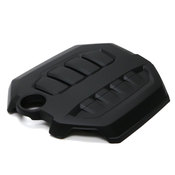
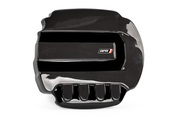
If your MK8 arrived without an engine cover, you’re not alone. Volkswagen removed them during the fire-risk recall, leaving many owners with an exposed and unfinished engine bay. New Genuine engine covers remedy this by not including the foam on the engine cover that caused the fire-risk. There are also aftermarket engine covers that are made of other materials, such as carbon fiber, that change the look of your engine bay drastically.
Haptic Button to Push Button Upgrade
One of the most popular MK8 reliability and usability upgrades is swapping the factory haptic-touch steering wheel controls for the later-style analog button setup. The touch-sensitive panels introduced on the MK8 may look modern, but they’re notorious for accidental inputs, lag, and wear issues as oils and dirt build up over time. Replacing them with tactile, mechanical buttons transforms the driving experience, restoring precision control for cruise, media, and driver-assist functions without the frustration of unintentional presses.
Why We Recommend It
We can’t stand the haptic feedback buttons. All of us here at FCP Euro have had a chance to experience the poor function and squishy feedback from these. We all want buttons and knobs. Maybe they will bring the volume and climate control knobs back next.

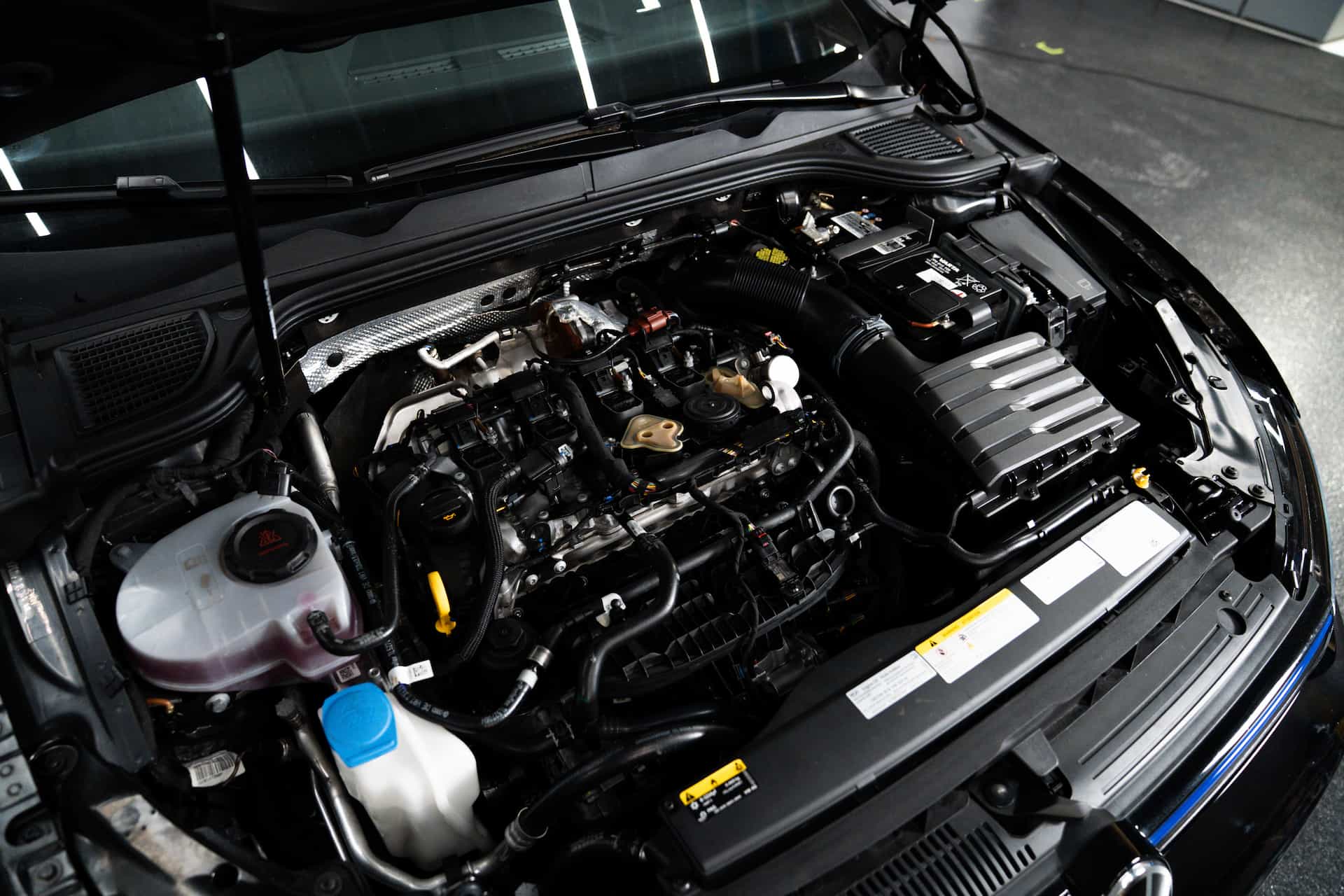
For over a decade, the EA888 has been the backbone of Volkswagen and Audi’s performance models, and the Evo 4 is the most polished version to date. Found in the Mk8 GTI, Golf R, and Audi’s S3, as well as other more pedestrian models across the VW/Audi lineup, it’s a powerplant designed to do everything: easy to live with in traffic, efficient enough for the commute, but still capable of delivering a grin when the road opens up. For enthusiasts who want a car that balances daily drivability with tuning potential, the Evo 4 might be the sweet spot.
At the core of the Evo 4 is its revised turbocharger and smarter ECU technology. VW engineered these changes to meet modern regulations, but owners benefit from sharper throttle response, more usable torque, and stronger midrange power. Compared to the Evo 3, the Evo 4 feels more eager without requiring big revs, which makes it a joy for backroads as much as for everyday driving. On paper, the horsepower figures don’t seem wildly different, but behind the wheel, the engine feels more awake and modern.
Of course, no EA888 discussion is complete without talking about mods. Like its predecessors, the Evo 4 responds extremely well to software tuning, with Stage 1 and Stage 2 options unlocking performance that rivals more expensive cars. Supporting upgrades like intercoolers, downpipes, and fueling tweaks open even more headroom. The good news for owners is that VW built in better cooling capacity and stronger internals than before, giving enthusiasts a sturdier baseline to work from.
As an ownership proposition, the Evo 4 offers the best of both worlds: modern efficiency and refinement, paired with the flexibility to become a 400+ horsepower street car with relatively simple mods. It’s not just an evolution of the EA888, it’s a statement of how far a turbocharged four-cylinder can be pushed while still being practical. That being said, the Evo 4 does have some weak points worth mentioning, so let’s address those below.
Water Pump And Thermostat Assembly
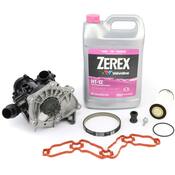
The EA888 Gen-4/Evo 4 uses a combined water pump and thermostat housing assembly that has a long history of coolant leaks, failed thermostats, and related issues dating back to the earliest Gen 3 variants. They are the same design on Evo 4 as introduced on the Gen 3 platform. Failures most come from leaking seals/gaskets or the plastic housing/thermal unit, often triggered or accelerated by oil contamination from nearby valve-cover or oil-cooler leaks.
Because the assembly is modular but integrated, the recommended repair is to replace the whole assembly (water pump, thermostat housing, seals, and associated o-rings) and address any sources of oil or mating-surface contamination.
Weak links:
Housing gasket/o-rings, plastic housing seam or flange, and the thermostat valve unit itself (seam or valve shaft seal failure). Many failures present as external coolant leaks at the housing/block interface or around the housing, despite originating internally in some instances.
Why They Fail:
- Gasket/o-ring deterioration or improper mating surface prep: The sealing surfaces and o-rings can fail (or be installed on a contaminated/unclean surface), leading to leakage. Cleaning/prepping the mating surface properly during replacement is crucial.
- Oil leaking from valve-cover gaskets or oil-cooler seals can run down and degrade the thermostat seal or cause the o-ring to fail. Many cases trace back to an oil leak that causes the coolant seal to fail.
- Plastic housings (or housings with plastic components) can crack or warp over time. Repeated heat cycles plus exposure to contaminants make this more likely.
- Thermostat valves can open incorrectly (early/late) or fail at their seam, leading to poor temperature control or internal leaks. Forum reports note thermostats sometimes fail open or leak from the valve assembly.
Typical Mileage / Timing of Failures
Reports vary widely. Many users see issues between 15k and 70k miles (some extreme cases earlier or later). Dealers and aftermarket threads document a cluster of failures in early ownership years for Gen 3, and similar failure profiles for Gen 4. Treat it as a wear item to watch for on higher-mileage cars.
Failure Symptoms
- Visible coolant under the car or pooling near front passenger side (depending on layout)
- Low coolant level without obvious radiator/fan hose failure
- White/pinkish crusty coolant residue around the thermostat housing or under the intake area
- Engine running cooler than normal (thermostat stuck open) or overheating (if pump fails or thermostat sticks closed)
- Smell of coolant and, occasionally, oil traces near the housing if oil contamination is present
Radiator
The MK8 Golf R and GTI have had repeated reports of radiators working loose or leaking. Owners and shops note that the factory design uses plastic side tanks with lightweight crimping and mounting tabs/brackets that can allow movement, especially under track conditions, aggressive driving, or repeated heat cycles. Over time, this can lead to vibration, chafing, or seam separation. Coolant leaks then appear at the side tanks or fittings. This issue is similar to the water pump/thermostat failures on EA888 engines. The parts themselves aren’t always bad, but the design leaves little margin for wear or abuse.
Why They Fail
- Loose mounting tabs/bushings: Radiators can shift in their mounts, especially under track loads, aggressive driving, or after service. Owners report rattling, rubbing, or eventual leaks as the radiator moves.
- Plastic tank seam separation: The crimped seam between aluminum core and plastic side tank is a weak point. Flexing from loose mounting accelerates failure.
- Stone impacts or debris: Without robust grilles or guards, debris can strike the lower area, damaging fins or even the plastic tanks.
- Heat cycling: Track cars see frequent high temp swings. The expansion/contraction stresses the thin plastic/aluminum crimp interface.
Failure Symptoms
- Low coolant warning/coolant light
- Visible coolant dripping from the front undertray
- Pink/white dried coolant residue on radiator seams, bottom corners, or splash guard
- Audible rattling or clunking in the front end (if the radiator is moving in its mounts)
- Overheating or unstable coolant temps (in extreme cases)
Typical Mileage / Timing of Failures
Early reports on MK8 forums show radiators coming loose within the first 10-20k miles, sometimes even sooner if tracked. Leaks tend to appear later, often 20-40k miles, but track-driven cars may see them earlier.

Like every turbocharged VW GTI since the turn of the century, and the Golf R since 2012, the 2022+ Mk8 Volkswagen Golf R is a prime candidate for simple, effective, and reliable performance upgrades. It’s worth noting that some or all of the performance modifications for your Mk8 Golf R may, or are likely to, void some of your vehicle warranty if it is still under a factory warranty. However, as the miles pile on and coverage drops off, it often becomes more difficult to avoid the allure of easy horsepower, improved performance and efficiency, or just adding a sporty tone to the exhaust or intake of your Golf R.
Many owners choose to eschew the warranty coverage from VW, knowing that, for the most part, with the right service and care, even a modified Mk8 Golf R can be reliable and last for many years and hundreds of thousands of miles. Emissions laws, compatibility, and other tightening legal regulations may dissuade you from the idea of performance tuning. Thanks to companies like APR, which stringently test for emissions adherence and apply for exemptions on their core bolt-on performance products, you can sleep well knowing that you can improve performance of your Mk8 Golf R without falling afoul of local regulations.
APR Ultralink and Stage 1 93 Octane Tune
If you happen to reside in an area of the United States that offers 93 octane, you can achieve over 400hp at the crank with just their Stage 1 93 octane tune. 400hp for a 4-cylinder? That’s huge.
The APR ECU upgrade is the best dollar-per-horsepower modification one can make to improve engine performance. The upgrade dramatically increases horsepower and torque, making for an exceptionally quicker and more exciting vehicle. This is made possible through APR’s optimization of the factory engine management system to take full advantage of the engine’s capabilities, without needing any end-user adjustment.
What You Get
- Stage 1 93 Octane: 400+ hp, 380+ lb-ft torque
- Improved throttle response
- Smoother power delivery
- Compatible with stock hardware
- Emissions compliant in most states

APR Poly Cold Air Intake
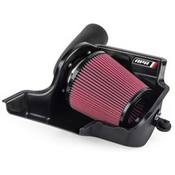
This is a true full 109mm intake system, engineered from the dual frontal inlet scoops all the way to the turbocharger via the included turbo inlet adapter. No bottlenecks, no compromises. Just uninterrupted airflow straight to the turbo. Designed to be configurable, the system can be run open or closed, with your choice of OEM-inspired covers or carbon fiber covers available in both twill and forged carbon. Whether your build leans subtle or aggressive, this intake adapts to match.
Compatibility is just as flexible. With swappable back tubes and turbo inlet adapters, the system supports stock, hybrid, and aftermarket turbochargers, making it future-proof as your build evolves.
What You Get
- Significantly increased airflow
- Reduced pressure drop
- Noticeable gains in horsepower and torque
- More aggressive induction sound
- Cleaner engine bay
- All at a price point that punches far above its weight
Production Years
- 2022: Initial US launch of MK8 Golf R
- 2023: Continued production with minor updates
- 2024: Introduction of Black Edition and other special trims
- 2025: MK8.5 refresh with updated exterior styling, interior improvements, and torque bump for manual transmission
Body Styles
- 4-door hatchback (only body style available in North America)
- 5-door estate/wagon (Variant) available in European markets only
Notable Changes by Year
2022-2023: Base specification with 315 hp, 280 lb-ft (manual) or 295 lb-ft (DSG)
2024: Introduction of Black Edition and special trim packages
2025 (MK8.5):
- Updated front and rear fascias with illuminated VW logo and light bar
- Revised interior with improved materials and 12.9" touchscreen (up from 10")
- Manual transmission discontinued. DSG only.
- Power increased to 328 hp and 310 lb-ft of torque (up from 315 hp / 295 lb-ft)
- Physical steering wheel buttons replace haptic touch controls
- New LED light signatures front and rear
- Larger shift paddles for DSG models
2024: Final year for manual transmission in both GTI and Golf R. GTI receives special “380” package for manual models (380 S, 380 SE, 380 Autobahn) with graphite gray paint, black 19" wheels, and adaptive suspension.
2023: Golf R 20th Anniversary Edition released. Only 1,800 units made with 20th anniversary badging, blue R logos, and “20R” puddle lights.
2022: Initial US launch with base specification
Specification | Details |
Platform | MQB Evo |
Drive Type | 4Motion All-Wheel Drive with torque vectoring rear differential |
Wheelbase | 103.6 inches |
Length | 168.9 inches |
Width | 70.4 inches |
Height | 57.3 inches |
Curb Weight | 3,450 lbs (manual), 3,485 lbs (DSG) |
Weight Distribution | Approximately 60/40 (front/rear) |
Suspension (Front) | MacPherson strut with lower control arms, adaptive dampers (DCC) |
Suspension (Rear) | Four-link independent, adaptive dampers (DCC) |
Brakes (Front) | 14.1-inch vented discs, two-piece pinned design |
Brakes (Rear) | 12.2-inch vented discs |
Wheel Size | 18" or 19" depending on trim |
Tire Size | 235/35R19 or 225/40R18 |
Steering | Electromechanical power steering, variable ratio |
Turning Circle | 35.4 feet |
0-60 mph | 4.5 seconds (manufacturer claimed) |
Top Speed | 155 mph (electronically limited), 180 mph with optional package |
Engine Model | HP | Torque | Years | Notes |
DSFE / DSFF | 315 hp @ 5,600-6,500 rpm | 280 lb-ft @ 2,000-5,000 rpm | 2022-2024 | Detuned manual specification only |
DSFE / DSFF | 315 hp @ 5,600-6,500 rpm | 295 lb-ft @ 2,000-5,000 rpm | 2022-2025 | DSG transmission |
DSFE / DSFD | 315 hp @ 5,600-6,500 rpm | 310 lb-ft @ 2,000-5,000 rpm | 2025+ | Updated manual transmission spec |
Specification | Details |
Manufacturer | Volkswagen |
Production Years | US Spec: 2022 - 2025+ |
Layout Configuration | Turbo Inline 4 Cylinder |
Displacement | 2.0L, 1,984 cc |
Cylinder bore | 82.5 mm (3.25 in) |
Piston stroke | 92.8 mm (3.65 in) |
Cylinder block material | Grey cast iron (GJL 250), cast-iron block / iron-plated bores |
Cylinder head material | Cast aluminum alloy |
Valvetrain | Variable valve timing and variable valve lift |
Valvetrain drive system | Single roller timing chain, located at the rear of the engine (transmission side) |
Compression ratio | 9.3:1 for Golf R |
Max RPM | 6,800 RPM |
Forced Induction | Turbocharged |
Turbocharger Details | Continental RA420 (Garrett MGT2260S) Boost Pressure: 1.6-1.8 bar (23-26 psi) in stock form Wastegate: Electronically actuated Bearing System: Dual-bearing (journal bearing) Compressor Wheel: Machined billet aluminum, larger inducer and exducer diameters than the GTI version Turbine Housing: Integrated exhaust manifold in the cylinder head (IEM concept), hot side flow path optimized to reduce turbo lag Cooling: Water-cooled center section with oil lubrication Peak Flow: Supports up to 330-350 hp in factory calibration, with additional headroom for tuning |
Fuel System Management | High pressure direct fuel injection |
Fuel Type | Gasoline, 91 octane minimum, 93 octane recommended |
Oil System | Pump: Two-stage, variable-displacement vane pump (chain-driven, ECU-controlled) Pressure range: 1.5-4.8 bar (load-dependent) Oil routing: Pickup → pump → filter housing → cooler → galleries → turbo → return Filter: Cartridge type, integrated with thermostat and oil cooler Cooling: Combined oil/coolant heat exchanger (part of thermal management module) Turbo feed: Oil- and water-cooled; restrictor-controlled feed, gravity return Sensors: Oil pressure & quality sensors for adaptive regulation Oil spec: VW 508 00 / 509 00 (0W-20 full synthetic) Capacity: 5.7 L (6.0 qt) |
Cooling System | System type: Fully electronically controlled, map-based thermal management Coolant pump: Electrically driven (no belt), variable-speed unit integrated into the cooling module Thermostat: Electronic; built into the same housing as the pump for compact packaging Circuits: Split-flow design, separate coolant paths for cylinder block, head, turbo, and oil cooler Warm-up strategy: ECU closes block/head circuits during cold start for rapid oil warm-up Turbo cooling: Dedicated post-run pump continues coolant flow after shutdown Oil cooler: Plate-type heat exchanger integrated into main coolant circuit Radiator: Dual-stage setup (main + auxiliary in high-load models like Golf R) Coolant spec: VW G12 Evo (purple/pink, Si-OAT based) System capacity: 8.0 L (varies by model) |
Power Output | 315 hp @ 5,600-6,500 rpm |
Torque Output | 280-310 lb-ft @ 2,000-5,000 rpm depending on year and transmission |
Dry Weight | Approximately 330 lbs |
Predecessor | EA888 Gen 3 |
Successor | EA888 Evo 5 |