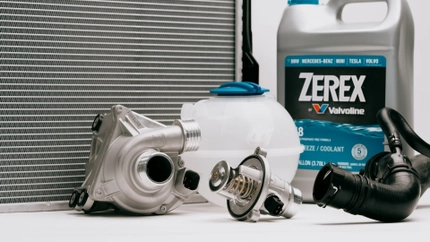
Fuel, air, and spark are the three necessities for any internal combustion engine. However, that leaves out the only system dedicated to ensuring the engine can survive running for more than a few minutes: cooling. Engines and their contained miniature explosions produce significant heat that will cause the engine to melt down if not countered, so it’s up to the cooling system to ensure that doesn't happen.
What’s The Cooling System & What Does It Do?
Other than in older VWs and Porsches, every engine in a car or truck uses a cooling system filled with a fluid-type coolant. Engines have many moving parts that spin and actuate thousands of times a minute, generating significant heat. Excessive heat is the enemy of the internal combustion engine, as it’ll shrink clearances and cause premature fatigue. The cooling system exists to prevent all of that and keep an engine at its most efficient operating range.
Inside an engine, water jackets surround the bulk of the moving components. They’re empty pockets through which engine coolant flows. As the water and antifreeze pass by, they pull the heat out of the engine to keep it cool. From there, the coolant flows out of the engine to the radiator, dissipating all that excessive heat. At the other end of the radiator, the cooled coolant is pulled back into the engine by the water pump, where it repeats the cycle. However, depending on the car, the coolant can also be routed elsewhere.
Alternators keep our batteries charged and electricity flowing, but some are stronger than others. High-tech luxury cars and SUVs with many features and multiple batteries need high-amperage alternators to handle the intense draw. Unfortunately, that comes at the expense of heat and cooling, forcing automakers to adopt a water-cooled alternator. BMW, Mercedes, Audi, and Bentley have all utilized the beefy but leak-prone units, much to the chagrin of second-hand owners.
Coolant connections for the throttle body and turbocharger are more common than those for the alternator. The latter is one of the largest heat sources in an engine bay, so it naturally needs to be cooled. There are turbochargers exclusively cooled by oil, but most modern automakers use those that feature oil and coolant cooling. It’s great for turbo longevity, but it puts an increased strain on the cooling system, typically requiring enhanced cooling. The coolant directed to the throttle body is strictly for warming it and ensuring it doesn’t freeze in cold temps.
Cooling System Breakdown - What’s What
Radiator
The entire point of the cooling system is to remove heat from the engine. Coolant is responsible for pulling the heat away from the engine, but it’s the radiator’s job to pull that heat out of the coolant. As such, the radiator is a heat exchanger that uses airflow to cool the coolant and remove the heat. It consists of a plate and fin core with two tanks on either side. The tanks direct the coolant into and out of the core while the core exchanges all of the heat.
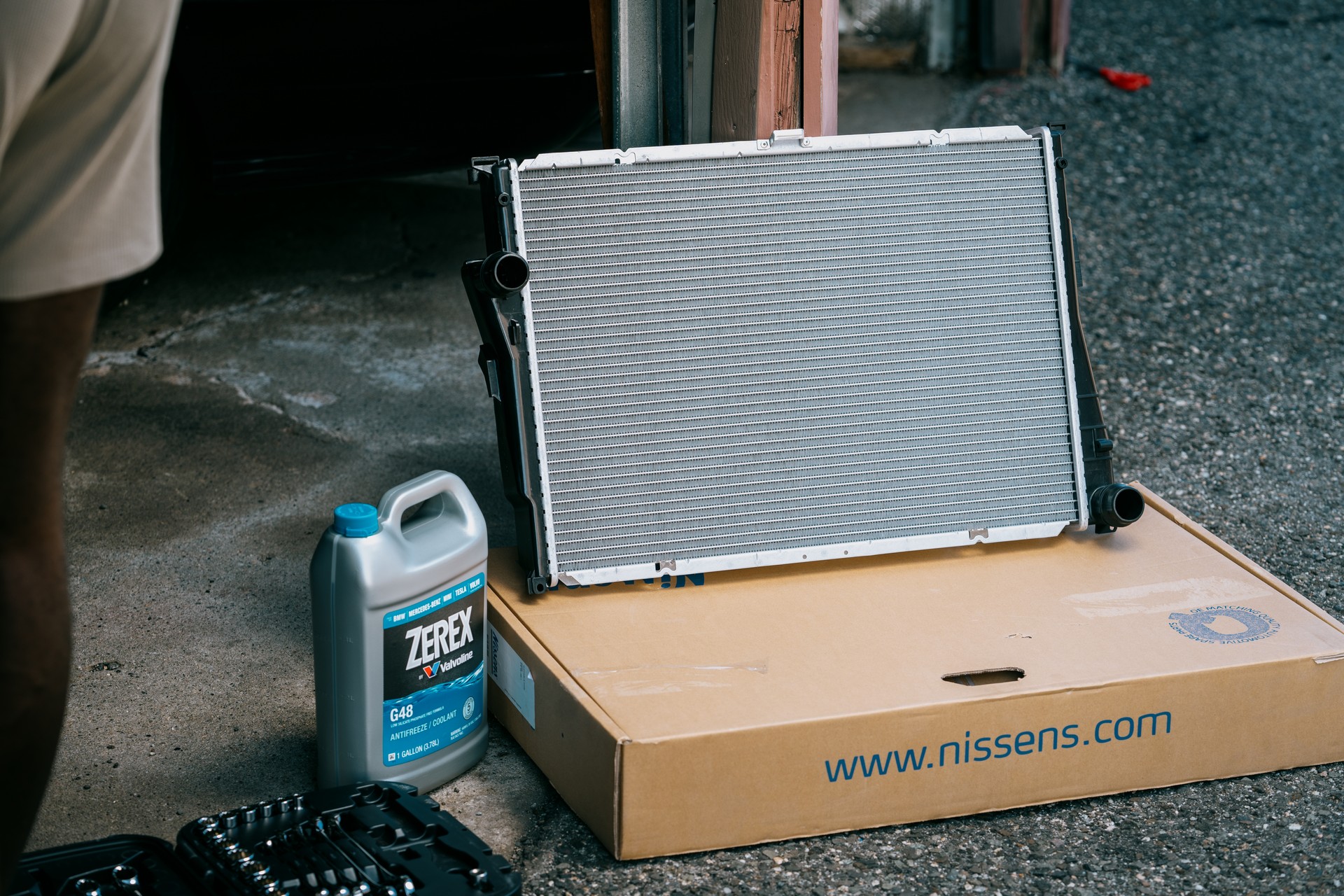
When the coolant passes through the radiator, it travels through channels separated by thousands of thin fins. The fins effectively increase the coolant's surface area and provide a very effective way of removing heat. Specifically, their effectiveness comes down to a few factors you’ll want to consider when buying a new one.
Radiator Characteristics To Know
Tank material
Core count
Pass count
Fin count
Your standard road car generally has a single core, but heavy-duty applications often require a dual-core. Multiple cores make for a thicker radiator, providing more surface area for heat removal. These are most common in aftermarket applications from companies like Koyo and CSF, both leaders in aftermarket OE replacements. They are also often dual and triple-pass radiators.
OE rads for non-performance SUVs and sedans, like those offered by Nissens and Mahle Behr, are single-pass, meaning they enter the rad and move through the core without direction. However, many aftermarket radiator cores are multi-pass, whether dual or triple. In those cases, a wall or directing baffle forces the coolant to run across the core longer, giving it more exposure to the airflow, which pulls out more heat.
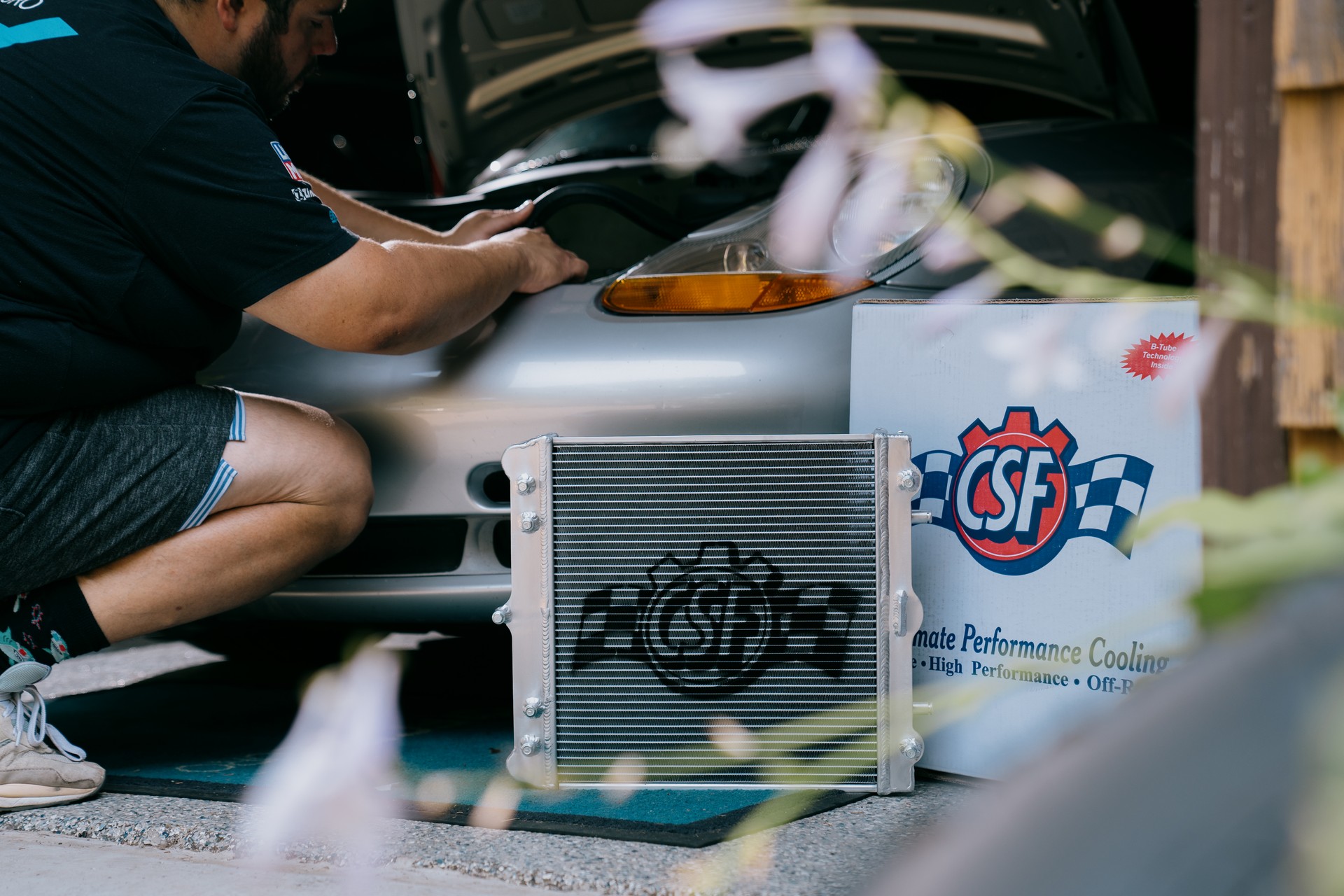
Tank construction for OE radiators is always plastic. It’s inexpensive, lightweight, and easy to produce, but not the most durable. Heat cycling destroys a plastic’s integrity, making it prone to cracks with age. For that reason, many OE radiators need replacement around the 100,000-mile mark. Moving to an aftermarket radiator, like one from CSF, will solve the issue, as most of their products feature TIG-welded aluminum tanks.
Lastly, the amount of fins placed between the plates in the core will heavily affect how well it radiates heat. More fins means more surface area, which directly relates to more cooling. Often, this is where the inexpensive no-name replacements skimp, as they’re tough to see. Without a detailed temperature gauge, the increase in average operating temperature won’t be noticeable, but the surrounding components in your engine will feel it, causing them to wear quicker than intended.
Water Pump
Coolant won't flow through the engine without a water pump. As the name implies, the water pump pumps the coolant throughout the system, ensuring the engine remains properly fed with cooled coolant. They can be belt-driven and mounted on the engine or electronic and away from it, but their purpose is always the same.
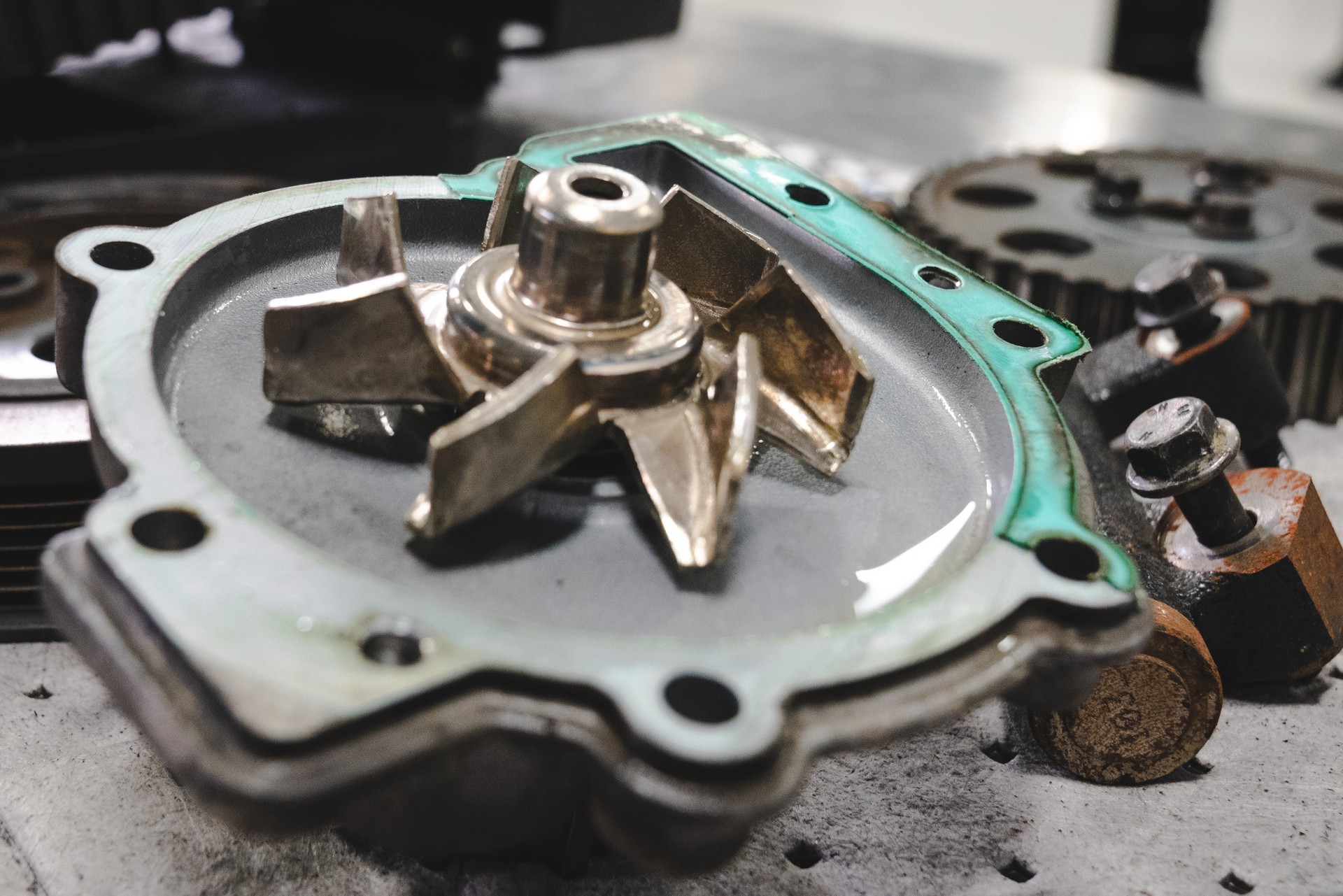
Electric pumps have become the standard for many and have become the most popular among BMW products made in the last decade. While more complicated than a mechanical pump, they allow for variable control of the pump’s speed, which allows the engine computer to alter coolant flow depending on how it wants the engine to perform. It’s largely why their engines can be so fuel-efficient while making class-fighting power. Mechanical pumps utilize a pulley driven by a belt off the crankshaft, so flow is directly determined by engine speed. It’s not as advantageous for maximum efficiency, but it's a reliable and simple design that’s been the standard for decades.
Mechanical and electric pumps are similarly reliable, typically lasting 60,000 to 80,000 miles. Traditional pumps fail because their bearings wear, allowing the pulley and impeller to move around. Electrical pumps can last much longer but suffer from control module failures. Neither is suitable for the engine; they’ll both leave you stranded.
Thermostat
The thermostat regulates the cooling system flow. While engines can’t get too hot, they must reach a specific operating temperature for their best performance. When the engine is cold and you fire it up, the thermostat is closed, preventing coolant flow. However, once the coolant within the engine heats up, the thermostat opens, allowing the coolant to cycle through and keep the engine within its operating range.
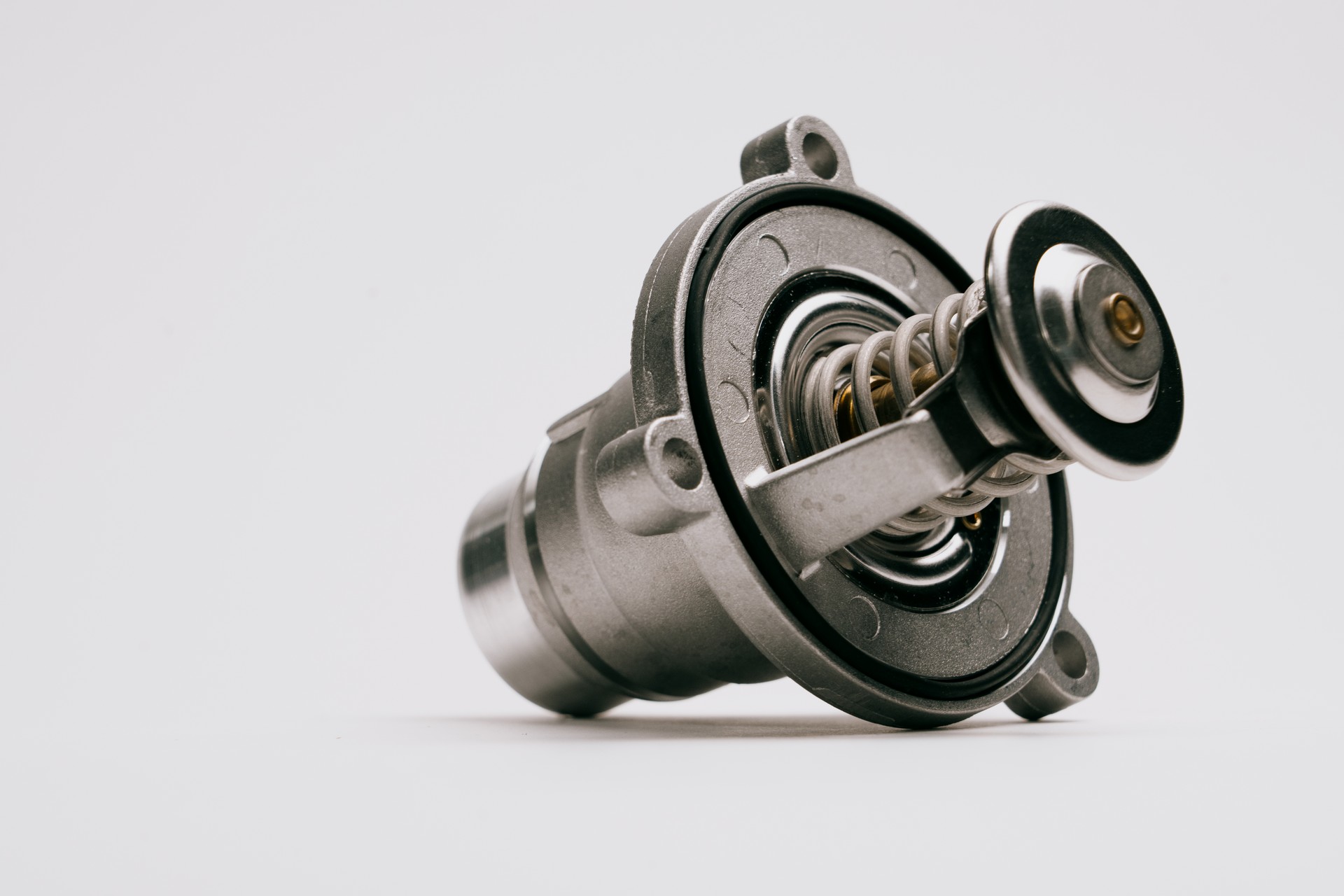
Most thermostats are entirely mechanical in operation; they’re nothing more than a simple valve pressed shut by a spring. On the engine side of the valve, there’s a cylinder containing wax with a push rod connected to it. As the engine coolant warms, the wax melts and expands, eventually pressing on the rod, opening the valve, and allowing the coolant to cycle through. However, with all its historic cooling system woes, BMW has taken a slightly different approach in the last decade.
The characteristic map thermostat is an advanced, electronically controlled thermostat and thermostat housing. They come as one unit, a black plastic sphere with several orifices for coolant flow. The idea behind them is similar to the variable electric water pump and is used in tandem with them. Again, it’s all about efficiency, and highly regulated coolant temps have shown to affect that, so it’s become the norm.
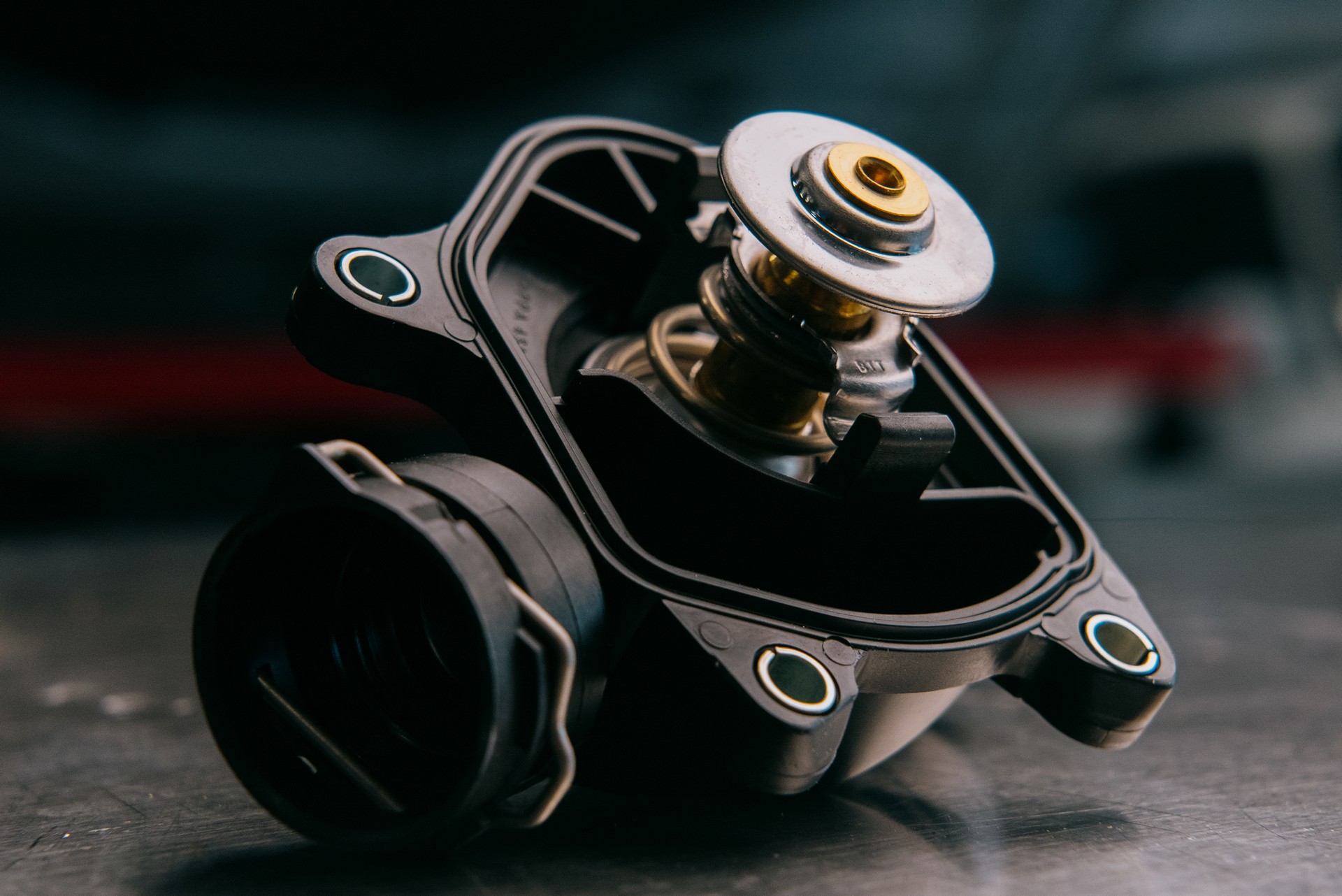
While there’s more to go wrong with BMW’s modern thermostat, it won’t leave you stranded if it does break. Once electronic control fails, for whatever reason, it defaults to the wax-regulated thermostat within. Of course, that can fail, too, no matter the application. Failures can occur in the open or closed position, neither of which is great. Fully opened will allow you to drive uninhibited, but the engine will take much longer to reach operating temperature if it ever gets there. Failing closed will prevent coolant flow, causing the engine to overheat.
Coolant
Coolant is a liquid pumped through the engine to keep it from becoming too hot and damaging itself. In its earliest form, engine coolant was simply distilled water, but as we know, that doesn’t work very well in freezing temperatures; frozen water inside an engine can crack the iron or aluminum surrounding it. It also has a relatively low boiling point compared to where engines should operate, leading us to develop anti-freeze.
As it is known today, coolant is a 50/50 mixture of water and antifreeze, forming a kind of “super water.” The water isn’t different, but anti-freeze is a concentrated mixture of chemical compounds, the most important being Glycol. When added to water, Glycol raises the boiling point and lowers the freezing point, stabilizing it for use in almost every application while also containing the lubricants that help the water pump and thermostat function effortlessly. The remaining chemicals are corrosion inhibitors and dyes (orange, green, red, or blue).
Corrosion inhibitors are critical to the material the engine is made from and largely determine which mixtures are correct for a given engine. Getting into them beyond that becomes a very involved conversation that isn’t best had here, but don’t worry. You can look in-depth at all things coolant with our coolant guide!
Hoses
Radiator hoses are as simple as they get. Nothing more than rubber reinforced with cord, they carry the coolant between the radiator, engine, and water pump while allowing the engine to vibrate and shift. Without any moving parts, there really isn’t much to go wrong with them other than age-related failures. Repeated heat cycling over tens of thousands of miles will deteriorate the rubber, eventually splitting it if not replaced.
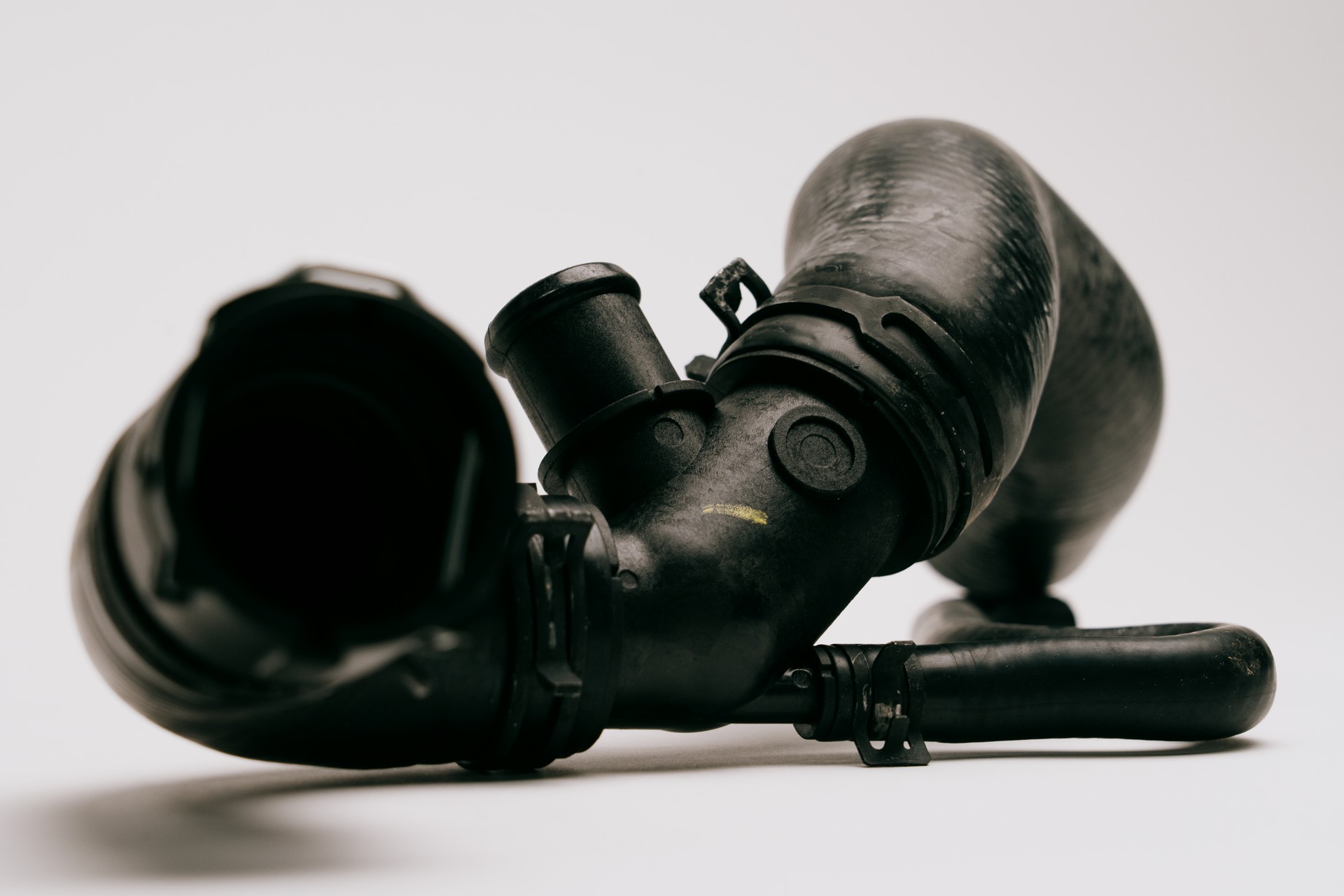
Replacing a radiator hose means opening up the cooling system, so if you can, install some fresh ones during a water pump or radiator replacement. Those jobs provide the perfect excuse to check their health, though you can do that whenever you’re under the hood. While in there, check the plastic components in the surrounding areas; chances are some need replacement.
Expansion Tank & Radiator Cap
If you look at the cap on your radiator or expansion tank, you’ll see a bold message warning you not to open the cap while the car is hot. Ignoring that warning will surely end up with a large plume of nearly 300°F water and steam shooting out in a scene reminiscent of Yellowstone’s Old Faithful. If you’re lucky, you’ll stay dry, but you’ll likely be hit with the scalding coolant.
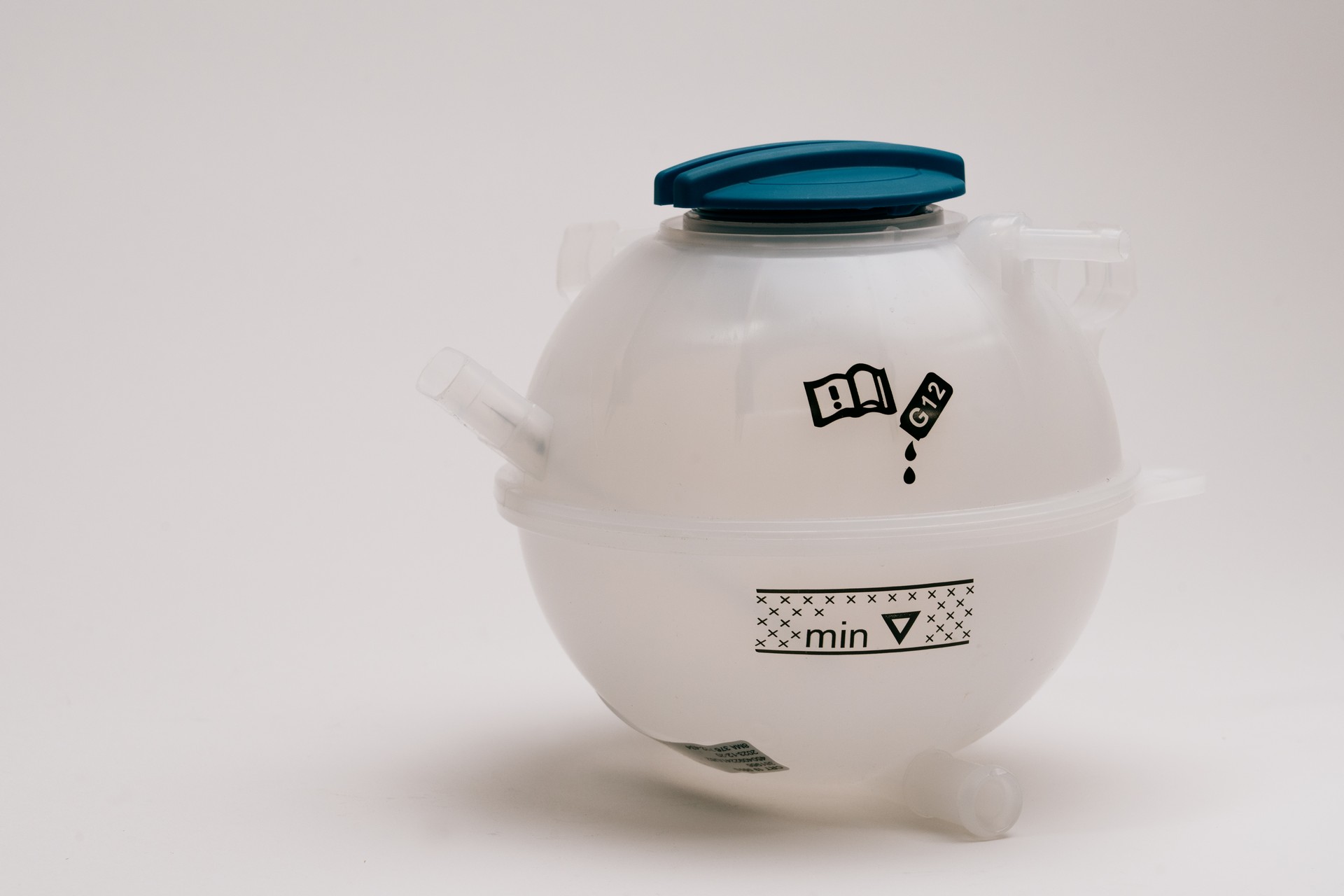
As the cooling system heats up, it builds pressure. Pressure is good for the system, as it forces out any air pockets that could cause hot spots and raises the boiling point of the coolant mixture. However, there is such a thing as excess pressure, and it’s the radiator cap’s (or expansion tank cap's) job to release it in a controlled manner. A bad cap won’t hold pressure, which can cause the engine to overheat.
Different systems deal with pressure build-up differently, but most modern European vehicles utilize an expansion tank. As the name implies, this tank gives the coolant a place to cycle through when pressure builds. The tanks are exclusively plastic, and as with the other components mentioned above, the lightweight and inexpensive material is prone to cracking with age. It’s a common failure for many Euros (VWs, BMWs, and the 996/986 generation Porsches) and not an enormous deal when caught early. Unfortunately, if you miss it, it can blow open on the road, leaving you unable to drive without hurting the engine.
How To Maintain A Cooling System
The cooling system comprises many parts, each with a different service interval. Replacement intervals also vary between make and model, depending on the era in which they were built and the engines they have. If you’d like to ensure the health of your cooling system for miles to come, the answer is simple: keep up with your maintenance.
Engine coolant should be the most common service item within the system. Although several manufacturers claim that the fluid is a “Lifetime Fill,” that’s more for making their products look more environmentally friendly. Realistically, you should flush and refill coolant every three years or 50,000 miles to prevent electrolysis from worn-down anti-freeze additives. The electrolysis process can happen as the anti-freeze portion of the mixture wears down, and a minor electrical charge is put through the system. The electric charge will seek the path of least resistance, ground itself on the aluminum or iron components, and eat away at them.
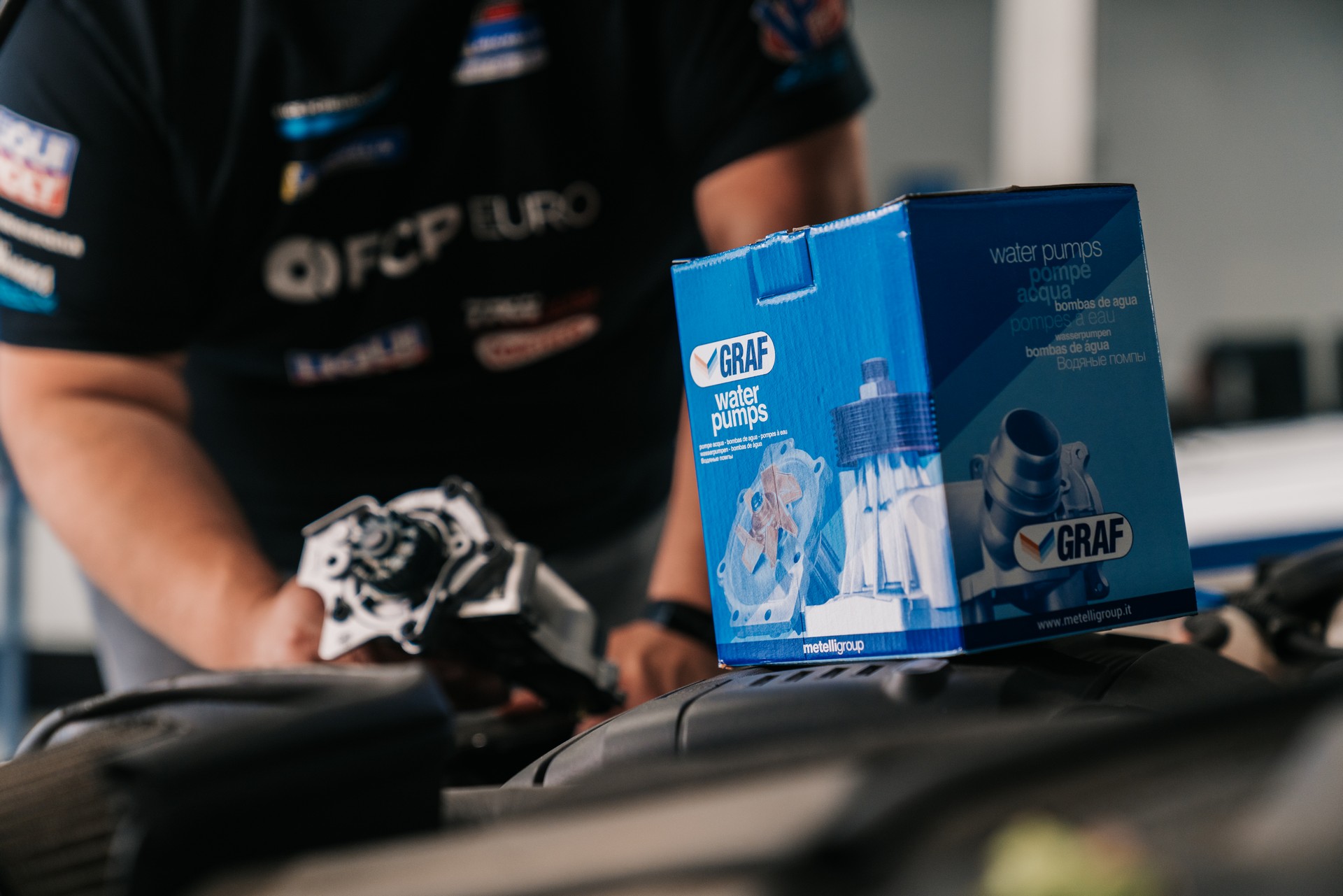
Next up, the water pump and thermostat will have a replacement interval between 60,000 and 80,000 miles. Often, one will fail before the other, but they work so closely connected (figuratively and literally) that it always makes sense to replace them as a pair. Although you won’t see when the thermostat fails, mechanical water pumps often have a weep hole that leaks a tiny amount of coolant and essentially warns you that it needs replacement as soon as possible.
The radiator and expansion tanks are relatively resilient and can last well over half a decade if not abused. However, plastic is a bit of a wild card regarding its durability, so consider replacing them around that five-year mark or 100,000 miles, whichever comes first. The hoses are also a case-by-case item but are often inexpensive, so replacing them with a more extensive service or replacement is an easy way to ensure peace of mind.
How To Upgrade A Cooling System
OE components are tough enough for daily commuting, and that’s about it. Some models can have optional packages that add additional coolers or a beefier system, but the one constant that always remains is plastic. Lightness and cheapness mean savings for the customer and better driving dynamics, so it’s no mystery why automakers love the stuff. But look at any race car, and you’ll find none rocking it within their cooling systems.
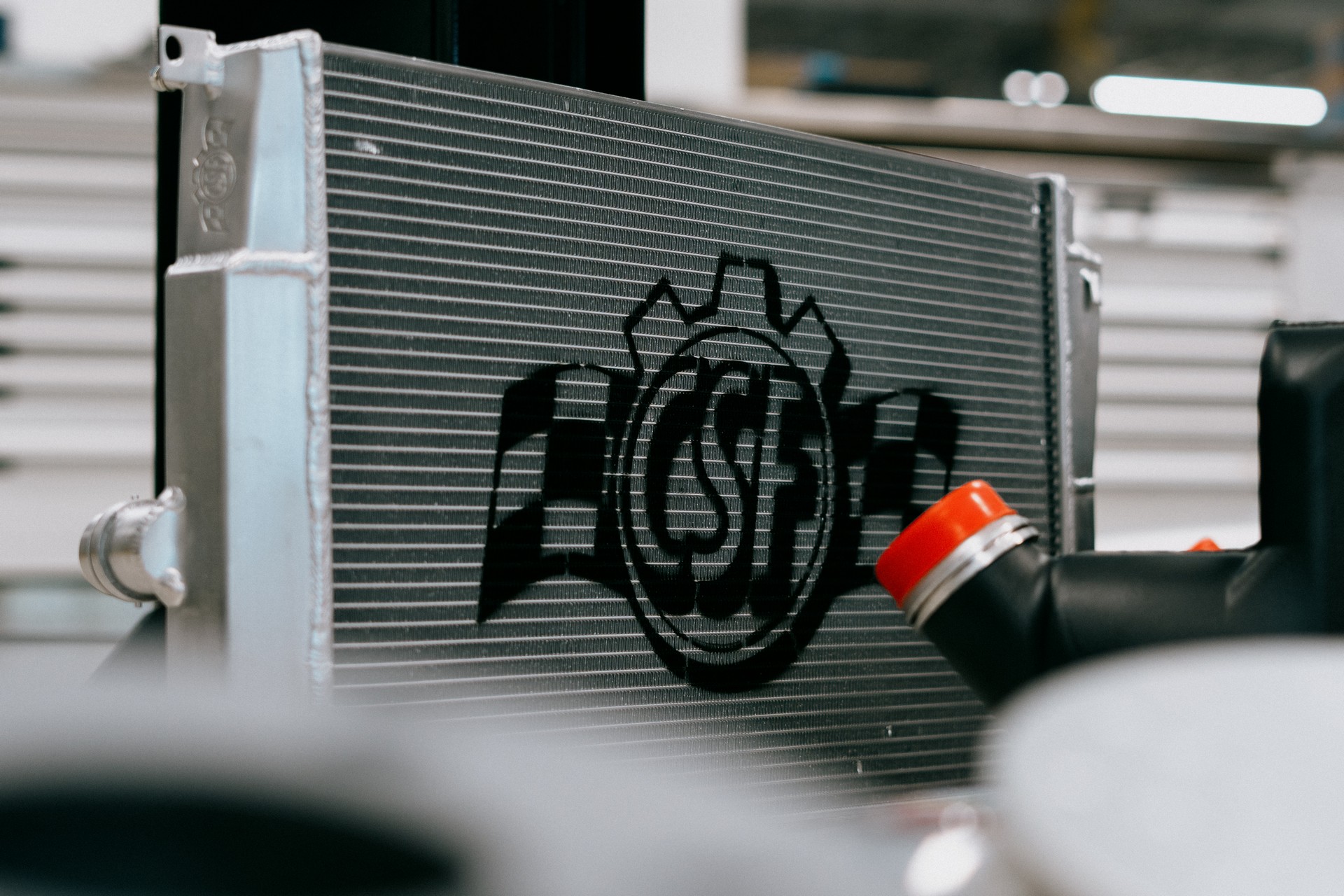
Metal parts are marginally heavier but light years more durable. OE suppliers like CSF have a strong and well-known aftermarket side dedicated to building the best radiators, all of which use aluminum tanks. Beyond the better build quality, CSF has proprietary technology proven to improve cooling characteristics over OE heat exchangers. Their “B-Tube Technology” is a unique way of shaping the tubes through which the coolant flows. It provides a stronger tube shape that makes them thinner, increasing thermal efficiency by 15% over the conventional shape. CNC-machined aluminum fittings and a “race-style” drain plug are also included.
Opening the thermostat earlier also makes it easier to keep the system cool. “Race” thermostats are an excellent option for regularly tracked vehicles as they open at a lower temperature than the industry standard 180°F. These are especially effective for Porsche sports cars, for example, as their radiators are easy to clog and relatively small for the amount of coolant in the system.
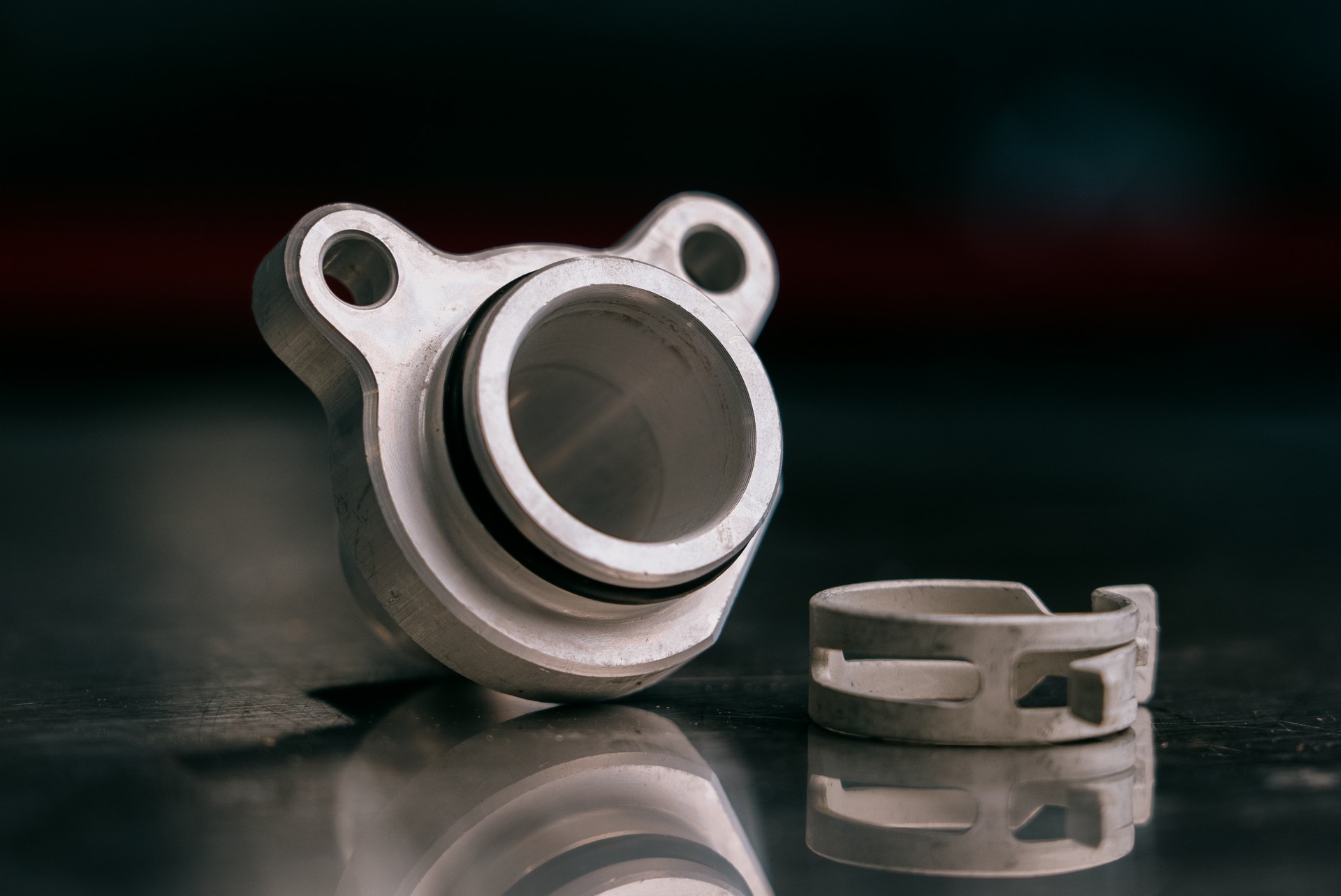
Make—and generation-specific fixes, as with the low-temperature thermostat mentioned above and an aluminum flange for BMW’s N5X and N2X engines, are reasonably popular. Colloquially known as the Mickey Mouse flange, the OE plastic fitting is notorious for becoming so brittle that it crumbles if you look at it the wrong way. This is technically an upgrade, but at this point, it’s a must for any of those engines.
More applicable to a larger number of vehicles are silicone hoses. Rubber lines work perfectly well in most applications, but repeated use in high-stress applications such as the race track can cause rapid degradation. Instead of running that risk with OE hoses, you can pick up a set of silicone hoses from do88 or Mishimoto. Silicone hoses have a much better thermal tolerance than rubber, which will last longer, especially in extreme situations. However, they’re porous enough that your coolant mixture will slowly evaporate through the hoses. For that reason, they’re best utilized on a dedicated track vehicle unless you’re checking your coolant level regularly.
Beyond all of that, there's not much more to your car's cooling system. Keeping it maintained and watching for the apparent signs of failure is crucial to keeping your car cool throughout the hottest of the summer months!