- 10/01/2026
- 5 Min Read
- By: Christian Schaefer
If You Want High-Performance Engine Oil, You Need To Consider Castrol

Cooking with any type of automotive or mechanical oil is guaranteed to cause some kind of ailment. Petroleum-based oils aren’t for people, unlike conventional plant and animal oils. But plant oils in machines? It was a shot in the dark back in the late 1800s, but one man discovered that adding oil pressed from castor beans improved existing formulas. Before long, this one oil formulation was the choice of pre-war motorsports and aeronautics across Europe and the Americas, eventually becoming so popular that its founding brand renamed itself after it. Today, you won’t find any remnants of castor beans in their oil, but you most certainly know their name and their products. That company is Castrol.
A Bit Of Vegetable Oil Is All You Need
The mechanical revolution that occurred in the late 19th and early 20th century was an era of seemingly unending potential. Scientific and engineering advancements were made daily as young upstarts full of new ideas and tired of upper management set out on their own. Charles ‘Cheers’ Wakefield was one of those engineers, choosing to form his own company in 1899 after spending time at the Vacuum Oil Company.
The company’s first decade making greases and lubricants for heavy machinery was successful enough, but in 1909, London-based CC Wakefield & Co developed their defining product: Castrol. Aeroplanes and automobiles were in their infancy, and a new oil market opened to support their needs. Wakefield set his sights on developing something for that market, and one of his employees tested plant-based castor bean oil as an additive to an established formula. That simple addition provided the low-temp viscosity and high-temp stability that the mineral-based formulas couldn’t match on their own, and just like that, Castrol was born.
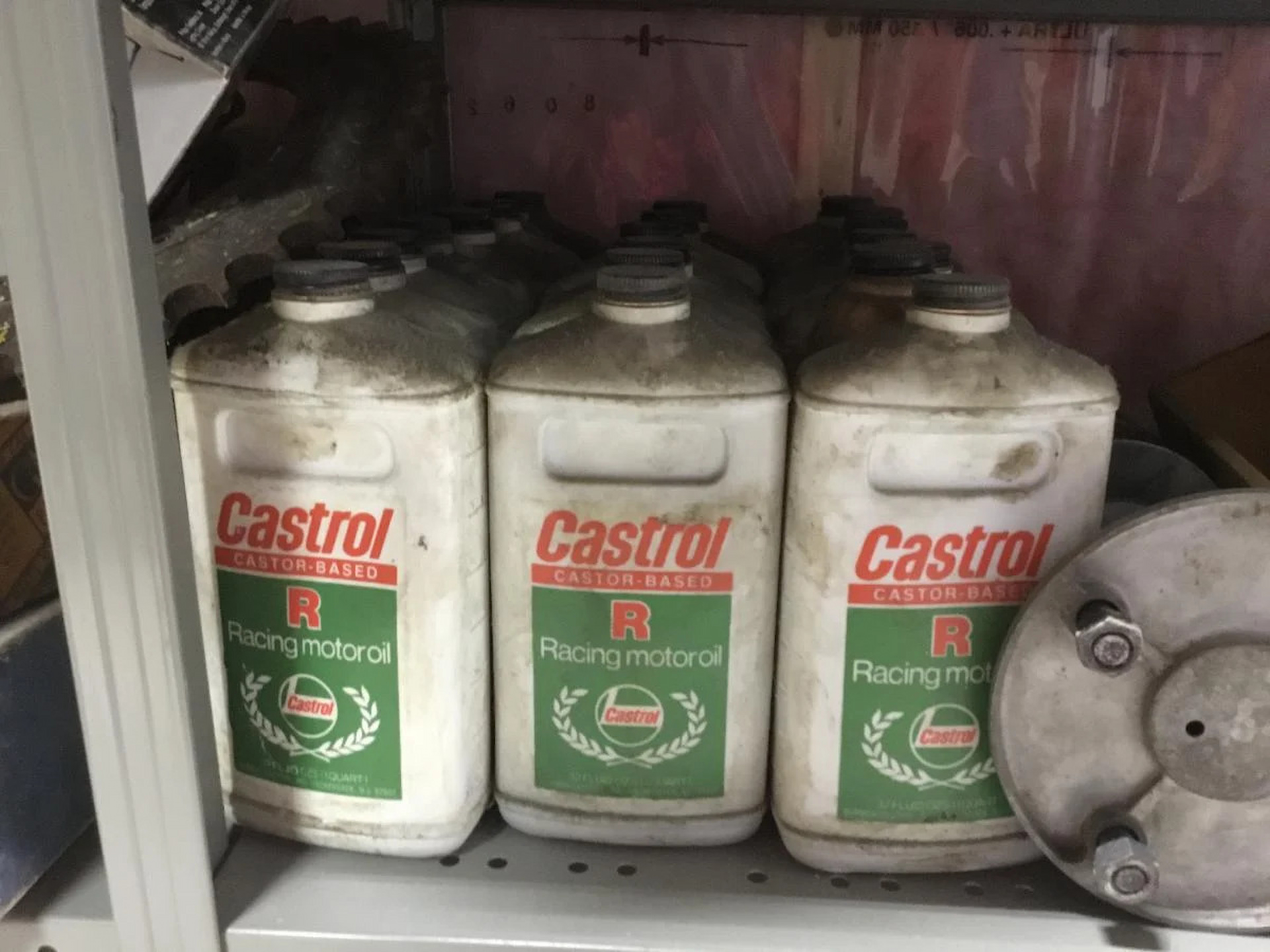
Within the year, “Castrol R” (the blend’s official name) lubricated several winning planes at the first Doncaster Aviation Meeting. From there, Castrol became the choice of many, including the Royal Air Force (and its preceding groups) in the First World War. In 1919, it lubricated the engines on the first non-stop Trans-Atlantic flight, and in the following two decades, it was poured into high-performance cars, including many land-speed record vehicles. However, as the decades raged on and war was once again on the brink, Wakefield was hard at work engineering the next generation of engine lubricant without castor oil. That’s not to say Castrol R disappeared from shelves, but more modern mineral-based formulas were gaining traction and proving as protective, if not more, in larger engines.
Despite the advent of newer oils, Castrol R was regularly used through the sixties for two-stroke race motorcycles and karts. Its popularity waned around then as new oils were undeniably more protective and production of the older formula was intermittent. But just as modern oils get updates, so too do old oils. A quick search for Castrol R brings up several outlets claiming its return in 2026, including from Castrol themselves. The special oil hasn't hit shelves yet, but it looks like a legend is returning to prove its worth to a new generation.
Iconic Liveries And An Undeniable Motorsport Presence: The Birth Of Sponsorships
While this generation doesn’t know the original Castrol R formula beyond stories, its impact on motorsport is undeniable. Providing critical lubrication for the earliest years of flight and motorsport allowed both to grow quickly and break records on a near-monthly basis. However, its largest impact might not actually be the oil itself, but the branding at events.
Castrol signs and banners filled that first aviation meeting in Doncaster, setting the tone for motorsport sponsorships forever. Oil companies have been a part sponsor in nearly every motorsport event since then, connecting the gap between high-performance machinery and the vehicles spectators use to get home through outstanding engine protection. In those 100+ years, banners and flyers have evolved into direct team sponsorships and liveries that define eras of motorsport and even certain race cars themselves.
If you’re a race fan, there’s almost certainly a Castrol-sponsored car that comes to mind, but I know many more out there are far less familiar with the sport. I know it’s not everyone’s cup of tea, but it’s such a defining part of Castrol’s history that I’d be remiss to leave it out. I can’t cover every cool or interesting car to wear the green, red, and white, but I’ve picked out a few of the most significant.
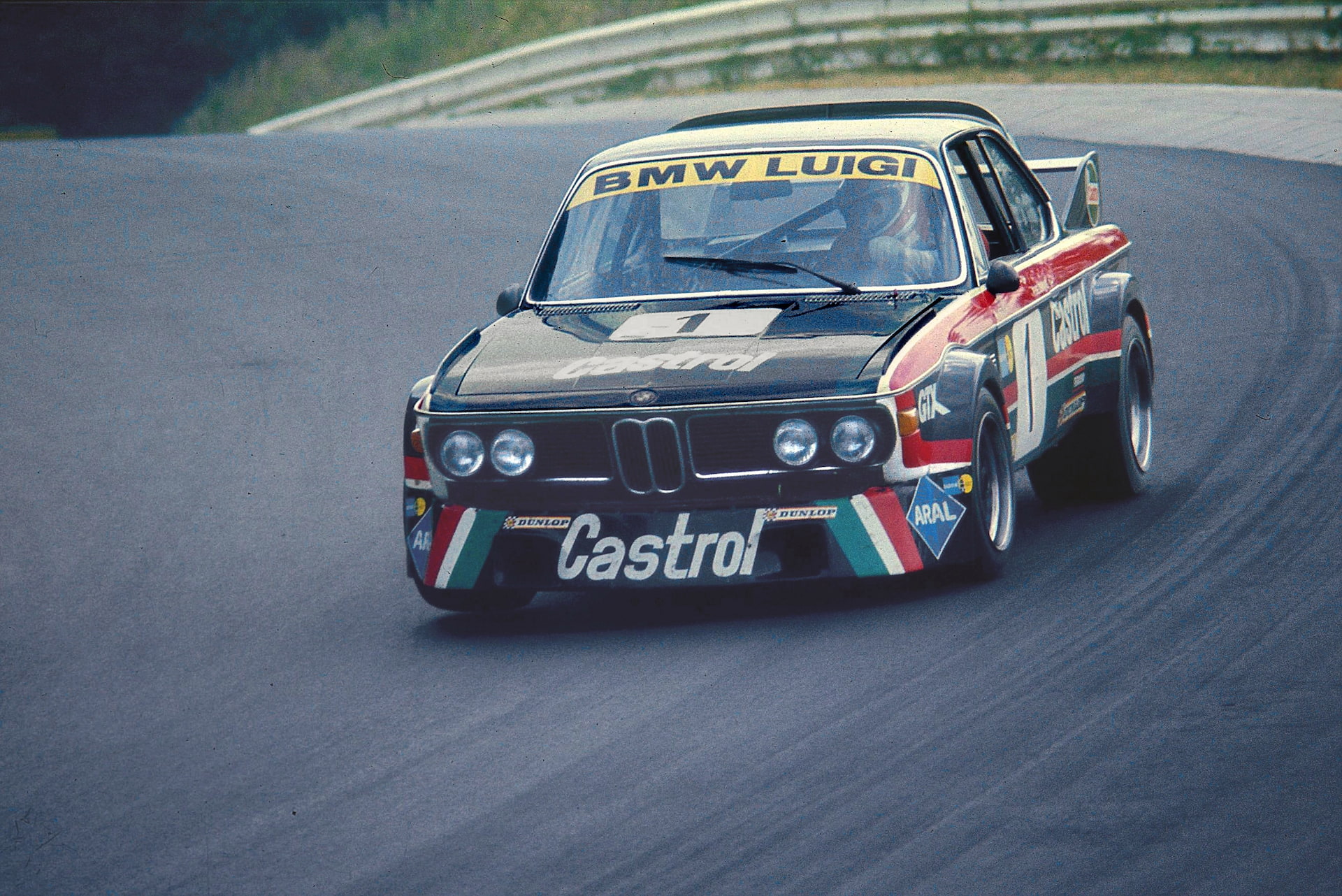
The first time Castrol found itself painted on a truly iconic car was in the mid 1970s. Race fields were full of legends in that era, and the British-born lubricants supplier was applied to what many consider the prettiest of them all: the BMW 3.0 CSL Renncoupe. The CSL in its wildest form was a box-flared, big-winged, shrieking super-sedan that dominated touring car and sports car championships in Europe and America, and the very first one, Chassis #001, reappeared in 1976 as an all-black beauty brushed over in Castrol's colors. Campaigned by the Luigi Racing team, it famously won the European Touring Car Championship that year, driven by Jean Xhenceval and Pierre Dieudonné. The same team entered Le Mans with their CSL the following year in the radical UFO livery, but even then, Castrol was front and center on the air dam. Even later evolutions of the car wearing BMW Motorsport colors retained Castrol branding over the rear wheel.
As important as that BMW was, the radical machines of the seventies are no match for PlayStation-era nostalgia, and that’s exactly where this next car earned its worldwide fame.
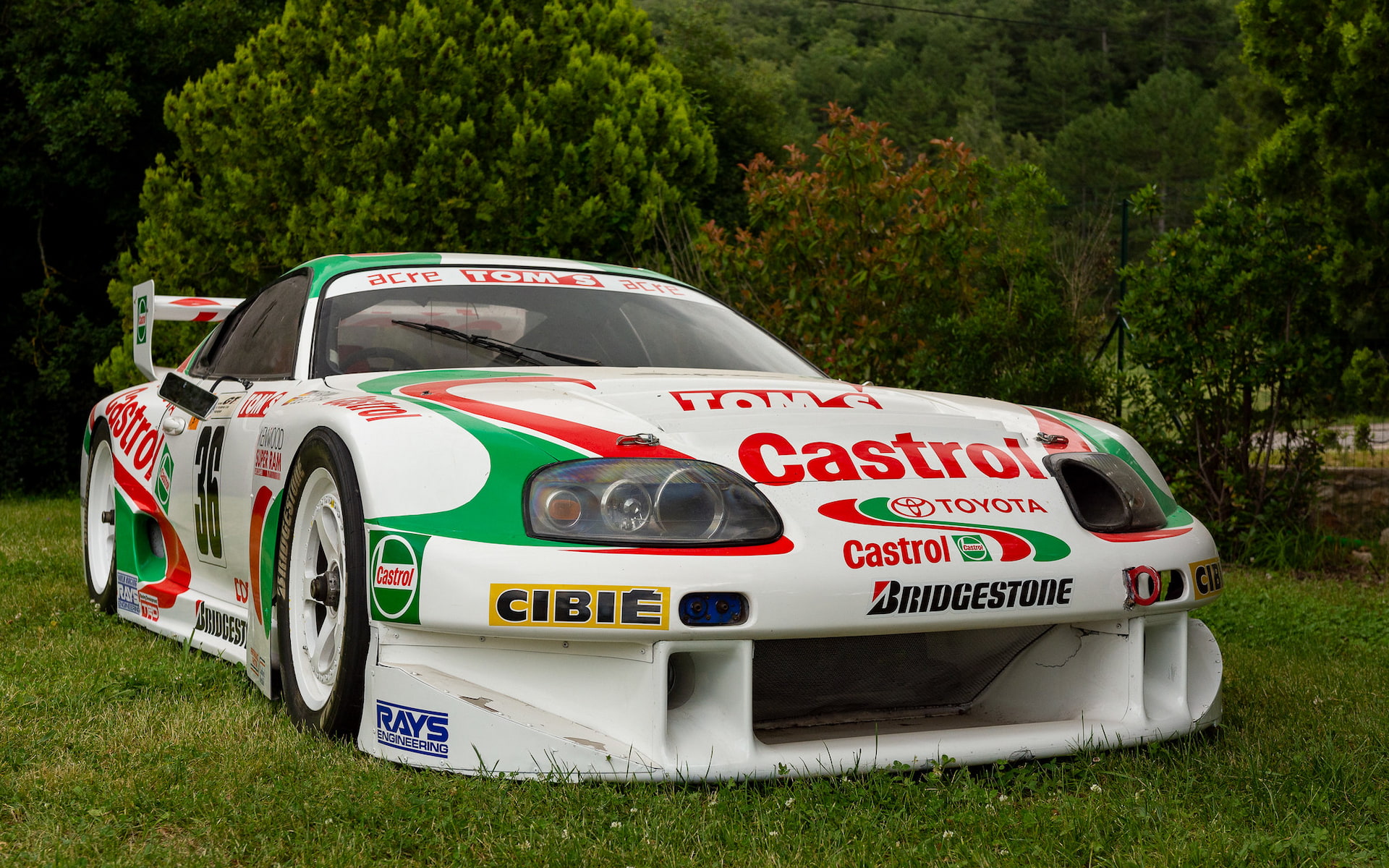
Have you heard of Gran Turismo? It’s a racing simulator video game franchise developed by Polyphony Digital for Sony that first appeared in 1997. It was an enormous success, partly because of the sheer number of vehicles included, many of which were Japanese and unavailable in other countries. As a result, millions fell in love with Skyline GTRs, Supras, Lancer Evolutions, and other JDM exclusives or rarities long before they could access them. The game also featured race cars from the Japanese Grand Touring Championship and shared them with fans unable to watch the series outside its home country. Many of the race cars captured fans’ hearts, but none more than the Castrol TOM’S Supra.
There are four versions of the TOM’S Supra, each slightly different per JGTC campaign, but all wore what’s likely Castrol’s most iconic livery. Many have worn it since, but sitting on the white-faced Volk wheels, the super-wide MkIV Supra’s GT500-spec chassis was the perfect canvas for Castrol’s swirling red and green. While video game fans were putting the Supra through its paces at Deep Forest Raceway and Trial Mountain, the real-life race team and car were busy winning the 1997 JGTC GT500-class championship. The TOM’s Supra was retired after the 1998 season, and although you’ll be hard-pressed to find one at a race event these days, its status as a Castrol icon cannot be overstated.
However, JGTC races in that era were only 300km at their longest, and Castrol’s consumer-facing engine oil has to do far more mileage than that. An event where their oil was stress-tested for far longer—let’s say 24 hours, flat out—would be the best brand representation of all, no? For that, we have to travel back a decade to endurance racing’s Group C era.
Porsche’s 962 prototype dominated endurance racing in the early and mid-eighties, fighting off Mercedes, Toyota, Nissan, Mazda, and Jaguar, who were all vying to knock them off. While the TWR Jaguar team was arguably the strongest competition, it wasn’t until Castrol joined as a sponsor and provided engineers that the tide finally turned. The XJR-9 that debuted for the ‘88 IMSA and WSC championships was a refined evolution of the preceding XJR-8, featuring a big V12, a futuristic carbon tub, and radical new aero that the Porsche teams simply could not compete with. It was a stunning car that tested well, but its debut race would be its greatest challenge: a 24-hour scrap at one of the toughest circuits in the world.
Daytona International Speedway is best known for the Daytona 500, but that’s not all it’s used for. Within its tri-oval is a road course used for IMSA’s season opener, its most prestigious race of the year, the Daytona 24 Hours. It’s an incredibly challenging mix of 200+ mph banked turns and slow, somewhat bumpy infield sections that requires an adaptable set-up and a car capable of surviving the abuse. Draped in Castrol’s green, red, and white, that’s exactly what the XJR-9 did in the chilly January Florida weather in ‘88. The three-car team took on more than twice as many 962s and outlasted them all, breaking Porsche’s dominant 11-year win streak. Six months later, a WSC-spec XJR-9 LM in Silk Cut colors, still wearing Castrol support on its nose, defeated Porsche at the 24 Hours of Le Mans, ending the company’s seven-year win streak. Along the way, Jan Lammers, Johnny Dumfries, and Andy Wallace regularly touched 250 mph on the Mulsanne Straight en route to their victory, a figure apparently inconsequential to the big Jag V12 filled with Castrol oil.
British Beginnings Paired With Britain’s Finest….And Some Others
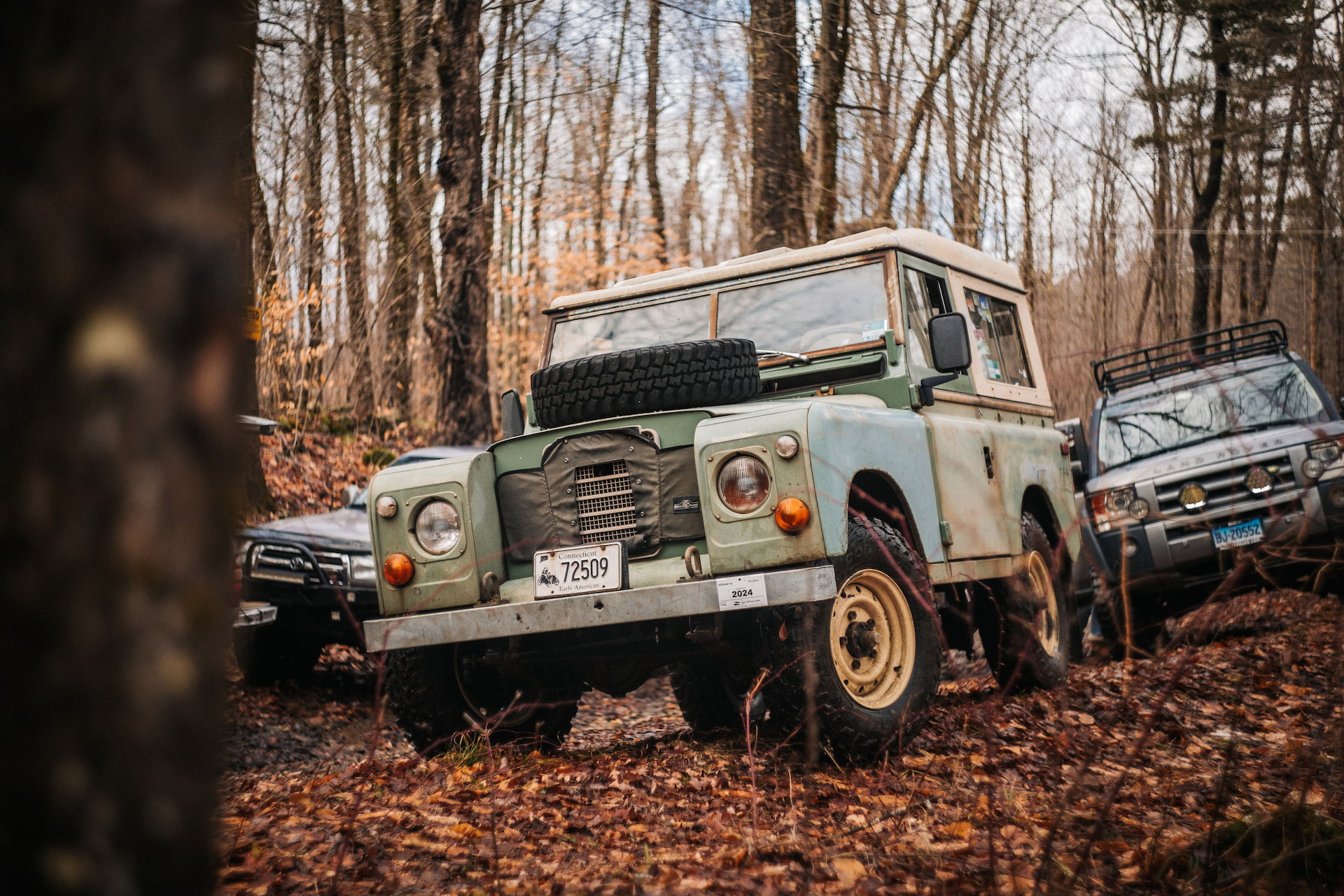
Although Jaguar no longer competes in motorsports, Castrol’s sponsorship and support helped form a multi-decade connection between the British oil supplier and the car manufacturer. It did come a few years later, but since 2001, Castrol has been the factory fill and recommended fill for all Jaguar and Land Rover vehicles. In that time, JLR products have used a wide variety of engines; some proprietary, some BMW, and some heavily Ford. Regardless of its origins, Castrol was the fill of choice.
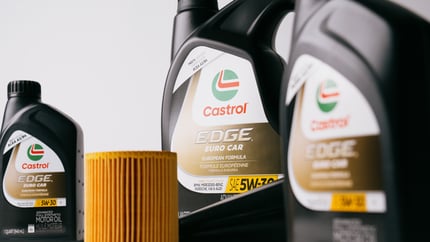
Now, you might be wondering about now which Castrol oil is Jaguar going to use next considering their enormous company rebrand has focused around a new EV sedan. To that I say, Castrol ON, of course. EVs still need specialized cooling and transmission fluid, both of which Castrol is happy to provide. Oil changes are likely to be different than engine oil, but the effort put into EDGE Euro Car is the same for ON.
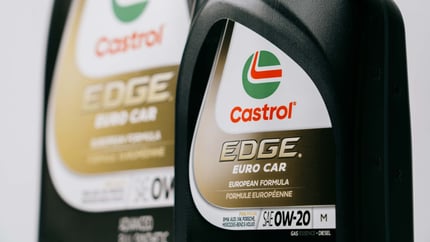
Beyond the Isle of Britain, BMW has also been a long-time Castrol partner. The two companies joined in an engineering partnership in 1999 that’s lasted through 2025, save for five years between 2015 and 2020 when BMW aligned with Shell. As a result, you’ll find Castrol recommended on the oil fill cap of most BMWs built in that time span. They were especially important in forming the 10W-60 oil blend for the naturally aspirated, high-revving M engines of the ‘00s that was so critical for their sensitive rod bearing clearances. These days, though, the 10w-60 is out in favor of super-thin blends like the 0W-20 required by hybrids.
Luckily, whichever weight or formulation you need, you can count on Castrol having something that fits your vehicle. Their latest Euro Car line was recently reformulated for this next generation of European engines, covering more than just JLR and BMW with quality oil. Shop the Castrol oil for your car on our site and keep your engine running happily this driving season.