
BMW G01 X3
- BMW G01 X3 Fluids
- BMW G01 X3 Drivetrain Maintenance & Issues
- Front Wheel Bearing Failure
- Rear Wheel Bearing Failure
- BMW G01 X3 Suspension & Chassis Maintenance & Issues
- BMW G01 X3 M40i Suspension & Brake Guide
- Engine Mount Failure
- Front Brake Pads & Rotors
- Rear Brake Pads & Rotors
- Cabin Air Filter Replacement
- Seized Front Lower Control Arms & Ball Seats
- Worn Front Tension Struts
- Tie Rods
- Front Struts
- Rear Shocks
- BMW G01 X3 Performance Modifications
- BMW G01 X3 Brake Upgrades
- Brake Pad Upgrade
- Track-Ready Brake Fluid
- BMW G01 X3 Engine Upgrades
- BMW G01 X3 Models, Production Years, and Model Years
- BMW G01 X3 Specifications
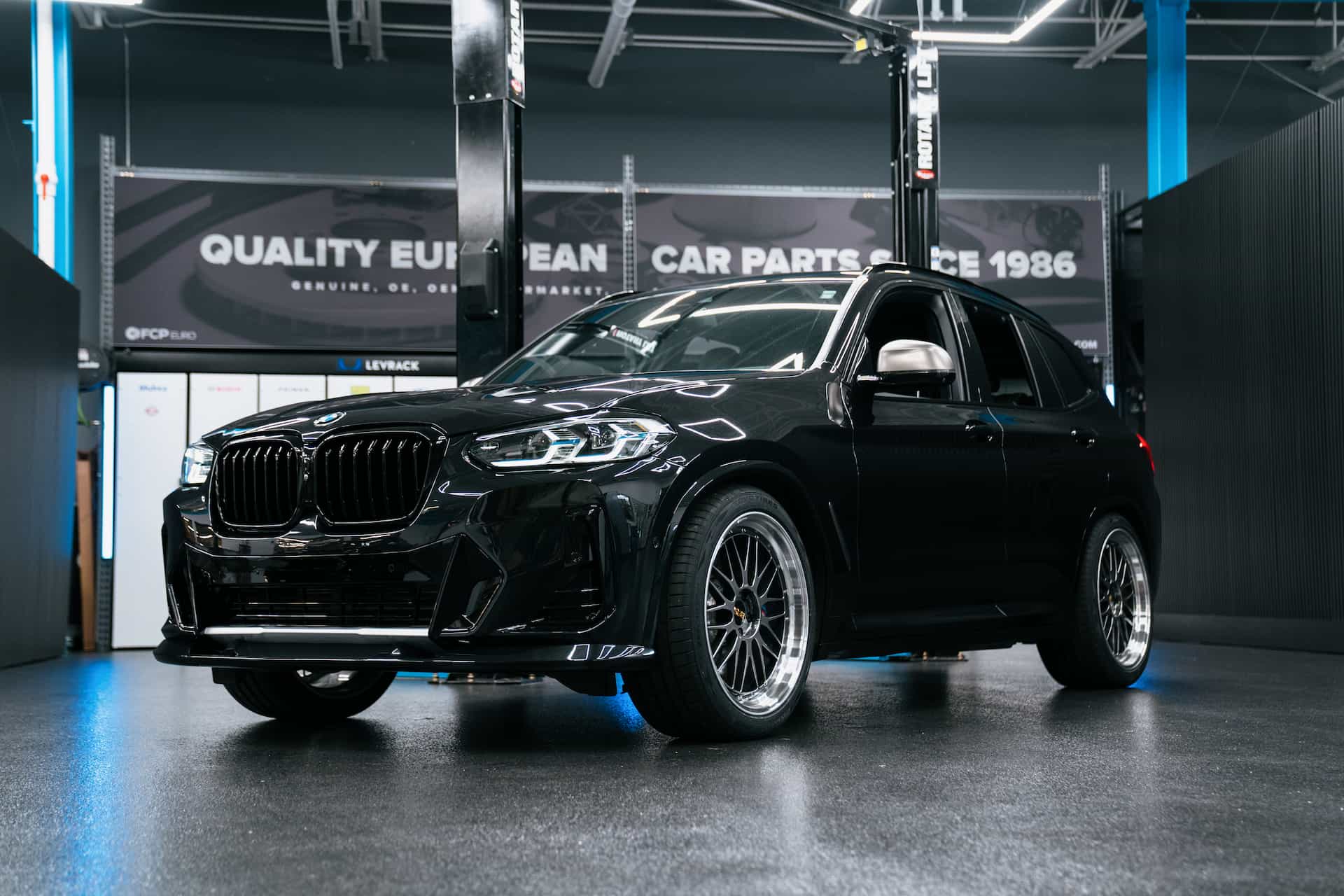
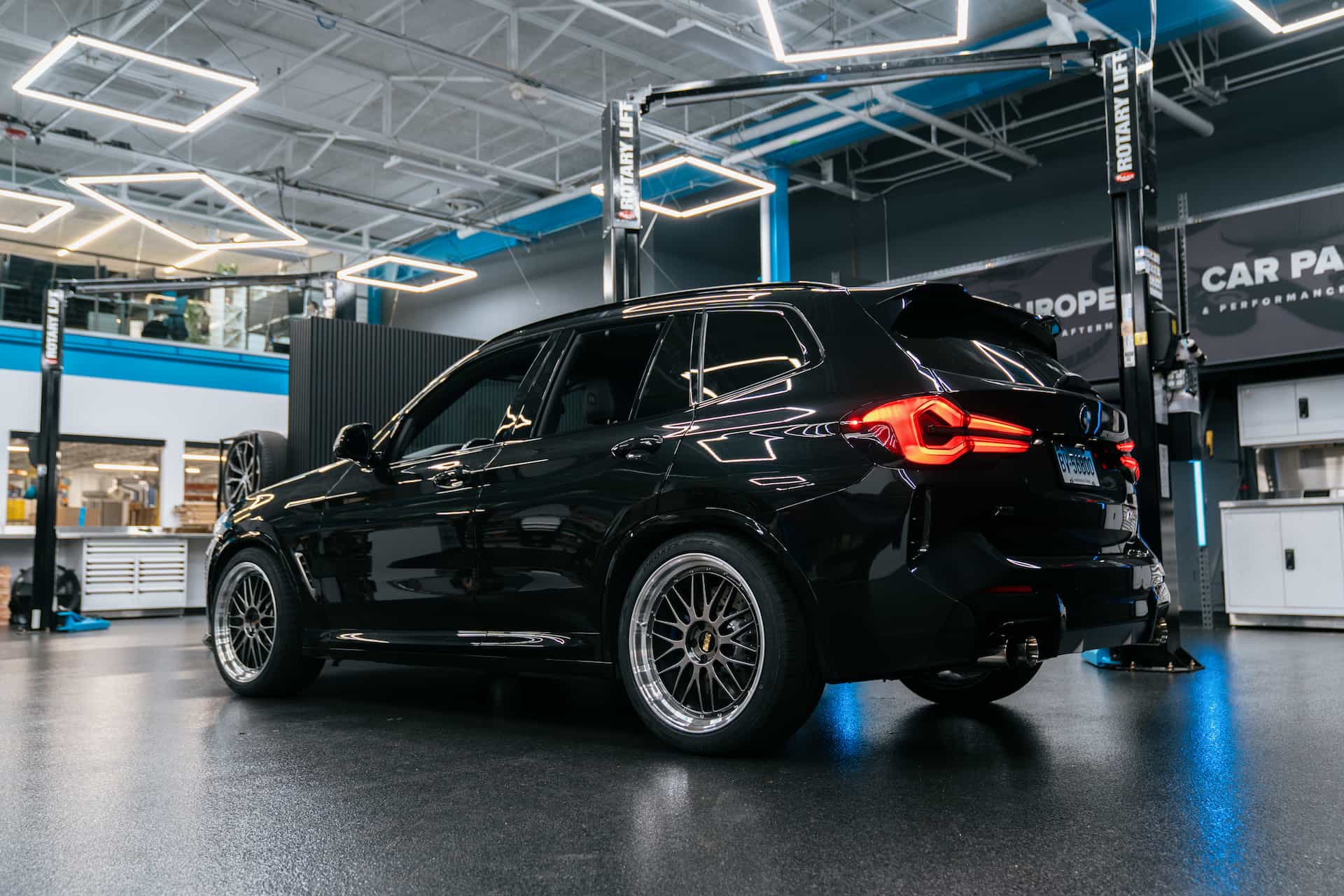
Going on sale in 2018, the G01 X3 is one of BMW’s largest steps forward in the SUV segment. With technology and architecture drawn from the G30 5-series and G12 7-series, and running gear shared with the G20 3-series, the G01 X3 is truly the apex of BMW’s G-chassis era of modularity. Throughout its 6-year run, which will continue into 2024, the G01 X3 and G02 X4 have received a range of hardware and software upgrades, along with some notable styling changes. In the used market, this constant development from Munich means there’s a large spread of G01 X3s to choose from. The first two years used technology and engines available since 2015, and the later years received updated engines and a massive 12.3” screen with controls from the G20 3-series.
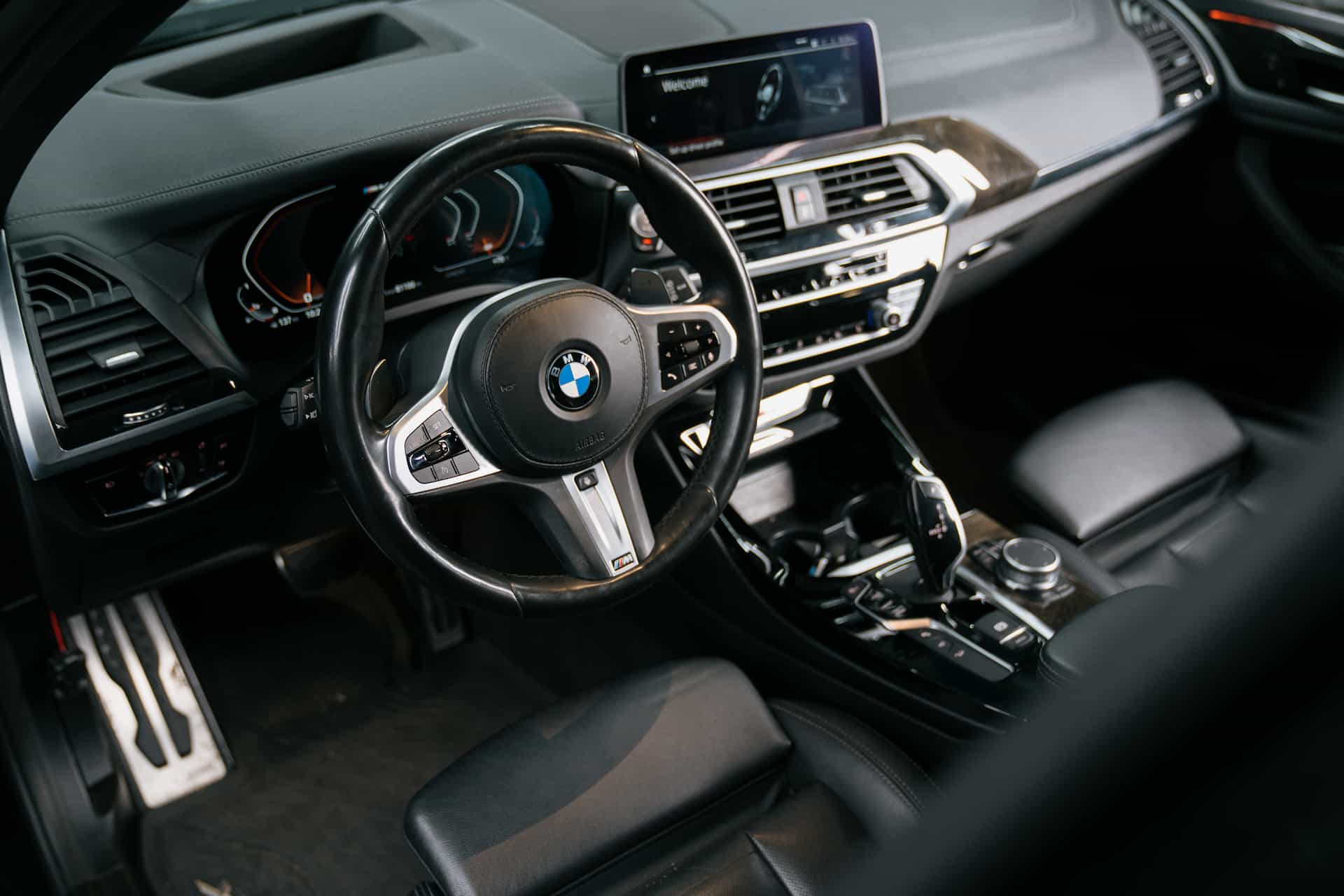
Throughout the 6-year production run of the 4-cylinder X3 30i and the 6-cylinder X3 M40i enjoyed numerous updates. For the 2020 model year, the B48 and the mighty B58 were both updated to the 2nd-generation B48TU and B58TU engines, respectively. iDrive 7 replaced the iDrive 6 operating system as well, although the X3 was spared from the introduction of the large curved display and the poorly received iDrive 8. For the 2022 model year, BMW facelifted the X3 and X4 exterior to include more angular body lines, along with offering an optional and enlarged 12.3” iDrive display, but still using iDrive 7. The X3M/ X4M received similar updates to the interior and exterior, including the infamous Halo “Energy Sword” tail lights from the 2022 facelift.
In this generation, it’s clear that BMW was extremely focused on improving their SUV offerings. Going so far as to debut the G01-based F97 X3M with the new S58 straight-six - the first time the new M3’s engine would debut in something other than an M3 - a deliberate move from BMW to acknowledge their SUV customer segment. With 7 series technology, the M3’s S58 soul, and traditional BMW styling, the X3M is arguably one of the most well-rounded BMWs to date.
Whether you’re looking for the ultimate daily driver or something to beat a hellcat-powered Mopar product from a stoplight, BMW’s G01-generation X3 may just be the perfect solution. Ownership isn’t without its ups and downs, though, and we’re going to walk you through everything you’ll need to know to keep a G01 X3 (M40i) on the road.
Engine B48 2018-2019 X3 30i & 30e |

SKU:
KIT-11428575211KT4
QTY
$78.49+
| ||||
Engine B48 2020+ X3 30i and 30e |
SKU:
KIT-11428575211KT4
QTY
$78.49+
| ||||
Engine B58 2018-2019 X3 M40i |

SKU:
KIT-11425B4C845KT2
QTY
$79.90+
| ||||
Engine B58 2020+ X3 M40i |

SKU:
KIT-11425B4C845KT10
QTY
$90.09+
| ||||
Transmission ZF 8HP (8HP55A) |

SKU:
KIT-24118612901KT
QTY
$275.70+
| ||||
| Differentials | Add your vehicle to the vehicle selector to browse differential fluid kits for your car as options are extensive based on your year, make, and model combination. | ||||
| Brake |

|
Front Wheel Bearing Failure
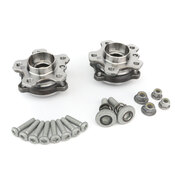
Front wheel bearings are a typical wear item on any car, and this holds true on the BMW X3 M40i. Thin tires and poor road conditions stress wheel bearings to the point of excessive wear, which creates a loud humming or rotational noise you can hear while driving at highway speeds. Fortunately, these BMW G01 X3s use a bolt-on wheel hub and bearing, making for a driveway-appropriate replacement.
Wheel bearings are subject to the environment where you drive most, so replacement intervals vary. Some see failures begin around the 60,000-mile mark, while others see six digits before replacing anything. Regardless of when it happens, the replacement process is only slightly more involved than a standard brake pad and rotor replacement. With a few extra tools and this DIY, you can replace it at home for much less than paying a professional.
Rear Wheel Bearing Failure
Just like the front wheel bearings mentioned above, rear wheel bearings on your G01 X3 M40i are also a regular wear item. Similar stresses as the front cause symptoms that can be both heard and felt as they fail. You can expect to start replacing these around 60,000 miles. And if one is failing, plan to have to do the rest in the very near future. The job is only slightly more involved than a standard brake service in the rear, so you should be able to tackle this DIY in your garage or your driveway.

BMW G01 X3 M40i Suspension & Brake Guide
Engine Mount Failure
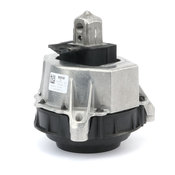
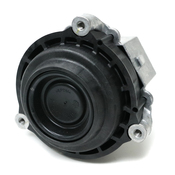
Engine mounts on both B48 and B58 vehicles are hydraulic (filled with oil), and take a beating from the increased power over previous generations. While the B48 is an especially smooth 4-cylinder, it is still abusive to engine mounts with its vibrations, and both engines deliver quite a bit of torque. Almost all engine mounts will need to be replaced before 90k miles, and should be inspected for cracks or fluid leakage during regular maintenance.
Most common symptoms
Excessive drivetrain vibration in the cabin
Drivetrain knocking sounds under initial acceleration
Excessive engine movement visible in the engine bay
Front Brake Pads & Rotors
The BMW X3 M40i uses a slightly larger brake system than the trim below, but the replacement process is essentially the same. BMW front brakes tend to wear out around the 60,000 mark with OE pads and rotors, but every car is different. Replacing the front pads and rotors on a modern X3 isn't any more difficult than on an older one, making the job very straightforward. It's one of the best jobs you can do at home, thanks to being relatively low-lift and one that doesn't involve opening up a critical area. Your brakes will tell you when they need changing. If all is well, the brake pad wear sensor will trigger a warning message on the dashboard when you have approximately 1,000 miles of driving left. However, pads can be damaged and rotors can warp, leading to vibrations and juddering under braking. If you have any of those symptoms, it's probably time to replace your front brake pads and rotors.
Rear Brake Pads & Rotors
Rear brakes are smaller than the fronts, but that doesn't make them any less important. They provide valuable stopping power and are critical to the stability control system. Replacing your brakes at home is a great way to keep your BMW safe while saving significant money on labor and parts costs. Ensuring your BMW X3's brakes are in good health is critical for safe driving. Brake pads have only so much friction material; when that's gone, stopping power is significantly reduced. The rotors can also be damaged over time, leading to vibrations under braking. Luckily, modern vehicles use pad wear sensors, so you'll unlikely have to deal with these issues unless you ignore your X3's warning.
Cabin Air Filter Replacement
The cabin air filter helps keep your interior clean and smelling nice. In doing so, it picks up and blocks all sorts of contaminants that the HVAC system pulls in to provide heat or A/C. Replacing the filter at its scheduled interval is the best way to ensure your G01 X3 always has quality air coming through the vents. Failing to replace it on time can lead to some stinky results. Blocking dirt, dust, and debris is a tough job that can only be done for so long. A typical cabin air filter replacement interval is around 30,000 miles, depending on the driving environment. Polluted or dusty areas can force an earlier replacement. You may notice a musty or moldy smell and reduced air flow with an old or partially blocked filter.
Seized Front Lower Control Arms & Ball Seats
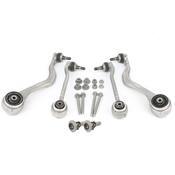
BMW utilizes similar non-tapered ball-joint studs for the G01 X3 as it does on the G20 3-series. In theory. This means stuck control arms are a thing of the past. In practice, however, these control arms and wishbones are also prone to becoming stuck in the suspension upright, and are much more difficult to spread from the upright due to the design of the large ball-seat. The upright is also made of aluminum, so it can be easily damaged, particularly the axle boot, which is directly overhead.
A normal ball-joint separator tool will not work, as the underside of the ball seat into the upright is a larger diameter than most fork openings. Ensure that, if you are using a fork-style ball-joint separator, the fork on the bottom is wider than the base of the ball seat. If you force an overly small tool, it will deform the threads on the stud and potentially create an even more difficult situation for removing the ball joint (see photo). If you are only replacing an axle, a strut assembly, or other services aside from the lower control arm, it’s highly recommended to remove the entire hub and control arm assembly from the subframe, leaving the arm connected to the upright. Simply remove the inner bolts, the axle bolt, and the top hat and caliper, and pull the entire assembly off as one.
Worn Front Tension Struts
Worn front tension struts are a common issue on a wide range of BMW models, from the 2-Series to the X7. The McPherson strut suspension, while simple, has a high-wear point at the front tension strut bushing due to the split lower wishbone design. If you hear a clunk and want to restore steering sharpness to your G01 X3, then replacing these front tension struts is likely your solution. Be sure to purchase the correct control arms for your application and trim.
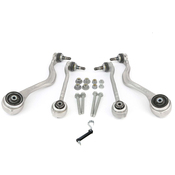
Tie Rods
BMW G01 X3 wheels are bolted to the steering knuckle, which allows them to roll and turn. However, the tie rods transfer the steering wheel input to those steering knuckles. The tie rods, both the inner and the outer, will wear down over time, eventually needing to be replaced. Luckily, as cars have advanced, suspension work like replacing the tie rods is still completely doable at home. When the inner and outer tie rods wear, they become loose, removing much of the original steering feel. They can also clunk and knock as you steer, constantly reminding you they need replacement. The outer tie rods can fail catastrophically if left unchecked, leaving you without steering and a wheel or wheels that'll turn in any direction on their own.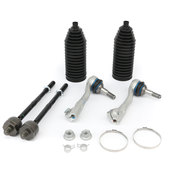
Front Struts
The front struts on your BMW X3 are major suspension components. They dampen the body motions produced by bumps, but not if they're damaged or failing. Replacing the front struts is the only way to restore your suspension and ride quality; doing so yourself isn't a complicated job. The typical lifespan for a strut is anywhere between 60,000 and 100,000 miles, depending on where the vehicle is driven. Worn struts will let you know they're failing in a few ways. Look for wet or oily strut bodies, which indicate leaking shock fluid. When driving, listen for clunking over bumps, big and small, and when parked, push on the front of the X3 to try to make it bounce. You shouldn't be able to, so if you can induce a fair bit of bounce and roll, your struts are likely worn.
Rear Shocks
Your BMW's shocks can deliver the ride comfort and sporty control you expect from anything with a BMW badge. However, they have a service life, and after around 80,000 miles of use, they'll likely need replacing. Replacing the rear shocks on a BMW G01 X3 is as straightforward as the job can be and is very similar to the process for other BMW vehicles. A worn rear shock cannot control the body's motion, leading to a squishy and wallowy ride. When they fail, they can start leaking fluid and will begin to clunk over bumps. We don't recommend waiting that long, as doing so can put extra strain on your other suspension components and accelerate their wear. Luckily, you can replace them at home and save yourself a bunch of money in the process.
Brake Pad Upgrade
The brake pads that ship with your G01 X3 M40i are already fairly large at 330mm and 348mm with the M Sport package, but the pads that ship with it aren't made to be the highest-performance ones out there; they're made to balance performance, how much brake dust they create, and noise levels. The average driver doesn't want to wash their wheels weekly or be subjected to the high-pitched squeal of brakes when at the drive-through for their morning coffee. While they do work for most, if you want more out of your X3 for those spirited drives on some back roads, there are options for you.


Track-Ready Brake Fluid
If you’re a regular track-day goer, or you regularly drive spiritedly, you’ll also want to upgrade to a higher-caliber brake fluid. You can read all about the nuances of brake fluid types and what they’re meant for over on our blog, but in short, know that the OE brake fluid won’t survive much longer than the OE brake pads. The BMW G01 X3s are relatively heavy and make lots of power, so the brakes often generate lots of heat, which is then transferred into the brake fluid. Fluid meant to withstand the race track has a much higher boiling point than one meant for daily driving, and skipping on it may mean losing your brakes at the end of the fastest part of the track you're on. Flushing out the OE fluid for something more durable is one of the least expensive and most meaningful changes you can make for your BMW's performance and your safety.


To read about engine upgrades for the G01 X3, specifically the M40i, visit our BMW B58 Engine Ownership Guide. Here you will find everything there is to know about the B58 engine, along with the most common and recommended upgrades.
The BMW G01 X3 is the third generation of BMW’s compact “Sports Activity Vehicle,” unveiled in June 2017 and sold for model years 2018 through 2024. Built on the modular CLAR platform and designed by Calvin Luk, it replaced the F25 X3 and represented a significant leap in both technology and refinement. Production began in August 2017, with the G01 serving as the core X3 model until it was succeeded by the fourth-generation G45 X3 in 2024.
Production for the G01 was centered at BMW’s Spartanburg plant in South Carolina, which serves as the global hub for BMW’s X models. To meet worldwide demand, additional production began in 2018 at BMW’s Rosslyn plant in South Africa and at the BMW Brilliance facility in Shenyang, China. Local assembly also took place in select markets such as India, Malaysia, Brazil, and Thailand.
The lineup included a wide range of engines—four-cylinder and six-cylinder gas and diesel options depending on the market. Popular variants included the sDrive20i, xDrive30i, M40i, and various diesel configurations such as the xDrive20d and xDrive30d. The high-performance X3 M40i, powered by a turbocharged inline-six, served as the M Performance flagship, while the fully electric iX3 (code G08) debuted in 2020 for select regions. A plug-in hybrid variant, the xDrive30e, joined the lineup for the 2020 model year, pairing a turbocharged four-cylinder engine with an electric motor.
A mid-cycle facelift (known as the LCI, or Life Cycle Impulse) was introduced in mid-2021 for the 2022 model year. This refresh brought updated front and rear styling, slimmer headlights, redesigned bumpers, new taillights, and an updated interior with BMW’s latest iDrive infotainment system. Mild-hybrid technology was also integrated into several engines to improve efficiency and responsiveness. The LCI refresh carried the G01 through its final years of production, maintaining its role as one of BMW’s best-selling models worldwide.
X3 M40i
- Engine Designation/Code: B58 3.0 L turbo inline-6 with 48-V mild-hybrid system
- Horsepower: 382 hp
- Torque: 369 lb-ft
- 0-60 mph: ~ 4.1 – 4.4 s
- Transmission: 8-speed automatic
- Drivetrain: xDrive all-wheel drive
- Wheelbase: 112.8 in
- Overall Dimensions: ~ Length 185.9 in, Width ~74.4 in, Height ~66 in
- Curb Weight: ~4,000 – 4,200 lbs (≈1,815 – 1,905 kg)
- Wheel & Tire Sizes: Standard 19″ (245/50R19) or optional 20″ (245/45R20 front / 275/40R20 rear) or optional 21″ (245/40R21 front / 275/35R21 rear)
- Brake Sizes: Standard front rotors ~330 mm diameter, thicker “Sport/M-Brake” variants ~348 mm diameter
X3 sDrive30i
- Engine Designation/Code: B48 2.0 L turbo inline-4
- Horsepower: 248 hp
- Torque: 258 lb-ft
- 0-60 mph: ~ 6.2 s
- Transmission: 8-speed automatic
- Drivetrain: sDrive (rear-wheel drive)
- Wheelbase: 112.8 in
- Overall Dimensions: ~ Length 185.9 in, Width ~74.4 in, Height ~66 in
- Curb Weight: ~4,079 lbs
- Wheel & Tire Sizes: Standard 19″ (245/50R19) or optional 20″ (245/45R20 front / 275/40R20 rear) or optional 21″ (245/40R21 front / 275/35R21 rear)
- Brake Sizes: Rear rotor about 13.0-13.5 in diameter for base brakes (front size similar)
X3 xDrive30i
- Engine Designation/Code: B48 2.0 L turbo inline-4
- Horsepower: 248 hp
- Torque: 258 lb-ft
- 0-60 mph: ~ 6.0 s
- Transmission: 8-speed automatic
- Drivetrain: xDrive all-wheel drive
- Wheelbase: 112.8 in
- Overall Dimensions: ~ Length 185.9 in, Width ~74.4 in, Height ~66 in
- Curb Weight: ~4,149 lbs
- Wheel & Tire Sizes: Standard 19″ (245/50R19) or optional 20″ (245/45R20 front / 275/40R20 rear) or optional 21″ (245/40R21 front / 275/35R21 rear)
- Brake Sizes: Front and rear ventilated disc brakes; standard rotor diameter ~330 mm front (non-M sport)
X3 xDrive30e (Plug-In Hybrid)
- Engine Designation/Code: B48 2.0 L turbo inline-4 + electric motor
- Horsepower: 288 hp (combined)
- Torque: 310 lb-ft (combined)
- 0-60 mph: ~ 6.4 s
- Transmission: 8-speed automatic
- Drivetrain: xDrive all-wheel drive
- Wheelbase: 112.8 in
- Overall Dimensions: ~ Length 185.9 in, Width ~74.4 in, Height ~66 in
- Curb Weight: ~4,586 lbs
- Wheel & Tire Sizes: Standard 19″ (245/50R19) or optional larger sizes similar to other trims (e.g., 20″ or 21″)
- Brake Sizes: Standard ventilated discs front and rear; rotor diameter ~330 mm front (non-M sport)

Recalls may not affect every vehicle of the same year, make and model. Use your VIN or plate to find out if your specific car has open recalls.
Recall information provided by the National Highway Traffic Safety Administration
-
Interior Rear Cargo Rail May Detach in CrashRecall Id: 24V764000January 01,2021| Vehicles affected:
BMW of North America, LLC (BMW) is recalling certain 2018-2022 X3 sDrive30i, X3 xDrive30i, X3 M40i, and X3 M vehicles. The attachment for the rear cargo rail may become damaged in a rear crash and result in the cargo rail detaching.
-
Interior Rear Cargo Rail May Detach in CrashRecall Id: 24V534000January 01,2021| Vehicles affected:
BMW of North America, LLC (BMW) is recalling certain 2018-2023 X3 sDrive30i, X3 xDrive30i, X3 M40i, and X3 M vehicles. The attachment for the interior cargo rail may become damaged in a rear crash and result in the cargo rail detaching.
-
Front Seats Not Properly WeldedRecall Id: 23V211000January 01,2021| Vehicles affected:
An improperly welded seat frame may not properly restrain the occupant during a crash, increasing the risk of injury.
-
Loss of Braking AssistRecall Id: 21V598000January 01,2021| Vehicles affected:
BMW of North America, LLC (BMW) is recalling certain 2020 M340i, M340i xDrive, 540i, 540i xDrive, X3 M40i, 2020-2021 X4 M40i, 745Le xDrive, 2019-2021 Z4 M40i, and 2020-2021 Toyota Supra vehicles. During engine start, the engine management software may cause loss of braking assist. Full mechanical braking (without assist) remains available.
-
Debris in Hybrid Battery may Cause FireRecall Id: 20V601000January 01,2021| Vehicles affected:
BMW of North America, LLC (BMW) is recalling certain 2020-2021 530e, 530e xDrive, 530e iPerformance and X3 xDrive30e and MINI Cooper Countryman All4 SE, 2020 BMW i8, and 2021 330e, 330e xDrive, 745Le xDrive and X5 xDrive45e vehicles. Debris may have entered one or more of the hybrid battery cells during their production.
-
Rearview Camera Image Obscured/FMVSS 111Recall Id: 20V598000January 01,2021| Vehicles affected:
If the driver relies on only the rearview camera image, the reduced rearview image view can increase the risk of a crash or injury.
-
Hybrid Battery May Short-CircuitRecall Id: 20V490000January 01,2021| Vehicles affected:
A short-circuited hybrid battery may increase the risk of a fire.
-
Rearview Camera Software not InstalledRecall Id: 20V443000January 01,2021| Vehicles affected:
BMW of North America, LLC (BMW) is recalling certain 2020 X3 sDrive40i, X3 xDrive40i and X3M40i vehicles. These vehicles were not programmed with rearview camera software during assembly, therefore, when the transmission is shifted to reverse, a rearview image is not displayed. As such, these vehicles fail to comply with the requirements of Federal Motor Vehicle Safety Standard number 111, "Rearview Mirrors."
-
Steering Gear Tie Rods May Become DamagedRecall Id: 20V355000January 01,2021| Vehicles affected:
BMW of North America, LLC (BMW) is recalling certain 2020 X3 xDrive30e, X4 xDrive30i, X4 M40i, X4M, 330i, 330i xDrive, M340i, 840i Gran Coupe, 840i xDrive Gran Coupe, M850i xDrive Gran Coupe, M8 Gran Coupe, X3 sDrive30i, X3 xDrive30i, X3 M40i, X3M, and 840i xDrive Convertible vehicles. The sensors in the front seat belt buckles may inaccurately detect a belted occupant as unbelted, possibly causing the air bag and seat belt pretensioners to deploy improperly in the event of a crash.
-
Seat Belt Sensors May Not Detect Belted ConditionRecall Id: 20V164000January 01,2021| Vehicles affected:
BMW of North America, LLC (BMW) is recalling certain 2020 X3 xDrive30e, X4 xDrive30i, X4 M40i, X4M, 330i, 330i xDrive, M340i, 840i Gran Coupe, 840i xDrive Gran Coupe, M850i xDrive Gran Coupe, M8 Gran Coupe, X3 sDrive30i, X3 xDrive30i, X3 M40i, X3M, and 840i xDrive Convertible vehicles. The sensors in the front seat belt buckles may inaccurately detect a belted occupant as unbelted, possibly causing the air bag and seat belt pretensioners to deploy improperly in the event of a crash.
-
Improperly Tightened Instrument Panel CasingRecall Id: 20V152000January 01,2021| Vehicles affected:
BMW of North America, LLC (BMW) is recalling certain 2019-2020 X4 xDrive30i and X4 M40i, and 2018-2020 X3 sDrive30i, X3 xDrive30i, X3 M40i, and X3M vehicles. The instrument panel casing may not have been tightened properly to the passenger air bag.
-
Steering Rack May FailRecall Id: 19V738000January 01,2021| Vehicles affected:
BMW of North America, LLC (BMW) is recalling certain 2020 BMW X3 M40i and X4 M40i vehicles. The steering rack pinion teeth may break under load, resulting in a loss of steering control.
-
Front Axle Swivel Bearings May BreakRecall Id: 19V678000January 01,2021| Vehicles affected:
BMW of North America, LLC (BMW) is recalling certain 2020 X3 sDrive30i, X3 xDrive30i, and X3 M40i vehicles, X4 xDrive30i, and X4 M40i vehicles. The front axle swivel bearings may not have been properly heat treated during manufacturing, reducing their strength and possibly causing them to break.