
BMW B58 Engine
- BMW B58 Engine Fluids
- BMW B58 Engine Maintenance & Issues
- Plastic Oil Filter Housing Failure
- Heat Management Module (Modern Thermostat)
- Mechanical Water Pump Leaks
- Valve Cover Gasket Failure
- PCV System Failure (1st Generation/Non-TU)
- High Pressure Fuel Pump & Fuel Injector Failure
- Spark Plug & Ignition Coil Failure
- Oil Pump Failure (2nd Generation)
- Engine Mount Failure
- Cooling System Active Grill Shutters (Upper & Lower)
- BMW B58 Engine Performance Modifications
- Dinantronics Sport Performance Tuner
- BMW B58 Engine Specifications
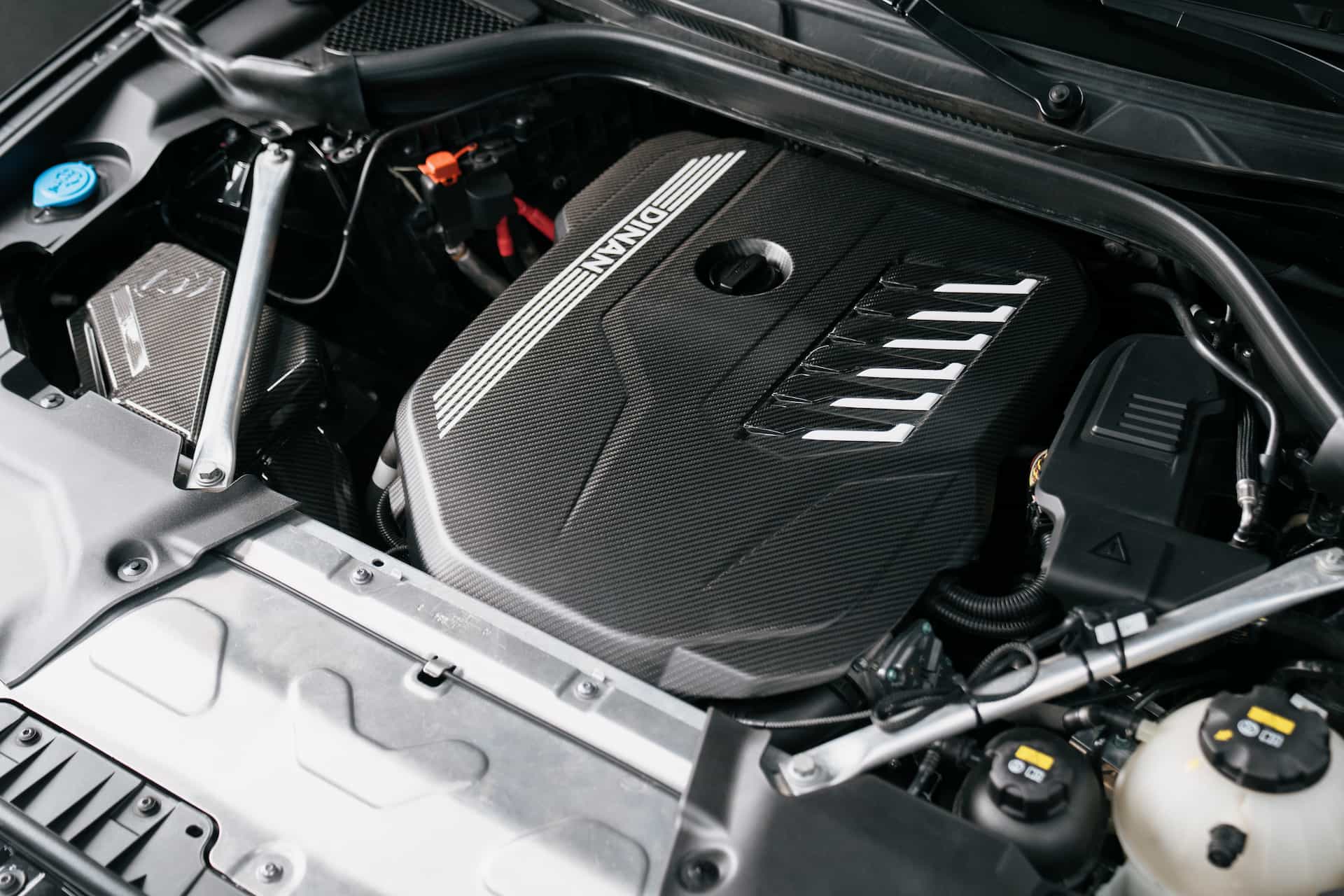
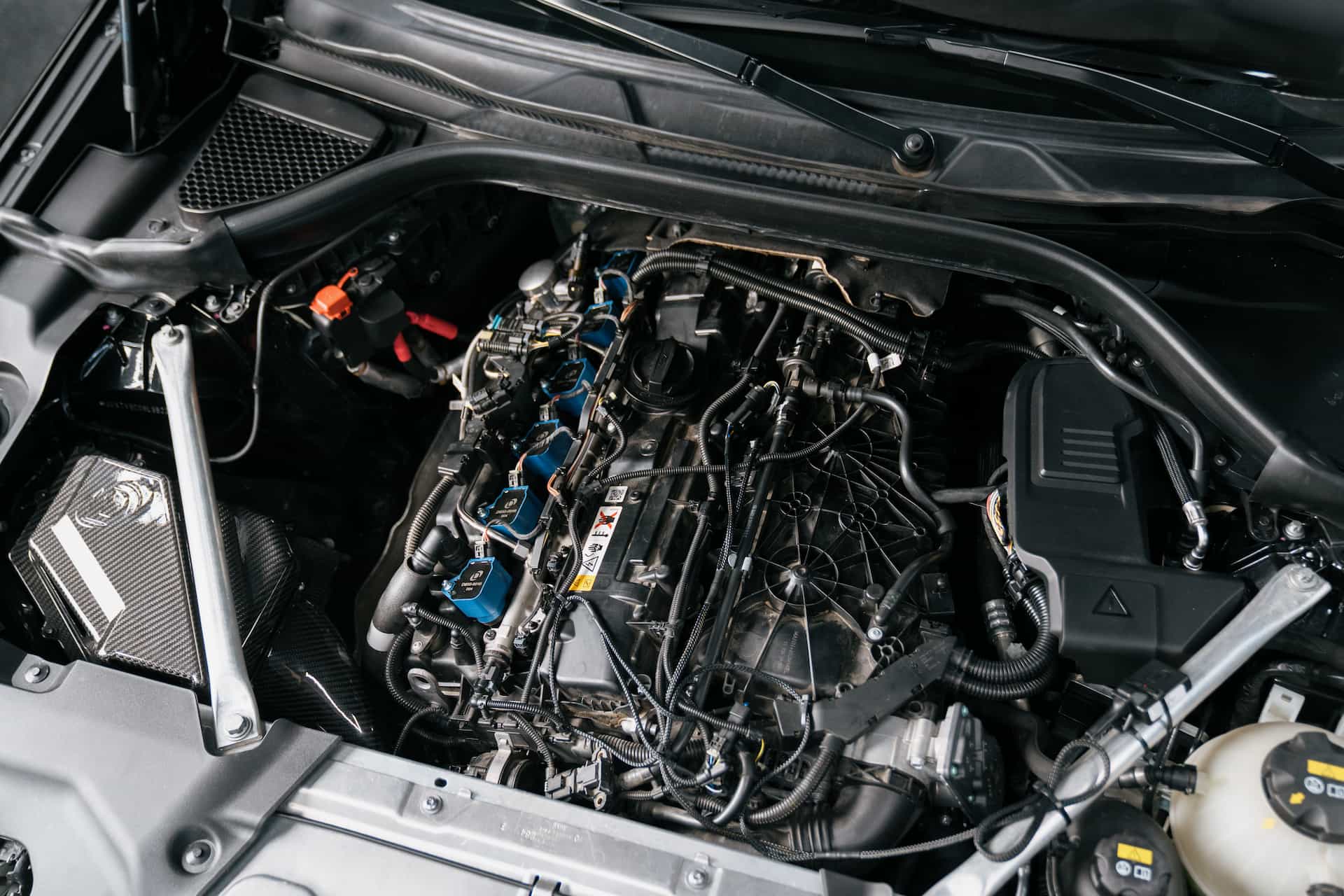
When BMW introduced the B58 engine in July 2015, it marked a significant leap forward in inline-six technology. Debuting in the 340i and 340i xDrive models, this powerplant represented more than just an evolution of its predecessor; it was a complete reimagining of what a modern performance engine could achieve.
The B58 replaced the well-regarded N55 engine, but this wasn't simply a routine update. BMW faced mounting pressure from increasingly strict emissions regulations, including Euro 6 standards in Europe and ULEV II requirements in the United States. The challenge was clear: deliver more performance while consuming less fuel and producing fewer emissions. The solution required a fundamental shift in approach, leading BMW to embrace a modular design strategy that would revolutionize their engine manufacturing.
What emerged is an engine that successfully bridges the gap between high performance and responsible engineering. Through innovations like electric arc wire spray cylinder coating, integrated indirect charge air cooling, and fourth-generation Valvetronic variable valve lift, the B58 achieves higher compression ratios and lower fuel consumption than its predecessor. The modular architecture it shares with other BMW engine families brings benefits that extend beyond the engine itself, streamlining manufacturing processes and simplifying parts management across the entire production chain.
The result is an inline-six that doesn't compromise. However, it isn't without its pitfalls. Not unlike BMWs of the past, this engine suffers from cooling system issues, as well as other maintenance items that should not be ignored.
Engine B58 2018-2019 X3 M40i |


SKU:
KIT-11425B4C845KT2
QTY
$96.10+
| ||||
Engine B58 2020+ X3 M40i |

SKU:
KIT-11425B4C845KT10
QTY
$108.19+
|
Plastic Oil Filter Housing Failure
On the B48 4-cylinder and B58 6-cylinder, BMW utilizes a modern oil-to-water heat exchanger combined with an oil filter stand. Located just below the intake manifold, this unit is not only responsible for housing the oil filter, but also carries hot coolant from the side of the block. While the heat exchanger itself is aluminum, the oil filter housing and carrier are entirely plastic.
Around 60k-100k miles, the gaskets sealing this plastic oil filter housing flatten out, and the plastic shifts and warps under the intense heat. Coolant leaks, oil leaks, cracked housings, and mixed fluids are all consequences of this plastic design. All B48 and B58 engines on the road will need to have this oil filter housing replaced at some point. While less likely to occur, it is also possible to crack the plastic oil filter housing from over-tightening or cross-threading the oil filter cap during an oil change. Interestingly, the BMW S58 engine used in the G80 M3, G82 M4, and F97 X3M and F98 X4M features an all-metal housing produced by Hengst, which does not see the same failure rate. Below are some of the symptoms of a failing oil filter housing. It should be noted that every B48 and B58 ever produced will likely need an oil filter housing at some point.
Most common symptoms
Noticeable coolant leak towards the rear of the engine
Noticeable oil leak towards the rear of the engine
Coolant streaks on the rear of the drivetrain under the car
Low coolant warning
Low oil level warning
Fault Codes & Warnings:
Low coolant level warning on the iDrive display
Refill coolant message on instrument cluster
Engine temp too high warning on instrument cluster
Low engine oil warning in iDrive display
Heat Management Module (Modern Thermostat)
Across all of the engines within the BMW G-chassis lineup, BMW utilizes the modern-day equivalent of a mechanical thermostat - the heat management module (HMM). This module not only works to control coolant temperature, but on the TU (Technical update) engines, the HMM also controls flow separation between the head and the block with the eSCV (Electric split-cooling valve).
While not nearly as infamous as the oil filter housing, the heat management module is also constructed entirely of plastic, and features two electronically operated ball-valves which slide on plastic bushings (or spring-loaded against plastic in the case of the B58). This plastic construction is prone to leaks from either the ball valves or the sealing surfaces to the block.
Whether you’re only looking to replace the gaskets or the entire module, its proximity to the oil filter housing makes this a great "while-you're-in-there" preventative maintenance item. Leaks and faults have occurred as early as 40k miles, and most HMMs are replaced before 130k miles.
Most common symptoms
Drivetrain malfunction, with codes for either “Split coolant valve” or “Engine cooling system”
Coolant leak along the middle-rear of the engine
Fault Codes & Warnings:
Low coolant level warning on the iDrive display
“Drivetrain malfunction” warning in the iDrive
Limp-mode
“20F220” (split cooling valve)
“20A704” (engine cooling system)

Mechanical Water Pump Leaks
Similar to BMWs of old, and much to the appreciation of owners, BMW has reverted to a mechanical water pump for the B48 and B58 engines. However, with old-school mechanical water pumps come old-school mechanical issues. Leaking water pump housings are a fairly common problem on both the B48 and B58 at around 100k-120k miles; however, the water pump is relatively easy to change and fairly inexpensive. The most common issue with these water pumps is a leak that develops on the pump shaft, necessitating the replacement of the entire pump.
Most common symptoms
Noticeable coolant leak towards the rear of the engine
Coolant streaks on the rear of the drivetrain under the car
Low coolant warning
Fault Codes & Warnings:
Low coolant level warning on the iDrive display
Refill coolant message on instrument cluster
Engine temp too high warning on instrument cluster

Valve Cover Gasket Failure
During our valve-cover (PCV) replacement DIY, we discovered that the high-pressure fuel pump gasket was not only leaking oil on top of the valve cover, but was being exacerbated by a failing PCV system, creating additional pressure in the valve cover, forcing oil out and into the spark plug holes. With this in mind, replacing your valve cover not only refreshes your PCV system but also reseals the associated components. Pay close attention when ordering your valve cover to ensure it is correct for your production date.
Most common symptoms
Oil accumulation around the oil filler cap
Oil accumulation on the valve cover and in the spark plug holes
Loud hissing sounds under load (We experienced this sound and thought it was turbo noises, which went away after a valve cover replacement)

PCV System Failure (1st Generation/Non-TU)
Part of Service Bulletin: 01 14 23
Although it has yet to become a significant issue with the updated B58TU engine, the first generation of B58 frequently experiences PCV valve failures. The PCV valve design is the same design BMW has been using for nearly 30 years, and it suffers the same fate. Thankfully, BMW has extended the warranty period of this part up to 15 years or 150,000 miles, but this still doesn’t accommodate for the inconvenience of encountering a failed PCV valve.
Over time, the rubber diaphragm inside the PCV valve mounted to the valve cover will rupture, preventing the PCV system from effectively separating oil from the crankcase gases. This will lead to several distinct symptoms of a failing PCV system.
Most common symptoms
Blue/ white smoke emitting from the exhaust
High-frequency whistling noise from the engine bay
Fault Codes & Warnings:
“140601” - Misfires, cylinder 6: Fuel injection is switched off
“140610” - Misfires, cylinder 6: detected
Illumination of the “MIL” Malfunction Indicator Light
High Pressure Fuel Pump & Fuel Injector Failure
In recent years, BMW's high-pressure fuel pumps and injectors have made significant advancements. They no longer fail with regularity, nor do they cost as much as the entire car they're needed for. But that doesn't mean they're perfect. X3 M40i owners, and others with the Gen 2 B58, will eventually have to replace their injectors and fuel pump. Fueling issues are almost always noticeable. They directly affect how the engine runs, so any loss of power or rough running is a potential symptom. There are also plenty of sensors and monitors in place, so those'll likely be accompanied by a few related engine codes. Should you have to replace either of them, it's a fairly involved job, but you can save yourself a whole bunch of money by tackling the job yourself.
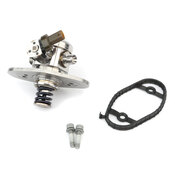


Spark Plug & Ignition Coil Failure
Spark plugs and ignition coils are one of the more frequent service items on any gasoline-burning engine. Their typical lifespan is around 80,000 miles, with plugs sometimes having an earlier replacement interval than the coils. However, if you're experiencing ignition-related issues on your used X3 and are unsure when they were last changed, it's best to replace the coils and plugs. A misfire is the typical ignition-related issue. It can be a sign that either component has gone bad in the affected cylinder. Other signs can be a lack of engine power, rough running, and a loss of fuel economy. Bad ignition means bad combustion, so fresh plugs and coils must be in good condition for the engine to run well.

Oil Pump Failure (2nd Generation)
While fairly uncommon, some B58 engines built before 2021 have experienced oil pump failure. It’s important to understand why these failures occur and what you can do to prevent this.
Until 2020 production (early 2021 model year), BMW used a plastic carrier in the oil pump of the B58 engine. This carrier is not actually the pump impeller itself, but rather the internal fixture that suspends the outer metal housing of the pump impeller. This plastic bracket is moved by oil pressure against a spring to control the placement of the outer impeller housing. As this housing moves, the maximum possible displacement of the plungers in the oil pump is changed.
When the oil is very thick, such as in cold climates, and the engine is started, this plastic carrier experiences its maximum strain. However, if using the prescribed 0w-20 BMW oil, this isn’t typically an issue for the pump. It’s essential to note that numerous reliable BMW engines have featured this oil pump design, which includes a plastic carrier, previously.
The problem generally lies in the use of thicker oils outside of BMW’s recommendations. For example, the use of an oil such as 5W-40 will place significantly more strain on the plastic carrier, especially during cold engine start-up, and may lead to failure.
While it may seem intuitive to go for a heavier oil - especially during winter - it’s very important to remember that the engine components were designed for a specific oil type and thickness, which BMW specifies. BMW has since updated this carrier to be metal, so if you don’t want to be concerned with this issue, we’d recommend purchasing a 2021+ vehicle or installing the updated oil pump.
Fault Codes & Warnings:
“1C2002” - Engine oil pump, pressure too low
“1FB801” - CCM(ID212) - Oil Pressure

Engine Mount Failure
Engine mounts on both B48 and B58 vehicles are hydraulic (filled with oil), and take a beating from the increased power over previous generations. While the B48 is an especially smooth 4-cylinder, it is still abusive to engine mounts with its vibrations, and both engines deliver quite a bit of torque. Almost all engine mounts will need to be replaced before 90k miles, and should be inspected for cracks or fluid leakage during regular maintenance.
Most common symptoms
Excessive drivetrain vibration in the cabin
Drivetrain knocking sounds under initial acceleration
Excessive engine movement visible in the engine bay
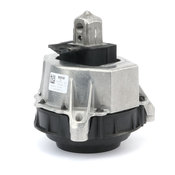
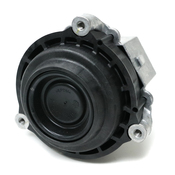
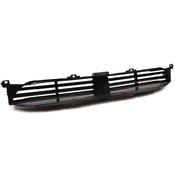
Cooling System Active Grill Shutters (Upper & Lower)
While the X3’s powertrains were designed to be fairly reliable, the body components were certainly cost-cut more heavily. On all BMW G-chassis cars, the upper and lower air intakes in the front bumper are regulated by control flaps known as “active grill shutters”. While this may seem unnecessary, think of any taped-up bonneville or top speed racer, with the front openings closed off. These grills are part of how modern cars achieve astonishing MPG while providing satisfying levels of grunt.
Unfortunately, this technology has found itself being implemented with plastic - lots of plastic. And the upper and lower grill flap actuators are very likely to fail, throwing engine warning lights.
Fault Codes & Warnings:
“21B043” - Active cooling air flap control (AKKS)
“P05A0” - Active Grill Air Shutter Stuck On
Most common symptoms
Check engine light with front flaps visibly out of sync
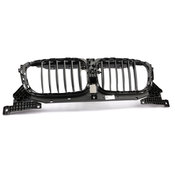
Dinantronics Sport Performance Tuner
It’s widely understood that a dedicated custom engine tune is the preferred method for maximum power and engine safety. However, in today's world with locked ECU’s, comprehensive vehicle warranties, and an already very powerful engine and turbo system from the factory, the Dinantronics tuner has its place.
By altering certain engine sensor signals the Dinantronics Tuner is able to develop an additional 40 horsepower and 50 lb-ft of torque on B58-equipped cars. This is all performed without removing engine safeties or changing engine knock-sensitivity. While it may not be the maximum possible output that a custom tune could derive, it’s an easy installation that takes a few minutes and is completely reversible at any time. It’s also relatively affordable in comparison to a custom tune and associated programming tools.
| Spec | Value |
|---|
| Cylinders / configuration | Inline-6 |
| Displacement | 2998 cm³ |
| Bore × stroke | 82 mm × 94.6 mm |
| Compression ratio | 11.0:1 |
| Peak power | 240 kW (320 hp) @ 5200–6500 rpm |
| Peak torque | 450 Nm (330 lb-ft) from >1380 rpm |
| Fuel octane range | RON 91–100 |
| Digital Motor Electronics | DME 8.6 |
| Emissions standard | ULEV II (US); Euro 6 (ECE) |
| Engine oil specification | BMW LL-01 / LL-04 |
| Crankcase material | AlSiMgCu 0.5 aluminum (heat-treated) |
| Block design | Closed-deck, deep skirt |
| Cylinder wall coating | Electric-arc wire spray (LDS) ~0.3 mm |
| Main bearing caps | Weight-optimized, embossed |
| Cylinder head | AlSi7MgCu0.5, cross-flow; 4 valves/cyl |
| Valve timing | Double VANOS |
| Valve lift system | Valvetronic (4th gen) |
| Valvetronic range / drive | 253°; worm gear 37:1; smaller servomotor |
| Valvetronic servomotor location | Outside cylinder head |
| Timing drive | Two-part chain with intermediate shaft; separate chain for oil/vac pump |
| Turbocharger | Twin-scroll |
| Exhaust manifold | Cyl 3/4 integrated with turbine housing; others multi-piece stainless |
| Wastegate actuator | Electric DC motor with position sensor |
| Charge-air cooling | Integrated indirect intercooler (low-temp circuit) |
| Low-temp circuit coolant | ≈5 L (auxiliary pump) |
| Intake manifold | PA6 GF35 two-shell, friction-welded |
| Catalyst total volume | 2.8 L (close-coupled, two monoliths) |
| Catalyst bricks | 600 cpsi 125×98 mm; 400 cpsi 125×130 mm |
| Upstream O₂ sensor | Bosch LSF Xfour voltage-jump |
| Injection type | Direct; rail with integrated high-pressure sensor |
| Injectors | Bosch HDEV 5.2 solenoid |
| Max injection pressure | Up to 200 bar |
| Heat Management Module (HMM) | Rotary valve; DC motor + position sensor |
| HMM motor specs | 6–16 V; 0.3–1.5 A; 1:492; 40°/s |
| HMM position sensor | 4.5–5.5 V; 20–35 mA; SENT output |
| HMM rotation range | 200° |
| Oil pump | Map-controlled variable-delivery (chain-driven) |
| Vacuum pump | Integrated with oil pump (chain-driven) |
| Vacuum system performance | <6 s to 500 mbar (absolute) |