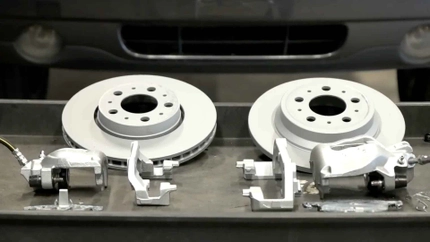
Volvo's S60R and V70R were a shot at the sport sedan/wagon market in one of its most competitive eras. The cars came with 300 hp turbocharged five-cylinder engines, a big Brembo brake system, aggressive styling, and more, but that was what everyone else was doing too. They needed something to set them apart, something that blended Volvo's grown-up character with genuine performance credentials. Thanks to engineering by Ohlins and production by Monroe, that feature was Volvo's first adaptive suspension system: the Continuously Controlled Chassis Concept, better known as Four-C.
At The Forefront of Adoption
Upon its debut in 2004, few other manufacturers were utilizing adaptive suspension. Although it had technically been around since the eighties, it had yet to become popularly adopted due to a lack of technical support. Such a system was still considered high-tech and exclusive enough that only a few sports cars and supercars were fitted with the tech. However, Volvo was always looking to the future, and adaptive dampers were the next step in improving performance and potentially enhancing safety. 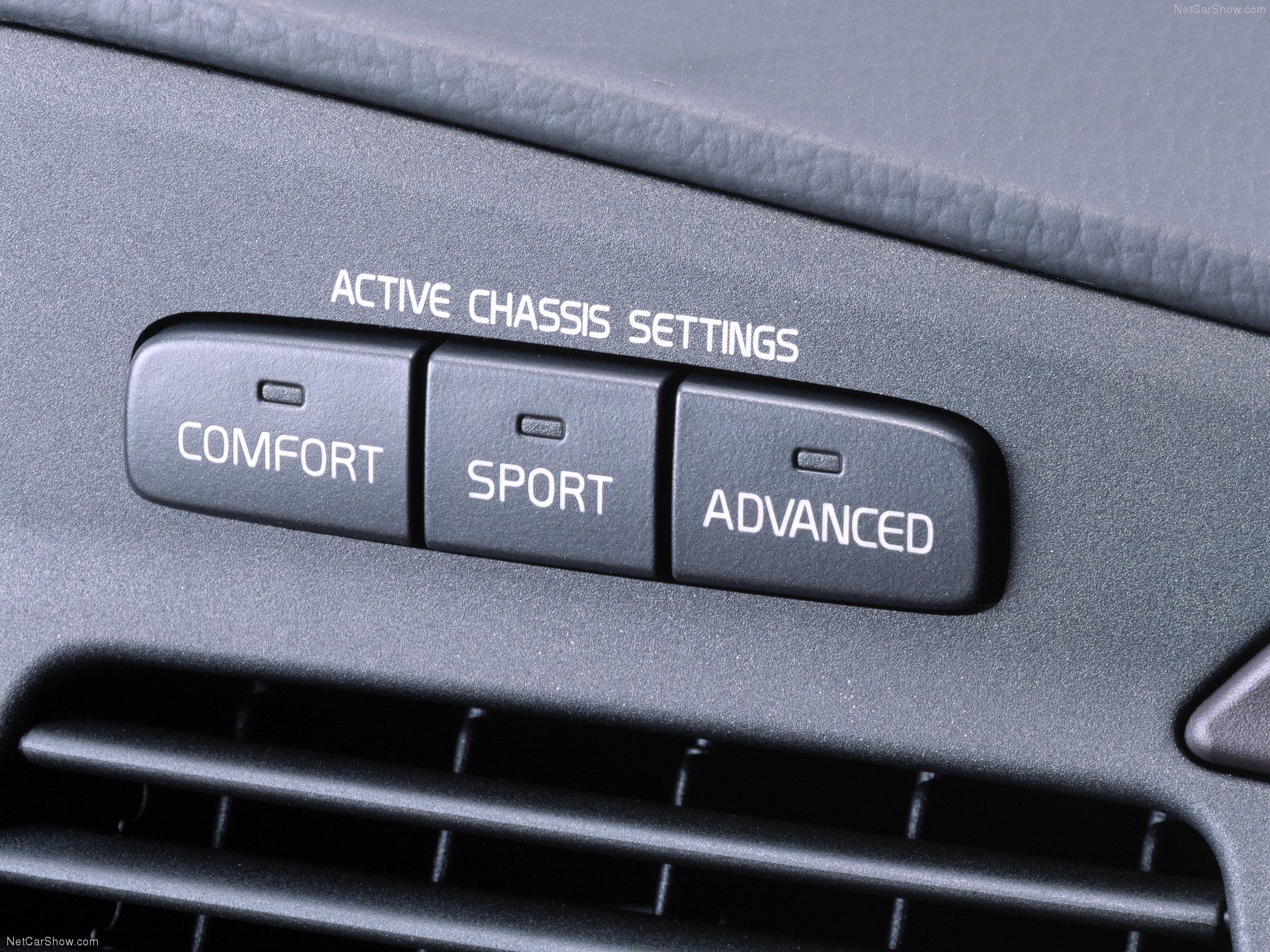
The Monroe design was largely similar to other systems at the time, utilizing a variable valve within the damper to adjust compression and rebound to a specific setting programmed into the suspension's computer. For Volvo, that meant three driving modes: Comfort, Sport, and Advanced. They're selected by buttons on the dashboard or center console, depending on the model. When a particular mode is selected, the system responds to the new desired mode within a few milliseconds. Comfort mode provides softer characteristics, isolating lots of the small bumps at the sacrifice of chassis response, while the sport setting is much more firmly damped. Advanced takes things a bit further, stiffening the dampers more than sport before affecting other parts of the vehicle.
Four-C Is More Than Just Smart Struts
While the Four-C system is famous for its struts, the real magic comes from the controlling computer, called the Suspension Module, or SUM. The SUM is integrated into the rest of the vehicle's functions via a CAN network, allowing it to track the relationship between the wheels and chassis. Damper adjustments occur 500 times per second, while body movement and adaptations are calculated 100 times per second. It's also responsible for calculating the car's current and upcoming movements based on inputs from the system's sensors, which are used to make the ride as comfortable as possible. Monroe developed the shock absorbers, which utilize an adjustable electronic valve internally that is activated by the current in a surrounding solenoid. The control valve is variable and is constantly being monitored by the SUM, which uses pulse width modulation to control the current to it. Essentially, low currents from the SUM to the valve result in low damping forces, whereas high currents provide high damping forces.
To do that, the SUM receives inputs from:
- Steering Angle Sensor (SAS)
- Brake Control Module (BCM)
- Drivers Information Module (DIM)
- Central Electronic Module (CEM)
- An accelerometer located in the front of the vehicle
- An accelerometer located in the rear of the vehicle
- Engine Control Module (ECM)
- Transmission Control Module (TCM)
- DSTC sensor module
- Level control sensor
The Four-C system works in conjunction with its Haldex AWD system and Dynamic Stability and Traction Control System (DSTC) to provide more power to the rear wheels when accelerating and cornering, while giving more power to the front when driving straight to maintain directional stability. It's also used to stiffen the shocks when braking, preventing diving and achieving the best possible braking performance. Volvo also utilizes a similar 4C system in their P2 chassis S80, as well as several of their P3 chassis vehicles, which remain a great, albeit expensive, feature to consider when selecting your suspension options.
Shop Volvo Suspension at FCP Euro
Nearly twenty years on, the Four-C moniker is still being used for Volvo's current adaptive suspension. The technology isn't identical; as you might imagine, it's now more reliable than ever while featuring more adjustment and quicker response times. However, it's still the same idea as all those years ago.