- 10/31/2025
- 4 Min Read
- By: Christian Schaefer
Is Your TPMS Light On? Here's What You Need To Know

Find yourself in any modern car, and you’ll have a tire pressure monitoring system built in. It’s designed to ensure safety, but it’s more of a constant source of annoyance for many people. Whether swapping out wheels or when the temperature drops, the small yellow tire symbol lighting up on the gauge cluster is never a joy and seems to stay around forever. But why is it there, and how does it go away? We’re here to help you out.
What is a Tire Pressure Monitoring System (TPMS)?
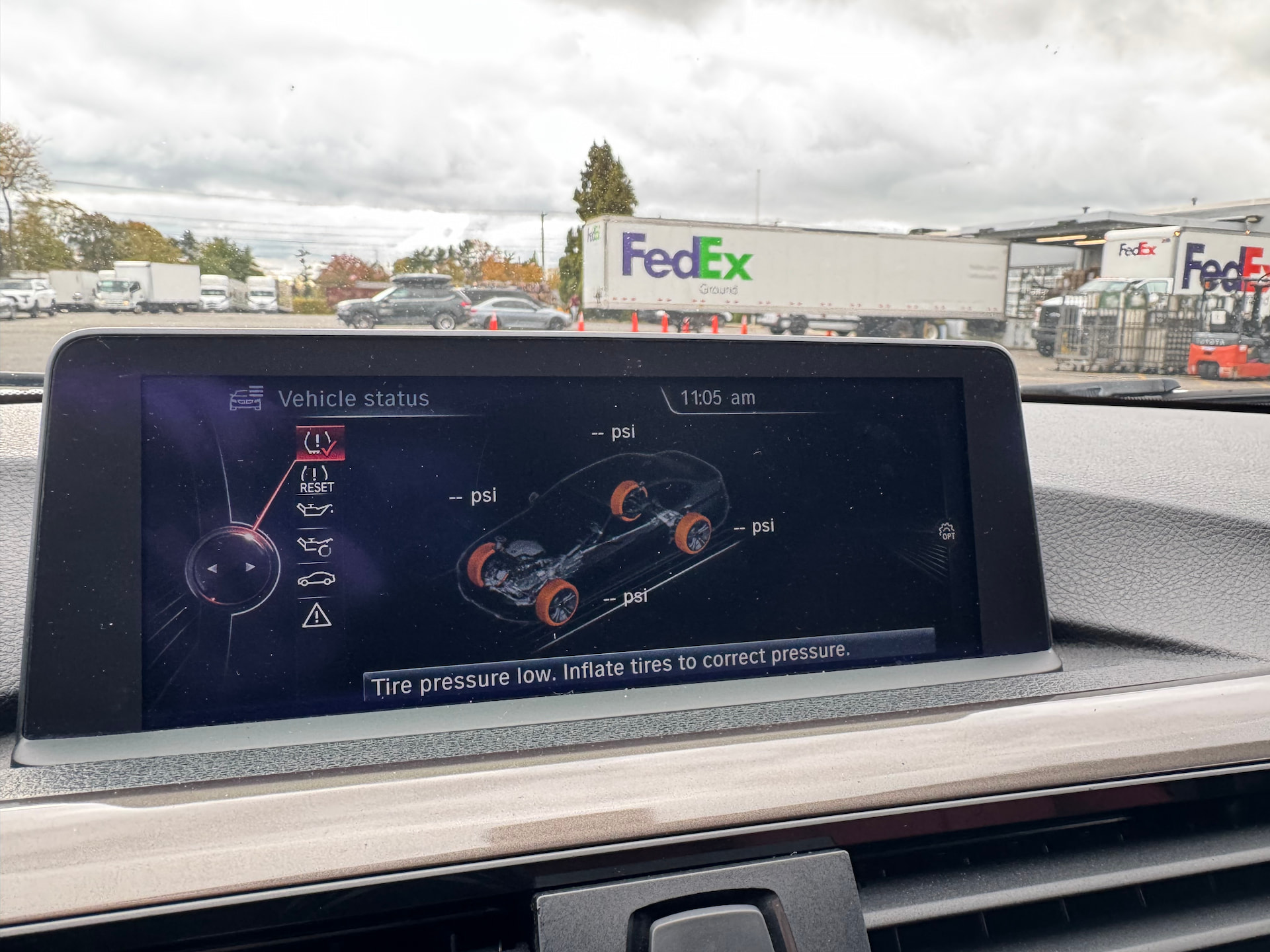
A tire pressure monitoring system tracks the air pressure in your four tires and relays that information back to the vehicle’s computer, ensuring it knows when one is below a safe figure. The system makes itself apparent when one or more of your tires is underinflated by triggering some kind of warning message that’ll appear on the instrument cluster. In the early days, the system was somewhat crude, alerting the driver via a warning light on the instrument cluster without pointing to a specific tire; however, the latest vehicles can display live tire pressure readings for all four tires via the screens in the cluster.
It might seem trivial that modern cars all keep track of their tire pressures, but in the United States, it’s been mandated by law since the TREAD Act passed in 2007. Evolving safety standards have been the catalyst for many innovations within the automotive industry, and the drive to reduce the number of rollover accidents in vehicles was the basis behind the Tire Pressure Monitoring System requirement. Underinflation immediately negatively affects vehicle handling and response. However, when driven on regularly, the underinflated tire will be subjected to road forces in areas not designed for it, as it deforms under the vehicle's weight. This can lead to rapid tire degradation and even tread separation in extreme cases. Underinflated tires are also a major source of reduction in fuel efficiency, so the system should help you maintain a more efficient vehicle.
Although the TREAD Act was passed in 2007, tire pressure monitoring systems have existed since the mid-eighties. Porsche was the first to debut one on a road car with the 959 in the mid-eighties before fitting it to the 928 in the early nineties. It wasn’t until later that decade that the likes of BMW, Audi, and Mercedes put them in their own vehicles, and even then, the technology wasn’t identical. To date, manufacturers use one of two types of TPMS that have evolved fairly little in overall design since those early days, but the improved technology elsewhere has allowed them to be as effective as ever.
Why Is Your TPMS Light On? It Depends On Your Type Of System
Unfortunately, there’s no simple answer to this question; at least, none is guaranteed. Between the tires, wheels, valve stems, TPMS transmitters, wheel speed sensors, and TPMS modules, a handful of physical parts can go wrong, and even then, none of them may be the actual cause. Often, it’s something simple, but check back here if you’re stumped.
Common Causes Of A Tire Pressure Warning Light
Low tire pressure due to temperature change or a slow leak.
Recent wheel/tire swap without sensor re-registration or missing sensors altogether.
Faulty or dead TPMS sensor battery (typically lasts 7–10 years).
Interference or a failed receiver module
Low tire pressure is the most common cause of the TPMS light in your vehicle. It’s the system's exact reason for existing, and it’s only doing its job in that case. However, you should always verify the low tire pressure with a separate tire pressure gauge, especially if your system doesn’t point out which tire has triggered the light. An analog or digital gauge will do the trick, and we have a few to choose from.
If the external gauge confirms the issue, you must determine why the tire is underinflated. Chances are there's a slow leak of some kind, but it could also be the weather. Colder temperatures create denser air, which reduces pressure. If your tire pressures are on the edge of what the TPMS determines as properly inflated, quickly dropping temperatures can push them below.
If it isn’t, the issue could very well lie within the tire pressure system itself. While TPMSs are accurate, they rely on sensors to relay information to the TPMS module. Direct systems use radio transmitters inside the wheel as part of a “specialized” valve stem. They’re powered by a battery with an advertised 7-10 year lifespan, so if your vehicle is around that age, it could be the cause. Indirect systems use wheel speed sensors to read how quickly each wheel and tire rotates, as more rotations at a given speed mean a smaller diameter and less tire pressure. Theoretically, the sensor could have a problem, but that would likely cause more serious warning messages connected to traction systems.
In slightly fewer cases, it could be the TPMS module. Owners of E90-era BMWs may be familiar with this as RDK or RDC, which stands for Reifendruck Kontroller and directly translates to Tire Pressure Controller. They’re a relatively common source of tire pressure warning lights in various BMW models from the late ‘00s and on, as their location in the vehicle makes them an occasional casualty of water intrusion.
Regardless of the issue, you’re met with a warning light and have to shut it off. What are your next steps?
How to Turn Off the TPMS Light — The Right Way
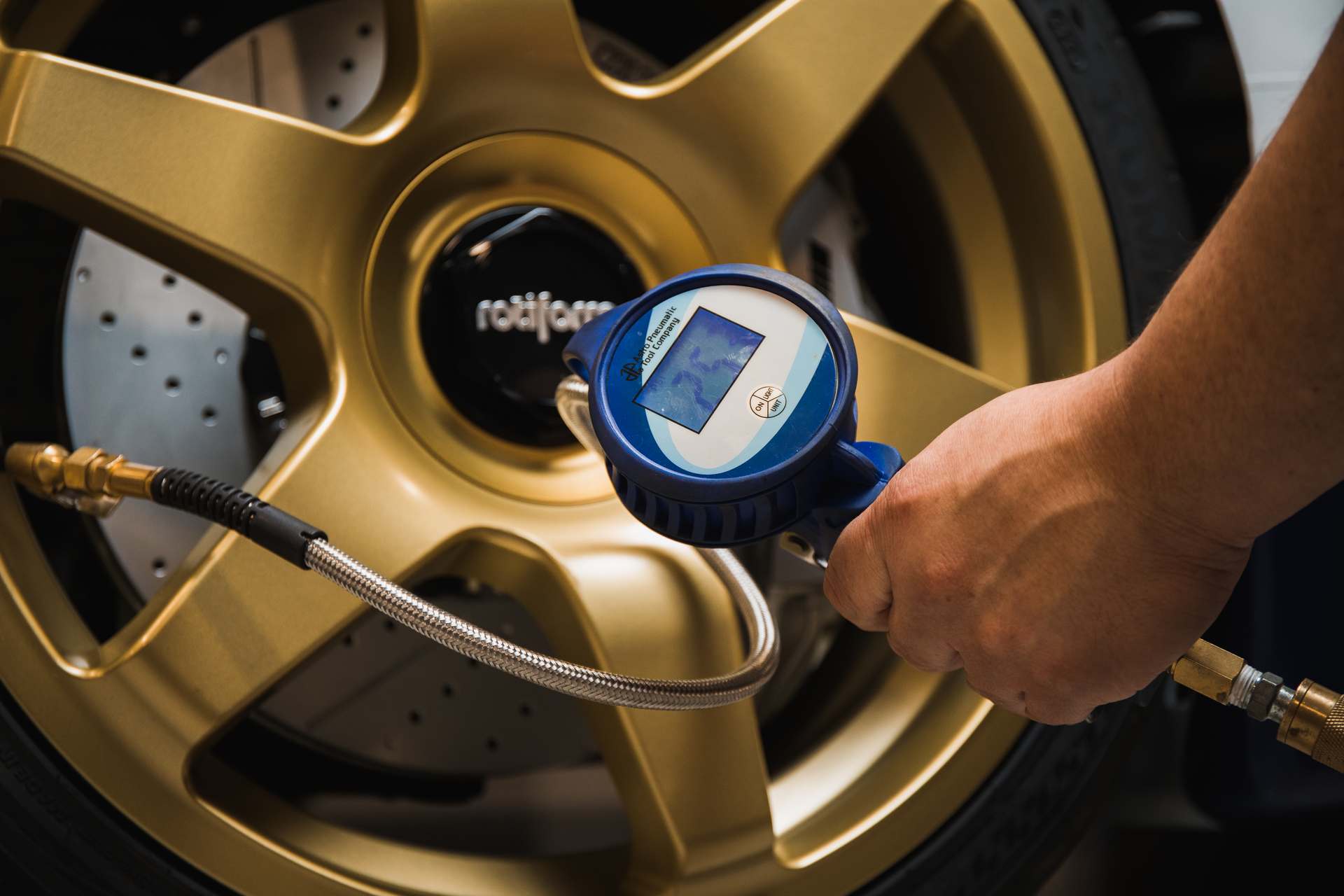
Before anything else, check your tire pressures manually. Modern vehicle owners may be able to get away without doing this as their systems point out the affected tire, but if yours doesn’t, find the culprit and fill it to the spec specified by the sticker in the driver’s door jamb. Then, reset your system.
Resetting the TPMS light in your vehicle can be done in several ways. Older TPMS systems have a reset button on the dashboard, usually to the left of the steering wheel. More modern systems can trigger the reset via the settings in the infotainment menus. Some indirect TPMS will reset automatically as you drive. Reading the owner’s manual is the best way to determine how to reset it in your vehicle, so do what it says and hit the road again; you’re in the clear if the light stays off.
If all tires are within spec and the light is on, your problem is elsewhere.
Unfortunately, without a tire installation machine, you won’t be replacing tire pressure sensors at home anytime soon. However, using a TPMS tool like the Autel TS508WF, you can scan each wheel for your sensor to check its health. The tool will be able to pick up on the frequency that they send out, letting you know that they’re working and how strong their signal is. A weak or missing signal points to dying sensor batteries, so do the smart thing and grab yourself a fresh set of four sensors. If one is dying, chances are that the others aren’t far behind.
If you’re not working with tire pressure sensor systems regularly, a TPMS tool may be overkill. In that case, a local tire replacement shop should be able to scan your car and point you in the right direction. Should they replace the sensors for you, they’ll be able to sync them to your vehicle and rid your instrument cluster of that pesky tire pressure warning light.
Swapping Between Winter and Summer Wheels? Here’s What You Need
A triggered warning light isn’t always a surprise. Drivers in northern climates know all about swapping wheel sets in the cold for ones with winter tires. This seasonal event keeps many drivers safe in hazardous conditions, but it’s not always a seamless swap.

Just because your winter wheels have tire pressure sensors doesn’t mean they’ll automatically connect with your vehicle. Tire pressure monitoring systems can connect to one set at a time, so when you switch over, you need to tell your TPMS controller to relearn what it’s looking for to communicate with your other set of wheels and tires. You can take your car to the dealership or a tire shop to reprogram the TPMS, but that’s likely not the most cost-effective method if you’re swapping wheels twice a year. Typically, that service should cost around $50-$100 per set of four, which can add up quickly over the years. In that case, acquiring one of the consumer-focused TPMS tools is the best way to go.
Autel offers a vast range of electronic scan and reprogramming tools for the consumer and independent professional. Their products rival those of Snap-On and Matco, two of the largest names in the business, but without their associated cost. TheTS508WF is Autel’s latest TPMS tool for the DIYer, and it features all of the functions you’ll need to keep your tire warning light off and your tire pressure monitoring system working as intended, including the relearn feature, which is what’s required when swapping between sets of wheels. If you add pressure sensors to a new set of wheels, the TS508WF can only programuniversal Autel MX sensors.
With that, you should have all you need to keep your tires inflated to spec and keep your TPMS light off for good. If you have any more questions about parts or software that can communicate with your vehicle’s TPMS, contact our customer service team; they’re ready with technical experts who can answer your questions and point you in the right direction. Then head back to the Blog to read up on more ways to better care for your car. Happy wrenching!