
.jpg)
.jpg)
.jpg)
.jpg)
Porsche Macan 95B.1
- Porsche Macan Fluid Resource
- Porsche Macan 95B.1 Drivetrain, Suspension, & Chassis Maintenance & Issues
- Chassis Maintenance Schedule
- Active Cooling Flap Motor
- Air Suspension Failure
- PASM Dampers
- PCCB (Porsche Ceramic Composite Brakes)
- Transfer Case
- Differentials
- Porsche Macan 95B.1 Chassis, Brake, Drivetrain & Suspension Modifications
- Lowering Springs
- Adjustable Front Upper Control Arm Bushings
- Performance Package Brake Upgrade (OEM+)
- Porsche Macan 95B.1 Visual Upgrades & Accessories
- PTS Key Fobs
- Smoked Tail Light Conversion
- Porsche MRA Twin-Turbo V6 (3.0TT & 3.6TT) Engine
- Porsche MRA Twin-Turbo V6 (3.0TT & 3.6TT) Engine Specifications
- Porsche MRA Twin-Turbo V6 (3.0TT & 3.6TT) Common Issues & Maintenance
- Front Timing Cover Bolts
- Water Pump & Coolant Vent Line ("Y-Pipe")
- Porsche MRA Twin-Turbo V6 (3.0TT & 3.6TT) Modifications
- Cobb Accessport
- BMC High-Performance Air Filter Kit
- Exhaust (Cracked Bracket Fix / Catback Upgrade)
- APR Ignition Coils
- Porsche Macan 2.0t (EA888 Gen 3)
- Porsche Macan 2.0t (EA888 Gen 3) Engine Specifications
- Porsche Macan 2.0t (EA888 Gen 3) Common Issues & Maintenance
- Water Pump / Thermostat Housing
- PCV Valve
- Porsche Macan 2.0t (EA888 Gen 3) Engine Modifications
- APR Ultralink
- APR High-Performance Air Filter
- APR Ignition Coils
- Porsche Macan 95B.1 Models, Production Years, and Model Years
- Porsche Macan 95B.1 Chassis Specifications
When the Macan arrived for the 2015 model year, plenty of purists rolled their eyes at the idea of a second Porsche SUV. The market did not. Within two years, the Macan was Porsche's best-selling model worldwide, and it earned that title honestly — this was a compact SUV that genuinely drove like a Porsche. Built in a purpose-expanded facility in Leipzig, Germany, the Macan (named after the Indonesian word for tiger) was unveiled at the 2013 Los Angeles Auto Show and slotted in below the Cayenne as Porsche's entry into the booming compact luxury crossover segment.
Under the skin, the Macan started life on the same MLB-derived architecture as the Audi Q5, but calling it a rebodied Audi misses the point. Porsche reworked the platform extensively — unique suspension geometry with an aluminum five-link front axle, a self-steering trapezoidal-link rear, a rear-biased full-time all-wheel-drive system borrowed in philosophy from the 911 Carrera 4, and a standard 7-speed PDK dual-clutch gearbox on every trim. Staggered wheel and tire fitments front to rear — a sports car hallmark — were standard across the board, something no other SUV in the class offered.
The design philosophy was simple: build the sports car of the segment. The 48/52 front-to-rear weight distribution, low seating position, and quick electro-mechanical steering made the Macan the benchmark for handling among compact SUVs of its era, and the press treated it accordingly. Whether equipped with the entry 2.0-liter turbo four or the 3.6-liter twin-turbo V6 in the Turbo, every 95B.1 shared the same fundamental chassis character.
Today, the first-generation 95B.1 (2015–2018) represents one of the best values in modern Porsche ownership. Depreciation has done its work, parts availability is excellent thanks to heavy VW Group component sharing, and the platform responds beautifully to both preventive maintenance and tasteful modification. This page covers everything you need to know to buy, maintain, and upgrade a 95B.1 Macan.
Engine MRA Twin-Turbo V6 |

SKU:
KIT-95BOILKT3
QTY
$175.80+
| ||||||
Engine EA888 2.0T |
__SKU:KIT-95BBASEOILKT__ | ||||||
Transmission PDK |

SKU:
KIT-95BPDKSERVICEKT1
QTY
$305.75+
| ||||||
Differential Front |
| ||||||
| Brake |

|
Chassis Maintenance Schedule
- Brake fluid flush: Every 2 years, regardless of mileage (DOT 4, 1–1.5 liters).
- PDK transmission service: Fluid and filter every 60,000 miles is our recommendation for long-term health, particularly on tuned or hard-driven cars.
- Transfer case fluid: No factory interval exists, so service every 40,000 miles. See the transfer case section above for technique.
- Differential service (front & rear): Every 40,000–60,000 miles (Porsche says 160,000; we disagree).
- Cabin air filter: Every 20,000 miles / 2 years.
- Suspension inspection: Check control arm bushings, ball joints, and sway bar end links at every service past 60,000 miles; front upper control arms commonly show wear by 75,000–100,000 miles.
- Air suspension (if equipped): Inspect air springs for cracking annually once the car passes 7–8 years of age.
- Brake pads/rotors: Inspect at every oil change; the 95B.1 is hard on front pads when driven enthusiastically.
Active Cooling Flap Motor
Did you know that letting your front bumper pack with snow, leaves, or road debris can trigger a check engine light on the 95B.1? The Macan uses active cooling flaps behind the front bumper that open and close to manage radiator airflow for optimal cooling and aerodynamic efficiency. When the flaps jam with debris, or when the small flap motor itself wears out, the system throws cooling-system faults and fuel economy suffers.
How common: Moderately common, with a strong seasonal pattern, winter debris and aged flap motors are the usual culprits.
How to diagnose: A check engine light with cooling flap / radiator shutter performance codes, often after driving through snow or debris. Visually inspect through the lower grille for obstructions before condemning the motor.
The fix: Clear any debris first. If faults persist, replace the flap adjustment motor, an accessible job with the front bumper area opened up.

Air Suspension Failure
Air suspension is a fantastic option on the 95B Macan... but it's not a matter of if it will fail, it's a matter of when. Air suspension design has come a long way since the first-generation Cayenne, but it remains an additional system with rubber air springs, lines, and valves that age and wear. Thankfully, we offer everything from the air springs themselves to the lines and valve units to keep your system in top shape.
How common: Expect age-related service on any air-sprung 95B.1, most original air springs are now 8–11 years old.
How to diagnose: A corner that sags overnight, the compressor running longer or more frequently than usual, suspension fault warnings, or visible cracking on the air spring bellows.
The fix: Replace failed air springs (ideally in pairs per axle); address compressors that have been overworked by a slow leak, as leak-induced compressor failure is the classic follow-on repair.
PASM Dampers
PASM, Porsche Active Suspension Management, is a great option for any enthusiastic Macan owner, available with either the steel springs or the optional air suspension. It's conceptually similar to VW/Audi's DCC adaptive damping, but tuned differently: where DCC is marketed for smoothing out rough roads, PASM is tuned for performance, defining every detail of the road surface. And like DCC, PASM dampers wear out over time, gradually losing damping force and adjustment range. We stock a variety of OE and OEM+ options so you can choose what's right for you: a factory refresh, a firmer PASM setup, or even a PASM delete kit.
How common: Normal wear item. Expect degradation in the 80,000–100,000 mile range, or sooner on hard-used cars.
How to diagnose: Floaty or underdamped ride that no longer changes meaningfully between Normal and Sport modes, suspension fault messages, or visible damper leakage.
The fix: Replace dampers in axle pairs with OE PASM units, an upgraded PASM-compatible setup, or convert with a PASM delete kit if you're moving to conventional coilovers.
PCCB (Porsche Ceramic Composite Brakes)
Porsche offered exotic brake options across the 95B Macan range, but on the .1 cars, PCCBs (Porsche Ceramic Composite Brakes) were the star. Ceramic brakes are a fantastic option... right up until they aren't, which is when replacement time arrives. Unlike the PSCB surface-coated brakes found on .2 and .3 cars, PCCB replacement rotors can still be purchased, but a full set can run the literal current market value of a 95B.1 Macan.
As a result, converting to the steel Turbo Performance Package brakes is a common, sensible swap to save money. That same Performance Package hardware is also a genuine upgrade for S and GTS cars, though you should anticipate slightly more nose dive from the added unsprung and rotating mass. We don't presently offer a complete conversion kit, but you can find many of the needed parts below.
How common: Every PCCB car eventually faces this decision. Rotor lifespan is excellent under street use, but pad and rotor replacement costs are extreme when the time comes.
How to diagnose: Worn ceramic rotors are evaluated by weight rather than thickness; visible surface crazing, chipped rotor edges, or wear indicators triggering all warrant inspection.
The fix: Either replace the PCCB hardware (costly) or convert to steel Turbo/Performance Package rotors and calipers.
Transfer Case
Transfer Case
The transfer case in the 95B Macan has no listed service interval from Porsche. As a result, many Macans go 75k, 100k, even 125k+ miles on original transfer case fluid, which is a huge no-no for a vehicle with full-time AWD. Like any drivetrain fluid, it endures constant movement, heat cycles, and variable strain, leaving little room for error. That's why our S-Tec replacement transfer cases are a very popular product for the Macan platform.
How common: Neglected-fluid wear is widespread simply because Porsche never told owners to service it. Outright failure is common enough at higher mileage that remanufactured units are a stocked item.
How to diagnose: A failing transfer case typically causes harsh, audible clicking or shuddering, especially during low-speed, tight turns like parking maneuvers.
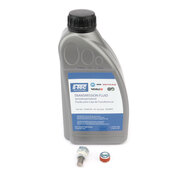
The fix: If you don't know when (or if) yours was last serviced, start with our drain-and-fill kit, and be sure to watch our DIY video. The specific technique shown matters for optimal cleansing and draining. If the unit is already failing, an S-Tec replacement transfer case is the cure.
Differentials
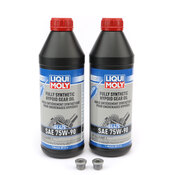
Unlike the transfer case, the 95B's differentials do carry a Porsche service interval, but the recommendation is questionable at best. Porsche calls for a drain and fill at 160,000 miles; we recommend every 40,000–60,000 miles depending on your driving style. We stock a variety of differential fluid kits, from Genuine Porsche to value-priced Liqui Moly options. One important note: double-check whether your car has the optional locking rear differential before ordering, as it requires a different oil.
How common: Fluid degradation is universal at the factory interval; servicing on our recommended schedule keeps the hardware itself trouble-free.
How to diagnose: Preventive service doesn't wait for symptoms, but whining on acceleration or deceleration, or fluid weeping at the diff seals, means you're overdue.
The fix: A straightforward drain and fill, front and rear (front: 0.6L; rear: 1.0–1.2L of GL-5 hypoid gear oil).
Lowering Springs
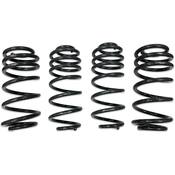
Whether your Macan rides on base steel suspension or PASM, a quality set of lowering springs makes the factory setup a little more aggressive and sporty. They're relatively affordable, easily reversible, and the perfect touch of performance for most daily-driven Macans. PASM paired with lowering springs is our preferred setup on the 95B platform: you keep adaptive damping and gain a more planted stance and lower center of gravity.

Adjustable Front Upper Control Arm Bushings
If you bought your 95B Macan used, chances are you're approaching or past the mileage where the front control arms need attention; the front upper arms typically develop wear around 75,000–100,000 miles. If the job is due anyway, why not improve performance and adjustability at the same time? These Powerflex bushings offer a range of camber adjustment and a firmer compound, letting you dial in alignment for lowered cars or more aggressive driving. As a bonus, reusing your existing control arms with new bushings saves real money versus buying complete new arms.
Performance Package Brake Upgrade (OEM+)
This is an OEM+ plug-and-play upgrade for Macan S owners looking for improved braking feel and aesthetics. Featuring 360mm front rotors and the iconic red calipers, it's an attractive move if you're already coming up on a full braking system refresh. Upgrade instead of merely replacing.

PTS Key Fobs
Whether your Macan is Paint to Sample or not, there's no better way to personalize your most common touchpoint, the key fob, than with your favorite PTS colors. As a Genuine Porsche accessory, this is one of our all-time favorite OEM+ touches, sure to make you smile every time you grab the keys.
Smoked Tail Light Conversion
A plug-and-play smoked tail light kit that modernizes the rear of the car with a darker, more aggressive look. No coding, no cutting, no tint film. It's one of the highest-impact visual changes you can make to a 95B.1, and because it's a Genuine Porsche kit, fit and light output are exactly as the factory intended.

The twin-turbo V6 family fitted to the Macan S, GTS, and Turbo is what separates the 95B.1 from every Macan that followed. These Porsche-developed 90-degree V6s, offered in 2,997cc (S and GTS) and 3,604cc (Turbo) displacements, feature tight turbo packaging close to the exhaust ports for fast response, direct fuel injection, and a free-revving character that the later single-turbo Audi engines can't quite match. In the 95B.1, output ranges from 340 hp in the Macan S to 440 hp in the Turbo with Performance Package, all routed through the 7-speed PDK and an electronically controlled multi-plate clutch AWD system.
Porsche MRA Twin-Turbo V6 (3.0TT & 3.6TT) Engine Specifications
| Engine Code | MRA-family twin-turbo V6 (CTMA for the 3.0TT, CTLA for the 3.6TT) |
| Configuration | 90° V6, twin-turbocharged |
| Displacement | 2,997cc (3.0TT) / 3,604cc (3.6TT) |
| Bore x Stroke | 96.0mm x 69.0mm (3.0TT) / 96.0mm x 83.0mm (3.6TT) |
| Compression Ratio | 9.8:1 (3.0TT) / 10.5:1 (3.6TT) |
| Aspiration | Twin-turbocharged |
| Valvetrain | DOHC, 24-valve |
| Fuel System | Direct fuel injection |
| Power Output | 340 hp @ 5,500–6,500 rpm (S) to 400 hp @ 6,000 rpm (Turbo); 440 hp (Turbo w/ Performance Package) |
| Torque Output | 339 lb-ft @ 1,450–5,000 rpm (S) to 406 lb-ft @ 1,350–4,500 rpm (Turbo) |
| Redline | 6,700 rpm |
| 0-60MPH Time | 5.2 sec (5.0 w/ Sport Chrono) for S; 4.6 sec (4.4 w/ Sport Chrono) for Turbo |
| Drive Type | Full-time AWD with electronically map-controlled multi-plate clutch |
| Gearbox | 7-Speed PDK |
| Production Years | 2015–2018 |
Front Timing Cover Bolts
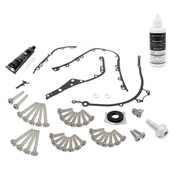
The MRA V6's best-known weak point is also its cheapest fix, provided you catch it in time. From the factory, the front timing-case cover was secured with aluminum screws that can stretch, degrade, or snap outright as the engine heat-cycles. Once they lose clamping force, the cover seal begins weeping oil, and a snapped bolt can turn a $10 repair into an engine-out reseal job costing thousands.
Porsche addressed this in a TSB that replaces the affected aluminum hardware with stronger steel bolts and washers to better distribute clamping force. If you're buying or already own a 95B.1 with the V6, this should be at the top of your inspection list.
How common: Very common. Consider it a "when, not if" item on unaddressed engines.
How to diagnose: Look for oil seepage at the front timing cover, particularly along the lower edges. A bore scope or mirror helps with visibility in the tight engine bay. Any weeping at the cover seam warrants pulling the accessible bolts and inspecting them.
The fix: If caught early, replacing the two most failure-prone bolts with the updated steel hardware costs under $10 in parts and can be done in a driveway. If the seal has already failed or bolts have snapped flush, the cover must come off for a full gasket overhaul, which is a far more involved job.
Water Pump & Coolant Vent Line ("Y-Pipe")
The cooling system is the MRA V6's other recurring maintenance theme. The coolant vent line that serves the left and right cylinder heads, commonly called the Y-pipe, is molded plastic that sits in the hottest part of the engine bay. Years of heat cycling make it brittle, and cracking and coolant leaks follow. The water pump and thermostat housing are similarly age- and mileage-limited items.
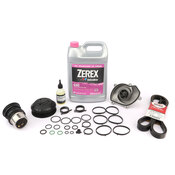
We've built an Engine Coolant Vent Line Kit as a complete, solution-based repair: it includes the vent line with o-rings, mounting hardware, and a gallon of Zerex concentrated coolant to refill the system. The Y-pipe is kitted separately from the water pump, but we strongly recommend replacing both at the same time, especially if there's no service record showing either has been done. You're already in there, and coolant is already drained.
How common: Very common on cars past 60k–80k miles or 7+ years of age.
How to diagnose: Low coolant warnings, the sweet smell of coolant after a drive, visible crusty pink or white residue around the vent line or pump housing, or coolant pooling on top of the engine valley.
The fix: Replace the vent line, water pump, and thermostat housing together with fresh coolant. It's an accessible DIY for an intermediate wrench.

Cobb Accessport
The Accessport is the gold standard for tuning the 3.0TT Macan, and the 50-state CARB-legal version means you don't have to choose between power and passing emissions. Flashing takes minutes from the driver's seat, and the device doubles as a gauge display and diagnostic tool. Off-the-shelf maps deliver the following on 93 octane:
- Macan S 3.0TT, Stage 1 (93 Octane): Peak gains of +10.74% HP / +43.47% TQ; max gains of +51.83% HP / +51.83% TQ
- Macan GTS 3.0TT, Stage 1 (93 Octane): Peak gains of +5.5% HP / +36.64% TQ; max gains of +44.60% HP / +44.60% TQ
Consider supporting modifications (intake, plugs one step colder at higher stages) and make sure baseline maintenance, especially ignition components, is current before adding boost.

BMC High-Performance Air Filter Kit
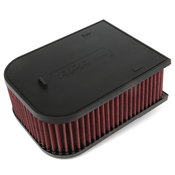
If you want improved intake noise, better airflow, and more serviceability out of your Macan, look no further than the BMC air filter kit. These reusable filters replace the factory disposable elements. Clean and re-oil them at service intervals instead of buying new, and enjoy a little more induction sound while you're at it. It's a subtle upgrade on its own, but it pairs naturally with an Accessport tune.

Exhaust (Cracked Bracket Fix / Catback Upgrade)
If you experience what feels like a misfire right around 1,800 rpm, chances are it's not a misfire at all, and it has nothing to do with your engine. The factory exhaust on the 95B.1 features a support bracket that's prone to stress cracking, and when it lets go it transmits a harsh vibration through the chassis at that rpm. It's commonly misdiagnosed as failing motor mounts or an ignition problem. The fix can be as simple as a relief cut with an angle grinder, or it can be your perfect excuse to upgrade to a catback exhaust.
APR Ignition Coils
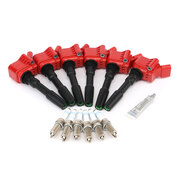
APR offers upgraded ignition coils for every engine option on the 95B, so no matter which spec you ended up with, roughly 10% greater spark energy is on the table. If your coils are due for replacement anyway, it's a no-brainer: stronger spark supports tuned cars under boost and improves combustion consistency on stock ones, at a price close to OE replacements.
Introduced to the Macan lineup for the 2017 model year, the EA888 Gen 3 is one of the most widely produced and best-understood engines in the VW Group catalog. It's the same fundamental architecture found in the Golf GTI, Audi A4, and countless others, here in a longitudinal 252 hp tune. While it gives up outright power to its V6 stablemates, the 2.0T brings real benefits: a lighter nose, a massive aftermarket, inexpensive parts, and torque delivery (273 lb-ft from just 1,500 rpm) that makes it feel quicker in daily driving than the spec sheet suggests. For 2017, it was the most attainable new Porsche SUV on sale, and it remains the value entry point into 95B.1 ownership.
Porsche Macan 2.0t (EA888 Gen 3) Engine Specifications
| Engine Code | EA888 Gen 3 |
| Configuration | Inline 4-cylinder, turbocharged |
| Displacement | 1,984cc |
| Bore x Stroke | 82.5mm x 92.8mm |
| Compression Ratio | 9.6:1 |
| Aspiration | Turbocharged |
| Valvetrain | DOHC, 16-valve |
| Fuel System | Direct gasoline injection |
| Power Output | 252 hp |
| Torque Output | 273 lb-ft @ 1,500–4,500 rpm |
| Redline | 6,700 rpm |
| 0–60 mph | 6.3 seconds |
| Drive Type | Full-time AWD with electronically map-controlled multi-plate clutch |
| Gearbox | 7-speed PDK |
| Models/Trims | Macan (Base) |
| Production Years (this chassis) | 2017–2018 |
Water Pump / Thermostat Housing
On the EA888, the water pump and thermostat housing are a single plastic composite unit mounted to the block, and it's known to develop slow leaks over time. While the internals have been redesigned since the first generation of EA888s, the plastic housing remains the cooling system's weak link.
How common: One of the most common EA888 repairs across the entire VW Group. Expect to do it at least once during ownership, typically in the 60,000–100,000 mile range.
How to diagnose: Low coolant level warnings, dried pink coolant residue on the side of the block below the housing, or a coolant smell after driving. Leaks usually start slow, so a periodic flashlight check of the housing area catches it early.
The fix: Replace the complete pump and thermostat housing unit with fresh coolant. It's a well-documented DIY thanks to how many vehicles share this engine.

PCV Valve
You might ask: what's the worst that could happen if I don't keep my PCV system in check? On the EA888 Gen 3, the answer is "quite a lot." The PCV valve regulates crankcase pressure, and when its internal diaphragm fails, vacuum runs unchecked through the crankcase, stressing every seal in the engine. Left unaddressed, it can blow out the rear main seal, turning a $100 valve into a transmission-out repair.
Symptoms:
- Rough idle
- Lean fault codes (P0171)
- Whistling or honking noise from the engine bay
- High oil consumption
- Oil cap difficult to remove at idle (excessive crankcase vacuum)
- Rear main seal leaks
- Accelerated carbon buildup
How common: A known wear item on every EA888 Gen 3. Treat it as a maintenance part, not a lifetime component.
How to diagnose: The oil cap test is the quickest check: with the engine idling, the cap should lift off with light resistance. If it takes real force or the idle changes dramatically when removed, the PCV diaphragm is suspect. Pair that with any of the symptoms above and the diagnosis is all but confirmed.
The fix: Replace the PCV valve unit. It sits on top of the valve cover and is one of the easier jobs on this engine.
APR Ultralink
The Ultralink is a great way to unlock power across a variety of maps for the EA888. Yes, the base Macan gives up output to its S, GTS, and Turbo counterparts, but a Stage 1 tune immediately closes much of that gap. And did we mention the 2.0T already carries substantial weight savings over the front axle? A tuned 2.0T is a legitimately quick, sweet-handling SUV at a fraction of the V6 buy-in. Run top-tier fuel and keep ignition components fresh.

APR High-Performance Air Filter
What if we told you one of the best ways to save money during Macan ownership was to buy performance parts? This intake filter from APR is reusable, so as long as you clean and maintain it, you'll never buy a replacement filter again. Added benefits include improved airflow and more induction noise. Consider it a win, win... and win.
APR Ignition Coils
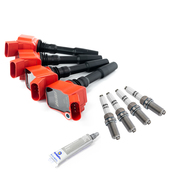
If you're nearing the mileage to replace spark plugs and coil packs, why not upgrade to a higher-output coil while you're in there? These APR coils deliver approximately 10% more output than factory units, which is valuable insurance on tuned cars and a consistency improvement on stock ones. We stock kits for both the 4-cylinder and 6-cylinder Macans.
The 95B.1 designates the first iteration of the first-generation Macan, produced for model years 2015–2018 in North America. All Macans are built at Porsche's Leipzig, Germany facility and were offered in a single body style: a five-door, five-seat SUV.
Model year highlights:
- 2015: Macan launches in the US with two trims, the Macan S (3.0TT V6) and the Macan Turbo (3.6TT V6).
- 2016: Largely carryover; minor equipment and option package updates.
- 2017: The lineup expands significantly. The base Macan (2.0T inline-four) and Macan GTS (3.0TT V6, 360 hp) join the range, along with the Macan Turbo with Performance Package (3.6TT V6, 440 hp).
- 2018: Final year of the 95B.1. Carryover lineup ahead of the facelift.
LCI / Facelift: For the 2019 model year, the Macan received its first Life Cycle Impulse, becoming the 95B.2. The facelift brought the full-width LED rear light bar, a larger touchscreen PCM system, and an engine changeover from the Porsche twin-turbo V6s to Audi-sourced single-turbo units. That makes the 95B.1 the only Macan generation with the Porsche-developed twin-turbo V6 family.
Market variations: European and other non-US markets also received a Macan S Diesel (3.0L V6 TDI) and, in some regions, lower-output 2.0T variants. This page focuses on North American gasoline models.
| Production Years | 2015–2018 |
| Body Style | 5-door SUV |
| Platform Code | 95B |
| Wheelbase | 110.5" |
| Length | 184.3" |
| Width | 76.1" (without mirrors) |
| Height | 63.4" |
| Curb Weight | 4,112–4,652 lbs (varies by trim) |
| Weight Distribution | 48% front / 52% rear |
| Front Suspension | Aluminum five-arm wishbone axle |
| Rear Suspension | Self-tracking trapezoidal-link axle |
| Front Brakes | Six-piston fixed calipers (S, GTS, Turbo) |
| Rear Brakes | Single-piston floating calipers |
| Steering | Electro-mechanical power steering |
| Fuel Tank Capacity | 19.8 gallons |
| Drag Coefficient | 0.36–0.37 |