
Audi B8 & B8.5 S5
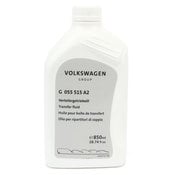
- Audi B8 & B8.5 S5 Fluids
- Audi B8 & B8.5 S5 Engine Maintenance & Issues (Audi 3.0t Engine)
- Intake Valve Carbon Cleaning
- Water Pump And Thermostat
- Upper Timing Chain Tensioners
- Engine Mounts
- Leaking Valve Cover Gaskets
- Air Oil Separator (PCV / Crank Case Breather)
- Ignition Coil Failure
- Intercooler Leaks (Intercooler Bricks)
- Supercharger Oil Change
- Audi B8 & B8.5 S5 Drivetrain Maintenance & Issues
- S Tronic (DSG / DCT) Fluid & Filter Service
- Mechatronic Unit Failure
- Sport Differential System Fault
- Audi B8 & B8.5 S5 Performance Mods, Engine & Power Upgrades, & Tuning
- Supercharger Pulleys
- ECU Tune
- Exhaust
- Audi B8 & B8.5 S5 Transmission Upgrades & Modifications
- Clutch & Pressure Plate
- TCU Flash
- Audi B8 & B8.5 S5 Brake Upgrades
- Street Brake Pads
- Track-Day Ready Brake Pads (Track Pads)
- Brake Rotors
- Brake Lines & Brake Fluid
- Big Brake Kits
- Audi B8 & B8.5 S5 Suspension Upgrades
- Lowering Springs
- Shocks & Struts
- Coilovers
- Wheel Spacers
- Bushing Inserts
- Audi B8 & B8.5 S5 Information, Models, Production & Model Years
- Audi B8 & B8.5 S5 Specifications
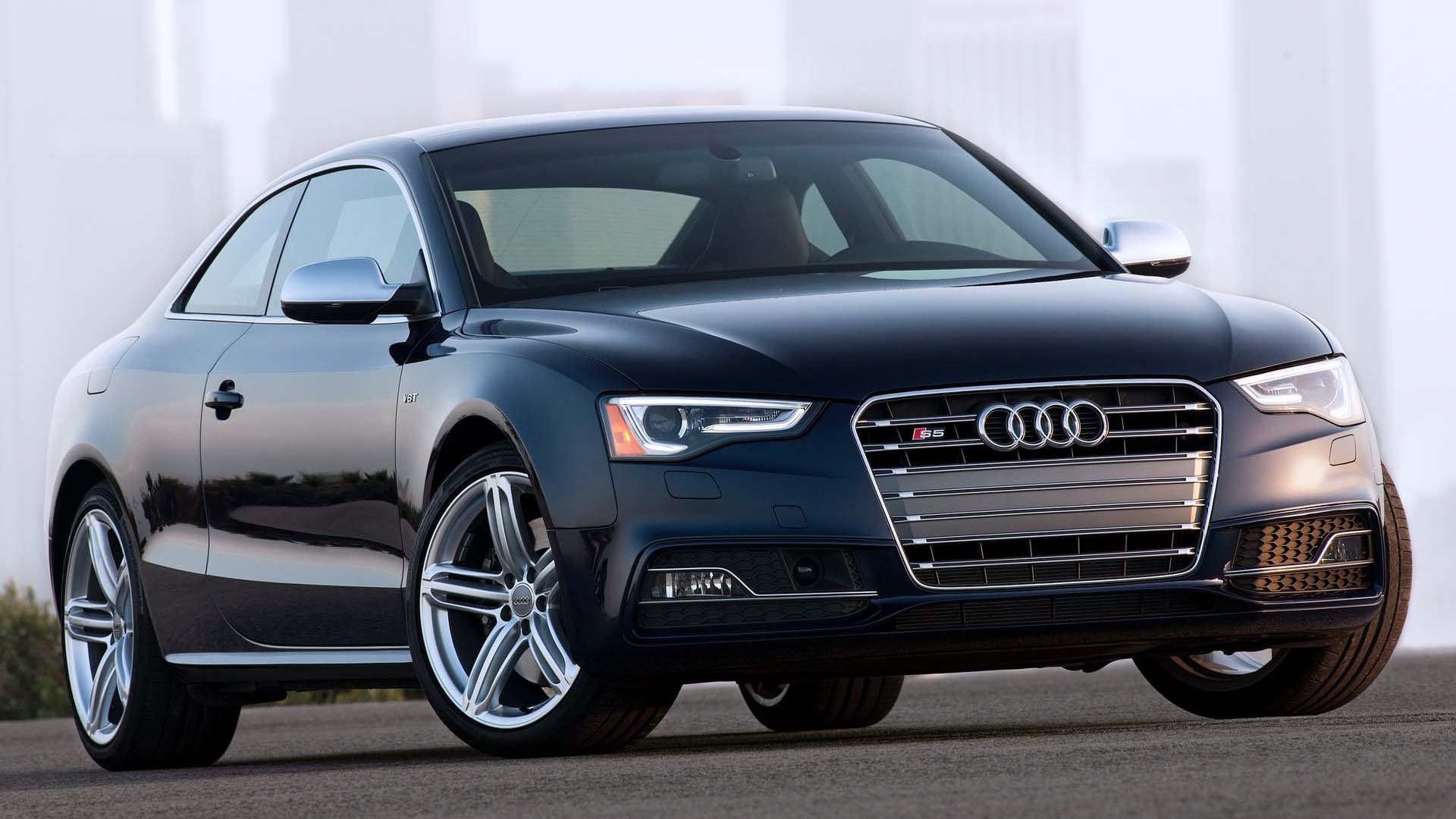
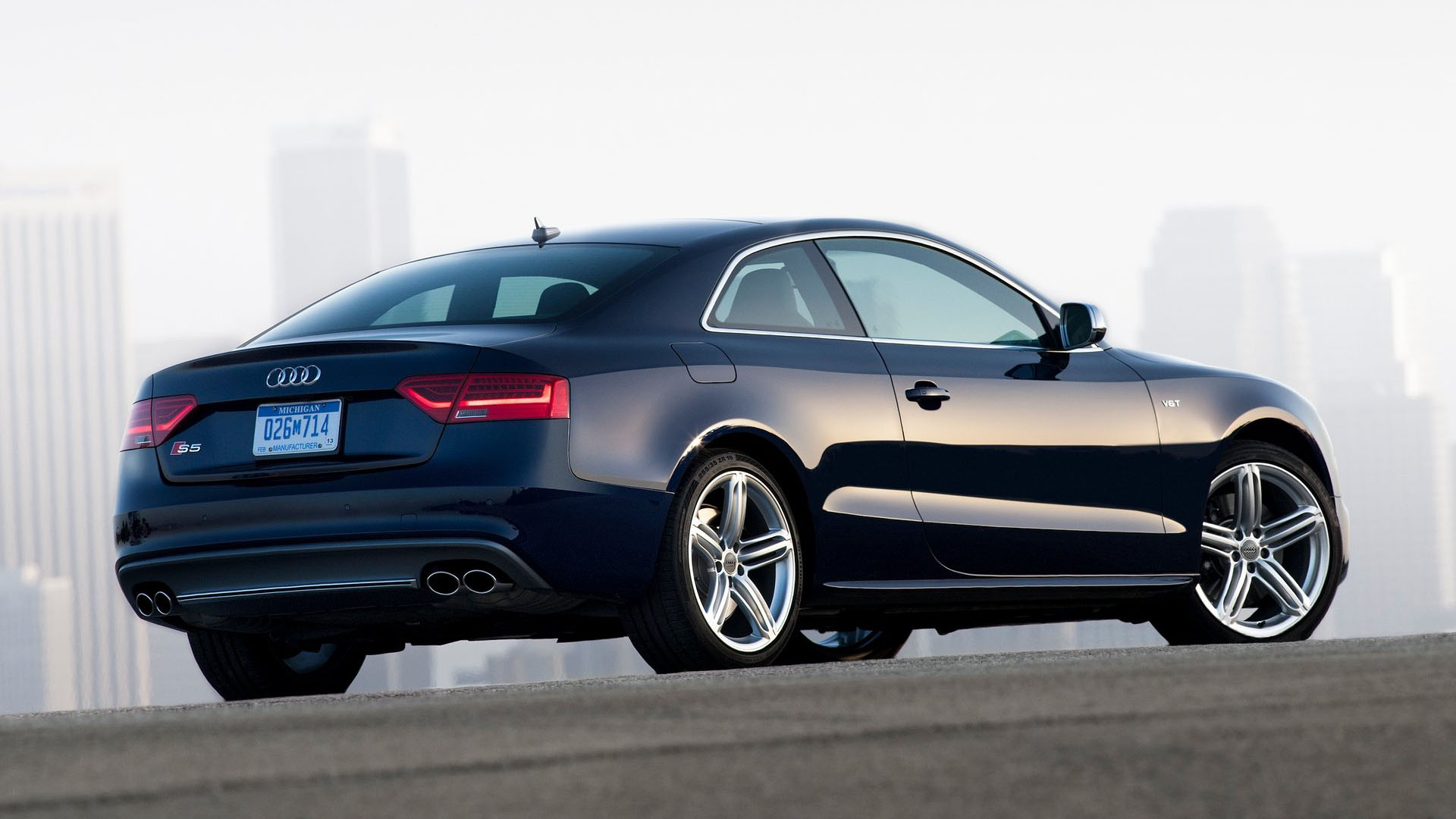
The B8/8.5 chassis code represents the fifth generation of mid-sized Audi sedans, coupes, convertibles, and Avants produced from 2008-2016. While the A4 had been around for over a decade, the A5/S5 was a new model in 2008, making the B8 its first generation. It’s built around VAG's MLB platform, which it shares with Audi's other sedans and the Porsche Macan. Midway through production, the S5 received a major update that saw an engine and transmission change, along with other improvements to infotainment, aesthetics, and performance. The B8 covers the S5 from 2008 to 2012, while the B8.5 covers from 2013 to 2016.
The B8 S5 Coupe uses the naturally aspirated 4.2L V8 developed alongside the R8’s first power plant. The “Comfort” variant of Audi’s V8 developed for the Q7 and S5 uses an aluminum block and cylinder heads with direct fuel injection to produce 354 hp and 325 lb-ft of torque. S5 buyers could spec either a six-speed manual or the six-speed automatic, called the Tiptronic. However, the B8 S5 Cabriolet that arrived in 2010 featured the supercharged V6 and DSG from the B8 S4.
The updated B8.5 S5 Coupe joined its convertible counterpart in using the supercharged 3.0t V6 and DSG transmission. Despite the lower peak output, the 3.0t was a much more efficient engine and supplied much more power under the curve compared to the outgoing V8. The AluSil engine block and aluminum cylinder heads combined with direct fuel injection and a roots-style supercharger produced 333 horsepower and 325 lb-ft of torque. However, the forced induction provided much more torque at lower revs and more opportunity to increase performance with aftermarket components.
The first-generation Audi S5 competed directly against the other performance luxury sedans in its class on and off the race track. On the showroom floors and in magazine tests, it was pitted against the E90 335i, W211 E63, CTS-V, and ATS 3.6. On the track, Audi flexed the chassis in the DTM or German Touring Car Championship, where it competed against Mercedes and BMW before winning it all in 2013 with Mike Rockenfeller.
Engine 3.0t |


SKU:
KIT-06E115562AKT43
QTY
$103.23+
| ||||
Transmission Manual |
SKU:
VAG-G052911A2
QTY
$38.29+
| ||||
Transmission S-Tronic Dual Clutch (DSG) |
SKU:
KIT-0B5325330AKT
QTY
$210.07+
| ||||
| Differential |

SKU:
VAG-G052145S2
QTY
$36.49+
| ||||
| Brake |

| ||||
| Power Steering |
SKU:
VAG-G0040001LDSP
QTY
$30.56+
|
Intake Valve Carbon Cleaning
Direct-port fuel injection has increased power and fuel economy for internal combustion engines enough that all modern engines are adopting the technology. However, the most significant downside to this new tech has proven to be a tedious issue to tackle. Traditional fuel injection systems spray gasoline on the back of the intake valves, which actively cleans away oil or carbon build-up. Injecting the fuel directly into the cylinders removes that effect, so carbon will accumulate on the back of the valves.
The most common symptoms of dirty intake valves are stumbling or wandering idle when cold. When the problem is severe, it can cause a ‘soft’ engine misfire until the engine warms up. Eventually, you will see significantly reduced fuel economy and poor performance.
How often you must clean your Audi’s intake valves can vary significantly. Driving conditions, driving style, temperature, and overall engine condition can significantly contribute to how severe and quickly the carbon build-up occurs. Generally speaking, a direct-injected engine that sees many short trips, spends a lot of time idling and doesn’t see a lot of full throttle or high RPM use will need cleaning at lower mileage. An Audi S5 with a 3.0t engine that sees track time or other high-load uses can go significantly longer before cleaning, and the carbon build-up tends to be easier to clean. As a rule, somewhere around 80,000 miles is a reasonable interval, although it is possible to need cleaning as low as 40,000 miles for cars that are ”babied” or as much as 120,000 miles for Audis that see heavy use.
While you can take your Audi to a dealer to fix the issue, you can save a lot of money by fixing it yourself. You can rent the tools, but seeing as most new engines use direct injection, they could be handy to have them ready. Beyond the tools, the steps are relatively simple, and we have them all laid out for you in a DIY. Because there is no fuel flowing over the intake valves, there is no additive that will solve this problem, but there are some additives, such as LIQUI MOLY Jectron DI, that can ensure the injectors continue to flow correctly and remove carbon deposits on the tips of the injectors.
Lastly, while it is tempting to use a ‘quick fix’ heavy-duty spray cleaner while the engine is running or other fixes, these generally will not fully clean the valves, and without knowing exactly how the cleaner is affecting the oil and protection while in use, we do not recommend these.

Water Pump And Thermostat
The 3.0t's issues with the thermostat and water pump aren't significant in the grand scheme of things, but they're sure to inform you of an impending failure. Together, the two make up most of the cooling system's moving components, so if anything fails mechanically, it'll be one of these two. However, neither fails uniquely; it's the same as in any engine.
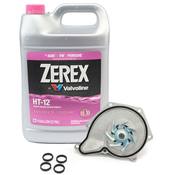
The B8 and B8.5 S5's have two slightly different water pumps. The early 3.0t tended to leak from their seal to the engine block. The updated pump resolved that seal issue but wasn't bulletproof. Most often, the bearing on which the pulley and impeller spin will wear to the point of excessive play. That play causes a leak through a weep hole, which indicates when the water pump is near failure. If ignored, the impeller can contact the engine and send composite or aluminum fragments throughout the engine's cooling ports. Thermostats have a similar lifespan to water pumps and should be replaced in tandem.
The thermostat housing is also a composite material that will degrade, and the 'teeth' on the edges can chip off or break. Aside from that, typical failures that result in the thermostat sticking open or closed, or part way, are what you can expect with a bad thermostat.
Symptoms of a thermostat that is stuck open include an engine that takes excessive time to warm up, no heat in the winter, and running cooler than expected due to the radiator always being 'in the loop' to cool the engine. Symptoms of a stuck closed thermostat include overheating when sitting idle or driving at highway speeds, regardless of the engine cooling fan operation. If your Audi S5 is running hot when idling, and you turn on your AC, this will activate the high-speed fans. If temperatures are not reduced, chances are the thermostat is stuck at least partially or entirely closed.


Upper Timing Chain Tensioners
While not as bad as other VW/Audi engines from this era, the 3.0t can occasionally have some timing chain tensioner trouble. So many B8 S5 owners found their engines rattling during a cold start that Audi released a related TSB. The problem was that the upper timing chain bled off oil pressure as the engine sat, causing it to lose some of its tension until pressure was restored a few seconds after firing. Audi says a rattle lasting less than three seconds after a cold start is within spec, and anything more needs a tensioner replacement. However, if it rattles at all, take that as a sign of impending tensioner replacement, no matter how long it rattles.

Engine Mounts
The 3.0t’s engine mounts are hydraulically filled and monitored electronically by the engine computer. That gives them two common points of failure. A physical failure from leaking fluid can cause increased vibrations and engine movement, potentially damaging surrounding components. Electrical failures are less apparent, but an open circuit fault will be stored in the ECU.
Symptoms of a bad or failing engine mount can include increased vibration through the car and cabin, especially when idling. It can also result in noticeable weight transfer when transitioning from on to off throttle or when applying the brakes, as the weight of the engine and driveline is damped less than designed, allowing it to move significantly more. Regardless of how they fail, you must replace the mounts as a pair.
When it comes time to replace the engine mounts in your B8/B8.5 Audi S5, you can install original-spec replacement mounts or an upgrade. Depending on your preference and how you drive your car, or if you’ve modified the engine for more power and performance, the Street Density line of engine mounts from 034 Motorsport offers improved control with minimal negative impact to noise, vibration, and harshness. If you have extensive modifications, prefer even more control, and don’t mind an increase in NVH, 034 Motorsport offers its track density line and its full billet line. The billet engine mounts are the most aggressive and recommended for drag racing or heavy track use.


Leaking Valve Cover Gaskets
Like almost every engine, aging valve cover gaskets can cause oil leaks around the valve cover and into the spark plug chambers. The rubber-like seals shrink and lose elasticity as they age, allowing pressurized oil to sneak by and accumulate where it shouldn’t. Typically, the spark plug tube seals leak first. Replacement is straightforward; even if only one of the two is leaking, replace them as a pair.
If you have an oil leak and are having trouble diagnosing the source of oil build-up, valve cover gaskets are one of the most common leaks on an Audi V6 or V8 engine and can sometimes be difficult to diagnose when they begin to leak. As air flows through the engine bay, it is not uncommon for the oil to be blown into unusual places, so a wash is always a good idea to clean things up and help guide you to the source of the leak.
If your B8/B8.5 S5 valve cover gasket leak is substantial, you'll likely smell burning oil as it runs down to the exhaust manifolds and burns off while the engine runs.

Air Oil Separator (PCV / Crank Case Breather)
The Positive Crankcase Ventilation system is a feature of every modern engine. It relieves the engine's positive crankcase pressure while collecting oil vapors and draining them back into the engine. A failed PCV will cause a few issues, the most common being an increase in oil consumption. Excess oil vapors entering the combustion chamber can also foul spark plugs, causing rough running through misfires and triggering engine codes for lean conditions.
In the most extreme situations, excessive oil consumption can cause more significant damage to downstream exhaust components, such as exhaust catalysts, as excessive unburned fuel and oil enter the exhaust system.
The failure of the PCV valve itself is typically due to a torn rubber diaphragm, which, once it's gone bad, will no longer effectively control pressure and oil vapor.
Early models have a slightly different PCV than the later ones, most easily differentiated by their respective black and white top portions. Later PCVs are retrofittable to the earlier engines but will require an ECU flash by your local Audi dealer to recalibrate sensors to the change in internal pressure.

Ignition Coil Failure
It’s not a VW/Audi product without troublesome ignition coils, right? Of all the regular issues, this is hardly severe and one that plenty of other manufacturers have dealt with. The 3.0t Audi S5 shares ignition coils with almost every late model VW / Audi engine from 2006+, including the V10 R8 supercar. While this generation of ignition coils is significantly more reliable than those of the past, they should still be changed as part of regular maintenance.
Ignition coils send electricity through the spark plug that ignites the air/fuel mixture in the cylinder, and any wear or damage to the coil will weaken that spark. Most often, that’ll trigger an engine code and light, but you may catch it beforehand through reduced power and poorer-than-normal fuel economy. Audi recommends replacement every 55,000 miles, but anyone making more power than stock will want to keep an eye out for earlier signs of wear.
If you have plans for tuning your S5 for more power and don’t know the age, mileage, or condition of your ignition components, it’s recommended to change these out proactively. If anything is “borderline” in terms of function, an ECU tune that makes more power and asks more of the ignition coils can push it over the edge in terms of being able to ignite the air-fuel mixture.

Intercooler Leaks (Intercooler Bricks)
The B8 and B8.5 Audi S5's 3.0t V6 makes all its power via a roots-type supercharger. This is effectively integrated into the intake manifold and, sitting just inches above the engine's intake ports, shoves air directly from the air filter intake down into the engine, increasing the amount of fuel that can be used and, therefore, the power that can be produced. It's a simple and effective method of boosting performance, but at a cost of high intake air temperatures.
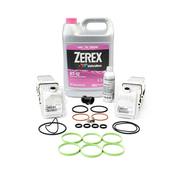
Typically, it's challenging to cool this intake air because of the limited space between the supercharger and the engine. Audi solved this problem by installing two air-to-water intercoolers inside the supercharger unit, meaning the air is being pressurized and heated before instantly cooling back down and entering the engine. The intercooler units, or 'bricks' as often called, are cooled by a circuit of coolant with a dedicated heat exchanger at the front of the car.
Unfortunately, the two air-to-water intercooler bricks are known to leak over time. Typically, there are no noticeable faults or issues, but you'll notice that your S5 will begin to 'use' coolant very slowly. The coolant is leaked directly into the intake ports, so there are no visible coolant leaks to diagnose. Over time, as the intercooler bricks leak more and more, you may experience engine misfires and other issues.
An ironic benefit of the coolant leaking into the intake ports is that it will help keep your intake valves clean. However, if you notice your S5 using coolant and there is no obvious place it's been going, you likely need to replace your intercooler bricks. This is a reasonably straightforward process.
Supercharger Oil Change
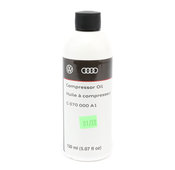
The supercharger used on the Audi S5 and other 3.0t engines is fully self-contained, with no external oil feeds or returns to lubricate the charger. While this means that removal and installation are quick, easy, and relatively mess-free, the oil is never freshened or filtered. Audi does not have a recommended service interval for changing the supercharger oil, considering it a “lifetime” fluid. That said, if you plan on keeping your Audi running at peak performance, especially if you’ve modified it and it’s a higher-mile car, changing the Audi supercharger oil will benefit longevity.


S Tronic (DSG / DCT) Fluid & Filter Service
Audi introduced the longitudinal DL501 7-speed S Tronic transmission in performance-minded sedans and CUVs, such as the S4, S5, RS5, and S6. The DL501 S Tronic differs from all of the transverse type DQ series DSG transmissions in that it has divorced lubrication systems. The oil for the gearing and differentials is separate from the oil utilized by the clutches, Mechatronic unit, and pump. This should, in theory, provide longer life and more reliability as there is no cross-contamination of fluids or particles between the two separated sections.
The most important service for any dual-clutch transmission is a fluid and filter change with the best quality parts. Exact service intervals will vary depending on the vehicle year, model, and transmission code. The B8 and B8.5 S5 S Tronic transmission should be serviced at 35,000 miles for the first service and every 40,000 miles afterward. If you have a heavy foot, have a highly modified car, or drive your car on the track, you may want to consider shortening the service interval as preventative maintenance.
DSG transmissions require no other regular maintenance outside of fluid service. Clutches and flywheels are service-free as long as they are functioning correctly and will benefit from regular fluid changes. Related components, such as engine and transmission mounts and the CV drive axles, should be checked and replaced as needed.
Mechatronic Unit Failure
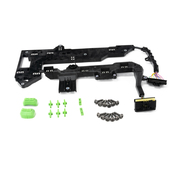
Although it's not a widespread issue, the most serious and typically most expensive problem that can arise on a DSG transmission is a failure of the Mechatronic unit itself. Failures can result in several issues, ranging from hard or jerky shifting, failure to shift or engage from a stop, or complete and total transmission malfunction. In this instance, the transmission goes into a 'limp mode' with limited gears available for use, or it may completely disengage the clutches to avoid damage, even while driving. Proper diagnosis with an electronic scan tool is the best and most accurate way to determine if there is a Mechatronic fault. Even with total Mechatronic failure, the other internal components, such as the gears, clutches, and differential, is typically not damaged.
Reconditioning your original Mechatronic unit or replacing it with a used example from a salvage yard is a possibility. Still, your results and the quality of repair may vary. These units cannot typically be changed unless the replacement is an exact match for both the box code and version type. Calibration and coding of the Mechatronic unit should always be performed after replacement to ensure proper performance.
Unfortunately, flywheel and Mechatronic failures can result in a DSG transmission that does not shift gears or shift properly, so it can be challenging to determine which issue you're dealing with if it is an intermittent problem. Neither a flywheel replacement nor a Mechatronic unit replacement is inexpensive, so be sure to diagnose correctly before replacing either part.
Sport Differential System Fault
Audi’s sport differential is an active, computer-controlled rear differential unit. Unlike a traditional limited-slip differential that is purely mechanical, the Audi Sport Differential uses a set of electro-hydraulically controlled clutch plates where the left and right axles meet the differential to modulate how much torque goes to each wheel. The advantage of this is active torque vectoring, or the ability to get the power delivery to actively improve cornering capability and handling.
They’re very clever but aren’t as reliable as a mechanical differential. Sensors can fail, and sharp hits to the differential unit can damage solenoids for some owners. The replacement is almost always a new differential unit, but specific sensor-related issues can be solved with recalibrations.
You should service your B8/B8.5 S5 Audi Sport Differential at least every 75,000 miles; however, for highly modified cars or vehicles that see track time, reducing it to 50,000 miles could extend the service life of the components.

Supercharger Pulleys
Superchargers are driven by a belt off of the crankshaft. How much boost it produces depends on how quickly the supercharger rotors are spun, and that speed is determined by the size of both supercharger pulleys. There’s one on the supercharger and one on the crankshaft, and their size relative to each other will determine how quickly the engine spins the supercharger rotors.
Upgrading to an aftermarket supercharger pulley, crank pulley, or both will spin the charger faster, allowing it to produce more boost and power. A corresponding ECU tune is a must for a pulley change to compensate for the additional boost. Depending on the tune and exact parts used, such as a free-flow intake and exhaust or cooling components, a dual-pulley 3.0t can make up to 500 hp on standard 93-octane fuel. That’s an outstanding 160 hp gain over the factory 333 hp rating, all without touching anything inside the engine or compromising the engine’s overall reliability.
It is recommended that ignition components always be checked and refreshed more regularly with a performance tune. Likewise, 5,000-mile engine oil changes are recommended for the best life and reliability.
Depending on the supercharger, a pulley installation and removal tool will be required to safely remove and install the supercharger pulley on your S5.


ECU Tune
There is no better bang for the buck for horsepower on a B8/B8.5 S5 3.0t than a performance tune for the ECU. Utilizing the on-board diagnostic (OBD) port, tuners such as 034 Motorsport, APR, and others can change the fueling, timing, and boost parameters to increase horsepower and torque. Like most other Audi engines, the supercharged 3.0t is overbuilt from the factory. This means there aren’t any other required parts to achieve a substantial increase in the power from the engine. When properly maintained, you shouldn’t see any long-term durability or reliability reduction either.
A ‘Stage 1’ tune is likely to require no other parts and makes no requirement other than the use of a certain octane of fuel. For example, with an APR Stage 1 tune, power is increased to 433 hp and 354 lb-ft of torque with 91 octane fuel. Rated for 91 octane fuel, you can use anything 91 or higher, but not lower. Although this is a simplified explanation, the higher the octane, the greater the resistance to pre-ignition, and the more power can be made. That same tune in Stage 1, 93 octane spec, makes 444 hp and 372 lb-ft of torque. A substantial improvement in horsepower and torque without any real downsides in short or long-term engine health.
Although we at FCP Euro don't carry the ECU tunes, we are partnered with a few brands that do. Take a look at what they offer, and choose what you believe fits your particular build best.
Exhaust
Like the intake, the 3.0T S5 performance exhaust systems range from refined but sporty to race-car loud. AWE Tuning is one of the top performance exhaust brands for Audi, Volkswagen, Porsche, BMW, and many others. Their range of products allows you to fine-tune the performance and volume of your 3.0T with their Touring or Track exhaust systems and either resonated or non-resonated downpipes.
First, the downpipes connect the catalytic converters to the rest of the exhaust system. The resonated downpipes will be quieter and have less of an edgy tone, with less of a rasp, compared to the non-resonated version. Power will be unaffected; it’s just the sound that’s being changed.
For the exhaust system, the Touring version is louder than what’s stock but offers a smooth and inoffensive tone at light throttle. When you put your foot down, it will open up and get a bit more aggressive, but it’s still totally reasonable. The Track edition has two modes - loud and even louder, so it’s not the best choice if you have neighbors who will try to run you out of town for having a loud exhaust. For our money, non-resonated downpipes with a Touring exhaust give the best combination of bark and bite without giving you a migraine on the way to work every day.
The AWE Tuning exhaust systems are available with a wide range of exhaust tips in different sizes, materials, and finishes, allowing you to make your S4 or S5 look and sound exactly how you want it to.
Clutch & Pressure Plate
The factory clutch on the B8 and B8.5 S5 is a reasonably robust unit from the factory and is known for coping with modest power upgrades without too much issue. That said, depending on how many miles your S4 has, how you drive it, and how much power you’re making, you will reach the limits of the factory unit at some point.
Depending on your preference and how you drive, there are a few different routes to go. The easiest and simplest upgrade is to go with something like the Southbend Stage 2 Daily or Stage 2 Endurance, both designed to work with the factory dual-mass S5 3.0t flywheel. Either kit will result in smooth, factory-like performance and engagement, with a modest increase in torque and power holding. It’s worth noting that while any clutch is sensitive to break-in, Stage 2 Endurance is particularly so, and you should follow the break-in instructions from SBC for that clutch. Both will have a modest to slight increase in pedal effort and feel. With either unit, you’ll want to use a new OE-type flywheel.
The South Bend Clutch Stage 3 Daily will be your best bet for high performance and power holding. With a stronger pressure plate, a ‘daily’ type disc, and a lighter weight single mass flywheel, this clutch will work great on your daily commute, but it will feel more responsive and rev a bit quicker thanks to the lighter flywheel. Since it is a single mass design, engagement will typically be a bit more consistent.
You’ll note that the factory flywheel on the 3.0t S5 is a very unusual design. That’s because Audi worked to reduce the driveline height on their Quattro vehicles. The end result is relatively odd, but the net result is lower CG and better handling while keeping the true Quattro performance.


TCU Flash
If you have an S Tronic dual-clutch transmission, you will want to upgrade the transmission control unit (TCU) software when you upgrade the ECU. While not required for most basic Stage 1 tunes, the S Tronic transmission will offer smoother shifting and improved performance when it is remapped to optimize the increased power from the engine. Performance TCU software optimizes shift points, increases clutch clamping power, increases the speed of the shifts, and offers an improved manual-mode experience.
Additionally, because the TCU can work with the ECU to manage engine torque, it is possible that the TCU will limit power when it is not reprogrammed to match the increased engine output.
A performance S Tronic TCU tune will not typically create additional wear or shorten service intervals. However, depending on how you drive—especially if you track or drag race your S5—you should consider shorter intervals for the best transmission component life.
Street Brake Pads
Of all the components that improve braking performance, nothing is as effective as upgrading your brake pads. Not only can you see enhanced stopping power, but there are also, very often, lower levels of brake dust compared to the OE brake pads.
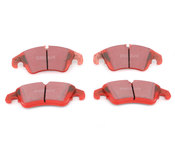
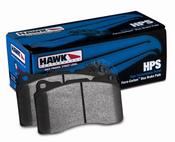
Akebono Euro Ceramic brake pads are an excellent choice if you’re looking for good street performance with a massive reduction in brake dust over the factory brake pads. If you have a modified S5 and want a significant increase in stopping power with a little more dust than the Akebono, check out the Hawk HPS brake pads. These offer improved pedal feel, reduced dust, and improved braking performance under demanding driving conditions, and they work just as well as they do when commuting, hitting backroads, or participating in a local autocross.
Track-Day Ready Brake Pads (Track Pads)
If you have plans to really push things to the upper limits of power or attend track days but still plan on driving your S5 on the street daily, we suggest looking at the Ferodo DS2500. This is one of the best all-around brake pads you can buy; a true “street and track” capable pad. The DS2500 offers exceptional on-track braking performance, excellent modulation, and outstanding wear rates for both the brake pad and rotor. Best of all, while it does dust a bit more than the street sport pads from Stoptech or Hawk, they are still less dusty than the stock brake pads and don’t suffer from the extreme noise that usually accompanies a track-ready brake pad.
Brake Rotors
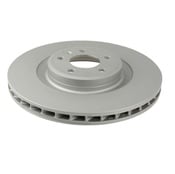
You should always install fresh brake pads with new brake rotors. Simply installing a fresh set of Zimmerman plain discs with new pads will go a long way to ensuring the best performance and even brake wear on your B8 S5. The brake pads make more of a difference in stopping power than brake discs, so money is better spent on pads regarding performance for budget. Some sport brake discs offer some limited improvements over plain rotors.
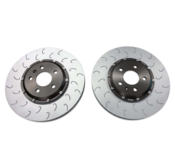
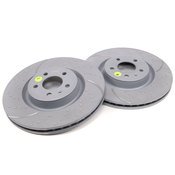
Sport brake discs typically come either slotted, cross-drilled, or both cross-drilled and slotted. Each design has its advantages and disadvantages. Slotted brake rotors offer an improved initial bite when you apply the brakes, but at the expense of being a little more aggressive in brake pad wear. The slots also help to keep the pads clean and wearing in an even fashion. The last benefit is that they help with braking in the wet, particularly as they aid in water evacuation between the pad and the disc.
Cross-drilled discs offer some of the benefits of a slotted disc, such as a strong initial bite and water evacuation in the rain, but there are some considerations for drilled rotors and extreme use. First, they can wear the brake pads in a less even fashion than slotted or plain discs due to the arrangement of the holes. Secondly, during ultra-high performance use, such as track days, the holes create additional stress areas around the disc. Brake disc quality and the manufacturing process are vital for drilled discs, so choosing German-made discs like the Zimmerman Sport discs is highly recommended.
Poorly made cross-drilled discs are more likely to crack and experience brake disc failures in extreme braking conditions. That’s not to say they are a terrible choice, as drilled rotors look great and offer some benefits over a plain disc. However, it’s essential to consider how you use the car when purchasing. Slotted and cross-drilled discs can result in a little more physical brake noise than a plain rotor, which is another crucial consideration when deciding which style of brake disc to use on your car when upgrading the brakes.
Brake Lines & Brake Fluid
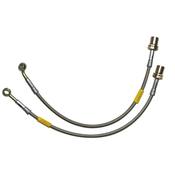
The two final components of an upgraded stock braking system on your S5 are the brake caliper lines and the brake fluid. Upgraded to braided stainless steel brake lines in place of the basic rubber units will give you a firmer pedal feel and increase confidence and the ability to modulate the brakes better at the limit. While any standard DOT 4 brake fluid works well, upgrading to a racing brake fluid such as Motul RBF600 or Castrol SRF will give your braking system the temperature capacity required for aggressive street or track driving. Racing brake fluids also usually have less compressibility, improving pedal feel and performance.

Big Brake Kits
A big brake kit (BBK) can substantially increase your S5’s braking performance. While they tend to be costly, a BBK will offer several benefits if it’s within your budget.
First, an aftermarket big brake kit will feature a fixed multi-piston caliper, usually with either 4 or 6 pistons. This not only looks super cool but has many advantages over the stock single-piston sliding caliper. Multiple pistons offer more even pressure on the brake pad, and more cooling air can circulate around the pistons, allowing the brake to cool more effectively. They also usually have a larger and thicker brake pad, and more physical pad area equals more potential braking performance.
Adding to the benefits of a multi-piston caliper, as the name implies, a big brake kit will usually have a much larger brake disc than the factory unit. The stock front brake disc on an S4 or S5 is 345mm, while most BBKs will have 355 mm, 365 mm, or even 380 mm discs. These discs typically have a directional design, so they cool more effectively than the stock discs. They are also usually 2-piece, with a lighter ‘hat’ or ‘bobbin’ center, typically made out of aluminum, and the actual friction surface is the only thing made of cast iron. This means that not only does a BBK offer better performance, but it’s also usually lighter as well.
Two of the best brands for big brake kits are Brembo and AP Racing. Both offer a range of options depending on size, budget and use, and they have a wide range of replacement parts and brake pad compounds available thanks to their availability and well-known quality. There are also “OEM+” big brake kits using multiple piston calipers from other VW, Audi, and Porsche models, such as the Macan. These can offer an affordable and easily serviced bit brake upgrade kit for a fraction of the cost of other, more track-oriented kits.
Lowering Springs
Lowering springs are probably one of the easiest and most common choices when it comes to suspension upgrades. There is no denying that a lowered S5 has a decidedly purposeful look. Sport springs come in many varieties, from mild to wild, so it’s important to consider what kind of roads you drive on and how you drive the car, as these can impact the best choice for your S5.
A mild drop is ideal for use with factory struts, especially if your car has the Audi Adaptive Suspension. Eibach’s Pro-Kit sport lowering springs are among the most well-known and best-performing spring kits on the market. Lowering is rated at 0.8” front (20 mm) and 0.6” rear (15 mm), which is enough to notice in terms of aesthetics but not enough to ruin the ride or the handling.
If you want something just a bit more aggressive, check out the 034 Motorsport Dynamic+ springs. Offering 1” (25 mm) of lowering, the Dynamic+ springs provide a noticeable but not excessive reduction in ride height and are designed to offer excellent ride quality with improved handling over the factory springs. Plus, the 034 Motorsport Dynamic+ are specifically designed to be used with factory dampers.
Shocks & Struts
Speaking of which, your struts and shock absorbers are crucial to your S5 suspension. Depending on your car’s mileage, you may want to replace them when you install your lowering springs, no matter which set you get. They will provide better performance, ride, and handling, and save you labor in the long run.
The Bilstein B8, aka Bilstein Sport, is one of the most proven sport dampers available. A high-pressure monotube design, these durable shocks are designed to be used with a lowering spring, helping to retain a decent ride even at lower ride heights. Damping rates are increased over the factory shocks and struts, but not to the extent that it negatively impacts comfort or how the car handles. You'll benefit from upgraded dampers while cruising the highway or taking laps at a local race track.
Koni, a well-known Danish manufacturer, is another excellent choice for aftermarket sport dampers. Their two most popular lines, the Koni Sport and Koni Special Active, offer unique advantages. The Special Active features a “Frequency Select Damping” function that offers adaptable suspension tuning depending on the conditions. This can provide a smooth, easy ride over smoother roads or broken pavement and a sporty, direct response in a more dynamic driving environment.
Koni Sport, otherwise known as Koni Yellow, offers adjustable rebound damping. This allows the user to match the shock's damping to their preference for ride and handling, or handling balance, and the exact sport spring set.
Many owners will have their brand allegiances between Bilstein and Koni, but both offer supreme performance as direct replacements for the factory Audi S4 shocks and struts.


Coilovers
If you want a more aggressive, lower style, or you’re just picky about the ride height and the handling performance of your S5, an adjustable coilover suspension may be the right choice for you. Coilovers are height-adjustable, with threaded perches allowing you to fine-tune your look or weight balance of the car down to the millimeter. Many kits also offer adjustable damping, enabling you to make the shock absorber more or less firm. This can be used to give the car a more or less compliant ride, or it can be used to help change the vehicle’s balance by controlling weight transfer.
Pricing and features of coilover suspension span a range of budgets, so if you find yourself more interested in these rather than springs, fear not. They also have the added benefit of often having an improved ride and better handling over the factory suspension, thanks to higher quality dampers and perfectly matched spring and damper rates.
If you’re looking for a slightly less costly suspension that still uses the highest quality components, one of H&R’s many coilover suspensions is an excellent choice. H&R arguably invented the street coilover as a product, and their Street Performance coilover suspension uses inverted monotube dampers, similar to Sachs Performance and Bilstein, but without adjustable rates. You can still fine-tune your ride height, but thanks to reduced complexity, these come at a significantly lower price while offering superb handling. H&R Street Performance coilovers offer between 1.0” and 2.2” of lowering. If you want to go lower, their Ultra-Low kit has all the same features as the Street Performance kit but reduces the ride height by 1.5” to 2.7” for that perfect stance.
When your S5 has Audi Adaptive Suspension, it is essential to note that replacing the shocks or installing coilovers that are not AAS-compatible will result in fault codes in multiple systems, including the ABS and stability management systems. If you replace your dampers with an aftermarket set, an AAS-defeat kit, such as the one produced by KW Suspensions, will be required for the best results.


Wheel Spacers
Adding on a set of wheel spacers to your factory wheels, combined with a lowered stance, spares are a great way to transform the look of your S5 with minimal cost compared to a set of aftermarket wheels. Fitting spacers will require longer lug bolts, and it’s important to use high-quality spacers with both hub and wheel-centric fitment, depending on the thickness of the spacer. Poor quality spacers that don’t fit tight to the car’s hub or the wheel hub’s center bore will result in vibration at highway speeds. As we all know, if you improve your car’s looks but it has a huge negative impact on the driving experience, is it really an upgrade?
As a general rule, you’ll need to increase the total thread length of the factory lug bolt to equal the spacer’s thickness. Most factory M14x1.5 lug bolts from VW and Audi have a 28mm thread length. So, using this math, installing 5mm spacers on your front axle will require ten 33mm thread-length lug bolts. Remember that your factory wheel locks will not work on spacers thicker than 3mm, which is generally the maximum spacer thickness for stock lug bolts. Typically, you will want to go slightly longer on lug bolts if you cannot get an exact match, so typically, choosing 35mm thread length, in this instance, will be the better choice. At a minimum, you will need at least the same number of threads engaged into your wheel hub as the thickness of the bolt, or around 7 full turns. Don’t forget to account for brake disc thickness.
It’s also important to note the “lug seat” your wheels use so you’re not without matching hardware. Factory Audi wheels use an R13 ball seat lug, while most (but not all) aftermarket wheels use a 60-degree conical seat. Using the wrong lug bolt can result in a wheel that can loosen over the road or damage to the wheel.
Bushing Inserts
One of the best and most affordable means of increasing the feedback and improving response in your B8 S5 chassis is to utilize bushing insert kits. They’re available in billet aluminum, such as those from 034 Motorsport, and polyurethane, offered by Powerflex and other brands. These inserts fill the voids and air gaps designed into the OEM engine, drivetrain, and chassis bushings. Since you do not have to replace any bushings or mounts, the labor costs are much lower than complete replacement performance parts.
The 034 Motorsport driveline insert kit provides aluminum inserts for the transmission and differential mounts. It removes the driveline slop and limits movement for more direct shifting, better launches, and a more connected feel on the road. It also offers these benefits without a massive penalty for noise, vibration, and harshness. So, just because you see better control doesn’t mean the car will be less comfortable despite the improved performance.
Similarly, 034 Motorsport offers a rear subframe insert kit, which limits movement in the rear subframe mounts and has two benefits. First, limiting movement in the subframe makes the rear suspension geometry more stable and provides better handling performance. Second, the rear differential can work more effectively with a more solid connection to the car’s chassis, as less movement means more positive power delivery.
If you’re looking for a more cost-effective version, Polyurethane bushing inserts are available from Powerflex in basically all the same configurations and locations. Powerflex offers two different durometers, or hardness, of poly, depending on how much control you desire. The Prothane’ Street’ is bright yellow and features a 70a durometer, which is about 25% firmer than the stock rubber. Their ‘black series’ are (as the name implies) black in color and feature a 95a durometer, which is about 70% firmer than the factory rubber. It’s important to note that some polyurethanes will be firmer in cold weather, but once they ‘warm up,’ they should return to their normal durometer.


The B8 chassis debuted in 2008 and ran until 2012. Audi introduced the facelifted model, the B8.5, for the 2013 model year, which ran until 2016. The B8.5 was a significant update for the S5, as it replaced the Coupe’s drivetrain with that from the S4 and S5 Cabriolet, along with external and internal aesthetic changes.
The best way to differentiate pre and post-facelift is by the front bumper/grill and the lights. The B8 uses a mostly rectangular headlight with an inner LED strip reminiscent of the R8. The B8.5 uses a more complex shape with a more aggressive and extensive LED arrangement. Between the headlights, the B8 uses an upside-down trapezoidal grille that takes up 80% of the space available. Audi didn't change the updated grill too much, smushing the upper corners into two extra small and flat sides, creating a very uneven hexagon.
Below the headlights, you'll find different fog lights. The early design uses a round fog light, while the facelift uses a rectangular fog light with a slanted inner side. Around the back, the updated taillights feature a slightly different inner corner, along with a change in the LED pattern to match the headlights. Additionally, the hood and bumper are different to accommodate the change in grill and lights. Still, they are very similar to the parts they replaced.
Mechanical updates varied between models. The S5 Coupe finally ditched the aging 4.2L FSI V8 in favor of the 3.0T that the rest of the range used. Along with the V8 went the optional six-speed Tiptronic transmission in favor of the S-Tronic DSG. The only mechanical change that all of the B8.5 "S" models received was switching over to electrically-assisted power steering, ditching the hydraulically-assisted setup.
Inside the cabin, the S5 received a new flat-bottomed steering wheel as standard, along with various trim pieces and interior bits. A revised infotainment and navigation system also found its way into the B8.5.
table { width: 100%; border-collapse: collapse; margin: 10px 0; } th, td { border: 1px solid #ddd; padding: 8px; } th { background-color: #38a4fe; text-align: left; color: white; } h3 { margin-top: 25px; }
Specification | Details |
|---|---|
Engine Type | Supercharged V6 |
Displacement | 3 Liter |
Horsepower | 333 hp @ 5500-7000 RPM |
Torque | 325 lb/ft @ 2900-5300 RPM |
Compression Ratio | 10.3:1 |
Max RPM | 7300 |
Induction | Roots-Style Eaton Supercharger |
0-60 Time Manual | 4.9 Seconds |
0-60 Time DSG | 4.7 Seconds |
Weight | 3800-4000lbs |
Specification | Details |
|---|---|
Engine Type | Naturally Aspirated V8 |
Displacement | 4.2 Liters |
Horsepower | 350 hp @ 7000 RPM |
Torque | 325 lb/ft @ 3500 RPM |
Compression Ratio | 12.5:1 |
Max RPM | 8250 |
Induction | Naturally Aspirated |
0-60 Time Manual | 4.8 Seconds |
0-60 Time Tiptronic | 5.1 Seconds |